Reviewed · TOURS
Half Day Traditional Handicraft Craftsmanship Tour from Chiang Mai
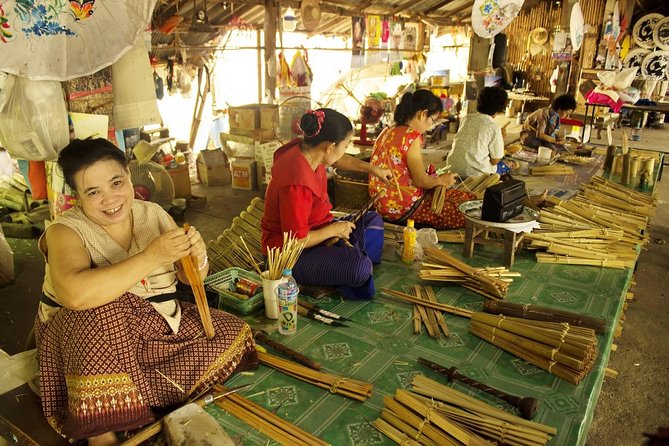
San Kamphaeng Road is Chiang Mai’s working craft corridor, not just a row of souvenir shops. On this four-hour outing, you can watch silk woven by hand, see elephant figures carved from wood, and follow mulberry bark paper as it becomes a Bo Sang parasol. The making is the point, so you get more than a quick stop at a gift shop.
I like the small group, capped at 10, and the easy hotel pickup in central Chiang Mai. I also like the mix of crafts: silk, wood, celadon, local clothing, jewelry, and paper umbrellas. The main drawback is that the tour visits workshops and factories where buying is part of the setting, so it may feel commercial if you want only museums and demonstrations.
In This Review
- Key points at a glance
- Why San Kamphaeng is worth four hours
- The drive from Chiang Mai to San Kamphaeng
- Hand weaving and craft workshops in San Kamphaeng
- Baan Jang Nak and the elephant carving tradition
- How mulberry bark becomes a Bo Sang umbrella
- What the small group changes
- Is $65 a fair price?
- Who will enjoy this craft tour most
- Booking advice and cancellation terms
- Should you book it?
- FAQ
- How long does the Chiang Mai handicraft tour last?
- What time does the tour start?
- Where does the tour visit?
- Is hotel pickup included?
- Is there a pickup surcharge?
- Can I join at a meeting point instead of using hotel pickup?
- What is the maximum group size?
- Is transportation included?
- Are children allowed on the tour?
- Can I cancel for a full refund?
Key points at a glance
- Handmade silk in San Kamphaeng: Watch the careful process of hand weaving and learn why silk production takes time.
- Elephant wood carvings at Baan Jang Nak: See carved figures and the steps that turn raw wood into finished work.
- Bo Sang paper umbrellas: Follow Saa paper from mulberry bark to the familiar painted parasol.
- Small-group transport: A maximum of 10 people makes questions and short demonstrations easier to manage.
- Central Chiang Mai pickup: Door-to-door service is included for many hotels within the stated city-center areas.
- A craft tour with shopping pressure: You can browse mementos, but the factory setting means purchases are part of the experience.
Why San Kamphaeng is worth four hours
Chiang Mai is often sold through temples, markets, and cooking classes. Those are good reasons to visit, but the city’s craft traditions explain another part of northern Thailand’s character. San Kamphaeng has long been associated with workshops making goods for local use and for visitors.
This tour gives you a practical look at that work. You are not simply shown finished umbrellas or polished furniture. You see several steps in the production process, then have time to look at the finished pieces. For me, that makes the $65 price easier to judge: you are paying for transport, a guide, and access to several craft stops in one morning, not only a ride to a shopping street.
The schedule runs for about four hours and begins at 8:00 am. That early start is useful. You can finish by lunchtime and still have most of the day for Chiang Mai’s old city, temples, or a slow meal. It also keeps the outing from becoming an all-day shopping expedition.
Other Chiang Mai days people book alongside this one:
- Half-Day Thai Cooking Class at Organic Farm in Chiang Mai
★ 5.0 · 19,087 reviews - Chiang Mai: Elephant Sanctuary, Waterfall & Bamboo Rafting
★ 4.9 · 9,160 reviews - Chiang Mai: Doi Inthanon National Park Eco-Friendly Tour
★ 4.6 · 6,667 reviews
The drive from Chiang Mai to San Kamphaeng
Pickup is offered from selected central hotels, with free door-to-door service in several parts of Chiang Mai. The listed areas include the Night Bazaar, Tapae Gate, Chiang Mai Gate, the old city, Suan Dok Gate, Huay Kaew Road as far as the Ibis Hotel, Nimman Haeminda Road, and Santitham.
The tour includes an air-conditioned vehicle, which matters in Chiang Mai’s heat. The first transfer to the San Kamphaeng area takes about 30 minutes. If your hotel is outside the central pickup zone, check the distance before booking. Hotels more than 5 kilometers, or about 3 miles, from the city center carry a 300 baht pickup and drop-off surcharge, paid on the day.
If your hotel is not covered, you can meet the group at the McDonald’s at Chiang Mai Night Bazaar. Confirm that arrangement before the morning of the tour, since the meeting details matter more than they might on a self-guided outing.
Hand weaving and craft workshops in San Kamphaeng
The San Kamphaeng stop lasts about an hour. The focus is handwoven silk, with demonstrations of a method passed down through generations. A guide can help you understand the full chain: preparing the thread, setting up the loom, weaving the cloth, and dealing with the fine detail required for a regular pattern.
This is the kind of stop where watching closely pays off. A finished silk scarf can look simple until you see the repeated hand movements behind it. If you are interested in textiles, ask how the fibers are prepared and how patterns are formed. The tour description promises an explanation of the production process, but the amount of time spent at each demonstration may vary.
San Kamphaeng is also known for other handicrafts, and the tour visits more than one type of workshop. One particularly useful detail is the chance to see celadon pottery that has been thrown, glazed, and painted. Celadon’s soft finish and careful decoration offer a nice change from the bright colors often associated with Thai souvenirs.
The setting is not a quiet gallery. It is a working craft district with factories, displays, and merchandise. That has two sides. You get a clearer sense of how goods are made, but you will also be surrounded by finished items for sale. The tour is described as avoiding buying pressure, yet you should still expect opportunities to purchase.
Baan Jang Nak and the elephant carving tradition
The next hour takes you to Baan Jang Nak, a museum devoted to elephant wood carvings. The stop combines an exhibition with a look at wood and furniture production.
The elephant is an especially fitting subject for northern Thai wood carving. Here, the point is not only the finished animal figures. You can learn how a piece moves from raw material through shaping and carving to a completed object. That process helps you judge the work on its own terms instead of seeing it as another decorative item on a shelf.
The display also includes local costumes, jewelry, and home novelties. This widens the stop beyond wood. You can compare the carved figures with other examples of local design, which is helpful if you are trying to understand how regional styles appear in clothing, ornaments, and household pieces.
I would allow yourself time to look at the details rather than rushing to the shopping area. Small carved features can be easy to miss, especially when the group is moving on a fixed schedule. Since the stop is about an hour, you should have enough time for the exhibit and the production explanation, but not for a long, leisurely museum visit.
The furniture factory element may appeal to anyone interested in traditional skills and workshop methods. It may be less appealing if your goal is a formal art museum with extensive labels and historical interpretation. This is a hands-on craft visit, not a major cultural institution.
Same city, a completely different sort of day:
- Chiang Mai: Elephant Sanctuary & Waterfall Group Tour
★ 4.9 · 5,780 reviews - Chiang Mai: Chiang Rai Temples, Karen Tribe and Hot Springs
★ 4.7 · 5,401 reviews - Chiang Mai: Cooking Class, Market & Thai Herbs Garden Tour
★ 4.9 · 4,824 reviews - Chiang Mai: Authentic Cooking Class with Market & Farm Visit
★ 4.9 · 4,546 reviews
How mulberry bark becomes a Bo Sang umbrella
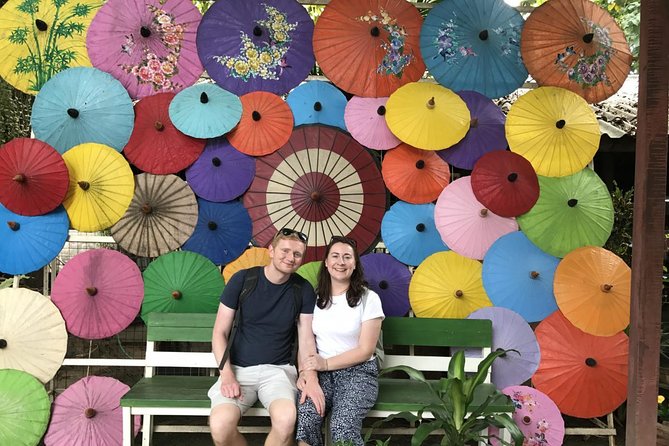
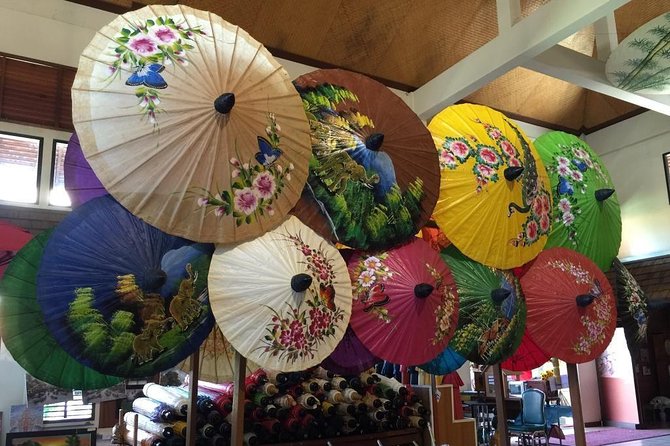
The final major stop is Bo Sang, also called the Umbrella Village. Here you see how Saa paper umbrellas are made from scratch. Saa paper is made from mulberry bark, and the process is one of the tour’s most memorable links between local materials and finished design.
The umbrella is more than a pretty object. Its structure requires paper preparation, shaping, drying, and decoration. Watching those stages gives you a better sense of the labor hidden behind a lightweight parasol.
Bo Sang is also the place where you can browse for souvenirs. The tour allows about an hour for the umbrella stop and a walk around the district. You can look at umbrellas, interact with local craftspeople, and choose a memento if something suits you.
Keep your expectations practical. The experience does not promise a long workshop in which you make an umbrella yourself. It is a demonstration and browsing visit. If you want to buy, compare pieces before deciding, and remember that the value depends on the quality of the paper, frame, painting, and finish. If you do not want to shop, focus on the production steps and treat the sales area as part of the local craft economy.
What the small group changes
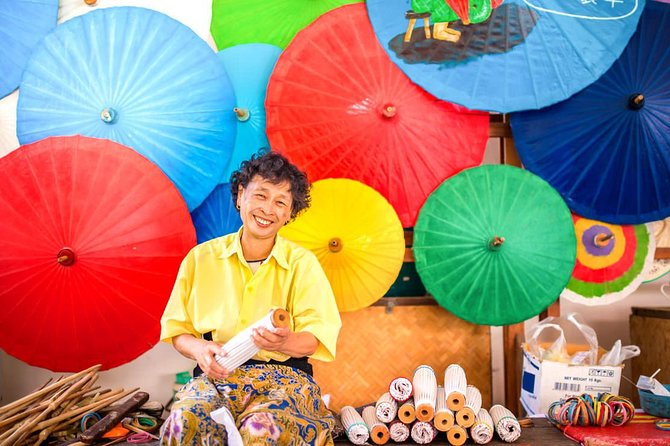
A maximum of 10 people is a useful limit for this kind of tour. Craft demonstrations often happen in front of a loom, carving bench, or worktable. In a large coach group, you may end up looking over shoulders or missing the explanation. A smaller party gives you a better chance to see the details and ask a quick question.
The guide is important here. Transport alone would get you to San Kamphaeng and Bo Sang, but it would not necessarily explain how the separate processes fit together. The guide’s role is to connect the stops, interpret what you are seeing, and keep the four-hour schedule moving.
One past account praised a guide whose name sounded like Ms Ooh lala and described the visit as a chance to see several businesses keeping older craft skills alive. Because guide assignments can change, you should not assume she will lead your departure. Still, the detail gives you a useful idea of the tour’s best quality: it can work well when the guide treats the workshops as working enterprises rather than quick photo stops.
Is $65 a fair price?
At $65 per person, this is not the cheapest way to see a market in Chiang Mai. You could visit some craft areas independently for less, especially if you already have transport and are comfortable arranging your own route.
The value improves if you want several stops in one morning. The fee includes an air-conditioned vehicle, hotel pickup and drop-off for selected central hotels, a guide, and access to a route that combines silk, wood, celadon, local design, and Saa-paper umbrellas. Hiring separate rides to San Kamphaeng and Bo Sang would also take planning and time.
The tour is less compelling for a serious shopper who wants to spend hours comparing prices. The schedule gives you about an hour at each main stop, so you will see a useful range but will not have unlimited browsing time. It is also not designed as a workshop course. You watch, learn, and shop if you wish.
The posted rating is 3.7 from three reviews, which is too small a sample to settle the question by itself. I would put more weight on the clear strengths and limits: easy transport, a modest group size, several craft traditions, and a factory-style setting that may include sales opportunities.
Who will enjoy this craft tour most
I would recommend it to you if you want a cultural morning outside the old city without giving up comfort. It suits first-time visitors who want an introduction to northern Thai crafts, couples looking for a lighter half-day activity, and families whose children can manage an hour of walking and watching at each stop.
It is also a good fit if you enjoy seeing how ordinary objects are made. Silk cloth, furniture, carved elephants, pottery, and paper umbrellas all become more interesting once you see the work behind them.
You may want another activity if your priority is architecture, temples, food, or long stretches of free time. The tour has a clear craft focus. It also includes commercial workshops, so anyone allergic to shopping stops should think twice.
Wear comfortable walking shoes. Most participants can take part, but children must be accompanied by an adult. The tour is near public transportation, though the included vehicle makes that less important for the morning itself.
Booking advice and cancellation terms
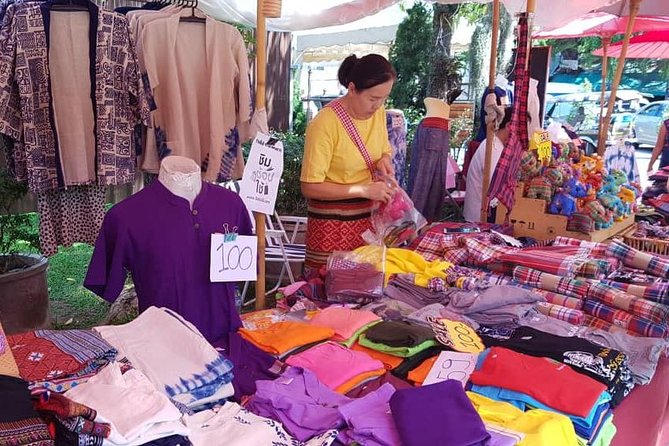
Confirmation is provided at booking, and the activity is often reserved well ahead of time, with an average booking lead of about 66 days. That suggests you should reserve early if your Chiang Mai dates are fixed, especially if the small group matters to you.
Free cancellation is available up to 24 hours before the 8:00 am start time for a full refund. Cancellations or changes made less than 24 hours ahead are not accepted for a refund, and the cutoff follows local Chiang Mai time.
Should you book it?
Book this tour if you want a tidy, guided introduction to Chiang Mai’s craft districts and value hotel transport more than complete independence. The strongest reasons are the mix of demonstrations, the maximum group size of 10, and the chance to see silk weaving, wood carving, celadon, and Saa-paper umbrellas in one morning.
Skip it if you want a museum-heavy visit, a hands-on class, or a full day devoted to shopping. For most visitors with a free morning, though, $65 is a reasonable price for an efficient route beyond central Chiang Mai, provided you understand that working craft centers usually include displays and sales areas.
FAQ
How long does the Chiang Mai handicraft tour last?
The tour lasts approximately four hours.
What time does the tour start?
The stated start time is 8:00 am.
Where does the tour visit?
It visits the San Kamphaeng craft district, Baan Jang Nak Museum of Elephant Wood Carvings, and the Umbrella Village in Bo Sang.
Is hotel pickup included?
Hotel pickup and drop-off are included for selected hotels in central Chiang Mai and the listed city-center areas.
Is there a pickup surcharge?
Yes. A 300 baht surcharge applies to hotels outside a 5-kilometer radius of the city center. It is payable on the day of the activity.
Can I join at a meeting point instead of using hotel pickup?
Yes. The stated meeting point is the McDonald’s at Chiang Mai Night Bazaar.
What is the maximum group size?
The tour has a maximum of 10 travelers.
Is transportation included?
Yes. The tour includes an air-conditioned vehicle.
Are children allowed on the tour?
Children can participate, but they must be accompanied by an adult.
Can I cancel for a full refund?
Yes, if you cancel at least 24 hours before the local start time. Cancellations or changes made less than 24 hours before the tour are not accepted for a refund.
Just added around Chiang Mai
- Chiang Rai Wonders: White, Blue & Red Temples and Hot Spring★ 5.0 · 3 reviews
- Chiang Rai White Temple Blue Temple and Hill Tribe Village Tour★ 3.5 · 3 reviews
- Private Chiang Mai City Tour including Wat Doi Suthep, Wat Suan Dok (SHA Plus)★ 5.0 · 3 reviews
- Workshop Making Herbal ball & herbal inhaler★ 4.3 · 3 reviews
- Phoenix Zipline Adventure Park – Chiang Mai Thrills★ 4.0 · 3 reviews
- Chiang Mai Mae Ping River Cruise and Thai Farmer House Visit★ 4.0 · 3 reviews
- Monk trails hike, Wat Phalat, Monk chanting, Wat Doi Suthep.★ 5.0 · 3 reviews
- Tok Sen Massage at Fah Lanna Spa in Chiang Mai★ 4.5 · 3 reviews
Tours, compared.


Cooking Class, Market & Thai Herbs Garden Tour
Read our review →
Elephant Sanctuary Feeding Program Half-Day Tour
Read our review →
Chiang Rai White Temple and Blue Temple Day Tour
Read our review →
White, Red/Black & Blue Temples Tour with Lunch
Read our review →