

Reviewed · ETHICAL ELEPHANT SANCTUARY VISITS
Chiang Mai: Elephant Sanctuary Feeding Program Half-Day Tour
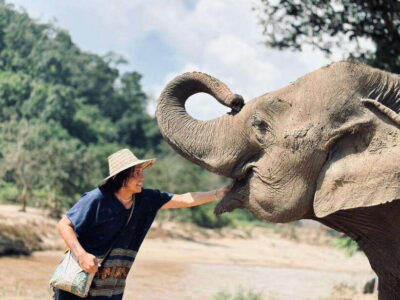
The best part of this Chiang Mai outing is the chance to meet elephants at close range without riding them. You help prepare food, feed them bananas and sugarcane, and follow them through a forest setting where their own choices shape the visit. The river stop is optional for the elephants, not a staged command.
I like the small-group feel and the care shown by the mahouts, who describe the elephants as individuals rather than props. I also like the useful mix of fun and learning: you hear about Asian elephant behavior, prepare herbal food for an older elephant, and get several feeding sessions instead of one quick photo stop.
The main drawback is the long road south of Chiang Mai, about 1.5 hours each way, plus walking between four activity areas. The half-day lasts five hours, and you can get very wet at the river, so this is not a soft, sit-down outing.
In This Review
- Key points to know before you book
- The trip south from Chiang Mai
- Meeting the sanctuary team
- A walk through the forest to the elephants
- Feeding bananas, sugarcane, and Napier grass
- Watching elephants behave on their own terms
- The river stop, and why you may get soaked
- What the $27 price really covers
- Who will enjoy this half-day visit
- What I would improve
- Should you book Pon Elephant Thailand?
- FAQ
- How long does the Chiang Mai elephant sanctuary tour last?
- Is hotel pickup included?
- Will I definitely bathe or swim with the elephants?
- Can I ride the elephants?
- What should I bring?
- Can I cancel the booking?
Key points to know before you book

- Four elephant stations: Feed and observe elephants at several points rather than gathering around one animal for the whole visit.
- A river visit with no forced bathing: Elephants may enter the water, but the schedule changes if they prefer not to.
- About five hours door to door: The sanctuary is south of Mae Wang, with a drive of roughly 1.5 hours from Chiang Mai.
- Practical elephant care: Learn about diet and help make herbal treats, including special food for an elderly elephant.
- No riding: The program prohibits riding and bases activities on what the elephants choose to do.
- Strong value at $27: The price includes fruit, water, insurance, a guide, and hotel transport if you select the pickup option.
The trip south from Chiang Mai
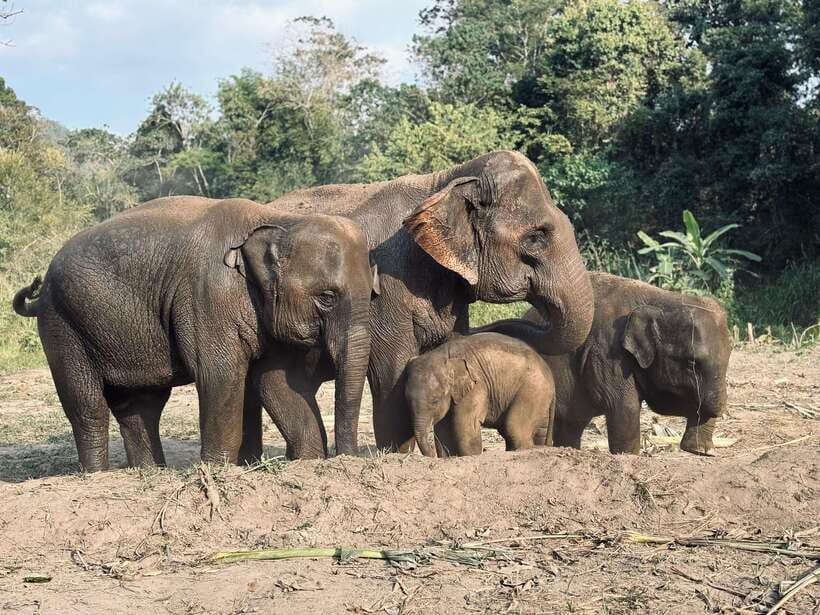
Pon Elephant Thailand is south of Mae Wang, outside the city. Getting there is part of the morning, with a drive of about 1.5 hours through hills, forest, and local farmland.
That travel time matters when you plan your day. This is advertised as a half-day activity, but the road journey uses a good share of those five hours. If you have a flight, a fixed appointment, or another tour afterward, leave a generous buffer. One visitor with a 3 p.m. flight found the team able to help with airport transport afterward, but you should not build your whole schedule around an unconfirmed connection.
Hotel pickup is optional. If you choose it, be in the lobby 5 to 10 minutes early, since the driver waits only five minutes after the scheduled time. Meeting points vary by the option you book, so check that detail carefully rather than assuming every departure leaves from the same place.
The included transport receives a strong 87 percent perfect rating, and the available descriptions point to clean, spacious, comfortable vans. A small group can make the ride easier, though the size depends on your booking. One group counted seven people, while the sanctuary activities may join several groups together.
More elephant sanctuary visits in Chiang Mai:
- Chiang Mai: Elephant Sanctuary, Waterfall & Bamboo Rafting
★ 4.9 · 9,160 reviews - Chiang Mai: Elephant Sanctuary & Waterfall Group Tour
★ 4.9 · 5,780 reviews - Chiang Mai: Elephant Sanctuary, Long Neck & Sticky Waterfall
★ 4.9 · 2,262 reviews
Meeting the sanctuary team
On arrival, you receive an introduction to the habitat, the elephants’ habits, their background, and safe ways to behave around them. The guides are central to the experience. Names that come up in the day’s teams include Tuto, Toto, Pat, Jackie, Pan, Saki, Oom, Lek, Jacky, King Kong, and Mr. Hod.
Do not expect one guide to lead every minute in a formal single-file tour. At times, each of the four stations has its own presenter or handler. That setup can work well because the person at each stop focuses on the elephant activity in front of you, though it may feel less like a traditional guided tour.
English and Thai are offered. The guides explain feeding, sleeping, behavior, and the sanctuary’s work with clear, friendly commentary. Pat and Jackie receive particular praise for making information easy to follow, while Tuto and Toto are noted for mixing facts with humor. The quality of the explanation matters here. Without it, feeding an elephant is only a photo opportunity. With it, you begin to understand why food, distance, body language, and routine matter.
A walk through the forest to the elephants
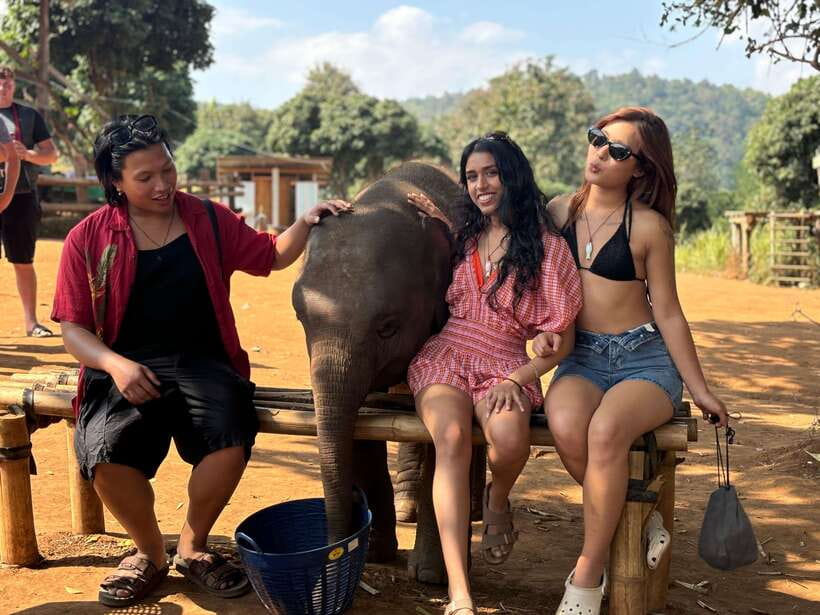
After the briefing, you take a nature walk with the rangers. The setting is a forested area with space for the elephants to move around. The sanctuary describes local hill tribes and nearby villages as part of the wider effort, with elephant care linked to protecting and maintaining the community forest.
The walking is not extreme, but it is real. You move between the four stations, and one route includes a wobbly bridge. It is described as safe, but it may make you pause if you dislike uneven or moving surfaces. One group with elderly parents managed the walk, while another found the activity a little long and tiring.
This is not the best choice for someone with a low fitness level, back trouble, recent surgery, epilepsy, limited mobility, or a need for wheelchair access. Insect allergies and animal allergies are also listed as concerns. The forest setting means you should use biodegradable insect repellent and sunscreen.
Feeding bananas, sugarcane, and Napier grass
The feeding sessions are the heart of the visit. You may offer the elephants Napier grass, sugarcane, bananas, and other fruit supplied by the sanctuary. Several feeding areas give you repeated contact with different animals, rather than one rushed turn at a single feeding trough.
The close distance is exciting, but follow the staff’s instructions closely. An elephant’s trunk is strong and fast, even when the animal is being gentle. Let the handlers show you where to stand and how to offer food. The rules also make clear that you should not feed animals outside the planned activity.
The staff’s familiarity with the elephants adds a useful layer. They know individual personalities, ages, and dietary needs. The group may include young elephants and older animals, with one description noting ages from a one-year-old to a 74-year-old. Another mentions a rescued bull among mostly domestic elephants.
You can also help prepare herbal treats, sometimes described as vitamin balls, for an elderly elephant. This is a small task, but it gives you a better sense of care work. The sanctuary is not just offering bananas for photographs. It is showing how food can be prepared for different needs.
A few more Chiang Mai half-days to weigh up
- Half-Day Thai Cooking Class at Organic Farm in Chiang Mai
★ 5.0 · 19,087 reviews - Chiang Mai: HALF-DAY COOKING COURSE at a Thai Cooking Farm
★ 4.9 · 705 reviews - Half-Day Elephant Experience at Rantong
★ 5.0 · 625 reviews - Chiang Mai: Elephant Dream Project Sanctuary – Half-Day
★ 4.9 · 552 reviews
Watching elephants behave on their own terms
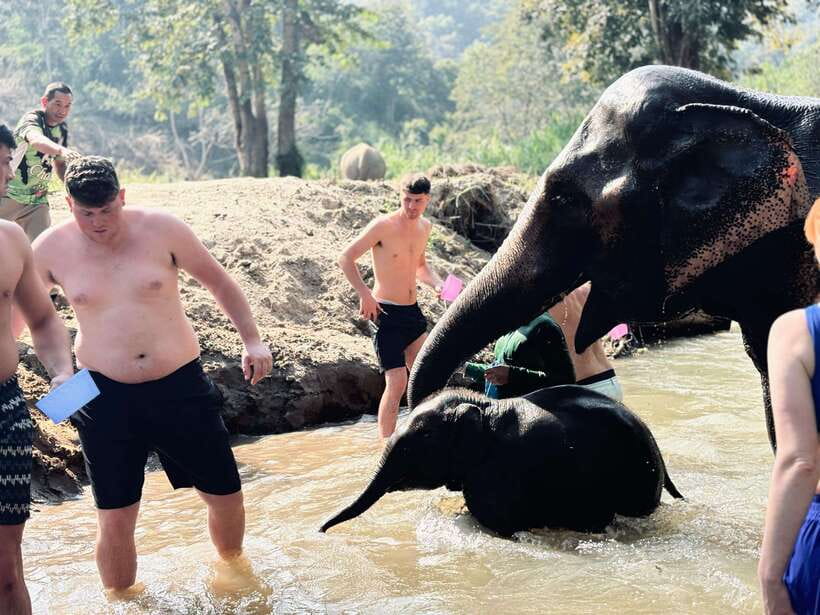
The most important ethical point is simple: activities depend on the elephants. The sanctuary states that it does not force them to perform, swim, or bathe. If an elephant does not want to enter the river, that part of the plan can change at short notice.
You should treat this as a strength, but also adjust your expectations. Promotional photos may suggest a guaranteed water encounter. The actual experience is less predictable. You might see elephants by the river, splash with them, or help wash them. You might also spend more time feeding and watching if they choose to stay out of the water.
The no-riding rule is clear, and riding is not allowed. That matters if you are comparing elephant programs around Chiang Mai. A close encounter does not automatically mean a good encounter, so look for the practical signs here: no riding, no forced bathing, staff instruction, space to roam, and attention to food and behavior.
The sanctuary is described as giving its elephants more than 60 acres to roam. You will not inspect every acre during a half-day visit, but the open forest setting is a major part of the appeal. The elephants are not presented only at a fixed platform. You follow them and watch what they do.
The river stop, and why you may get soaked
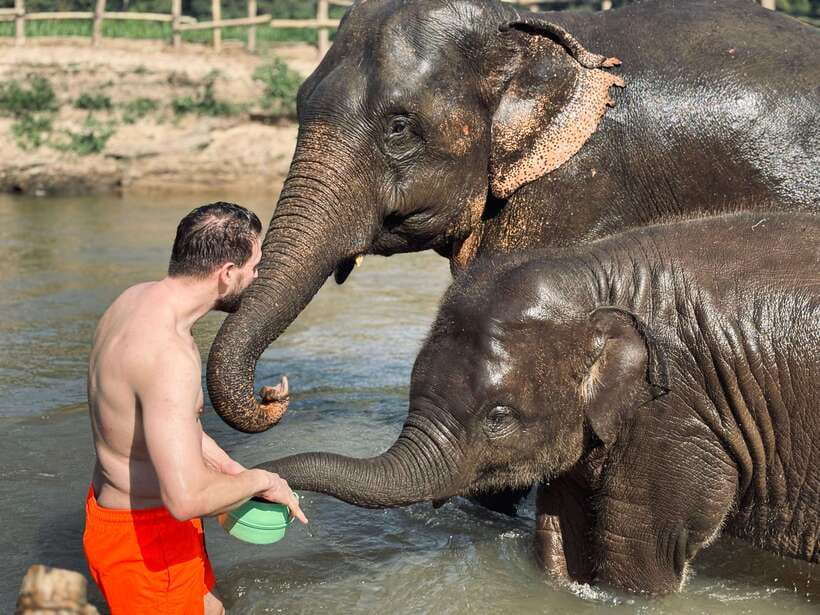
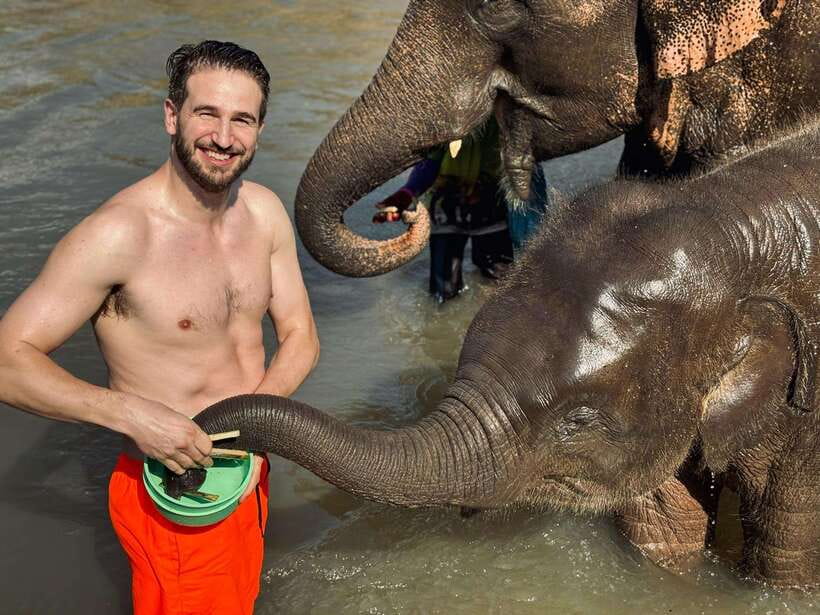
The river visit usually brings the most playful energy. If the elephants choose to enter, you may help wash them, splash water, and stand in the shallows with the group. The activity can be calm and intimate, but it can also turn into a full water fight. Bring beachwear, clothes that can get dirty, and a complete change of clothes.
You need to bring your own towel. Drinking water is included, but towels and replacement clothing are not. A waterproof phone pouch would be sensible, though only bring a camera or smartphone you can protect from water.
The river is not a guaranteed bathing pool. That is worth repeating because it affects the value of the tour for different people. If your main goal is to swim with elephants, you may be disappointed if the animals stay on land. If your main goal is to see respectful care and natural behavior, the flexible plan is more reassuring.
What the $27 price really covers
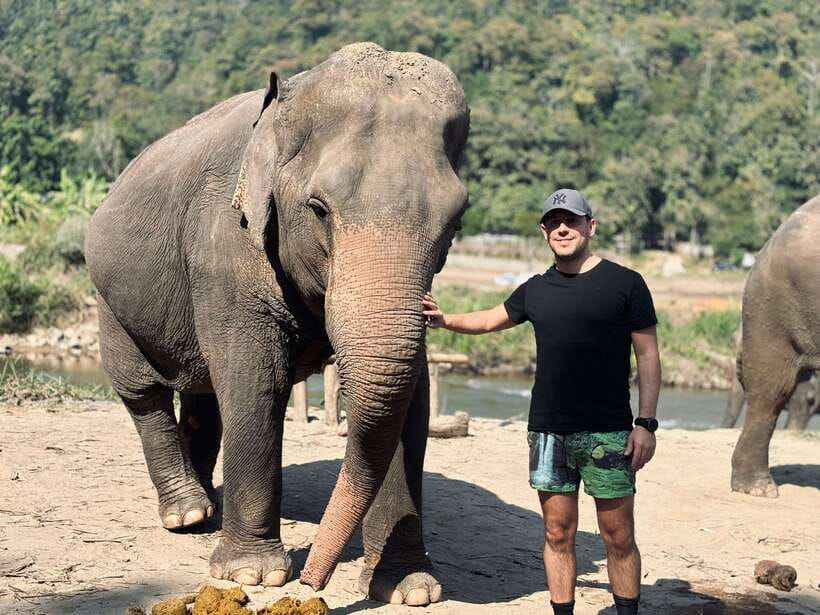
At $27 per person, this is inexpensive for a five-hour Chiang Mai excursion that includes a guide, insurance, elephant fruit, drinking water, and hotel transport when that option is selected. The transport alone would otherwise take time and planning, especially for a site well outside the city.
One booking without transfer was described as costing 800 baht, but prices and options can change. Check whether your selected rate includes pickup before comparing it with other programs. A cheaper self-arranged option may suit you if you already have transport, while the pickup version is easier if you want a single organized plan.
The price is particularly good if you value several feeding opportunities and a proper explanation of elephant care. It is less compelling if you want a short visit with little walking, or if you expect a guaranteed bath and a private encounter.
Free cancellation is available up to 24 hours before the activity for a full refund, and you can reserve now and pay later. Weather and other force majeure events can change the schedule. Opening hours and departure times can also change, so check availability for the exact day.
Who will enjoy this half-day visit
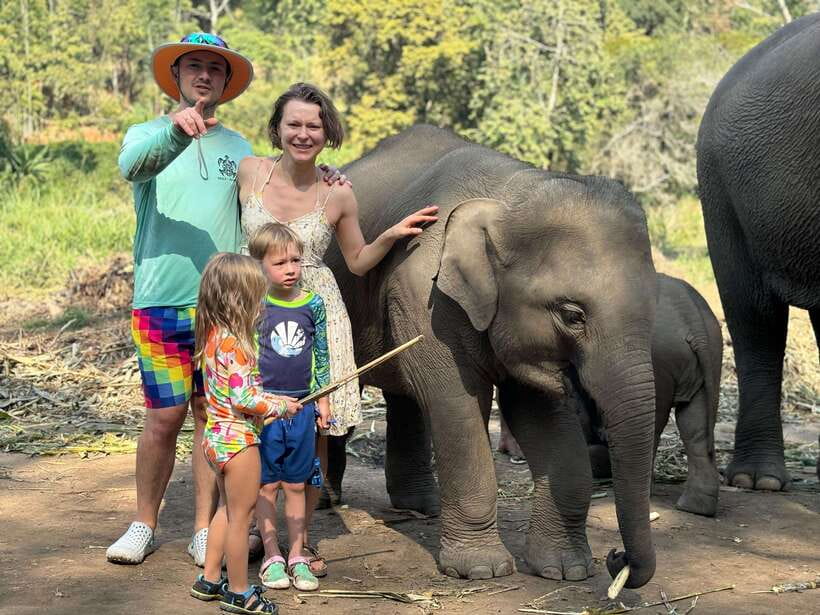
This works well for families, couples, first-time elephant visitors, and anyone with only part of a day in Chiang Mai. Guides are described as patient with children, and one family with a six-month-old baby received extra help from the staff while the adults spent time with the elephants.
It can also suit older people who can manage light walking, though the bridge, forest paths, and heat deserve attention. Ask yourself honestly how comfortable you are walking outdoors and standing around for several hours.
Bring comfortable clothes, beachwear, biodegradable sunscreen, insect repellent, cash, a charged phone, and a passport or accepted copy. Wear clothing that can get dirty. Do not bring alcohol, drugs, weapons, sharp objects, fireworks, explosives, or anything used to start a fire. Fishing, littering, skateboards, skates, party groups, and animal riding are also prohibited.
What I would improve
The biggest practical weakness is timing information. The drive takes about 1.5 hours, but exact pickup and return times depend on the option and starting time. I would want those details before committing the rest of my day.
The program may also feel busy at the sanctuary because groups can join together at the activity stations. On the other hand, this format gives you several guides and keeps each part moving. You should not expect a private elephant encounter unless your booking specifically says so.
Walking and weather are the other tradeoffs. The setting is natural rather than polished, and paths can be uneven. Rain or other conditions can alter the itinerary. That is part of visiting a working forest sanctuary, but it is not ideal for someone seeking a controlled, air-conditioned attraction.
Should you book Pon Elephant Thailand?
I would book this tour if you want close contact with elephants but do not want riding, forced tricks, or a guaranteed bathing performance. The strongest features are the repeated feeding stops, the explanations about individual animals, the herbal food preparation, and the stated decision to let the elephants choose whether to enter the river.
I would skip it if you have serious mobility limits, a low tolerance for a long road transfer, or a fixed afternoon appointment that cannot move. I would also choose another plan if your only goal is swimming with elephants, since the river activity depends on the animals.
For most visitors, $27 is a fair price for a full half-day with transport available, food for the elephants, water, insurance, and a setting that links animal care with local community forest protection. Pack a dry outfit, keep your schedule loose, and let the elephants set the pace.
FAQ
How long does the Chiang Mai elephant sanctuary tour last?
The activity lasts five hours, or 330 minutes. Travel to the sanctuary south of Mae Wang takes about 1.5 hours through hills, forest, and local farms.
Is hotel pickup included?
Hotel pickup and drop-off are included only if you select that option when booking. The meeting point can vary, so check the details for your chosen option.
Will I definitely bathe or swim with the elephants?
No. The elephants choose whether to bathe in the river, and the itinerary may change if they do not enter the water. You may help wash them and splash with them when they choose to participate.
Can I ride the elephants?
No. Riding the elephants is not allowed on this activity.
What should I bring?
Bring a change of clothes, a towel, a camera or charged smartphone, comfortable clothing, beachwear, cash, biodegradable sunscreen, biodegradable insect repellent, and a passport or accepted copy. Wear clothes that can get dirty.
Can I cancel the booking?
You can cancel up to 24 hours in advance for a full refund. A reserve-now-and-pay-later option is also available.
Just added around Chiang Mai
- Chiang Rai Wonders: White, Blue & Red Temples and Hot Spring★ 5.0 · 3 reviews
- Chiang Rai White Temple Blue Temple and Hill Tribe Village Tour★ 3.5 · 3 reviews
- Private Chiang Mai City Tour including Wat Doi Suthep, Wat Suan Dok (SHA Plus)★ 5.0 · 3 reviews
- Workshop Making Herbal ball & herbal inhaler★ 4.3 · 3 reviews
- Chiang Mai Mae Ping River Cruise and Thai Farmer House Visit★ 4.0 · 3 reviews
- Phoenix Zipline Adventure Park – Chiang Mai Thrills★ 4.0 · 3 reviews
- Monk trails hike, Wat Phalat, Monk chanting, Wat Doi Suthep.★ 5.0 · 3 reviews
- Tok Sen Massage at Fah Lanna Spa in Chiang Mai★ 4.5 · 3 reviews
Ethical Elephant Sanctuary Visits, compared.

Elephant Sanctuary, Waterfall & Bamboo Rafting
Read our review →
Elephant Sanctuary, Long Neck & Sticky Waterfall
Read our review →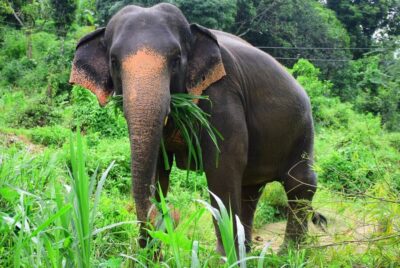

3-in-1: Doi Inthanon Tour, Elephant Sanctuary, and Trekking Trail
Read our review →
Chiang Mai Elephant Sanctuary, Bamboo Rafting and Waterfall Tour
Read our review →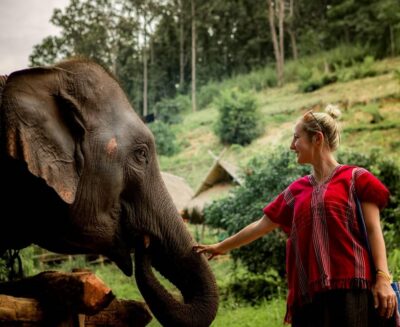

Browse the lists this tour appears in