
Reviewed · THAI COOKING CLASSES
Chiang Mai: Authentic Cooking Class with Market & Farm Visit
The best part of Grandma’s Home Cooking School is that the Thai meal begins before you reach the stove. You visit a local market, walk through an organic farm, pick mushrooms, smell herbs, collect eggs, and then cook what you have just learned about. I like the farm-to-kitchen connection, and I like having your own station rather than merely watching a chef work. The chance to make Khao Soi and curry paste from scratch adds real Chiang Mai flavor.
The main consideration is size. This is a polished operation with several kitchen bungalows, not a tiny lesson in somebody’s private home. The instructors keep things friendly and personal, but you should expect an organized cooking school with multiple groups. Pickup communication can also be a little unclear, so confirm the time and wait in your hotel lobby.
In This Review
- Key points at a glance
- From Chiang Mai market to Grandma’s farm
- Chickens, mushrooms, and herbs in the countryside
- Making coconut milk the old-fashioned way
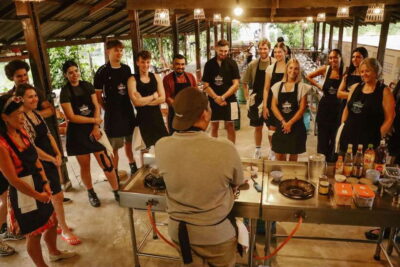
- Cooking Thai food at your own station
- What you actually eat
- Choosing morning, afternoon, evening, or full day
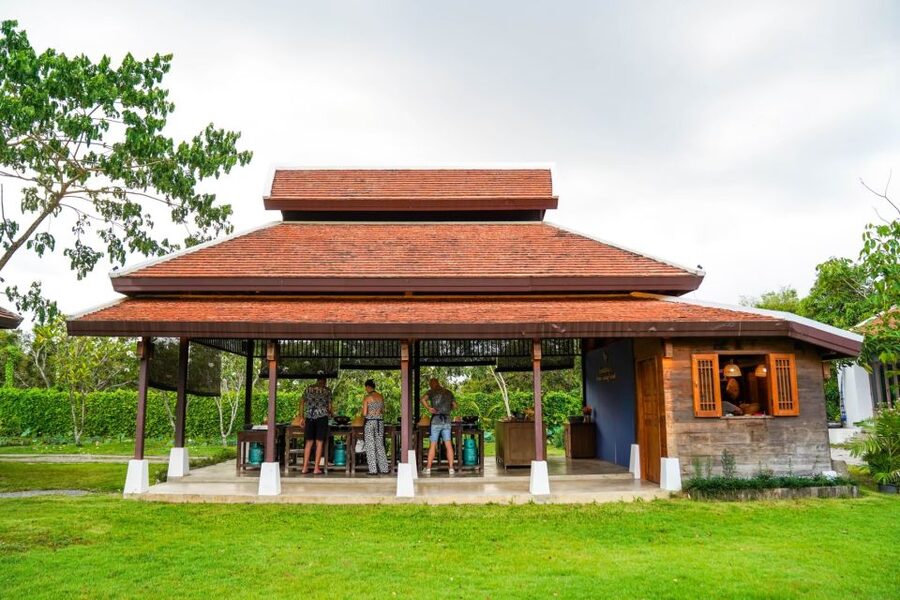
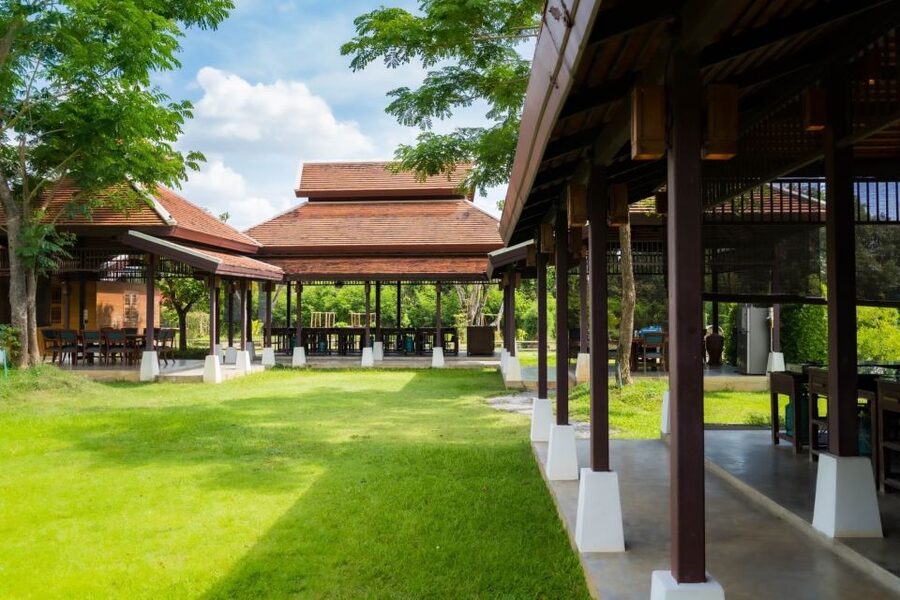
- The setting is polished, not rustic
- Is $34 good value?
- Who will enjoy this class most?
- Practical advice before you book
- Should you book Grandma’s Home Cooking School?
- FAQ
- How long does the Chiang Mai cooking class last?
- Is hotel pickup included?
- Does every class include a market visit?
- Can I join if I am vegetarian or have food allergies?
- Do children get their own cooking station?
- Is coconut milk preparation included in every session?
Key points at a glance
- Market first, cooking later: Morning, afternoon, and full-day sessions visit a local market before heading to the farm.
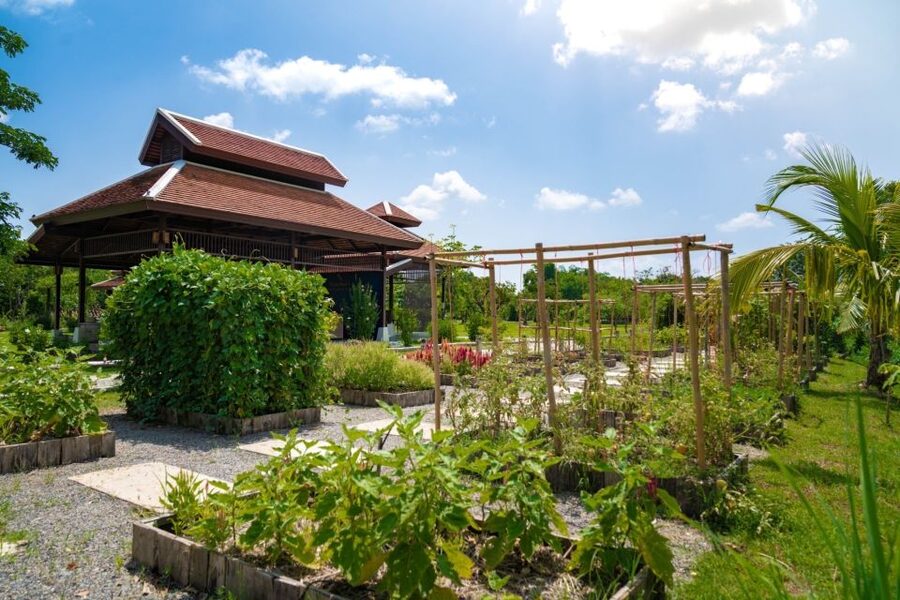
- A real farm stop: Walk among rice fields, herbs, vegetables, fruit, chickens, and a distinctive mushroom hut.
- Your own cooking station: Follow each dish step by step instead of standing behind a demonstration counter.
- Chiang Mai’s signature dish: Khao Soi is part of the menu, along with Pad Thai, curries, soups, Som Tam, and spring rolls.
- Good dietary flexibility: Vegetarian, Halal, gluten-free, allergy-sensitive, and other special menus can be arranged in advance.
- Choose your pace: Morning, afternoon, evening, and full-day options range from about 210 minutes to seven hours.
From Chiang Mai market to Grandma’s farm
The outing begins with hotel pickup in an air-conditioned van for properties within five kilometers of central Chiang Mai. The ride matters more than it may sound. Cooking schools outside the old center can be awkward to reach on your own, and an arranged transfer removes the need to bargain with a driver or work out a rural address.
For the morning, afternoon, and full-day options, your first stop is a local market. An English-speaking instructor introduces the ingredients used in Thai cooking and explains how they fit into familiar dishes. This is more useful than a quick food walk with no follow-up, since you soon handle many of the same flavors at the farm and cooking station.
Look for the practical lessons: the herbs that give Thai soups their smell, the vegetables used in curry, and the ingredients that make a dish taste sweet, sour, salty, or hot. You will not just collect a list of unfamiliar names. You begin to understand what you are likely to taste in Chiang Mai restaurants and what you might later look for in a market at home.
The market is not included in the evening option, so choose your session with that in mind. An evening class is still a strong choice if you want to cook dinner and enjoy the farm in the softer late-day light, but the morning and afternoon programs offer more ingredient context.
More Thai cooking classes in Chiang Mai:
- Half-Day Thai Cooking Class at Organic Farm in Chiang Mai
★ 5.0 · 19,087 reviews - Chiang Mai: Cooking Class, Market & Thai Herbs Garden Tour
★ 4.9 · 4,824 reviews - Thai and Akha Cooking Class in Chiang Mai
★ 5.0 · 4,358 reviews
Chickens, mushrooms, and herbs in the countryside
At Grandma’s farm, the pace changes. Rice fields and open-air spaces replace the traffic and shopfronts of Chiang Mai. The farm walk gives the class its most distinctive touch, because you are not simply handed premeasured ingredients and told to cook.
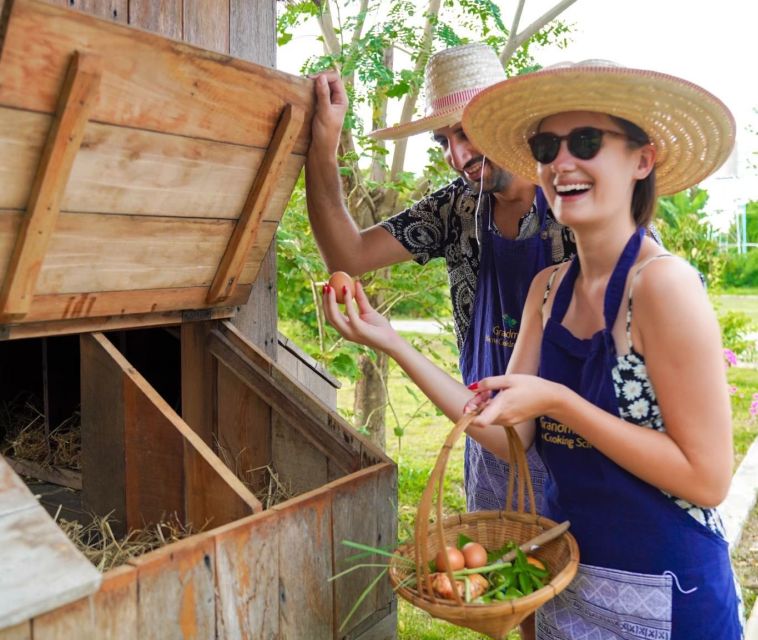
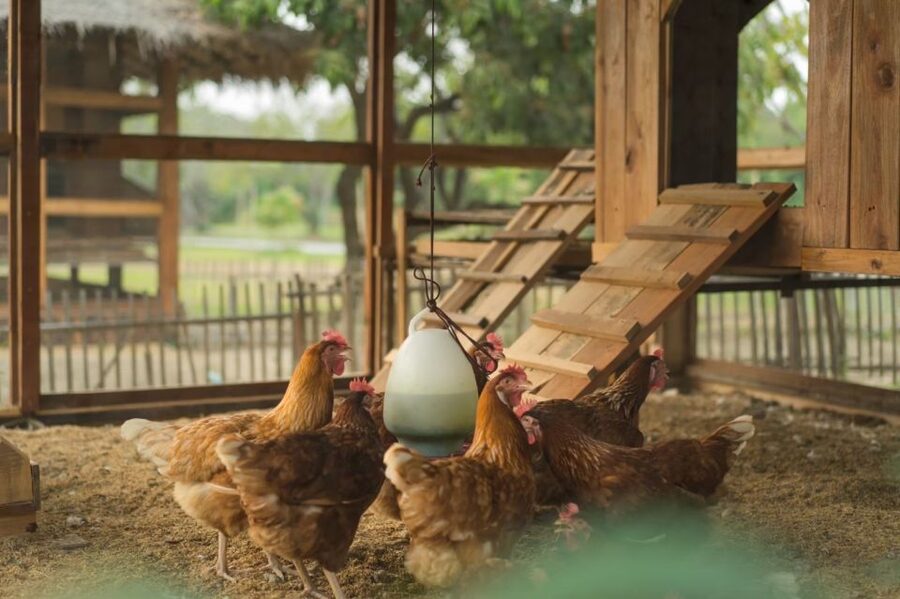
You can feed the chickens, collect fresh eggs, and even give them a gentle hug. That is a small activity, but it helps make the place feel like a working family property rather than a standard urban cooking studio. It also gives children something to do between the market and the meal, although children under 10 are treated as visitors and do not receive their own station unless booked at the adult price.
The mushroom hut is another memorable stop. You may pick mushrooms if they are ready, then learn about the herbs, vegetables, and fruits growing around the property. Vegetable picking depends on what is available that day, so do not expect a guaranteed harvest of every ingredient on the menu. Chicken feeding is always available, while farm produce changes with conditions.
The farm is a good reason to wear comfortable shoes and bring a sun hat. You will be walking outdoors, and the setting is peaceful but not designed as a formal garden tour. Bring water concerns down a notch, since drinking water is available throughout the experience, along with a herbal drink during class.
Making coconut milk the old-fashioned way
The full-day option adds a traditional coconut milk lesson using a wooden coconut grater. This is one of the strongest reasons to choose the longest program if you want more than a standard half-day cooking class.
Most visitors know coconut milk as a carton or can on a supermarket shelf. Here, the process connects the ingredient to an older kitchen practice and helps explain why fresh coconut milk tastes and behaves differently in Thai food. It also adds a hands-on task before the main cooking begins.
The full-day schedule is the most food-heavy choice. You cook several dishes and eat each one, so plan a light breakfast or lunch rather than arriving after a large meal. Several dishes mean generous portions, and the class can leave you very full.
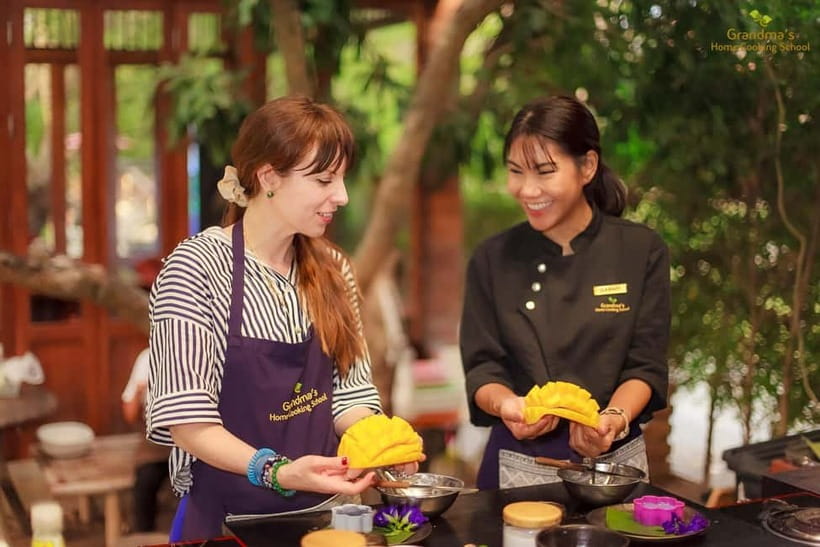
The full-day program also teaches mango sticky rice as part of the cooking, rather than simply serving it as a prepared dessert. That extra instruction may matter to you if dessert techniques are as appealing as curry and noodles.
Cooking Thai food at your own station
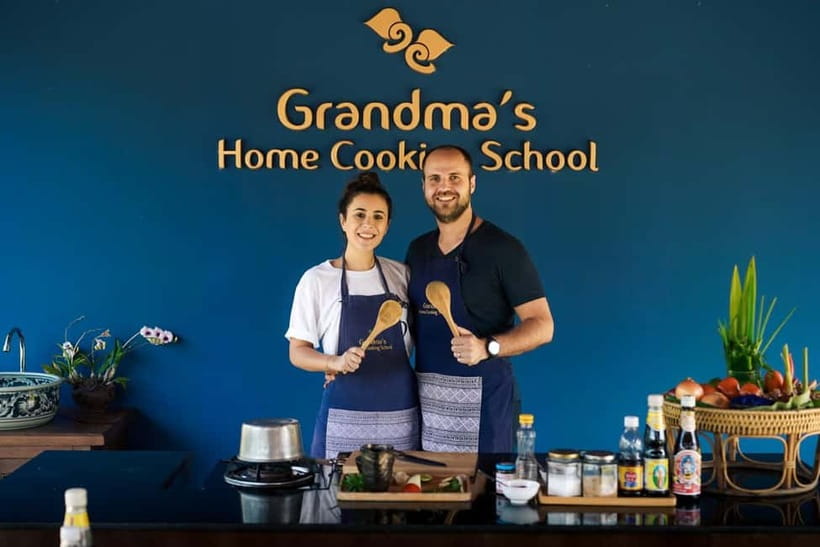
Once you reach the open-air kitchen, each participant chooses a menu before cooking starts. The exact selection can vary, but the offered dishes include Pad Thai, Pad Kra Prao, Green Curry, Red Curry, Panang Curry, Tom Yum, Tom Kha, Som Tam, spring rolls, mango sticky rice, and Khao Soi.
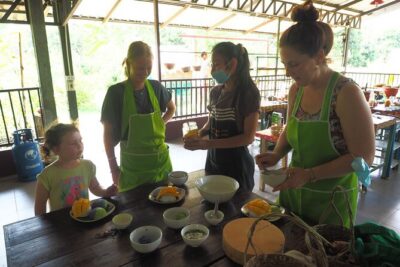
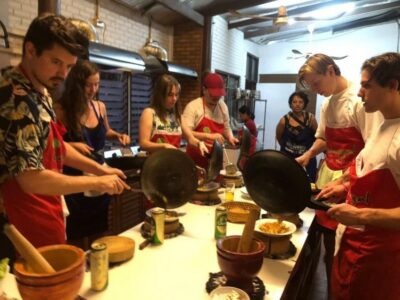
Your cooking station is the heart of the activity. An instructor explains the ingredients and method, then leads you through the preparation step by step. You are not expected to have cooking experience, and the format works well for beginners because you can follow along at your own pace.
The curry paste lesson is especially worthwhile. You pound the ingredients with a mortar and pestle rather than relying on a ready-made jar. The work takes more effort, but it shows how herbs, chilies, aromatics, and spices combine into the base of a curry. You also gain a better feel for how Thai cooks balance strong flavors.
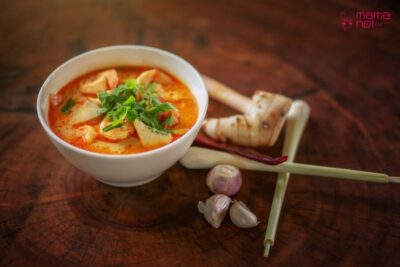
Khao Soi is the dish to watch for. Chiang Mai’s signature curry noodle soup combines a creamy curry base with noodles and garnishes, and learning it in the city where it is associated gives the class a clear local identity. If you have eaten Khao Soi in town and want to understand what makes it different from an ordinary noodle soup, this is the menu item I would prioritize.
The class is not only about copying a recipe. Instructors explain ingredients, sauces, and the background of some dishes. Guides such as Kiki, Jimmie, Patty, Roger, Joyzaa, Bryan, and Le Vin have been singled out for clear instruction, humor, energy, and care with special diets. Your instructor will depend on the session, but the teaching style is designed to be friendly rather than formal.
Some teachers use plenty of jokes. Most people will find that keeps the class moving, though you may prefer a quieter lesson if you want a serious culinary workshop. The instruction itself remains practical and easy to follow.
Same city, a completely different sort of day:
- Chiang Mai: Elephant Sanctuary, Waterfall & Bamboo Rafting
★ 4.9 · 9,160 reviews - Chiang Mai: Doi Inthanon National Park Eco-Friendly Tour
★ 4.6 · 6,667 reviews - Chiang Mai: Elephant Sanctuary & Waterfall Group Tour
★ 4.9 · 5,780 reviews - Chiang Mai: Chiang Rai Temples, Karen Tribe and Hot Springs
★ 4.7 · 5,401 reviews
What you actually eat
You cook and eat several dishes, rather than preparing one recipe and watching the rest. A half-day class commonly includes a soup, Pad Thai, a curry of your choice, and sometimes another dish such as spring rolls or Som Tam. The evening option is a useful way to combine an activity with dinner, with several courses prepared and eaten on site.
The portions are not token tastes. You will have a proper meal, and the repeated advice is simple: do not eat much beforehand. That is useful planning, not an exaggeration. The food is served fresh from your own work, and the format gives you a chance to adjust flavors to your preference.
Mango sticky rice is served in morning and afternoon classes. In the full-day and evening sessions, it is taught as part of the cooking. If dessert matters to you, check the session details before booking so you know if you will make it or simply receive it.
You also receive a welcome drink, with a choice of Thai milk tea, Thai lemon tea, or butterfly pea flower tea. A herbal drink and unlimited drinking water are included. Alcohol is not included, though it can be purchased.
Choosing morning, afternoon, evening, or full day
The class length ranges from about 210 minutes to seven hours, depending on the option. Each format has a different feel.
Morning: This is a good fit if you want to visit the market, cook before the heat of the day builds, and keep your afternoon free. Mango sticky rice is served, and the schedule gives you a food-focused start without using your entire day.
Afternoon: This offers the market and farm, then turns the cooking into a late lunch or early evening meal. It works well if you have a slow morning or want to pair the class with an early start elsewhere.
Evening: Choose this for sunset light, a relaxed farm setting, and dinner in one outing. The evening option does not include the market tour, but cooking as the light fades can be one of the most atmospheric versions. Mango sticky rice is taught hands-on in this session.
Full day: This is the best choice for serious food fans. You get the market, more time at the farm, coconut milk preparation, a larger cooking program, and hands-on mango sticky rice. It is also the option most likely to feel like a complete food day rather than a short activity.
The class can accommodate a range of food needs, but tell the school before the session begins. Vegetarian and Halal dishes are available, and the kitchen can adjust for gluten-free diets, allergies, and other special requirements. Gluten-free soy sauce and oyster sauce have been provided for participants who needed them, and gluten-free spring rolls may be possible with advance notice.
The setting is polished, not rustic
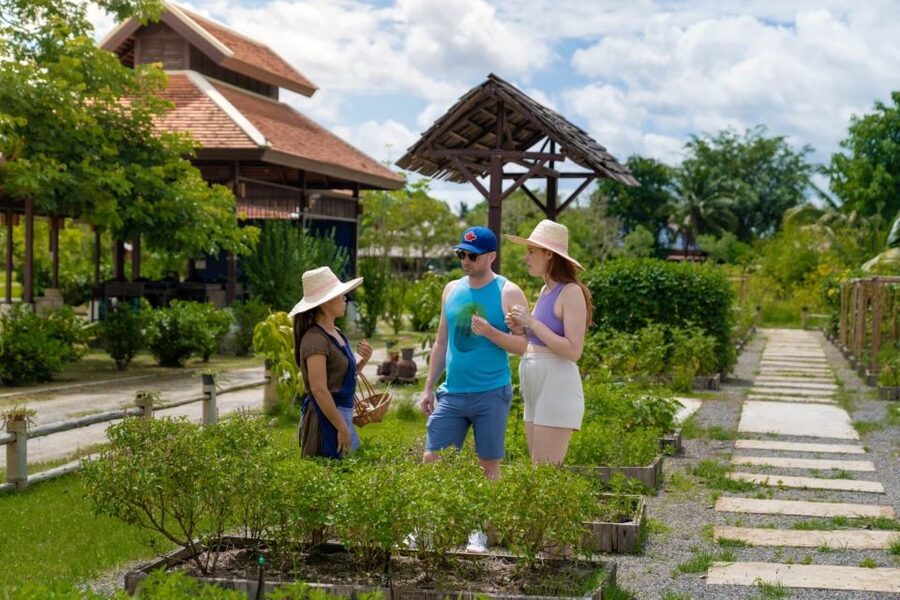
The outdoor kitchen and farm grounds are attractive, clean, and well organized. Assistants keep ingredients coming and clear used dishes, which means you can focus on cooking instead of washing up between every course.
That efficiency has a tradeoff. One description of the property notes roughly 10 kitchen bungalows, each able to accommodate about 10 people. So the school feels more like a well-run cooking center than a small family kitchen with a handful of students.
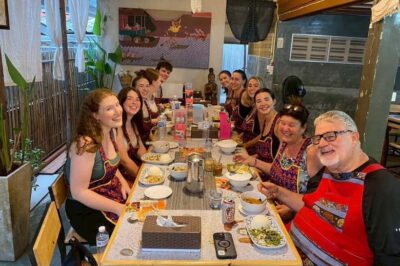
I do not see that as a dealbreaker. The instructors still work directly with each person, and having your own cooking station adds independence. But if you are seeking a very private lesson with one chef and two students, this is not that kind of experience. Book it for the combination of good organization, attractive grounds, fresh ingredients, and active participation.
Photography is also part of the experience in at least some sessions, with photos provided free of charge. The farm, chickens, cooking stations, and evening light give you plenty to document without turning the class into a photo stop.
Is $34 good value?
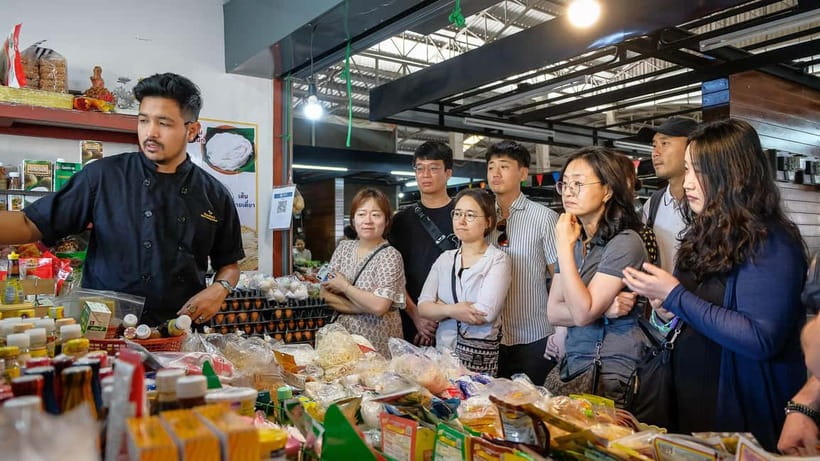
At about $34 per person, the price covers more than a cooking lesson. You receive hotel transfers within the central pickup zone, a market visit on most schedules, the farm tour, multiple dishes, drinks, a personal station, and a digital recipe e-book.
The transport alone adds practical value if you do not want to arrange a trip into the countryside. The farm visit also gives the class something many city-based cooking lessons lack. You see ingredients growing, learn where they fit in Thai food, and then use them in a meal.
The strongest value comes if you eat everything prepared. A full-day program includes enough food to replace several meals, while a half-day or evening class can cover a substantial lunch or dinner. At this price, the experience suits people who want both an activity and a meal, not just a demonstration.
There are a few limits. Pickup is free only within five kilometers of central Chiang Mai. If your hotel is farther out, you may need to meet the van nearby or pay a small extra charge. One person found the van a little snug, and another had some uncertainty about the pickup time, so confirm the meeting details and be ready in the lobby.
The recipe e-book is a useful souvenir, although make sure the QR code or download link works before you leave. A technical problem with the recipe access has occurred, and it is easier to resolve on the day than after returning home.
Who will enjoy this class most?
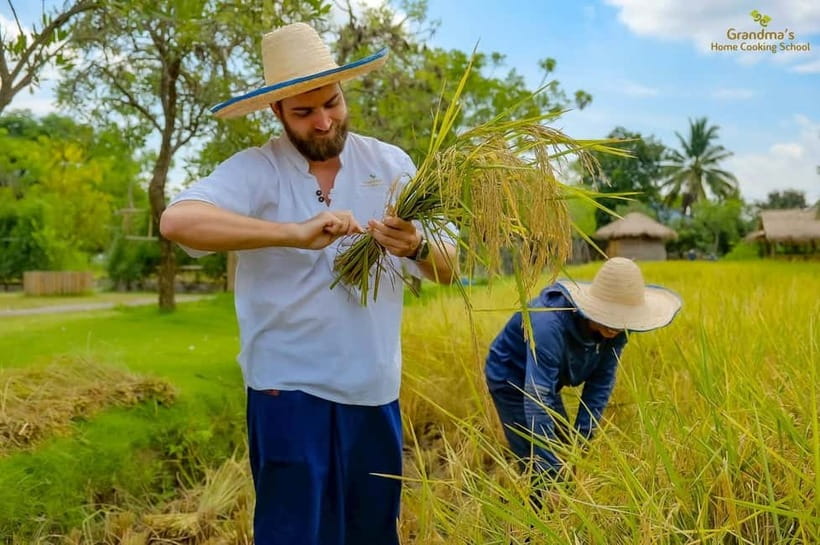
I would choose this for first-time visitors who want a clearer understanding of Thai food than restaurant meals alone can provide. It is also a good match for people who cook at home, since the recipes and curry-paste method give you something practical to repeat.
Families can enjoy the farm, chickens, and open-air setting, especially with a guide who is comfortable around children. Just remember that children under 10 do not receive their own station unless you book them at the adult rate.
Couples may prefer the evening option, especially if they want a shared dinner and a sunset setting. Honeymooners have used it as a memorable food activity, and the relaxed format gives you plenty of time to talk while you prepare the dishes.
This is less suitable if you dislike group activities, walking outdoors, strong flavors, or eating a large meal. It is also not the best pick for someone who wants a tightly focused professional chef lesson with advanced techniques. The emphasis is on accessible Thai cooking, cultural context, and having a good time.
Practical advice before you book
Wear shoes that can handle a farm walk, and bring a sun hat. Comfortable clothing helps, especially in the open-air kitchen.
Tell the school about vegetarian, Halal, gluten-free, allergy-related, or other dietary needs before the class starts. Do not wait until you are sitting at the stove, since the team may need to adjust ingredients in advance.
Pick your dishes carefully. Each person chooses a menu at the beginning, so think about whether you want Khao Soi, a curry, Pad Thai, soup, Som Tam, or spring rolls. If you are unsure, ask the instructor which dishes best show off Chiang Mai cooking.
Leave room in your stomach. You will cook a lot and eat what you make. The full-day option especially calls for a light meal beforehand.
The experience has free cancellation up to 24 hours before the start, and you can reserve while paying later. That helps if your Chiang Mai schedule is still shifting. Pickup is generally around 3:30 PM to 4:00 PM for the evening arrangement, but check the confirmed time for your chosen session.
Should you book Grandma’s Home Cooking School?
Yes, if you want a hands-on introduction to Thai food with more substance than a recipe demonstration. The market, farm, chickens, mushrooms, curry paste, and Khao Soi give the experience a clear sense of place. The $34 price is strong value when you include transport, drinks, several dishes, and the recipe book.
Choose the full day if cooking is a main interest and you want the coconut milk lesson. Choose evening if you want dinner and attractive late-day light. Pick morning or afternoon if the market matters most.
I would not book it expecting a tiny, private class. You are joining a professional operation with several cooking areas. For most people, that organization is a benefit. You get clear instruction, plenty of food, practical recipes, and a pleasant setting without paying a luxury price.
FAQ
How long does the Chiang Mai cooking class last?
The options range from about 210 minutes to seven hours. The exact length depends on whether you choose the morning, afternoon, evening, or full-day session.
Is hotel pickup included?
Free pickup and drop-off are included for hotels within five kilometers of Chiang Mai city center. Hotels outside that area may use a nearby meeting point or incur a small extra charge.
Does every class include a market visit?
Morning, afternoon, and full-day tours include the market visit. The evening option spends extra time at the farm instead and does not include the market tour.
Can I join if I am vegetarian or have food allergies?
Yes. Vegetarian and Halal choices are available, and the school can adjust ingredients for gluten-free diets, allergies, and other dietary needs. Tell the school before the class begins.
Do children get their own cooking station?
Children under 10 are treated as visitors and do not receive their own station. They can cook with their parents. If you want a child under 10 to have a personal station, book that child at the adult price.
Is coconut milk preparation included in every session?
No. Making coconut milk with a traditional wooden coconut grater is included only with the full-day option.
More Shopping Tours in Chiang Mai
- Evening Cooking Class in Organic Farm with Local Market Tour
★ 5.0 · 394 reviews - Chiang Mai: Elephants, Sticky Waterfalls, Market and Temple
★ 4.9 · 227 reviews - Cooking Morning Class Chiang Mai Visit Organic Garden and Market
★ 5.0 · 211 reviews - Chiang Mai Temples and Market Tuk-Tuk Evening Night Tour
★ 4.5 · 201 reviews
More Markets in Chiang Mai
- Chiang Mai: Cooking Class with Market and Pickup
★ 4.9 · 1,365 reviews - Chiang Mai: Evening Cooking Class and Local Market Visit
★ 4.9 · 648 reviews - Chiang Mai: Evening Local Street Food Market Tour
★ 4.8 · 604 reviews - Chiang Mai: Kalare Night Bazaar Boxing Stadium Muay Thai
★ 4.7 · 507 reviews
Just added around Chiang Mai
- Chiang Rai Wonders: White, Blue & Red Temples and Hot Spring★ 5.0 · 3 reviews
- Chiang Rai White Temple Blue Temple and Hill Tribe Village Tour★ 3.5 · 3 reviews
- Private Chiang Mai City Tour including Wat Doi Suthep, Wat Suan Dok (SHA Plus)★ 5.0 · 3 reviews
- Workshop Making Herbal ball & herbal inhaler★ 4.3 · 3 reviews
- Chiang Mai Mae Ping River Cruise and Thai Farmer House Visit★ 4.0 · 3 reviews
- Phoenix Zipline Adventure Park – Chiang Mai Thrills★ 4.0 · 3 reviews
- Monk trails hike, Wat Phalat, Monk chanting, Wat Doi Suthep.★ 5.0 · 3 reviews
- Tok Sen Massage at Fah Lanna Spa in Chiang Mai★ 4.5 · 3 reviews
Thai Cooking Classes, compared.
Half-Day Thai Cooking Class at Organic Farm in Chiang Mai
Read our review →
Cooking Class, Market & Thai Herbs Garden Tour
Read our review →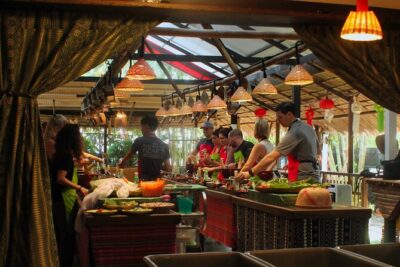
Browse the lists this tour appears in