
Reviewed · THAI COOKING CLASSES
Half-Day Cooking Class with Market Tour
The best part of this Chiang Mai cooking class happens before the first pan hits the heat: you visit a local market, learn what the vegetables and seasonings are for, then use those ingredients in a family home kitchen. I like the small groups of up to 10 and the freedom to choose dishes instead of following one fixed menu. I also like that you cook and eat each course as you go, with plenty of food and clear instruction from hosts such as Oun and Mind.
The main drawback is easy to spot: this is a food-heavy five-hour outing. You can end up eating five dishes plus sticky rice with mango, so skip breakfast or lunch beforehand. Pickup is limited to hotels within 3 kilometers of Chiang Mai Old City, and the market visit is interesting but fairly brief.
In This Review
- Key points at a glance
- Why this Chiang Mai class feels different
- The morning market visit, from herbs to everyday shopping
- Choosing your menu before the cooking begins
- Cooking in a home kitchen
- Eating each course while it is fresh
- Dietary requests and menu flexibility
- Is $36 good value in Chiang Mai?
- Morning or afternoon class?
- Who should book this cooking class?
- Booking and cancellation details
- Should you book it?
- FAQ
- How long does the cooking class last?
- Is hotel pickup included?
- How many people are in the class?
- Can I choose which Thai dishes to cook?
- Is the class suitable for food allergies or special diets?
- What is included in the $36 price?
Key points at a glance
- Start with a real local market: Learn about Thai vegetables, herbs, curry ingredients, and daily shopping before cooking.
- Choose your own menu: Pick one dish from each available category, including northern-style Khao Soi options.
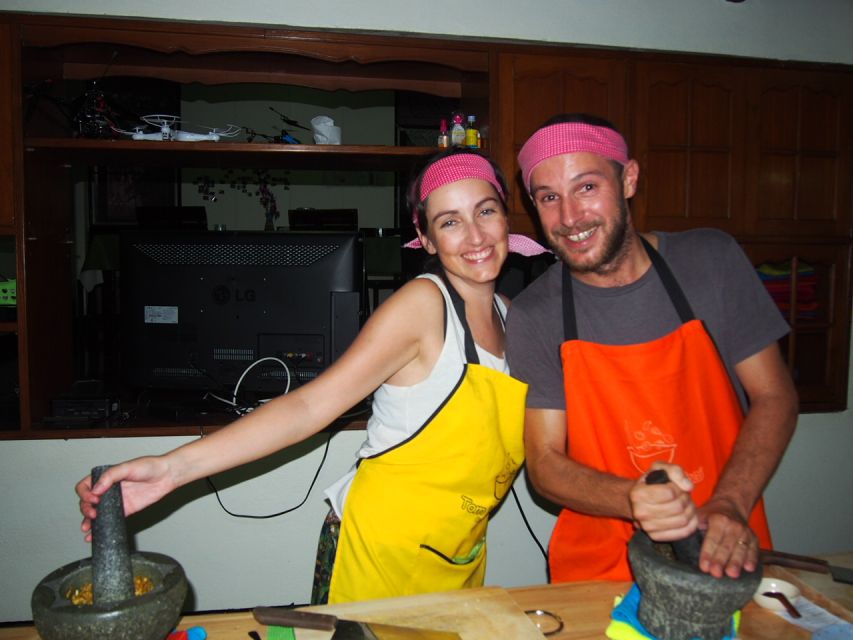
- Cook in a Thai home: The class takes place in a home rather than a large commercial school, creating a relaxed setting.
- Eat every dish you prepare: Courses are cooked, served, and enjoyed during the class, so nothing sits waiting for hours.
- Good for dietary needs: Vegetarian, gluten-free, pescetarian, allergy-related, and other food requests can be discussed in advance.
- Useful extras included: Hotel transfer within the stated area, drinking water, tea, coffee, and a recipe book are part of the $36 price.
Why this Chiang Mai class feels different
Chiang Mai has no shortage of cooking schools. Many begin with a van ride to a market, hand you premeasured ingredients, and move you through a set menu. This class takes a more personal route. After pickup, you visit a local market with your guide, then continue to a cooking school set in a home.
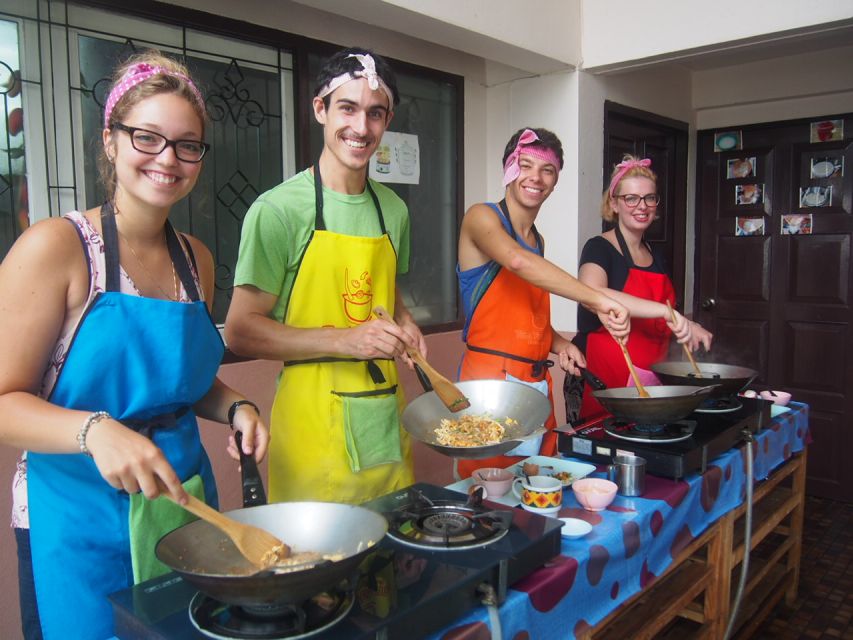
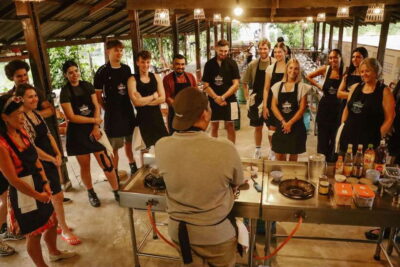
That home setting is central to the experience. You are not simply watching a chef demonstrate food from a distance. You prepare ingredients, cook at your own station, and sit down to eat what you make. The hosts and their wives help keep the class moving, answer questions, and make the room feel informal rather than technical.
The teaching style also seems to suit beginners. Oun is described as funny, friendly, and easy to follow, while Mind is praised for her clear English and patient instruction. Different instructors may lead different sessions, but the pattern is consistent: explanations cover the ingredients, the cooking process, and bits of Thai food culture.
The five-hour format gives you enough time to learn without racing from dish to dish. It also means you should not treat this as a light snack stop. You will make several full portions and eat them along the way.
More Thai cooking classes in Chiang Mai:
- Half-Day Thai Cooking Class at Organic Farm in Chiang Mai
★ 5.0 · 19,087 reviews - Chiang Mai: Cooking Class, Market & Thai Herbs Garden Tour
★ 4.9 · 4,824 reviews - Chiang Mai: Authentic Cooking Class with Market & Farm Visit
★ 4.9 · 4,546 reviews
The morning market visit, from herbs to everyday shopping
Morning pickup usually takes place between 8:45 and 9:15 a.m. The class itself runs from about 9 a.m. to 1:30 p.m. You wait in your hotel lobby or agreed pickup place 10 minutes early, which matters in Chiang Mai traffic and helps avoid a rushed start.
The market visit is more than a quick ingredient collection. Your guide introduces the vegetables and seasonings used in Thai cooking and gives you a look at how local people shop for food. You may also try seasonal fruit and snacks during the outing.
This part is especially useful if you are new to Thai food. Ingredients that seem interchangeable on a restaurant menu can play very different roles in a wok or curry paste. Seeing them in their market setting gives you a better sense of what is fresh, what is commonly used, and how Thai cooking builds flavor from herbs, vegetables, spice, sweetness, and sourness.
You should keep your expectations sensible. This is not a long market tour with extensive free time. The market supports the cooking class rather than replacing it. Still, it adds context that a classroom-only class cannot provide, and it helps you recognize ingredients during the rest of your Chiang Mai visit.
Choosing your menu before the cooking begins
One of the strongest features is menu choice. You select one dish from each category, giving you control over the meal and letting you focus on food you actually want to learn.
The options include:
- Stir-fried dishes: Pad Thai, cashew nut with chicken, and Pad See Ew
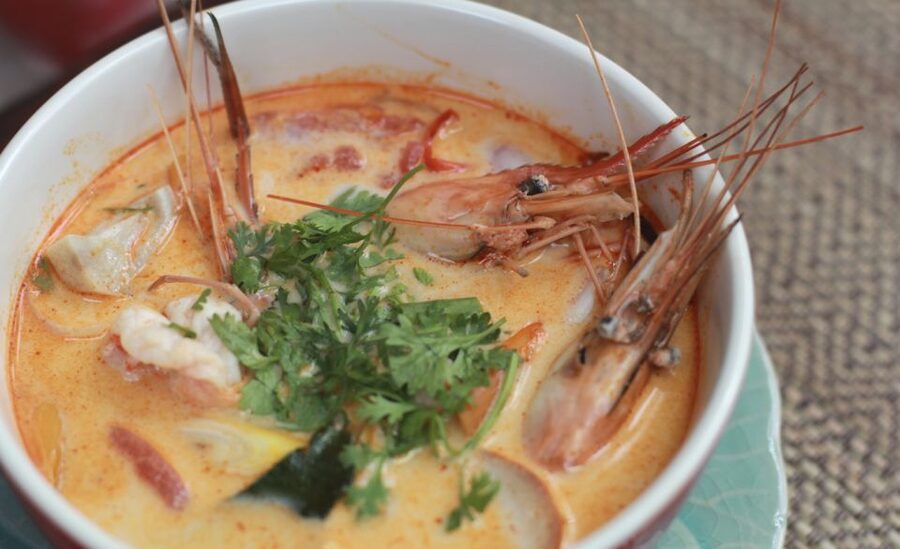
- Soups: Hot and sour prawn soup, chicken in coconut milk soup, and Thai noodle soup
- Appetizers: Spring roll, papaya salad, and cucumber salad
- Curry pastes: Green curry paste, Panang curry paste, and Khao Soi curry paste
- Curries: Green curry, Panang curry, and Khao Soi curry
- Dessert: Sticky rice with mango, prepared by everyone
The exact menu arrangement may be explained by the instructor on the day, but the purpose is clear. You build a meal from a stir-fry, soup, appetizer, and curry selection, then prepare the dessert as a shared final course. This makes it easy to compare cooking methods and flavor profiles in one session.
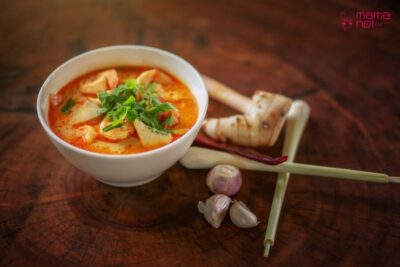
Khao Soi is the particularly useful northern Thailand choice. It is closely associated with Chiang Mai, so learning its curry paste gives you a food connection to the region rather than another generic Thai cooking lesson. If Pad Thai is already familiar to you, choosing Khao Soi or Panang curry may give you more from the class.
The choice system also works well for couples and families. One person can select one dish while another chooses something different, allowing you to taste a wider range. Just remember that the class is designed around eating what you cook, not preparing small samples for a later buffet.
Cooking in a home kitchen
Once you arrive at the home cooking school, you can expect a short welcome with seasonal fruit, snacks, water, tea, or coffee before the main work begins. The class is arranged across separate spaces for preparation, cooking, and eating, according to detailed descriptions from the experience.
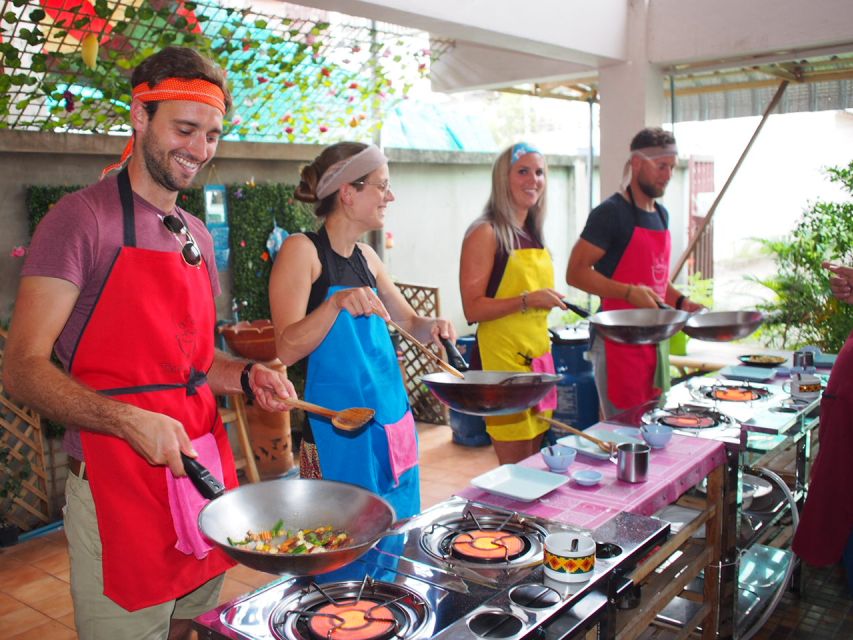
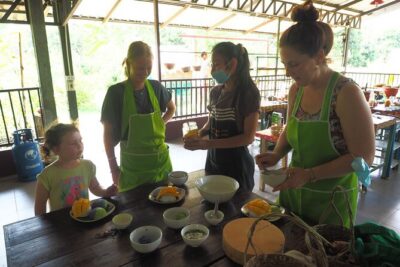
You prepare ingredients at your own station and cook in your own skillet. That matters because you get hands-on practice with the heat and timing instead of watching one large pan handled by the instructor. The setup also lets you work at a manageable pace while the teacher checks each station.
The instructors explain the process as you go. They can help with chopping, spice levels, curry paste, and substitutions. This is useful for first-time cooks, but it also leaves room for experienced home cooks to ask why a certain ingredient is used or how to repeat the dish later.
The hosts are part of the appeal. Oun is often singled out for his humor, while Mind is praised for her teaching and English. Some sessions have included both the chef and his wife helping a larger group. The tone is friendly and relaxed, with enough jokes to keep the cooking from feeling like a formal lesson.
There is a practical point here: a home kitchen can feel less polished than a purpose-built school. If you want a sleek demonstration kitchen or a high-end culinary workshop, this may not be your style. If you want to see how Thai food can be prepared in a personal, everyday setting, the home is a real advantage.
Same city, a completely different sort of day:
- Chiang Mai: Elephant Sanctuary, Waterfall & Bamboo Rafting
★ 4.9 · 9,160 reviews - Chiang Mai: Doi Inthanon National Park Eco-Friendly Tour
★ 4.6 · 6,667 reviews - Chiang Mai: Elephant Sanctuary & Waterfall Group Tour
★ 4.9 · 5,780 reviews - Chiang Mai: Chiang Rai Temples, Karen Tribe and Hot Springs
★ 4.7 · 5,401 reviews
Eating each course while it is fresh
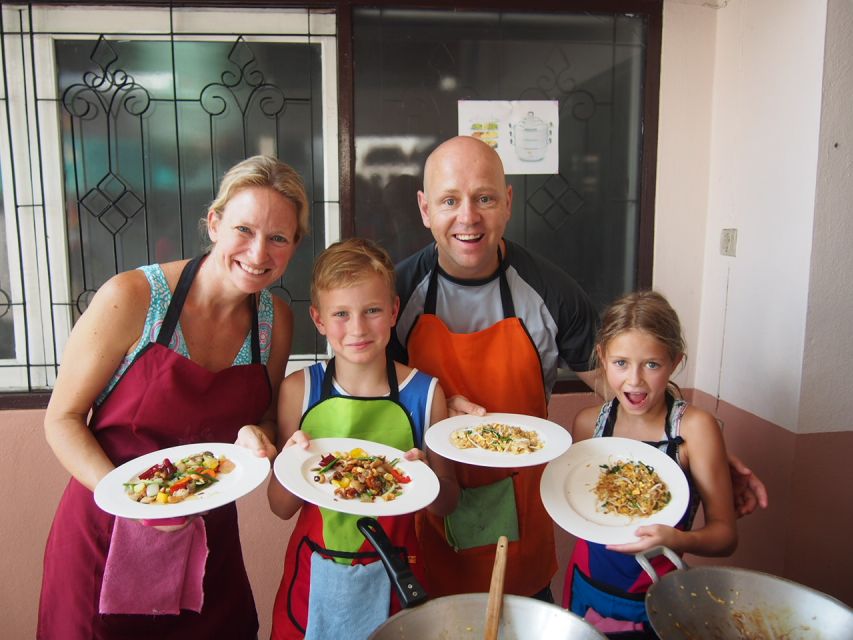
The class does not leave you waiting until the end for one large meal. You cook a dish, eat it, and then move to the next stage. That rhythm keeps the food hot and gives you an immediate sense of how your work turned out.
You will eat a substantial amount. The menu includes several courses, and dessert is included for everyone. Past class participants have found that they needed little or no other food for the rest of the day, so plan accordingly.
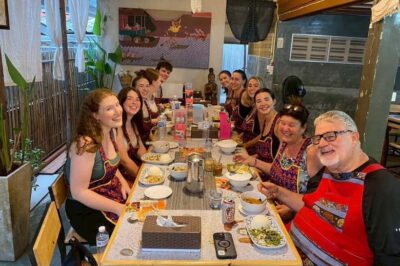
This also makes the class social. You can compare choices with the other people at your table and taste dishes that you did not select yourself. The small-group cap of 10 helps the instructor give attention without making the session feel crowded.
Spice levels should be discussed openly. Thai food can be adjusted, and the instructor can help you find a level that works. Do not assume that a mild dish means no flavor. The point of the lesson is to understand how the ingredients work together, not simply to endure heat.
The food is meant to be practical as well as enjoyable. Several people have found the recipes easy to repeat at home, which is exactly what you want from a cooking class. You leave with a recipe book rather than only a full stomach.
Dietary requests and menu flexibility
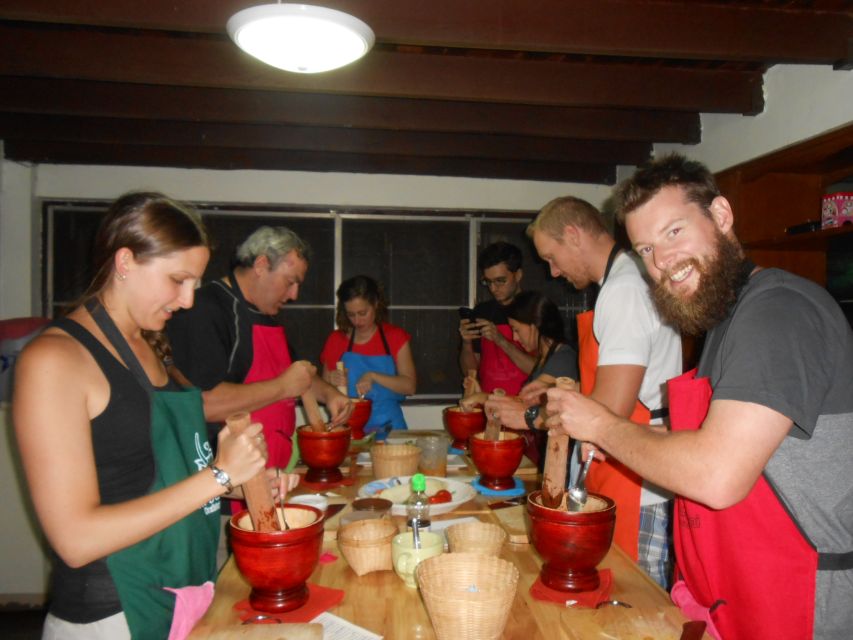
Tell the provider about allergies and special requests before the class. This is important because the dishes commonly use seafood, chicken, soy, nuts, coconut milk, wheat-based noodles, and other ingredients that may affect your choices.
Vegetarian adjustments have been handled during the class, and specific food styles such as gluten-free and pescetarian requests have also been accommodated. That does not mean every dish can be changed without limits, so early notice is the sensible approach.
If you are traveling with someone who eats differently, the choice-based menu helps. You can select separate dishes and still cook beside each other. Families also have flexibility, though young children should be comfortable with a five-hour activity involving knives, hot pans, and a large meal.
Is $36 good value in Chiang Mai?
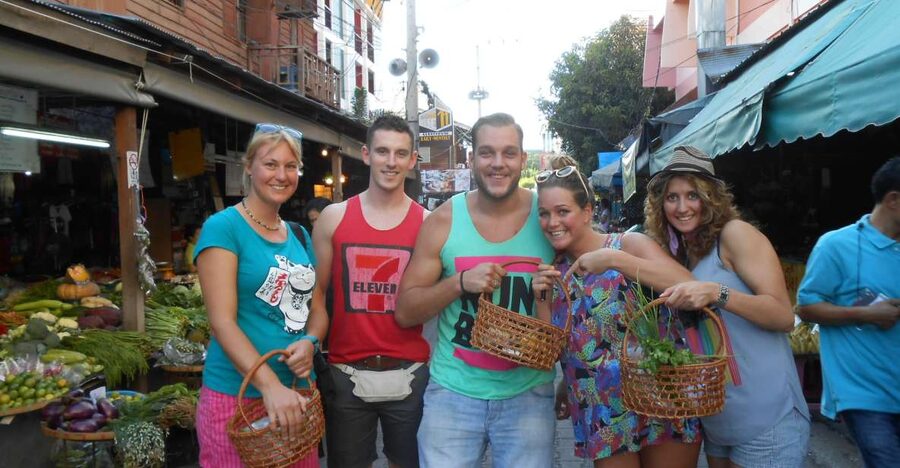
At $36 per person, the class offers more than a cooking demonstration. The price covers the market visit, instruction, ingredients for multiple dishes, the meal you prepare, drinks, a recipe book, and hotel pickup and drop-off within 3 kilometers of the Old City.
Transport adds real value. You do not need to find the market or arrange your own ride to a home outside the central sightseeing zone. Pickup is rated highly, and the service is organized around hotel lobby collection and return.
The best value comes if you want both a meal and a skill. A restaurant meal might cost less, but it will not teach you how to make curry paste or explain the produce behind the flavors. A longer professional cooking course may cost more and suit serious culinary students better, but this half-day version gives you a broad sample of Thai dishes without taking over your entire day.
The value is weaker if you dislike cooking, have a very small appetite, or only want a market tour. You are paying for active participation and a lot of food. For most people who enjoy Thai cuisine, the combination is strong.
Morning or afternoon class?
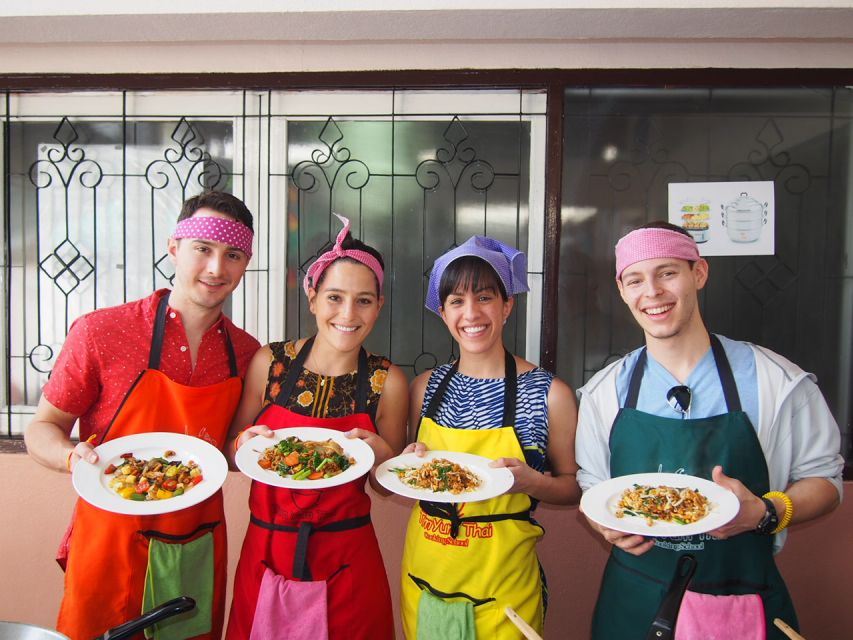
The morning session runs from about 9 a.m. to 1:30 p.m., with pickup around 8:45 to 9:15 a.m. It works well if you want the afternoon free for temples, museums, or a walk through Chiang Mai.
The afternoon and evening session runs from about 3:30 to 8:30 p.m., with pickup around 3 to 3:30 p.m. This gives you a slower start and turns the class into an evening meal.
I would choose the morning class if you want to use the cooking lesson as your main lunch. I would choose the evening class if you prefer a cooler start or want to avoid placing a large meal in the middle of a sightseeing day. The class is conducted in English, and both time slots last about five hours.
Rain should not be a major concern because the cooking takes place indoors. The market portion is outside, so bring suitable clothing for Chiang Mai weather, but the central activity continues in the home.
Who should book this cooking class?
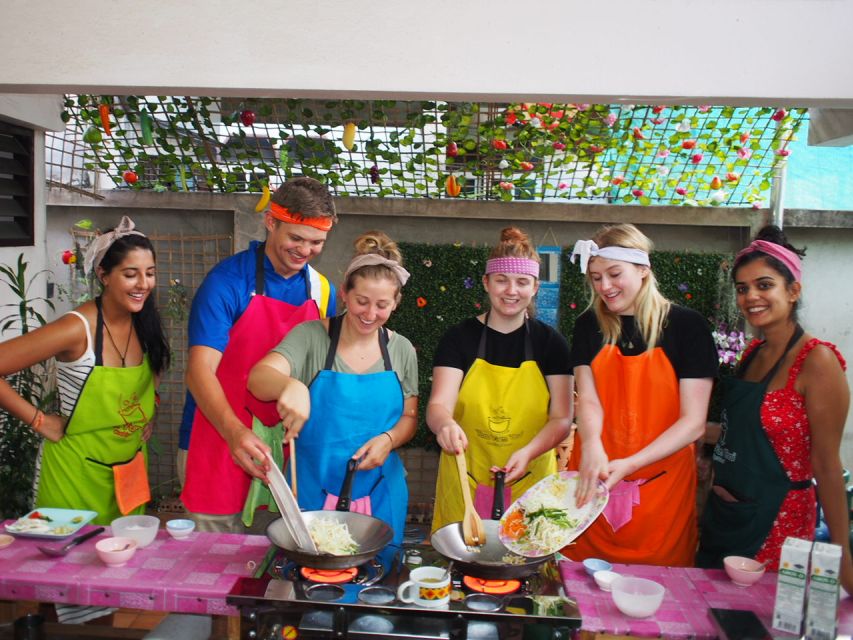
This is a strong choice for first-time visitors who want an introduction to Thai ingredients and cooking methods. It also suits food-focused travelers who want to learn northern dishes rather than simply order them in restaurants.
Couples will appreciate the ability to choose different menu items. Families can benefit from the friendly setting and hands-on stations, provided everyone is ready for a long, food-filled session. Solo visitors should find the small group size more comfortable than a large class.
I would especially suggest taking the class near the start of your Chiang Mai stay. You will recognize ingredients and dishes more easily during later meals, and the recipe book gives you a practical souvenir.
It may not suit you if you want a short, polished demonstration with minimal participation. It is also not ideal if your hotel lies outside the stated pickup area and you do not want to arrange your own way to the meeting point.
Booking and cancellation details
The activity costs $36 per person and accepts reservations with payment later, which can help when your Chiang Mai plans are still shifting. You can cancel up to 24 hours before the class for a full refund.
Pickup is included only for hotels or pickup points within 3 kilometers of Chiang Mai Old City. Wait in the lobby 10 minutes before the scheduled time, and send any allergy or special food request before arrival.
The group is limited to 10 people, and the tour language is English. The transport service has received a 96 percent perfect score, which adds reassurance for anyone concerned about the morning or afternoon transfer.
Should you book it?
I would book this class if you want a hands-on Thai food lesson, a market introduction, and a generous meal in one outing. The strongest reasons are the menu choice, the home setting, the individual cooking stations, and the friendly teaching style associated with Oun and Mind.
Book it early in your trip if you want food guidance for the rest of your stay. Skip it if you would rather spend five hours sightseeing or if a large multi-course meal sounds exhausting. For $36, though, this is a well-priced way to turn Chiang Mai food from something you order into something you understand and can make again.
FAQ
How long does the cooking class last?
The experience lasts about five hours. The morning session runs from approximately 9 a.m. to 1:30 p.m., while the afternoon and evening session runs from approximately 3:30 p.m. to 8:30 p.m.
Is hotel pickup included?
Yes. Pickup and drop-off are included for hotels or pickup places within 3 kilometers of Chiang Mai Old City. Morning pickup is around 8:45 to 9:15 a.m., and afternoon pickup is around 3 to 3:30 p.m.
How many people are in the class?
The class is a small group with a maximum of 10 participants.
Can I choose which Thai dishes to cook?
Yes. You can choose dishes from the stir-fried, soup, appetizer, curry paste, and curry categories. Everyone makes sticky rice with mango for dessert.
Is the class suitable for food allergies or special diets?
You should notify the provider about allergies and special requests in advance. Vegetarian, gluten-free, pescetarian, and other dietary adjustments have been accommodated.
What is included in the $36 price?
The price includes the local market visit, cooking instruction, food prepared during the class, drinking water, tea, coffee, a recipe book, and hotel pickup and drop-off within the stated Chiang Mai Old City area.
More Shopping Tours in Chiang Mai
- Evening Cooking Class in Organic Farm with Local Market Tour
★ 5.0 · 394 reviews - Chiang Mai: Elephants, Sticky Waterfalls, Market and Temple
★ 4.9 · 227 reviews - Cooking Morning Class Chiang Mai Visit Organic Garden and Market
★ 5.0 · 211 reviews - Chiang Mai Temples and Market Tuk-Tuk Evening Night Tour
★ 4.5 · 201 reviews
More Markets in Chiang Mai
- Chiang Mai: Cooking Class with Market and Pickup
★ 4.9 · 1,365 reviews - Chiang Mai: Evening Cooking Class and Local Market Visit
★ 4.9 · 648 reviews - Chiang Mai: Evening Local Street Food Market Tour
★ 4.8 · 604 reviews - Chiang Mai: Kalare Night Bazaar Boxing Stadium Muay Thai
★ 4.7 · 507 reviews
Just added around Chiang Mai
- Chiang Rai Wonders: White, Blue & Red Temples and Hot Spring★ 5.0 · 3 reviews
- Chiang Rai White Temple Blue Temple and Hill Tribe Village Tour★ 3.5 · 3 reviews
- Private Chiang Mai City Tour including Wat Doi Suthep, Wat Suan Dok (SHA Plus)★ 5.0 · 3 reviews
- Workshop Making Herbal ball & herbal inhaler★ 4.3 · 3 reviews
- Chiang Mai Mae Ping River Cruise and Thai Farmer House Visit★ 4.0 · 3 reviews
- Phoenix Zipline Adventure Park – Chiang Mai Thrills★ 4.0 · 3 reviews
- Tok Sen Massage at Fah Lanna Spa in Chiang Mai★ 4.5 · 3 reviews
- Private: 3 days 2 night trip: ChaingMai-Chaingrai- The Golden Triangle trip★ 5.0 · 3 reviews
Thai Cooking Classes, compared.
Half-Day Thai Cooking Class at Organic Farm in Chiang Mai
Read our review →
Cooking Class, Market & Thai Herbs Garden Tour
Read our review →
Authentic Cooking Class with Market & Farm Visit
Read our review →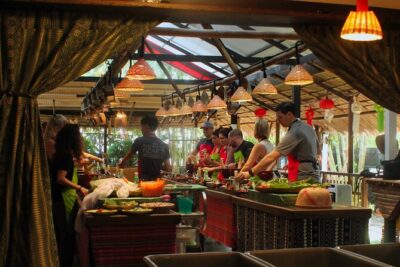
Browse the lists this tour appears in