

Reviewed · ETHICAL ELEPHANT SANCTUARY VISITS
Chiang Mai: Elephants, Sticky Waterfalls, Market and Temple
The elephant visit is the heart of this long Chiang Mai day. You make vitamin balls, feed the animals bananas and sugarcane, walk beside them, and may help bathe them in the river. Earlier, you climb Bua Thong Sticky Waterfalls, where mineral-coated rock lets you walk upward with surprising grip. Hands-on elephant care and a waterfall you can climb make this more than a standard temple-and-elephant outing.
I like the local market stop, where insects, worms, produce, and everyday rural foods give you a quick look at Northern Thai life. I also like Wat Ban Den, a colorful Lanna temple that most day tours skip. The drawback is the pace: with a market, waterfall, temple, lunch, and elephant program packed into 7.5 to 8.5 hours, you spend plenty of time in the van and may find the waterfall crowded in high season.
In This Review
- Key points at a glance
- Why this Chiang Mai day works so well
- A rural market where insects are part of the menu
- Climbing Bua Thong Sticky Waterfalls
- Wat Ban Den and Northern Thai design
- Local lunch before the elephant visit
- Preparing food for elephants
- The guide can make or break the day
- Who should book, and who should think twice
- Is the $70 price good value?
- Should you book this Chiang Mai tour?
- FAQ
- How long does the Chiang Mai elephant and waterfall tour last?
- What time does pickup begin?
- Is hotel pickup included?
- How large is the group?
- What happens at Bua Thong Sticky Waterfalls?
- Should I bring a towel and extra clothes?
- Is lunch included?
- What elephant activities are included?
- Can I cancel the booking?
Key points at a glance
- Climb Bua Thong Sticky Waterfalls: Mineral-rich rock gives your feet grip, making it possible to scramble up the flowing falls.
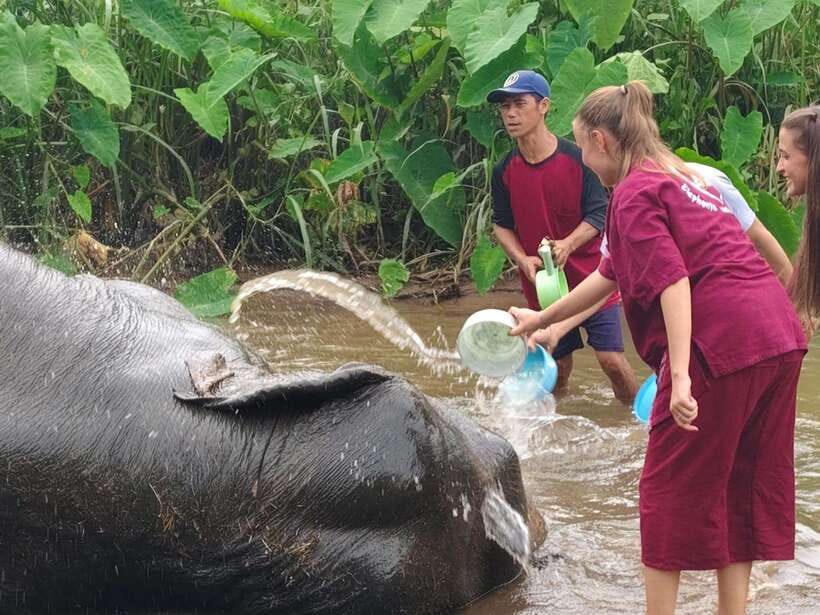
- Meet elephants in a small setting: Feed them, prepare digestive vitamin balls, walk with them, take photos, and bathe them in the river.
- See Wat Ban Den beyond the usual route: Its white, green-blue, and pink buildings show off Northern Thai Lanna design.
- Taste rural Chiang Mai: The morning market features insects, worms, snacks, and foods linked to local village life.
- Travel with up to nine people: A small group makes it easier to ask questions and move at a reasonable pace.
- Bring clothes for getting wet: The waterfall and elephant stop both call for a change of clothes and a towel.
Why this Chiang Mai day works so well
For about $70 per person, this is an ambitious bundle of Northern Thailand experiences. You get transport, admission fees, lunch, snacks, water, elephant food, a guide, uniforms for the elephant activities, and accident insurance. Paying separately for several of these stops would take planning, transport, and time, so the price is strong if you want a full day outside Chiang Mai without arranging a private car.
The trade-off is simple: this is not a slow, single-theme outing. You are visiting four very different places in one day. I would choose it if you have limited time and want a broad taste of the countryside. If you prefer lingering at one temple or spending half a day at the falls, book separate trips instead.
The tour normally begins with pickup at 10:45 am from your hotel lobby or an agreed meeting point. Listed pickup points include Chiangmai Boxing Stadium, Wat Loi Kroh, Wat Dok Kham, Wat Lok Moli, Wat Khuan Khama, Wat Santitham, and Mueang Chiang Mai Police Station. Confirm your hotel or guesthouse after booking, since pickup coverage depends on the place you provide.
The group is limited to nine people, and the transport is a van or similar commercial vehicle. The ride out takes about an hour, followed by a return trip of roughly 75 minutes. That means the day has a fair amount of road time, but the countryside roads are part of the appeal. Paddy fields, orchards, villages, and open views replace the traffic and tight lanes of central Chiang Mai.
More elephant sanctuary visits in Chiang Mai:
- Chiang Mai: Elephant Sanctuary, Waterfall & Bamboo Rafting
★ 4.9 · 9,160 reviews - Chiang Mai: Elephant Sanctuary & Waterfall Group Tour
★ 4.9 · 5,780 reviews - Chiang Mai: Elephant Sanctuary Feeding Program Half-Day Tour
★ 4.8 · 4,527 reviews
A rural market where insects are part of the menu
The first stop is Talat Chedi Mae Krua, a local market visited with the guide for about 25 minutes. This is not presented as a polished food hall for tourists. You may see bugs, worms, and other insects beside more familiar foods, along with ingredients used by rural families.
You do not need to eat anything that makes you uneasy. The value is in looking, asking questions, and noticing how food connects to daily life in Northern Thailand. Guides have also offered small market snacks for tasting, which gives the stop more life than a quick walk past the stalls.
Twenty-five minutes is enough to get a sense of the place, but not enough for a long shopping session. Think of it as a cultural introduction before the outdoor activities. If you want to buy something, carry cash, as cash is listed among the recommended items.
Climbing Bua Thong Sticky Waterfalls
After the market, the van continues to Bua Thong Sticky Waterfalls. You have about 100 minutes here, including time to change clothes and follow the natural path down to the falls.
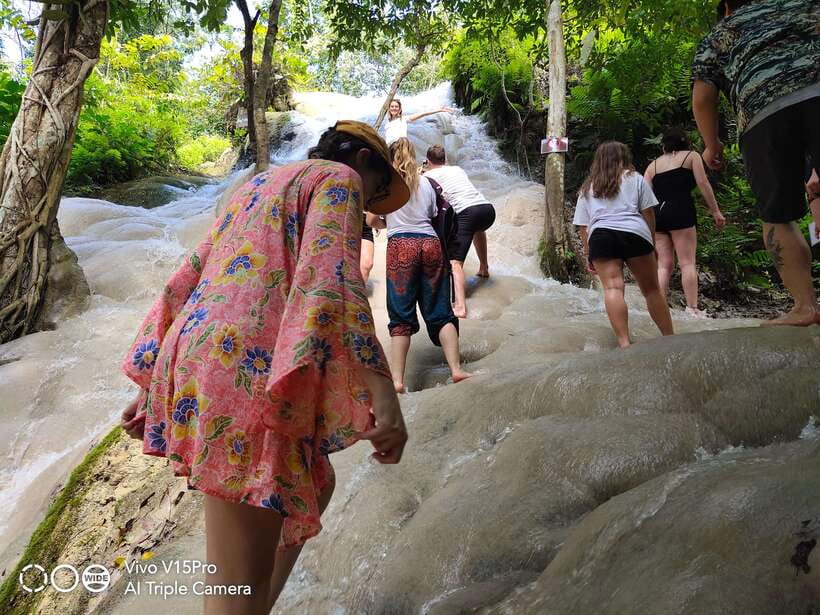
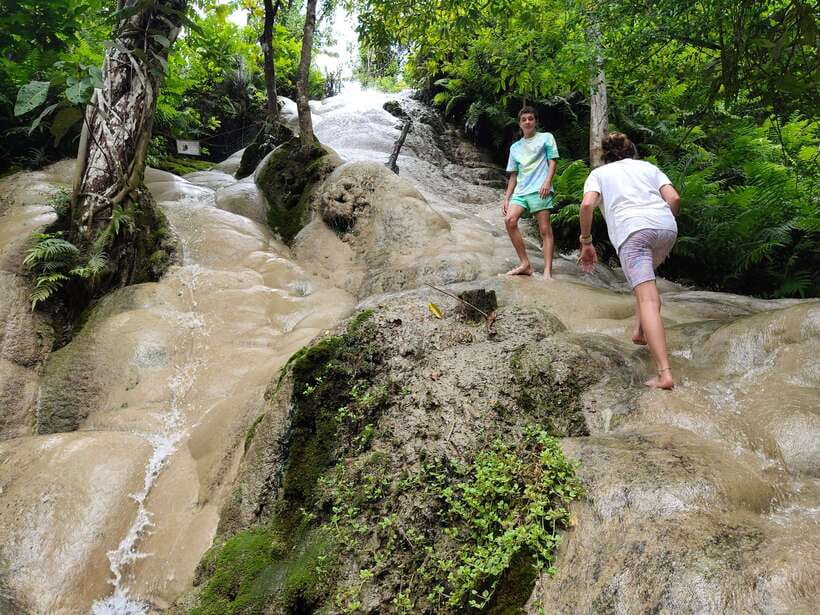
The name makes sense once you step onto the rock. Mineral deposits create a rough surface with unusual traction, so you can walk and climb up sections where an ordinary wet waterfall would be too slippery. The sensation is part of the fun: water runs over your feet while you use the rock and fixed routes to work upward like a person with suction cups.
You should still take care. Sticky does not mean risk-free. The route is wet, uneven, and more physical than the photos may suggest. One family found the climb more demanding than expected, while another group said older parents could sit nearby and watch comfortably. That is useful context: you can enjoy the stop without climbing every section, but anyone who wants to go up the falls needs steady footing and comfort with scrambling.
Wear shoes with a secure grip, and consider water shoes if you have them. Comfortable shoes are listed as essential, but ordinary sandals may not feel secure on wet rock. Bring a towel, a hat, sunscreen, insect repellent, and a complete change of clothes. You will probably get wetter than expected.
The waterfall can become crowded during the high and holiday season. That does not erase the fun, but it can mean waiting for a clear route and sharing the best climbing sections. If you dislike busy outdoor attractions, set your expectations accordingly. The 100-minute stop gives you time to play, cool down, and dry off, rather than rushing straight back to the van.
Wat Ban Den and Northern Thai design

The next stop is Wat Ban Den, also called Wat Banden, reached by countryside roads through fields and orchards. You have about 40 minutes at the temple.
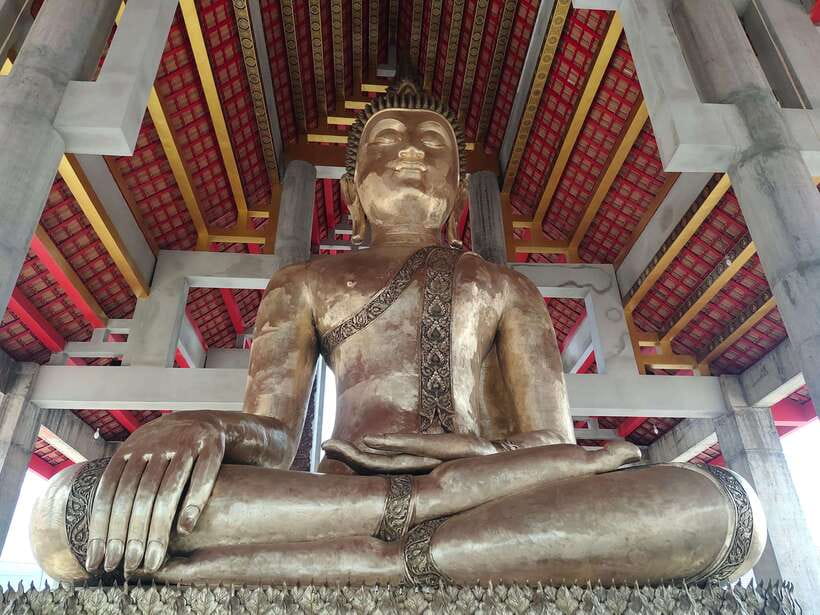
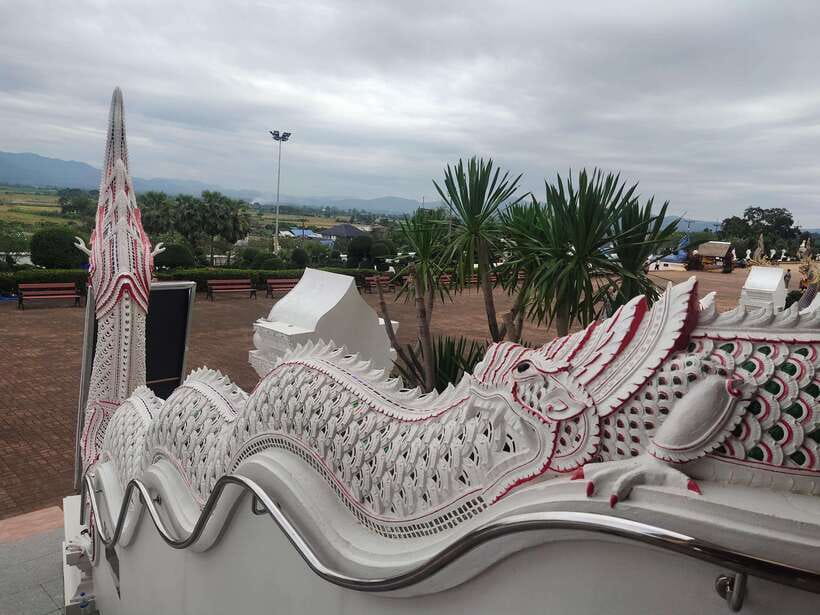
This is one of the strongest parts of the day for anyone interested in architecture. The complex uses white, green-blue, and pink tones, with decorative details that show the Lanna style associated with Northern Thailand. It is colorful without feeling like a theme park, and the surrounding countryside gives the temple a spacious, calm setting.
The visit is not only about taking photos. Wat Ban Den remains a sacred place where local people come to worship and pray. You should dress respectfully and follow temple rules. Take off your shoes where required, and bring socks if the floor may be hot. One useful tip from a summer visit is that bare feet can become uncomfortable on sun-heated surfaces.
The temple is often quieter than Chiang Mai’s best-known sights. That makes the 40-minute stop feel more reflective, though it is still short if you want to inspect every building. Your guide can explain Thai and Lanna features, Buddhist customs, and local history. Guides named Blue, Non, Tom, James, Tu, and Pon have led this trip at different times, and the best part of their role is turning the buildings into something you can understand rather than simply photograph.
More markets in Chiang Mai:
- Chiang Mai: Cooking Class, Market & Thai Herbs Garden Tour
★ 4.9 · 4,824 reviews - Chiang Mai: Authentic Cooking Class with Market & Farm Visit
★ 4.9 · 4,546 reviews - Chiang Mai: Cooking Class with Market and Pickup
★ 4.9 · 1,365 reviews - Chiang Mai: Evening Cooking Class and Local Market Visit
★ 4.9 · 648 reviews
Local lunch before the elephant visit
Lunch is served at a local restaurant in the countryside after the temple or along the route. The exact dishes are not fixed in the information provided, but the meal is included and is intended to give you a chance to eat local food.
That matters on a full day like this. The waterfall uses energy, and the elephant activities come later, so you do not have to search for food or settle for a snack from a tourist stop. Several menus enjoyed the meal, including a particularly well-liked Pad Thai, but you should not book this expecting a specific dish every time.
Water and snacks are included. Soft drinks, alcohol, and personal purchases are not, so carry cash if you want extra drinks or market items.
Preparing food for elephants
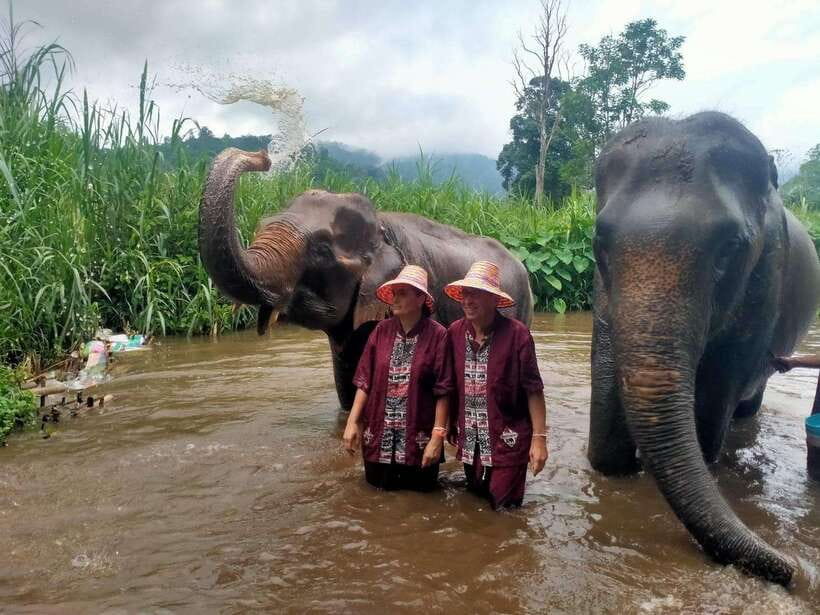
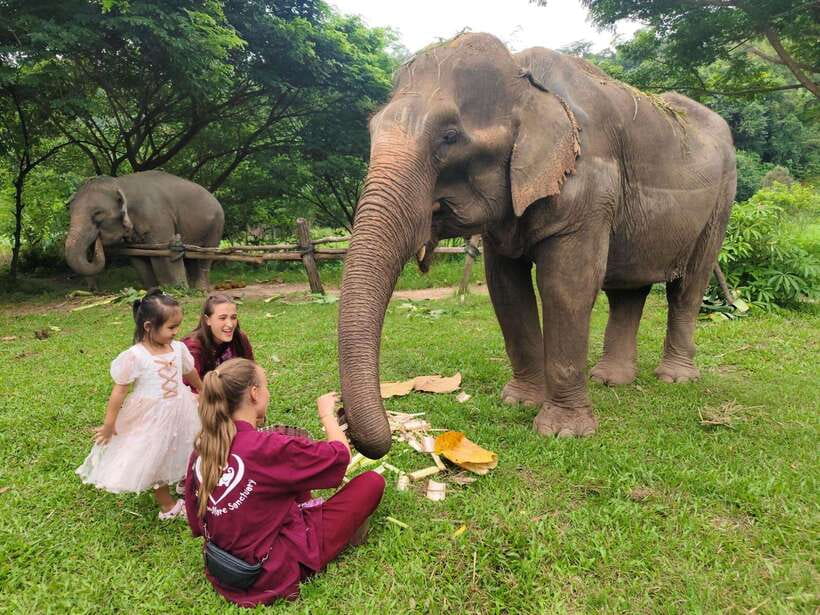
The elephant program takes up about two hours in Chiang Mai Province and is the main reason to choose this tour over a basic temple-and-waterfall trip. You change into a caretaker or Mahout-style uniform, then learn how to prepare herbal vitamin and medicine balls for the elephants.
The stated reason for the balls is to help the animals digest food. You also receive bananas and sugarcane to feed them. These tasks give you something useful to do, rather than reducing the visit to a brief photo stop beside a large animal.
You can expect close contact. The program may include feeding, walking with the elephants, observing them, taking photos, and bathing them in the water. One version of the visit also involved crossing a river on a small bamboo raft, so do not assume your clothes will stay dry after the waterfall.
The setting has been described as a simple countryside property, in some cases more like a home caring for elephants than a large fenced attraction. That can feel personal and gives the animals room to move around. Staff provide instructions, and the elephant caretakers help you understand how to approach and handle the food.
Still, I would keep your animal-welfare standards switched on. The experience allows touching and posed photos, and one participant felt that some elephants appeared trained to perform tricks. The information supplied does not provide a formal welfare policy, group-size policy at the sanctuary itself, or veterinary details. If strict no-touch, no-bathing, observation-only ethics are important to you, ask the operator for a clear explanation before paying.
For many people, the best part is watching ordinary care: preparing food, feeding, walking, and seeing how the keepers manage the animals. Approach the elephants calmly, follow every instruction, and remember that a gentle animal is still powerful.
The guide can make or break the day
The guide is especially important because the stops are spread out and the schedule is full. The English-speaking guides who have led this tour include Blue, Non, Tom, James, Tu, Pon, Phon, Ata, and Anon.
Blue has been praised for clear communication, cultural explanations, attentiveness, and taking photos throughout the day. Non is known for an energetic style and for sharing details about Thai religion, local life, and his six years as a Buddhist monk. Tom has been valued for explaining Chiang Mai and Thai history, while James has been described as funny, helpful, and good at keeping a group engaged.
You may receive photos and videos taken during the day, but do not treat that as guaranteed. One person found that many photos were taken but not sent afterward. If pictures matter to you, ask the guide when and how they will be shared, and bring your own camera anyway.
The small group limit of nine is a real advantage. A group of four or five gives you more room to ask questions and adjust the pace. Some departures have even operated with only two people, but you should book for a small group rather than assume a private tour.
Who should book, and who should think twice
I would recommend this outing to you if you want variety, outdoor activity, and a taste of local culture in one day. Families with older children have enjoyed it, and children around 10 to 14 can find plenty to do. You need to be comfortable with wet paths, changing clothes, temple etiquette, and close contact with elephants.
It is not suitable for children under 2, babies under 1, pregnant women, wheelchair users, people over 75, or people over 95 according to the stated restrictions. The age wording overlaps, so if an older family member is close to the limit, confirm eligibility before booking.
You should also skip it if you want a quiet luxury day. The van rides are unavoidable, the schedule is active, and the waterfall requires care. Food restrictions are not explained in the supplied information, so contact the operator before booking if you need a special meal.
Wear light, comfortable clothing and pack:
- A swimsuit or quick-drying clothes
- A towel and a full change of clothes
- Secure shoes, ideally water shoes for the falls
- Sun protection and insect repellent
- A camera and some cash
- Socks for the temple floor if you dislike hot stone
Free cancellation is available up to 24 hours before departure, and you can reserve now and pay later. Those terms help if your Chiang Mai plans are still shifting.
Is the $70 price good value?
At $70, the value is strongest when you count the full package rather than one attraction. Round-trip transport, all admission fees, lunch, snacks, drinking water, elephant food, vitamin-ball ingredients, caretaker uniforms, an English-speaking TAT-licensed guide, and local accident insurance are included.
You are also getting a small group rather than a large coach outing. The four-part schedule covers food culture, nature, architecture, and animal care, which would be difficult to reproduce independently in a single day without renting transport.
The price is less compelling if you plan to spend only a few minutes at each stop or if you do not want animal contact. In that case, a focused waterfall or temple visit could suit you better. The high overall rating and strong transport score suggest reliable organization, but the elephant-welfare concern and possible waterfall crowds deserve attention before you book.
Should you book this Chiang Mai tour?
Book it if you have one open day and want Chiang Mai beyond the old city. The combination is unusually broad: an earthy local market, a playful waterfall climb, a peaceful Lanna temple, and hands-on elephant care, all with lunch and transport included.
I would be most likely to book this for an active couple, a family with older children, or anyone making a first visit to Northern Thailand. Bring the right clothes, accept that the day will be busy, and ask the operator about its elephant-care rules if that issue matters to you. For a packed but memorable introduction to the countryside, this is a strong choice.
FAQ
How long does the Chiang Mai elephant and waterfall tour last?
The tour lasts about 450 to 510 minutes, or roughly 7.5 to 8.5 hours.
What time does pickup begin?
Pickup is scheduled for 10:45 am from your hotel lobby or selected meeting point.
Is hotel pickup included?
Yes. Round-trip transfer from hotels, Airbnbs, and guesthouses is included, but you need to provide the hotel or accommodation name after booking.
How large is the group?
The tour is limited to nine participants and is described as a small-group experience.
What happens at Bua Thong Sticky Waterfalls?
You change clothes, follow a natural path to the falls, and can climb sections of the wet rock. The mineral-coated surface provides unusual grip, but you still need to move carefully.
Should I bring a towel and extra clothes?
Yes. You should bring both. The waterfall can get you wet, and the elephant activities may include bathing the animals or crossing water.
Is lunch included?
Yes. Lunch at a local restaurant is included, along with snacks and drinking water. Soft drinks and alcoholic beverages are not included.
What elephant activities are included?
You can prepare herbal vitamin balls, feed the elephants bananas and sugarcane, walk with them, observe them, take photos, and bathe them. Caretaker uniforms are provided.
Can I cancel the booking?
You can cancel up to 24 hours in advance for a full refund. Reserve-now, pay-later booking is also available.
More Shopping Tours in Chiang Mai
- Chiang Mai: Evening Local Street Food Market Tour
★ 4.8 · 604 reviews - Chiang Mai: Kalare Night Bazaar Boxing Stadium Muay Thai
★ 4.7 · 507 reviews - Evening Cooking Class in Organic Farm with Local Market Tour
★ 5.0 · 394 reviews - Cooking Morning Class Chiang Mai Visit Organic Garden and Market
★ 5.0 · 211 reviews
Just added around Chiang Mai
- Chiang Rai Wonders: White, Blue & Red Temples and Hot Spring★ 5.0 · 3 reviews
- Chiang Rai White Temple Blue Temple and Hill Tribe Village Tour★ 3.5 · 3 reviews
- Private Chiang Mai City Tour including Wat Doi Suthep, Wat Suan Dok (SHA Plus)★ 5.0 · 3 reviews
- Workshop Making Herbal ball & herbal inhaler★ 4.3 · 3 reviews
- Chiang Mai Mae Ping River Cruise and Thai Farmer House Visit★ 4.0 · 3 reviews
- Phoenix Zipline Adventure Park – Chiang Mai Thrills★ 4.0 · 3 reviews
- Monk trails hike, Wat Phalat, Monk chanting, Wat Doi Suthep.★ 5.0 · 3 reviews
- Tok Sen Massage at Fah Lanna Spa in Chiang Mai★ 4.5 · 3 reviews
Ethical Elephant Sanctuary Visits, compared.

Elephant Sanctuary, Waterfall & Bamboo Rafting
Read our review →

Elephant Sanctuary Feeding Program Half-Day Tour
Read our review →
Elephant Sanctuary, Long Neck & Sticky Waterfall
Read our review →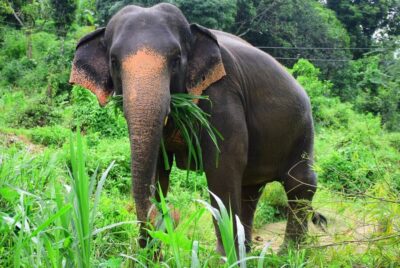

3-in-1: Doi Inthanon Tour, Elephant Sanctuary, and Trekking Trail
Read our review →
Chiang Mai Elephant Sanctuary, Bamboo Rafting and Waterfall Tour
Read our review →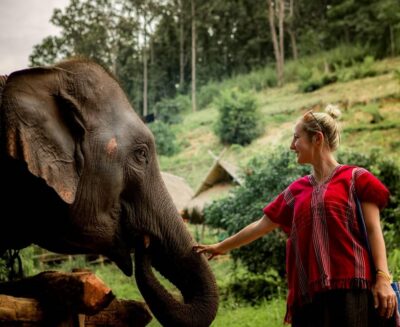
Browse the lists this tour appears in