Reviewed · GUIDED
Colors of Chiang Mai Guided Bicycle Tour
Chiang Mai shows its quieter side on this 20 to 25-kilometer bicycle route through rice fields, village lanes, fruit orchards, and the old settlement of Wiang Kum Kam. I like the easy pace and the chance to see women making traditional Thai goods, rather than spending the morning on the usual city streets.
I also like the stops for fresh fruit, local snacks, and Khao Soi Kai at a small restaurant. The main consideration is distance: 20 to 25 kilometers is manageable for many people, but this is still a serious half-day ride, and the itinerary can change when markets, schools, orchards, or rice fields are not operating or looking their best.
In This Review
- Key points to know before you ride
- Why this bicycle tour reaches beyond central Chiang Mai
- Starting out on quiet lanes and village roads
- Meeting local makers and seeing daily work
- Temples, Buddhism, and a former monk’s perspective
- Rice fields, orchards, and the Ping River
- Market snacks, coffee, and Khao Soi Kai
- Wiang Kum Kam and the 700-year-old chedi
- How difficult is the 20 to 25-kilometer ride?
- Safety, group size, and what you receive
- Best time to book and what can change
- Who should book the Colors of Chiang Mai ride?
- FAQ
- How long does the Colors of Chiang Mai bicycle tour last?
- How far do you cycle?
- What languages does the guide speak?
- Is the tour private or shared?
- What is included in the price?
- Does the tour visit Wiang Kum Kam?
- Can a solo person book the tour?
- What happens if I need to cancel?
Key points to know before you ride
- A 20 to 25-kilometer route: Expect about 270 minutes on bicycles, usually at a relaxed pace on quiet roads and green lanes.
- Wiang Kum Kam ruins: Visit the former Lanna capital, founded in 1286, including temples and a 700-year-old chedi.
- Former monk guides: Guides such as Wit have shared personal insight into Buddhist customs and temple life.
- Food is part of the experience: Water, soft drinks, snacks, fresh fruit, and a local Thai meal are included.
- Safety receives careful attention: Guides use clear hand signals and help the group across busier roads.
- Small groups or private rides: You can book a private outing or join a small group, subject to a minimum of two participants.
Why this bicycle tour reaches beyond central Chiang Mai
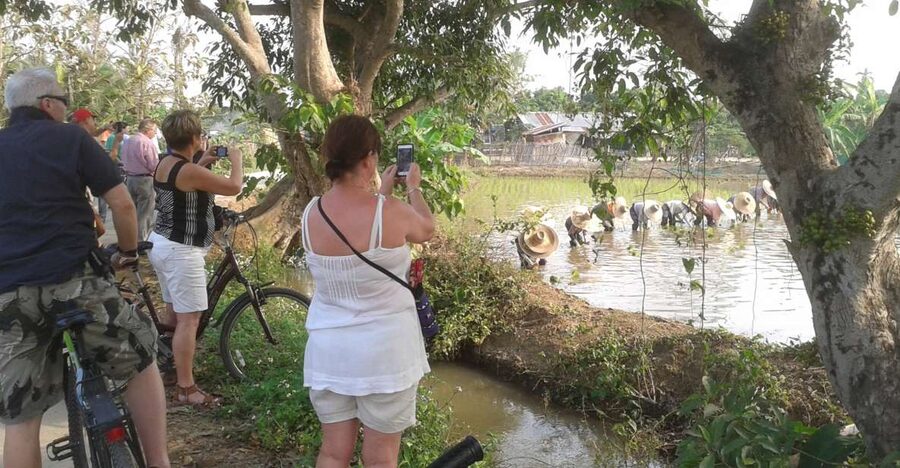
Central Chiang Mai is easy to enjoy on foot, but a bicycle takes you into a different kind of city. Within a short ride, paved streets give way to narrow lanes, green fields, local homes, fruit trees, and communities carrying on with everyday work.
That change is the main reason I would choose this tour. You are not simply moving between famous sights. You are seeing how Chiang Mai connects with its surrounding farmland and the Ping River, with time to stop and ask questions.
The pace is designed to be comfortable rather than athletic. The route is mostly flat and follows quiet roads, according to the supplied ride details and firsthand accounts of the outing. Still, you should be honest with yourself about cycling for several hours. You do not need to be a keen cyclist, but you should feel comfortable riding a bicycle for 20 kilometers or more.
The tour costs $38 per person. That is a fair price when you consider that it includes the bicycle, helmet, English-speaking guide, insurance, drinks, snacks or a meal, and the cultural interpretation that turns a ride into a useful introduction to Chiang Mai. You are also paying for route planning and local knowledge, especially valuable when the ride moves away from the main sightseeing circuit.
A few more Chiang Mai half-days to weigh up
- Chiang Mai: 3 Hour Old City and Temples Guided Walking Tour
★ 4.6 · 1,568 reviews - Chiang Mai: Doi Inthanon Trip with Pha Dok Siew Guided Trek
★ 4.6 · 910 reviews - Chiang Mai: Historic Temples and City Guided Walking Tour
★ 4.7 · 650 reviews
Starting out on quiet lanes and village roads
You meet at the operator’s office and should arrive five to ten minutes before departure. The tour supplies a bicycle and helmet, and the guide leads the group out toward quieter parts of the province.
The opening section is important because it sets the tone. This is not mainly a traffic ride through the center of Chiang Mai. You move along back lanes and leafy suburban roads, with occasional crossings of busier streets. Guides have been praised for using clear hand signals and making those crossings feel calm and organized.
I would still keep your eyes on the road. Chiang Mai traffic can be unpredictable, and a guided ride does not remove the need for ordinary bicycle caution. The good news is that the route is built around quieter roads, so traffic should not dominate the morning.
Different guides may lead the tour. Names associated with recent departures include Wee, Wit, Dong, Koi, and Wichan. Wit has a background as a former monk, which can add useful context at Buddhist temples. You should not assume a particular guide will be assigned, but the operator offers live guidance in English or Thai.
Meeting local makers and seeing daily work
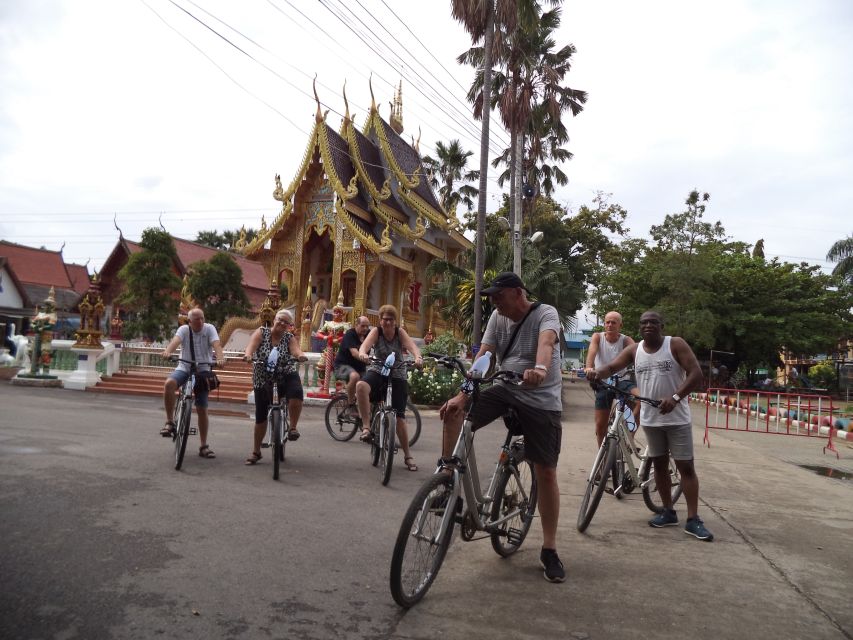
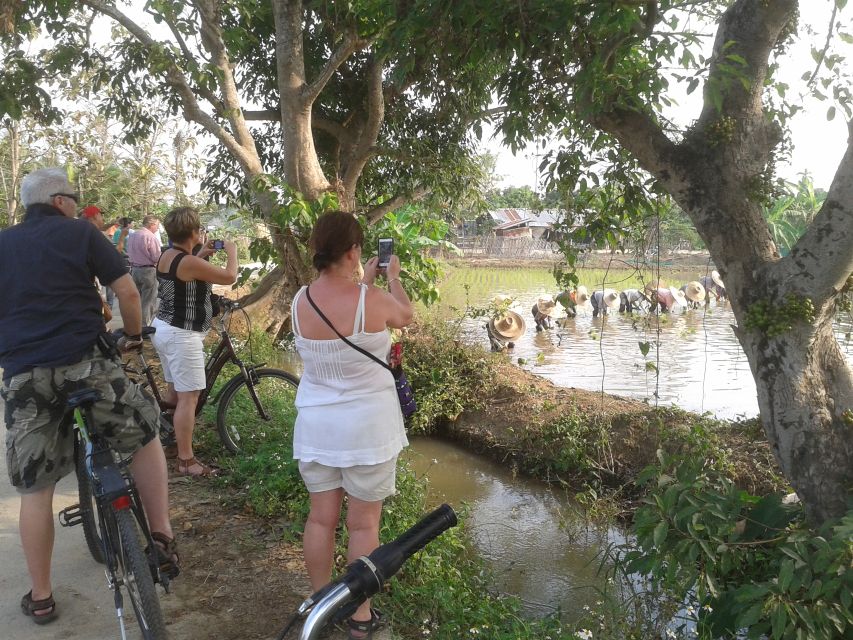
One of the most appealing parts of the ride is its attention to local work. The route can include a village stop where women make traditional Thai products. This gives you a closer look at skills and small-scale production that are easy to miss from a taxi or tour bus.
Other reported stops have included a pottery-making place, a public school, and a site where coffee beans are roasted in a furnace. These details may vary, since local shops and schools can close on weekends, school holidays, or national holidays. Think of the itinerary as a framework rather than a rigid checklist.
That flexibility is worth understanding before you book. If you need to see one specific workshop, this may frustrate you. If you prefer a ride that responds to local conditions, it is a strength. The guide can explain what is open and adjust the stops instead of taking you to a closed door.
You also get a chance to see communities from the saddle. That matters because bicycles let you move slowly enough to notice homes, lanes, gardens, and small work areas without turning every stop into a formal attraction.
Temples, Buddhism, and a former monk’s perspective
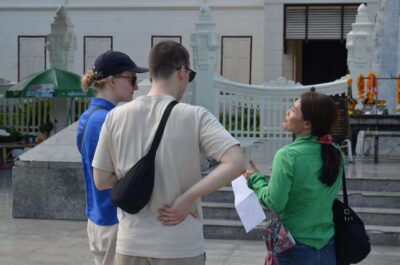
The ride includes a stop at a local temple, where the guide explains the site and Buddhist traditions. This is more useful than a quick photo stop because the guide can help you understand what you are seeing and how the temple fits into local life.
If Wit is leading your tour, his six years as a monk may provide a particularly personal explanation of customs. That does not turn the outing into a religious lesson, but it can help make temple details less mysterious. You can ask about Buddhist practice, temple buildings, and traditions as you walk around.
Temple visits require respectful behavior. Dress modestly, follow the guide’s instructions, and remember that these are functioning religious places rather than empty monuments. The exact temple stops may change, especially if local conditions affect the route.
I like this part because it adds meaning without taking over the day. You get cultural background, then return to the bicycle and continue through the countryside.
Same city, a completely different sort of day:
- Half-Day Thai Cooking Class at Organic Farm in Chiang Mai
★ 5.0 · 19,087 reviews - Chiang Mai: Elephant Sanctuary, Waterfall & Bamboo Rafting
★ 4.9 · 9,160 reviews - Chiang Mai: Doi Inthanon National Park Eco-Friendly Tour
★ 4.6 · 6,667 reviews - Chiang Mai: Elephant Sanctuary & Waterfall Group Tour
★ 4.9 · 5,780 reviews
Rice fields, orchards, and the Ping River
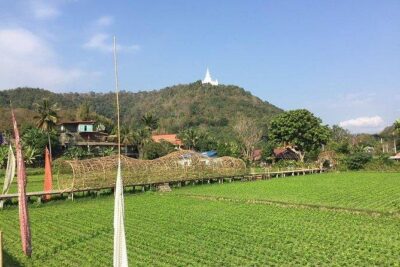
After the temple and village sections, the route moves through rice fields and fruit orchards when conditions allow. These are simple sights, but they are a welcome change from Chiang Mai’s old city walls and cafes.
The timing matters. Rice fields and fruit trees do not look the same all year, and the operator reserves the right to adjust this part of the route when crops are not in season or orchards are not in bloom. You should not book this ride expecting a guaranteed postcard view in every month.
The route then follows the Ping River. Here, the value is the atmosphere rather than a single landmark. You get to ride beside one of the waterways that helps define Chiang Mai, while seeing settlements and green spaces along the river corridor.
A bicycle works well here. You can pause, take photographs, and absorb the setting at a slower speed than you would from a vehicle. The guide also helps connect what you see with local life, rather than leaving you to guess why the river matters.
Market snacks, coffee, and Khao Soi Kai
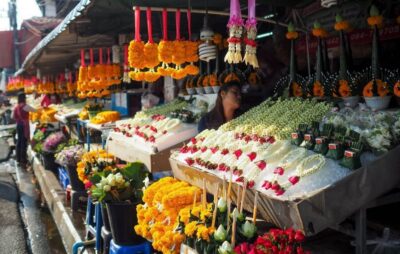
Food breaks are built into the ride, which is sensible in Chiang Mai’s warm climate. The tour includes water or soft drinks, plus a Thai snack, fresh fruit, or a small meal. Reported stops have included a local market, coffee, ice cream, and a roadside restaurant.
The market is not guaranteed to operate every day. A Saturday departure may offer more activity, while weekends, school holidays, and national holidays can also lead to closures elsewhere. The operator may adjust the stop, so treat the market as a possibility rather than a promise.
The most substantial food stop is Khao Soi Kai, a northern Thai dish made with chicken and curry noodles. It is a fitting meal for this part of Thailand and gives you a taste of the region’s food culture, not just a generic restaurant lunch.
I would still bring a little extra money for personal expenses. The included food and drinks cover the planned refreshment stops, but you may want to buy something at a market or order an additional drink. Personal purchases are not included in the $38 price.
Wiang Kum Kam and the 700-year-old chedi
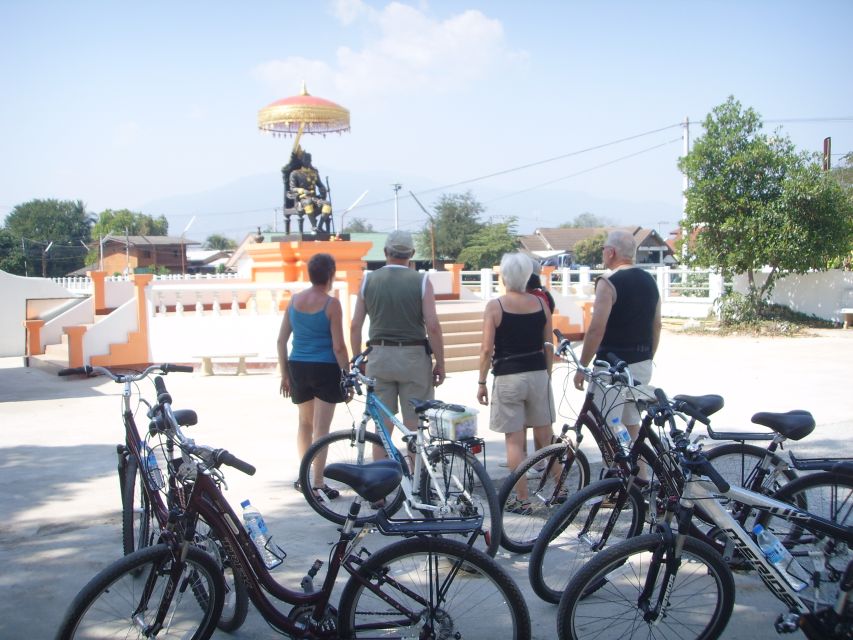
The historical centerpiece comes near the end of the ride at Wiang Kum Kam. King Mengrai founded this settlement in 1286, and it served as the capital of the Lanna empire for about ten years before the capital moved.
Today, you cycle among temple ruins and old religious structures spread through the former settlement. The area offers a strong contrast with the earlier countryside sections. Instead of seeing modern village life, you are looking at the remains of an early center of power and faith.
The tour includes a visit to a 700-year-old chedi, with time to photograph the ruins. This is not a huge archaeological complex that takes half a day to explore. Its appeal comes from seeing old brick structures in a setting connected to present-day communities.
You may appreciate this final section more because you arrived by bicycle. The route has already shown you fields, river communities, food, and temples. Wiang Kum Kam then adds a historical layer to the same region, linking the current city with the Lanna kingdom.
How difficult is the 20 to 25-kilometer ride?
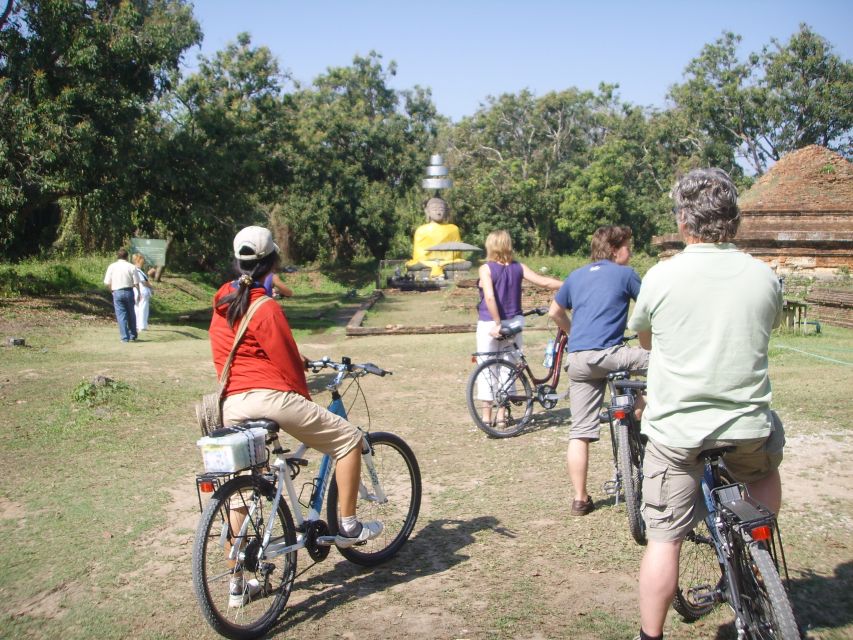
The ride is described as easy-paced, and much of it follows quiet roads. Several departures have taken around three to four hours of cycling and stops, fitting the advertised 270-minute duration.
The distance remains the key point. You might find the cycling comfortable if you regularly ride a bicycle or can manage a relaxed half-day outing. If you rarely cycle, the distance may feel long even if the roads are gentle.
The guide controls the pace and makes regular opportunities to rest, hydrate, eat, and look around. This helps, but it does not turn the ride into a short sightseeing trip. I would choose a different activity if you have a bicycle injury, strongly dislike sustained riding, or are worried about warm-weather exertion.
Solo participants are welcome, but the tour requires at least two people to operate. If the minimum is not reached, the operator may offer another time, day, or tour, or cancel the booking.
Safety, group size, and what you receive
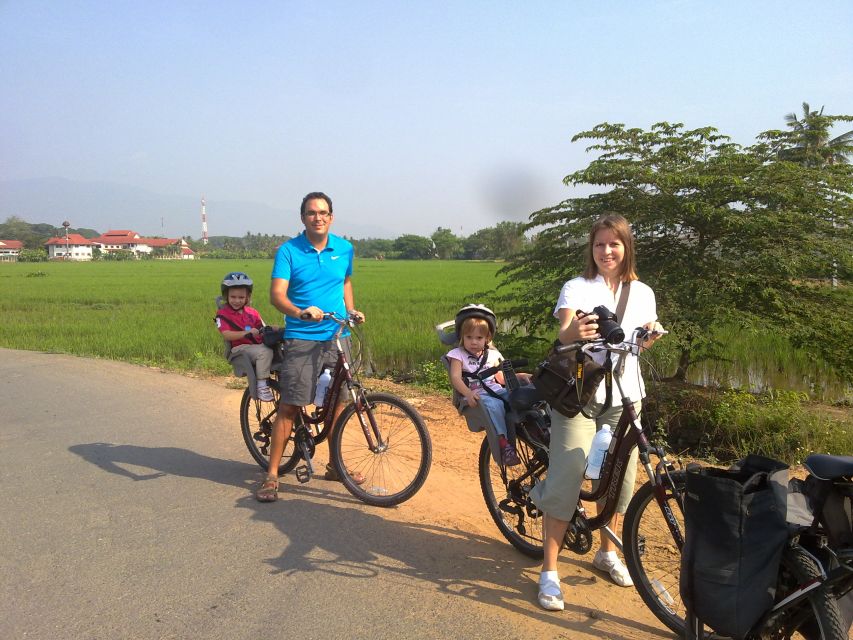
You receive a bicycle, helmet, insurance, an English or Thai-speaking guide, drinks, and food or snacks. Free WiFi is also available at the office, though that is a minor benefit compared with the guide and equipment.
Private and small-group options are available. A smaller group should make it easier to ask questions and keep the pace comfortable, while a private ride may suit you if you want more control over stops. The supplied information does not specify a fixed maximum group size, so ask when booking if group size matters to you.
Safety is one of the strongest reasons to take a guided ride rather than attempt the same route alone. Guides know the roads, signal at crossings, and help the group handle the occasional busier stretch. You should still wear the helmet and follow instructions.
One practical point is the return to the city. On one outing, the guide arranged shared tuk-tuk transport back because returning by bicycle would have been difficult. That was charged at 50 THB per person in that instance. Do not assume this return arrangement is included or guaranteed, but ask the guide about the end point if you need to reach central Chiang Mai promptly.
Best time to book and what can change
A morning departure is a sensible choice because it leaves time for the meal and ruins visit before the day is over. Starting times vary, so check availability when booking.
The scenery changes with the season. Rice fields and fruit orchards may not be in bloom or at their most attractive year-round. Local markets, schools, and small shops may also close during weekends, holidays, or national holidays.
That does not make the tour unreliable. It simply means you should focus on the overall experience: cycling, local roads, food, temples, river scenery, and Wiang Kum Kam. The exact order and number of stops may change.
Free cancellation is available up to 24 hours before the tour for a full refund, and you can reserve now and pay later. Those terms are useful if your Chiang Mai schedule is still moving around.
Who should book the Colors of Chiang Mai ride?
I would recommend this tour to you if you want to see Chiang Mai beyond the old city and prefer active sightseeing to sitting in a van. It suits curious visitors who like local food, small cultural stops, temple explanations, and a slower look at ordinary surroundings.
It is also a good fit if you are nervous about riding in traffic but still want to cycle. The route uses quiet roads for much of the outing, and the guides take care at crossings.
I would think twice if your main goal is a short, effortless activity or a guaranteed visit to a particular market, workshop, or flowering orchard. The 20 to 25-kilometer distance and changing itinerary require some flexibility.
At $38, the outing offers solid value. You get equipment, guidance, food, drinks, insurance, and access to places that are awkward to connect independently in half a day. The best reason to book is not one landmark. It is the combination of countryside, river, food, village life, Buddhist culture, and ancient Lanna ruins in one well-paced ride.
FAQ
How long does the Colors of Chiang Mai bicycle tour last?
The tour lasts 270 minutes, or about four and a half hours.
How far do you cycle?
The route covers approximately 20 to 25 kilometers.
What languages does the guide speak?
Live guides are available in English and Thai.
Is the tour private or shared?
Private and small-group options are available.
What is included in the price?
The price includes a bicycle, bicycle helmet, English-speaking guide, insurance, water or soft drinks, and a Thai meal or snack. Free WiFi is available at the operator’s office.
Does the tour visit Wiang Kum Kam?
Yes. The route passes through historic Wiang Kum Kam, founded in 1286, and includes temples and ruins dating back hundreds of years, including a 700-year-old chedi.
Can a solo person book the tour?
Solo travelers are welcome, but the tour operates only when at least two participants are booked.
What happens if I need to cancel?
You can cancel up to 24 hours before the tour for a full refund. The reserve now and pay later option is also available.
Just added around Chiang Mai
- Chiang Rai Wonders: White, Blue & Red Temples and Hot Spring★ 5.0 · 3 reviews
- Chiang Rai White Temple Blue Temple and Hill Tribe Village Tour★ 3.5 · 3 reviews
- Private Chiang Mai City Tour including Wat Doi Suthep, Wat Suan Dok (SHA Plus)★ 5.0 · 3 reviews
- Workshop Making Herbal ball & herbal inhaler★ 4.3 · 3 reviews
- Chiang Mai Mae Ping River Cruise and Thai Farmer House Visit★ 4.0 · 3 reviews
- Phoenix Zipline Adventure Park – Chiang Mai Thrills★ 4.0 · 3 reviews
- Monk trails hike, Wat Phalat, Monk chanting, Wat Doi Suthep.★ 5.0 · 3 reviews
- Tok Sen Massage at Fah Lanna Spa in Chiang Mai★ 4.5 · 3 reviews
Guided, compared.
3 Hour Old City and Temples Guided Walking Tour
Read our review →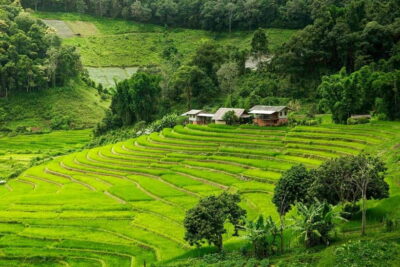
Taste of Chiang Mai: Michelin Guide & Street Food Tour
Read our review →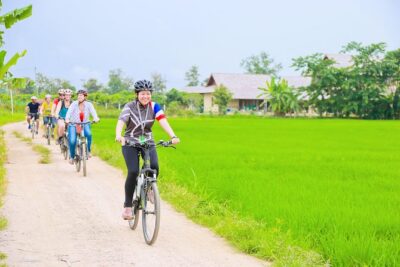
Full-Day Guided Tuk Tuk Chiang Mai Adventure and Rafting
Read our review →