
Reviewed · CHIANG MAI OLD CITY TOURS
Chiang Mai: 3 Hour Old City and Temples Guided Walking Tour
Chiang Mai’s best-known temples are close enough to link on foot, but a good guide turns a pleasant stroll into a lesson in Lanna culture and Buddhism. This tour takes you from the huge brick stupa of Wat Chedi Luang to the small teak prayer hall of Wat Phan Tao, then finishes at lavish Wat Phra Singh.
I like the clear three-stop route and the chance to ask real questions along the way. Guides such as Nana, Sunny, TomTam, and Boon have been praised for explaining history, meditation, Thai beliefs, and even the role Buddhism plays in daily life. The $16 price is strong value, though you still pay 120 THB in temple admission fees and need enough stamina for three hours on foot.
In This Review
- Key points at a glance
- Why this three-hour temple walk works
- Starting at Wat Chedi Luang
- The small surprise of Wat Phan Tao
- Finishing at Wat Phra Singh
- What your guide adds to the visit
- Walking, heat, and temple etiquette
- Is the $16 price good value?
- The right timing and group expectations
- What I would pack for this route
- Who should book this walking tour?
- Should you book the Chiang Mai temple walk?
- FAQ
- How long does the Chiang Mai temple walking tour last?
- Which temples are included?
- How much are the temple entrance fees?
- Is hotel pickup included?
- What should I wear?
- Is the tour available in English?
Key points at a glance
- Three major temples in one walk: Visit Wat Chedi Luang, Wat Phan Tao, and Wat Phra Singh without arranging separate transport.
- A local guide adds meaning: Learn about Lanna history, Buddhist customs, Thai beliefs, and temple design in clear English.
- The route has strong contrasts: See a giant ancient stupa, a modest teak temple, and a lavish mosaic-decorated sanctuary.
- Plan for heat and bare feet: Wear easy-on, easy-off shoes, carry water, and expect to remove footwear several times.
- Extra costs are modest: The three entrance fees total 120 THB, while food, drinks, and hotel transfers are not included.
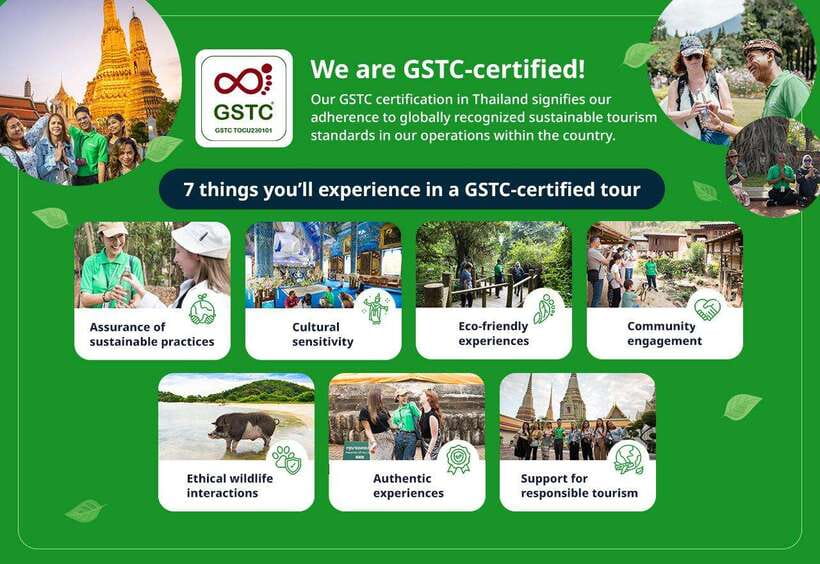
- A low-impact way to explore: The GSTC-certified experience focuses on reducing its carbon footprint and offsetting emissions.
Why this three-hour temple walk works
Chiang Mai’s Old City is compact, and this tour makes smart use of that fact. Instead of spending part of your morning waiting for a songthaew or tuk-tuk, you move between three important temples with someone explaining what you are seeing.
That matters in Chiang Mai. A gold roof and a seated Buddha can look beautiful on their own, but the details are easy to miss. Your guide can explain why one building is plain teak while another is covered in mosaics, or how Lanna design differs from other Thai styles.
The pace is also useful for a first morning in town. You get a clear introduction to the old center, the city’s temples, and Buddhist practice before deciding which places deserve a longer return visit. I would not treat this as a complete tour of Chiang Mai, since it focuses mainly on three temples, but it gives you a strong base.
The tour is advertised as three hours, with about an hour at each main stop. That is enough time for explanations and photos, but not enough for slow, detailed examination of every corner. One guide may finish closer to the planned time, while another may linger over questions and run longer. Plan a little flexibility afterward.
More Old City walks in Chiang Mai:
- Chiang Mai: Thapae Boxing Stadium Muay Thai Match Ticket
★ 4.5 · 457 reviews - Chiang Mai: Historic Old City Bike Tour – Morning or Night
★ 4.7 · 263 reviews - Chiang Mai: Historic Old City Bike Tour – Morning or Night
★ 5.0 · 202 reviews
Starting at Wat Chedi Luang
Meet at the entrance of Wat Chedi Luang, where your guide will hold a TripGuru sign. You are asked to arrive 10 minutes early, and the team sends an email the evening before to confirm the meeting time and place.
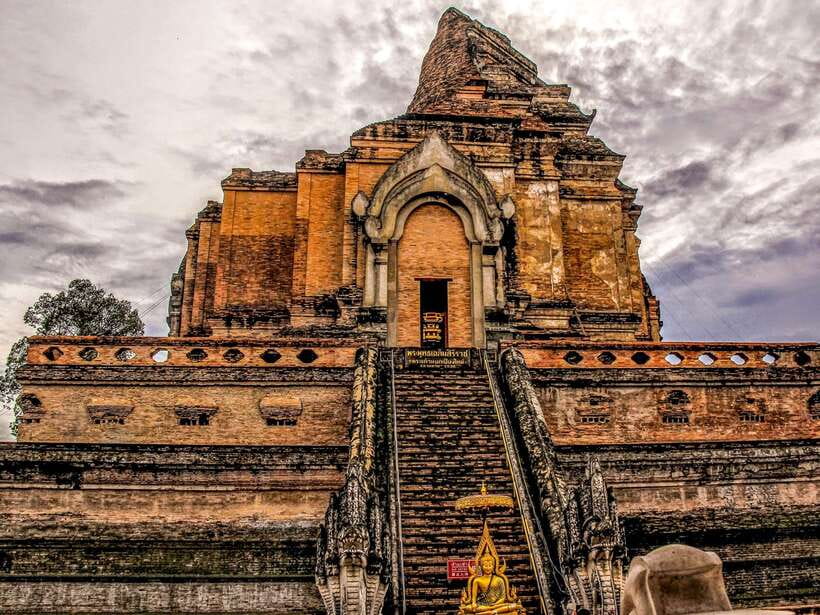
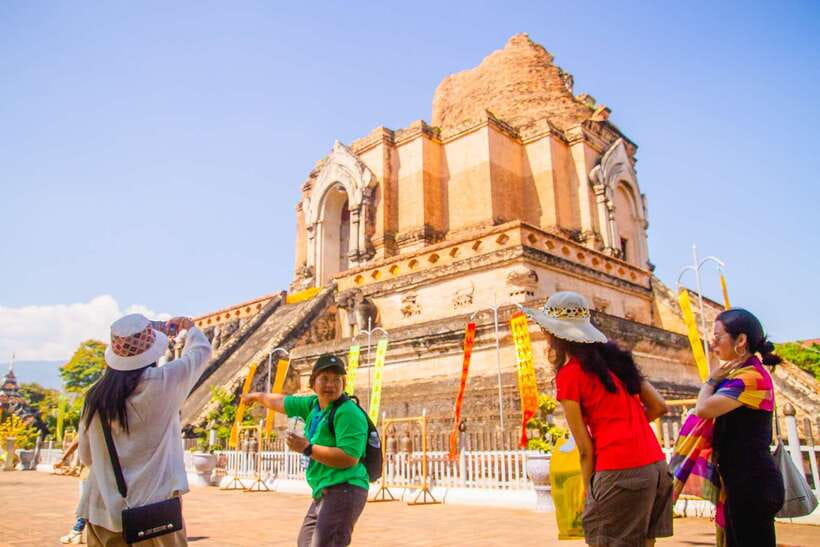
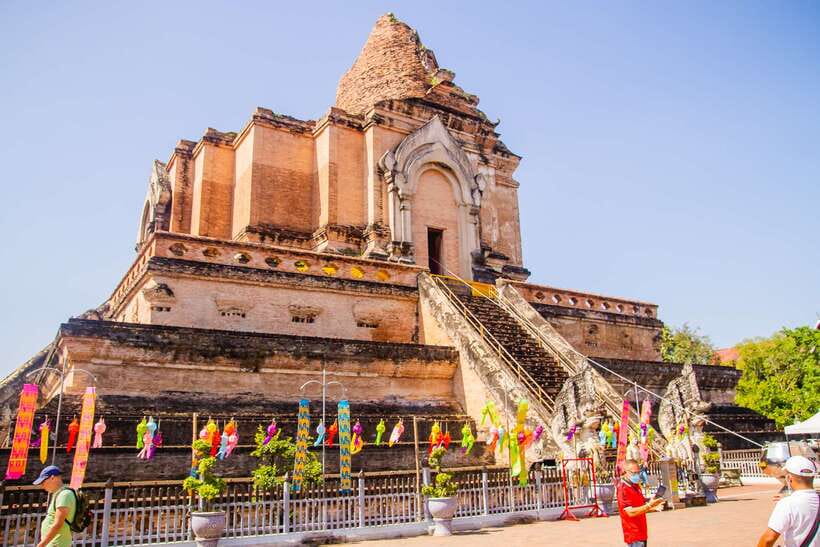
Wat Chedi Luang is the right starting point because it gives you the tour’s biggest visual moment first. The temple was built between the 14th and 15th centuries, and its enormous stupa once formed the main focus of the compound. Even in its present condition, the scale is striking.
Your guide will lead you around the broad grounds and point out Lanna-style details in the buildings and decorations. This is where the historical setting of Chiang Mai starts to make sense. The city was the center of the old Lanna kingdom, and its religious buildings preserve a distinct northern Thai look.
Do not expect a quiet, private visit. Wat Chedi Luang is one of Chiang Mai’s best-known sights, so the compound can feel active, especially at popular times. The advantage of joining a guide is that you spend less time wondering which structure matters and more time looking closely at the architecture.
The entrance fee is 50 THB, paid separately. Keep cash handy. The tour price does not cover temple admissions, so your total cost is $16 plus 120 THB for all three sites.
The small surprise of Wat Phan Tao
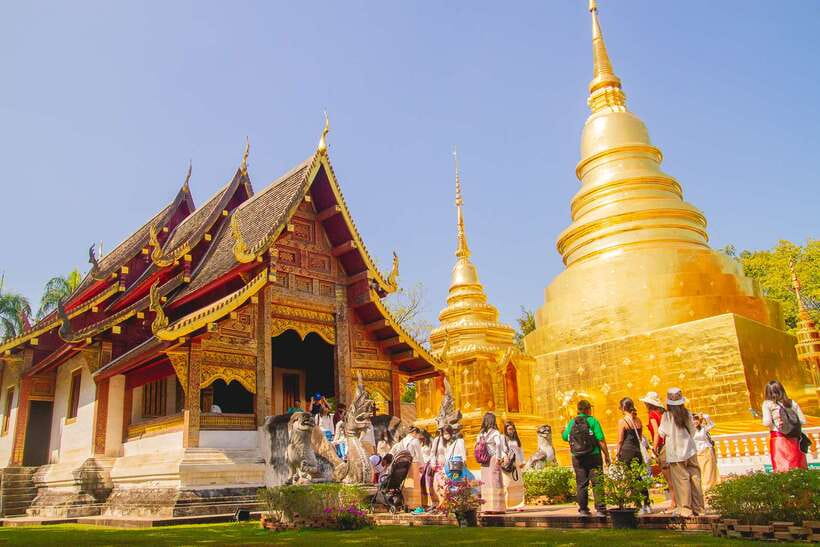
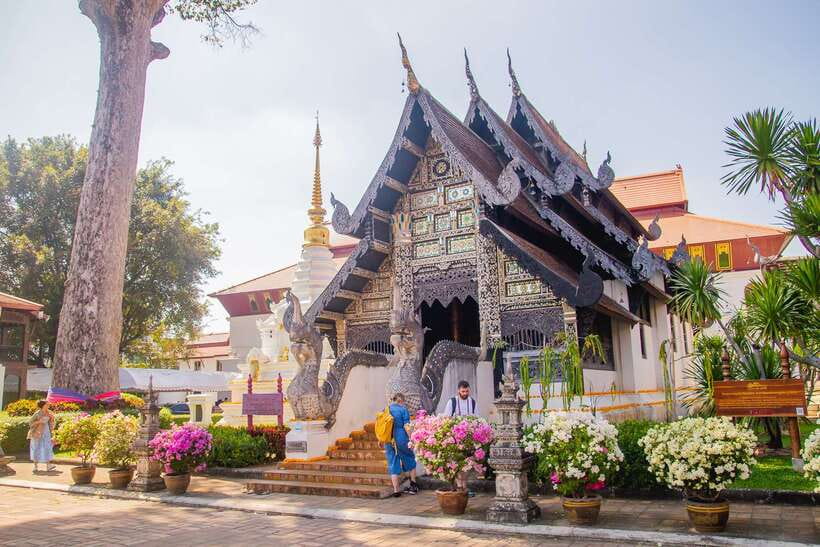
Wat Phan Tao makes a useful contrast with the massive Chedi Luang. It is smaller and less imposing, but its intricately carved teak facade rewards close attention.
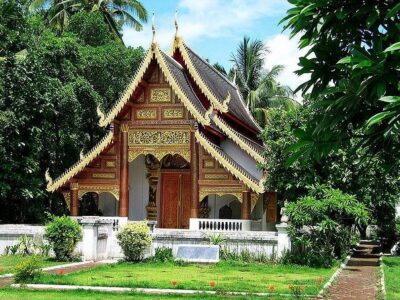
The building once served as a throne hall for King Mahotara Prateth before becoming a place of prayer. That change of use gives the temple an unusual character. Rather than relying on a giant stupa or a huge compound, it draws your eye to woodwork, proportions, and hand-carved surfaces.
This is the sort of place that can be easy to rush through when exploring alone. A guide can show you where to look and explain why the building matters. You might find this stop more memorable than expected, especially if you enjoy craft and architecture more than sheer size.
The admission fee is 20 THB. The low cost makes it easy to include, but the stop may feel short if you want plenty of time for photographs. The tour’s one-hour format covers the temple and its story, yet the full group’s pace can affect how long you linger.
Wear shoes that come off quickly. Several people who enjoyed this route pointed out that footwear removal happens often, and sandals or slip-on shoes make the process much less awkward. If you prefer not to walk barefoot, bring socks.
Finishing at Wat Phra Singh
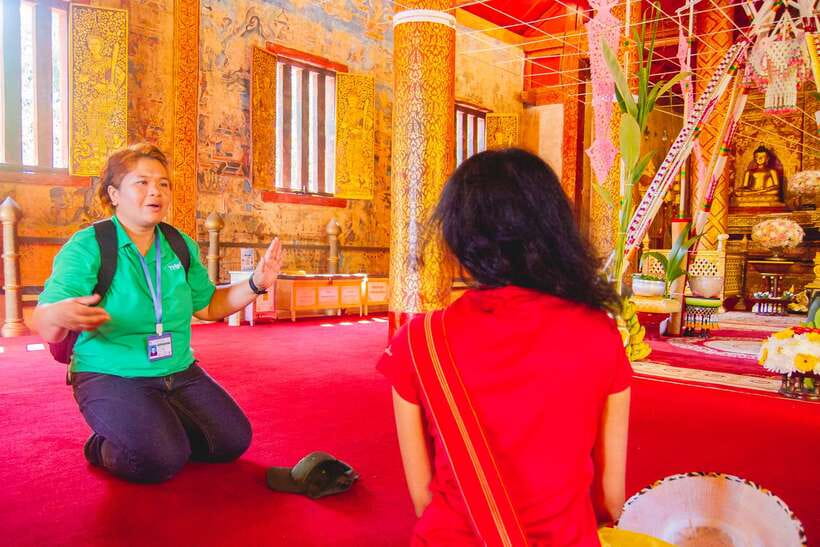
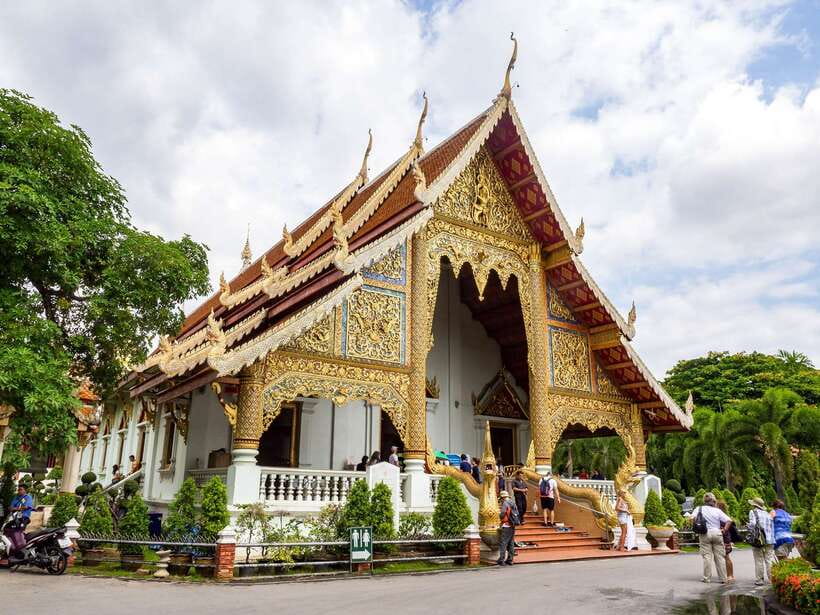
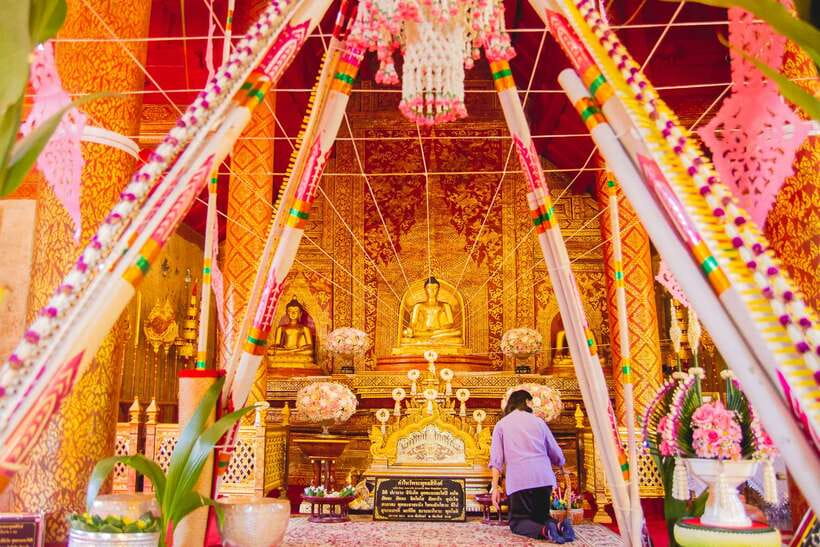
Wat Phra Singh is the grand finale, and it brings together the decorative features that many people associate with northern Thai temples. Built in the 14th century, it is known for its polished grounds, mosaic-inlaid sanctuary, gilded pagodas, and large Lion Buddha statue.
The sanctuary is especially rewarding after the simpler teak work at Wat Phan Tao. Here, your attention shifts to mosaic decoration and gilded surfaces, with many corners offering a strong photograph. Your guide can also explain the religious meaning behind the buildings and images rather than leaving you with a collection of pretty snapshots.
This is the final stop, and the tour ends at Wat Phra Singh Woramahawihan. That makes the finish convenient if you want to continue exploring the Old City on your own, find lunch, or return to your hotel by local transport.
The entrance fee is 50 THB. Like the other admissions, it is not part of the $16 booking cost. The grounds are beautiful, but this stop can feel busy and visually crowded. If you want quiet photographs, your guide may help you find better angles, but the tour cannot control the flow of people inside a major temple.
More walking tours in Chiang Mai:
- Chiang Mai: Historic Temples and City Guided Walking Tour
★ 4.7 · 650 reviews - Chiang Mai: Temple And City Walking Tour Part I
★ 4.7 · 244 reviews - Chiang Mai: Local Food and Markets Guided Walking Tour
★ 4.3 · 175 reviews - Chiang Mai Untouched Elephant: Nature Walk & Waterfall Trek
★ 4.7 · 77 reviews
What your guide adds to the visit
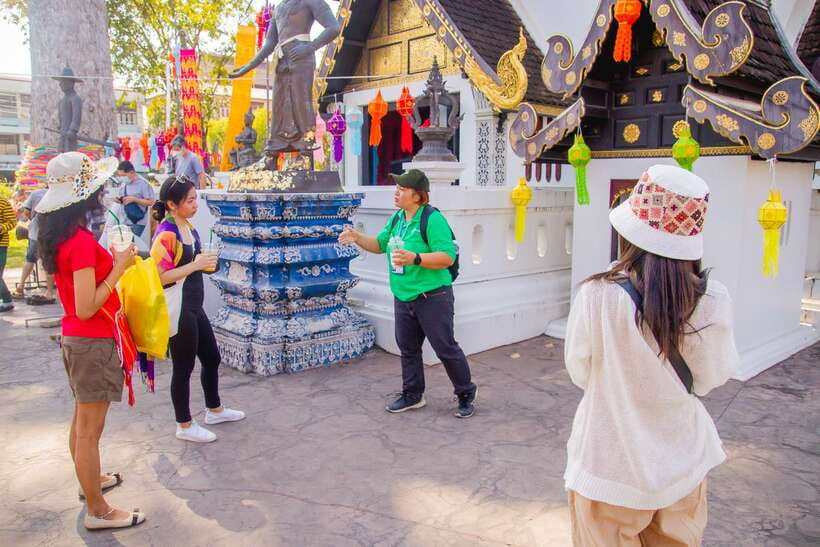
The strongest part of this experience is the guide rather than the walking itself. You can find all three temples without a tour, but it is harder to understand how they connect to Chiang Mai’s past and present.
Guides named Nana, Nuttaya, Sunny, TomTam, James, and Boon have been singled out for clear explanations and friendly personalities. That does not mean you will receive one of those specific guides, but it gives you a useful sense of the standard people have experienced. Several guides have also been praised for answering questions patiently instead of delivering a speech and moving on.
The subject matter goes beyond dates and construction. You may learn about Buddhism, Thai beliefs, local languages, meditation, Lanna history, and the ways religious practice shapes daily life. Boon included a meditation lesson during one visit, while another guide shared personal insight from growing up as a monk. Those details can make the tour feel more human.
A good guide also helps with small practical matters. Guides have taken group photographs, offered local food tips, and helped guests who were short on cash for an entrance fee. One guide arranged a tuk-tuk for a participant who found the walking difficult. That kind of care is not guaranteed, but it shows the benefit of having a local person beside you.
English is the stated tour language. The strongest experiences depend on how well the guide matches your interests, so speak up. Ask about the Buddha images, temple etiquette, Lanna design, or modern Thai religious life. The more you ask, the more useful the three hours become.
Walking, heat, and temple etiquette
Three hours on foot sounds easy until you add tropical heat, temple floors, and repeated shoe removal. The route is not presented as a strenuous hike, but moderate fitness is recommended, and the experience is not suitable for people with mobility impairments, heart problems, respiratory issues, or pregnancy.
Bring water even in the cooler season. February can still feel hot in the shade, and you may spend part of the walk outdoors between buildings. Sunglasses, a hat, sunscreen, and insect repellent are sensible additions. A camera is welcome, but keep it secondary to the setting and local customs.
Dress with temple rules in mind. Clothing that exposes shoulders, underarms, backs, or knees is not permitted at some sights. The safest choice is light clothing that covers your shoulders and knees from the start. A scarf can help with coverage, but it is better not to rely on a last-minute fix.
Expect to remove your shoes before entering certain buildings. This is normal temple etiquette, not an inconvenience created by the tour. Easy slip-on shoes save time, and socks can make hot or rough surfaces more comfortable.
Move quietly inside prayer spaces and follow your guide’s instructions about photographs. The temples are active religious places, not simply historic displays. A respectful visit is also a better one, since you can pay attention to what is happening around you instead of worrying about rules.
Is the $16 price good value?
Yes, provided you want explanation rather than just access. For $16 per person, you receive a three-hour guided walk through three of Chiang Mai’s main temples. The fee is low for an English-speaking local guide, especially when the guide gives time for questions and adds cultural context.
You should add 120 THB for admissions:
- Wat Chedi Luang: 50 THB
- Wat Phan Tao: 20 THB
- Wat Phra Singh: 50 THB
Food, drinks, hotel pickup, and hotel drop-off are not included. The meeting point is the entrance to Wat Chedi Luang, so you need to arrange your own way there. That is a drawback for anyone staying far from the Old City, but it also keeps the price down and avoids spending your morning in a vehicle.
The tour’s best value comes from what you learn. If you already know Chiang Mai’s temple design and Buddhist customs, the route may feel basic. If you are visiting for the first time, a good guide can save you from looking at the same buildings without understanding their purpose.
The GSTC certification is another positive for visitors who want a lower-impact activity. The experience focuses on offsetting carbon emissions and reducing its environmental effect. Walking between nearby sights also avoids adding a private vehicle to a short city route.
The right timing and group expectations
Starting times depend on availability, so check the schedule before booking. A morning departure is likely to be more comfortable than the hottest part of the day, but the information provided does not promise a particular start time or temperature.
Allow extra time after the tour. Some people finish close to three hours, while an enthusiastic guide and a question-filled group can continue for four hours or more. That is good news if you want detailed explanations, but not if you have a tight lunch reservation or a later excursion.
The tour is conducted in English, and the group pace matters. You will need to stay with the guide as the group moves between sites. If you prefer to stop for long periods at one statue or take many posed photographs, an independent visit gives you more freedom.
Still, the walk is a sensible choice for solo visitors, couples, and first-time visitors who want company and structure. It also suits anyone who normally wanders through religious sites without knowing what to look for. Families with older children may enjoy the variety, but the walking and dress requirements may be less suitable for very young children.
What I would pack for this route
Keep your day bag light, but include the items that solve the tour’s small annoyances.
- Water, since even cool-season conditions can feel warm
- Cash for the 120 THB admission total
- Slip-on shoes or sandals
- Socks if you dislike walking barefoot
- A scarf or light layer for temple coverage
- Hat, sunglasses, sunscreen, and insect repellent
- Camera or phone for photographs
- Comfortable shoes with good support
Do not count on hotel pickup. You are responsible for reaching Wat Chedi Luang, and you should confirm the final meeting details in the email sent the evening before. Arrive 10 minutes early and look for the TripGuru sign.
Who should book this walking tour?
I would book it as an early Chiang Mai activity, especially if you have only a few days in the city. It gives you the essential Old City temple circuit, introduces Buddhist and Lanna culture, and leaves you with enough context to explore other places on your own.
It is also a good match for you if you value clear local explanation more than a relaxed, unstructured morning. The guides have been praised for warmth, humor, strong English, and a willingness to answer questions. That personal connection is the main reason to choose this over walking alone.
I would think twice if you have mobility limits, serious heart or respiratory problems, or little tolerance for heat. The tour also may not suit you if you need hotel transport, dislike removing shoes, or have a tightly scheduled day.
Should you book the Chiang Mai temple walk?
Book it if you want an affordable introduction to Chiang Mai’s central temples and Buddhist culture. Wat Chedi Luang provides the scale, Wat Phan Tao supplies the fine woodwork, and Wat Phra Singh finishes with decorative grandeur. The three sites feel different enough to keep the walk interesting.
Skip it if you prefer to set your own pace or already know the Old City well. For most first-time visitors, though, the combination of a compact route, low price, and engaging English-speaking guides makes this a smart opening look at Chiang Mai.
FAQ
How long does the Chiang Mai temple walking tour last?
The tour lasts three hours. Each of the three main temple visits is planned for about one hour, though the total time can vary if the guide spends longer answering questions.
Which temples are included?
The route includes Wat Chedi Luang, Wat Phan Tao, and Wat Phra Singh. It starts at Wat Chedi Luang and finishes at Wat Phra Singh Woramahawihan.
How much are the temple entrance fees?
The listed fees are 50 THB for Wat Chedi Luang, 20 THB for Wat Phan Tao, and 50 THB for Wat Phra Singh. These charges are separate from the tour price.
Is hotel pickup included?
No. Hotel pickup and drop-off are not included. You meet at the entrance of Wat Chedi Luang, where the guide will hold a TripGuru sign.
What should I wear?
Wear clothing that covers your shoulders and knees. Some temples do not permit clothing that reveals the shoulders, underarms, back, or knees. Bring a scarf if you need an extra layer.
Is the tour available in English?
Yes. The tour has a live English-speaking guide. Guides explain Chiang Mai’s history, Lanna culture, Buddhism, Thai beliefs, and the temples visited along the route.
More 3-Hour Experiences in Chiang Mai
- Doi Suthep Temple Tour by Local Red Car 3 Hour Adventure
★ 5.0 · 34 reviews - No.1 Chiang Mai: 3-Hour Monk Trail Hike to Wat Doi Suthep & Palad
★ 5.0 · 11 reviews - Chiang Mai Old City & Temples 3 hour Twilight Walking Tour
★ 5.0 · 9 reviews - Doi Suthep Temple Tour by Local Red Car – 3 Hours Experience
★ 5.0 · 8 reviews
Just added around Chiang Mai
- Chiang Rai Wonders: White, Blue & Red Temples and Hot Spring★ 5.0 · 3 reviews
- Chiang Rai White Temple Blue Temple and Hill Tribe Village Tour★ 3.5 · 3 reviews
- Private Chiang Mai City Tour including Wat Doi Suthep, Wat Suan Dok (SHA Plus)★ 5.0 · 3 reviews
- Workshop Making Herbal ball & herbal inhaler★ 4.3 · 3 reviews
- Chiang Mai Mae Ping River Cruise and Thai Farmer House Visit★ 4.0 · 3 reviews
- Phoenix Zipline Adventure Park – Chiang Mai Thrills★ 4.0 · 3 reviews
- Private: 3 days 2 night trip: ChaingMai-Chaingrai- The Golden Triangle trip★ 5.0 · 3 reviews
- Monk trails hike, Wat Phalat, Monk chanting, Wat Doi Suthep.★ 5.0 · 3 reviews
Chiang Mai Old City Tours, compared.

Highlights & Hidden Gems With Locals: Best of Chiang Mai Private Tour
Read our review →

Browse the lists this tour appears in