
Reviewed · HISTORICAL TOURS
Chiang Mai: Historic Temples and City Guided Walking Tour
Chiang Mai’s best introduction may be on foot, moving from its oldest temple to its grandest ruined chedi through quiet old-town streets. This three-hour walking tour gives you the story behind the temples, not just a quick look at their roofs and statues.
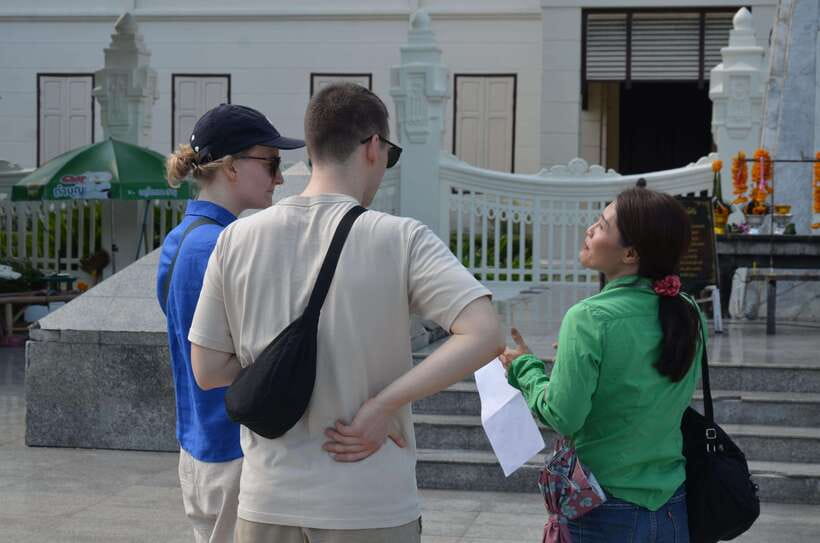
I like the small groups of up to 10 and the easy pace, especially when guides such as Jen, Pun, and Danny are leading. I also like the route’s variety: Lanna architecture, Buddhist traditions, royal history, and everyday streetside life. The main drawback is simple: you must walk outdoors in Thailand’s heat, and the two main temple entrance fees cost extra.
In This Review
- Key points at a glance
- Why this Chiang Mai walk works so well
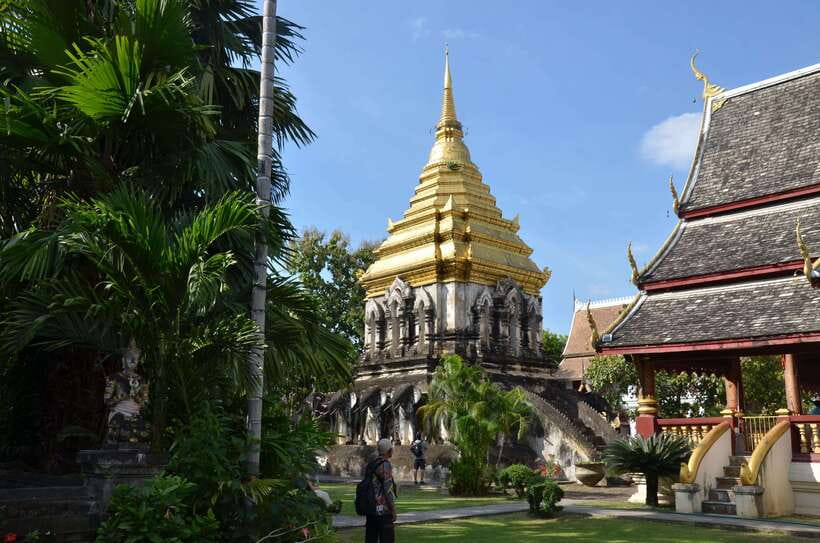
- Wat Chiang Man, Chiang Mai’s first temple
- The Three Kings Monument and the old city’s civic heart
- Wat Phra Singh and classic Lanna design
- Wat Phan Tao, the quiet appeal of teak
- Wat Chedi Luang, the tour’s grand finish
- What the guides add to the experience
- Heat, clothing, and the practical side of walking
- Is $21 a fair price?
- Who should book this walking tour?
- Should you book it?
- FAQ
- How long does the Chiang Mai temple walking tour last?
- Where does the tour begin?
- Where does the tour finish?
- Which places are visited?
- Are temple entrance fees included?
- What language is the tour offered in?
- What should I wear?
Key points at a glance
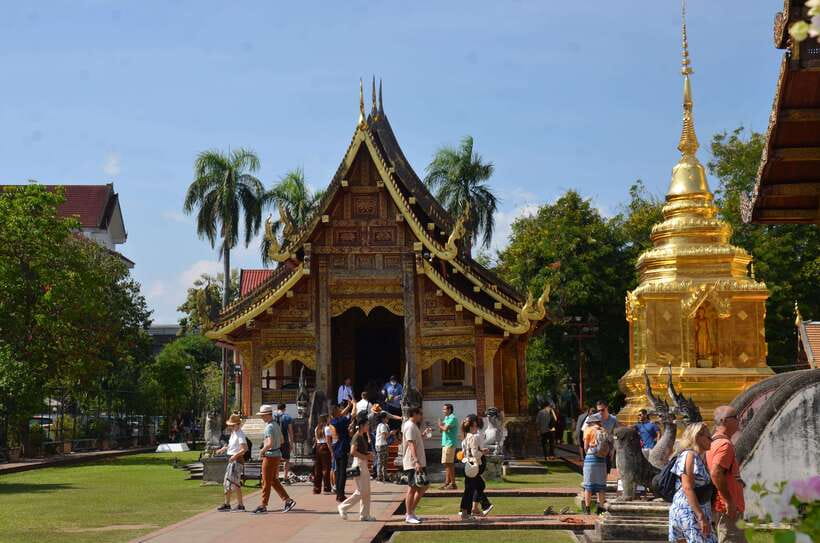
- Four important temples in one compact route: Visit Wat Chiang Man, Wat Phra Singh, Wat Phan Tao, and Wat Chedi Luang.
- A strong first-day choice: The walk explains Chiang Mai’s old town, Lanna culture, and Buddhism before you explore more temples on your own.
- Small-group attention: Groups are limited to 10, and some departures may be much smaller.
- Teak and brickwork together: Compare Wat Phan Tao’s wooden hall with the huge, weathered chedi at Wat Chedi Luang.
- Plan for temple etiquette: Cover your shoulders and knees, and bring comfortable shoes, sunscreen, and cash.
- Good value at $21: You receive a local English-speaking guide and water, but pay 100 THB extra for two temple entrances.
Why this Chiang Mai walk works so well
Chiang Mai’s old city is easy to admire but harder to understand. You can wander from one temple to another and notice gold, brick, wood, and painted figures, yet miss why each building matters. This tour gives those details a place in the larger story.
The route begins at Wat Chiang Man and finishes at Wat Chedi Luang. Along the way, you pass the Three Kings Monument and two especially important temples, Wat Phra Singh and Wat Phan Tao. It is a tidy introduction to the old city without the expense or carbon cost of a vehicle tour.
I would choose an early starting time if one is available. February guests especially appreciated beginning before the day became too hot, and the timing also helps you enjoy the temples at a calmer pace. The exact start time depends on availability, so check before booking.
The walking itself is part of the point. You move through the city rather than viewing it through a window. You might notice cafés, shops, side streets, and small details between the major stops. One guide also offered coffee and food suggestions, including a recommendation for khao soi, Chiang Mai’s famous curry noodle dish.
More historic sites in Chiang Mai:
- Chiang Mai: Historic Old City Bike Tour – Morning or Night
★ 4.7 · 263 reviews - Chiang Mai: Historic Old City Bike Tour – Morning or Night
★ 5.0 · 202 reviews - Chiang Mai: Private Historic Old City Bike Tour – Night
★ 4.7 · 143 reviews
Wat Chiang Man, Chiang Mai’s first temple
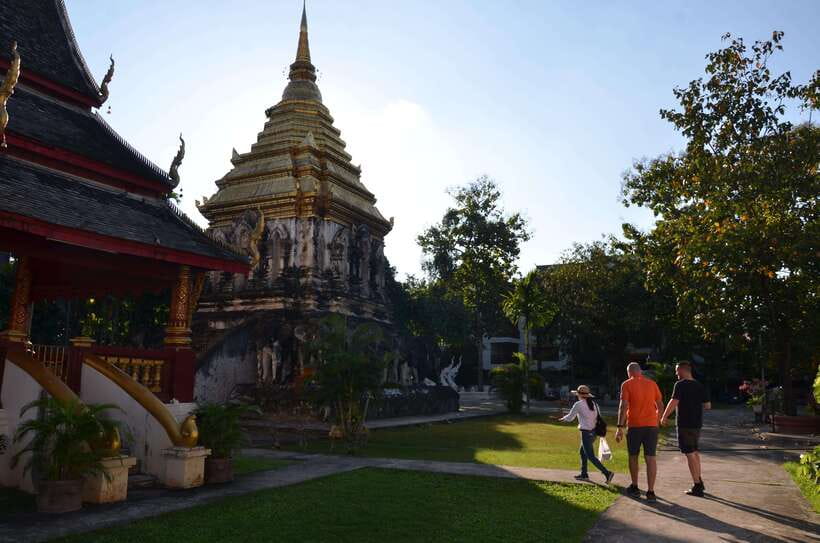
Meet your guide inside the grounds of Wat Chiang Man, looking for the Beyond Experience sign. This meeting point matters because Wat Chiang Man is not simply a convenient starting place. It is the oldest temple in Chiang Mai, built in 1296, when the city was founded.
You have about 30 minutes here for a guided visit, photographs, and questions. Your guide sets up the basic story of Chiang Mai and the Lanna kingdom, giving you useful context for the temples that follow.
The first stop is also a practical test of the tour’s style. This is not a race to take a photograph and move on. Guides such as Pun and Jen have been praised for explaining Buddhist traditions, answering questions, and allowing time for photographs. Danny, one of the guides, was described as a former monk of 12 years, which can add a particularly useful perspective on temple customs and Buddhism.
You should still expect an active visit. Temple grounds can involve uneven surfaces, outdoor heat, and periods of standing. People with back problems or those who are pregnant may find this format uncomfortable, and the activity is not recommended for them.
The Three Kings Monument and the old city’s civic heart
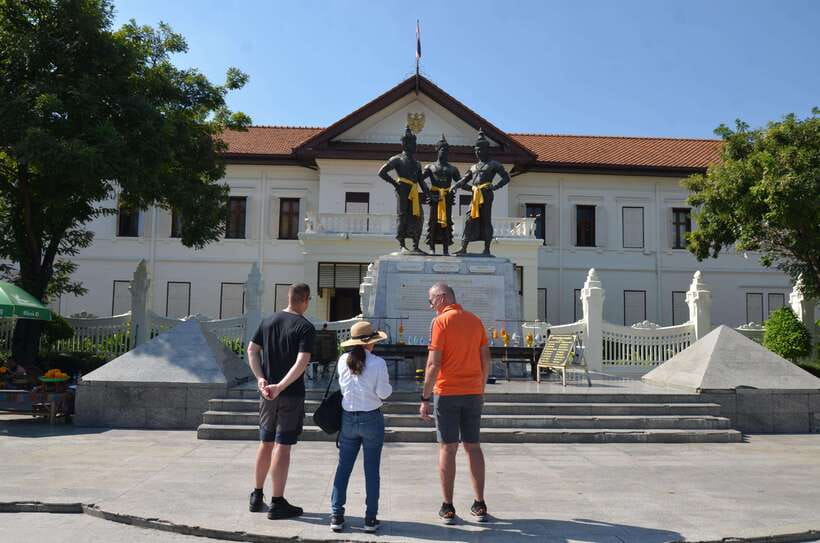
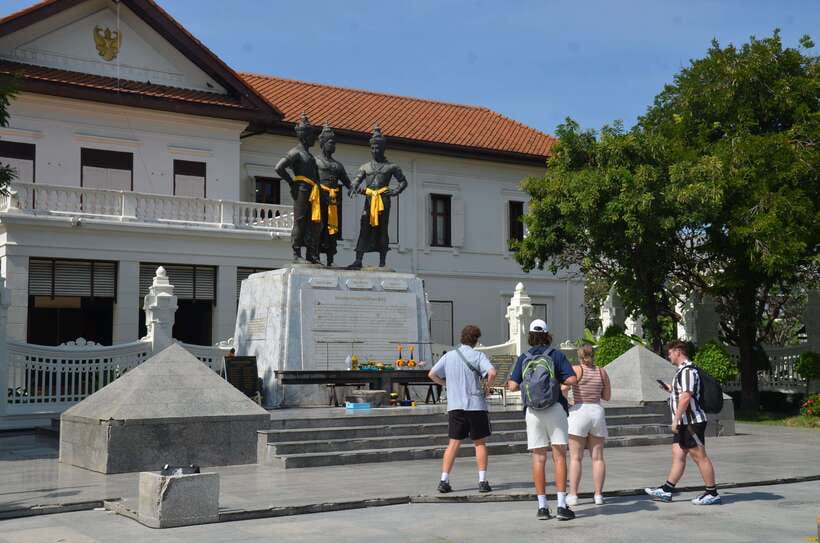
From Wat Chiang Man, the group continues west to the Three Kings Monument. The stop lasts about 10 minutes, so think of it as a focused explanation and photo break rather than a long visit.
The monument sits in a broad open square at the center of the walled old town. It provides a useful contrast with the temples. Here, your guide can connect the city’s founding story and royal past to the streets around you, while also pointing out how the old town is organized.
This is one of the places where walking adds value. You are not only collecting temple interiors. You are seeing how important religious buildings fit into the old city’s public spaces. The short stop also keeps the tour moving toward Wat Phra Singh without making the three hours feel overloaded.
Wat Phra Singh and classic Lanna design
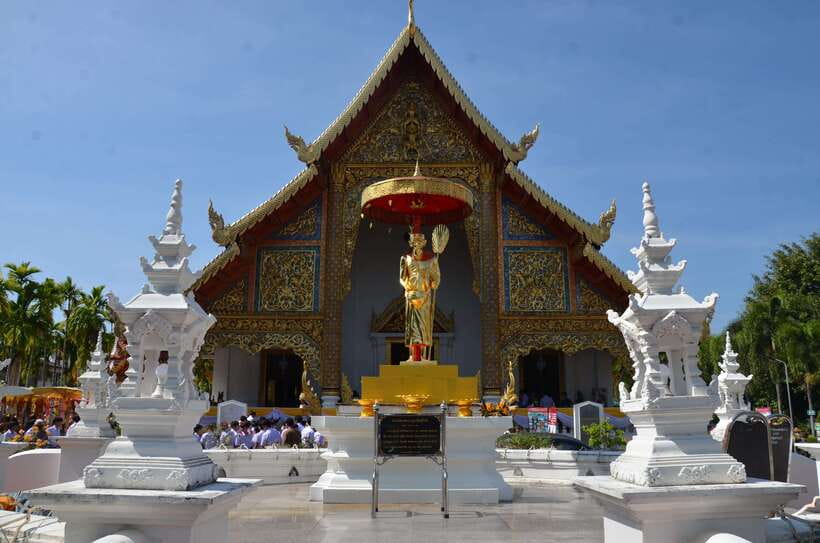
Wat Phra Singh receives the longest visit after Wat Chiang Man, with around 40 minutes for the guided tour. It is known as one of Thailand’s finest examples of classic Lanna temple architecture, so this is a major visual and cultural stop.
The Lanna style is easier to appreciate when someone points out what you are seeing. Your guide can help you compare the rooflines, decorative details, prayer spaces, and Buddhist imagery with the buildings at the other temples. Instead of treating every temple as another version of the same sight, you begin to notice differences in material, age, purpose, and design.
An entrance fee of 50 THB is not included. Bring cash, as the tour information specifically advises doing so. The dress code also matters here: shoulders and knees must be covered when entering temples. Shorts, short skirts, and sleeveless shirts are not allowed, so dress for both the weather and the religious setting.
This is a good place to ask questions. Several guides, including Pun and Danny, have been praised for giving clear explanations without drowning the group in facts. That balance is valuable in a place filled with unfamiliar symbols and stories.
More walking tours in Chiang Mai:
- Chiang Mai: 3 Hour Old City and Temples Guided Walking Tour
★ 4.6 · 1,568 reviews - Chiang Mai: Temple And City Walking Tour Part I
★ 4.7 · 244 reviews - Chiang Mai: Local Food and Markets Guided Walking Tour
★ 4.3 · 175 reviews - Chiang Mai Untouched Elephant: Nature Walk & Waterfall Trek
★ 4.7 · 77 reviews
Wat Phan Tao, the quiet appeal of teak
Wat Phan Tao is a shorter stop, around 15 minutes, but it adds a completely different note to the route. The main ordination hall, or viharn, is made almost entirely from teak wood. Its warm, dark structure gives you a sharp contrast with the brick and plaster of the larger temple compounds.
The building was originally part of a royal palace, and the hall contains a large teak throne once used by Chiang Mai’s rulers. Those details give the visit more depth than simply calling it an old wooden temple. You are looking at a building tied to both religious life and the city’s ruling household.
Because this stop is brief, listen closely while the guide explains the building. You will have time for photographs, but not an extended independent exploration. I like that the route includes Wat Phan Tao because it prevents the tour from becoming a parade of similar gold-painted façades.
Wat Chedi Luang, the tour’s grand finish
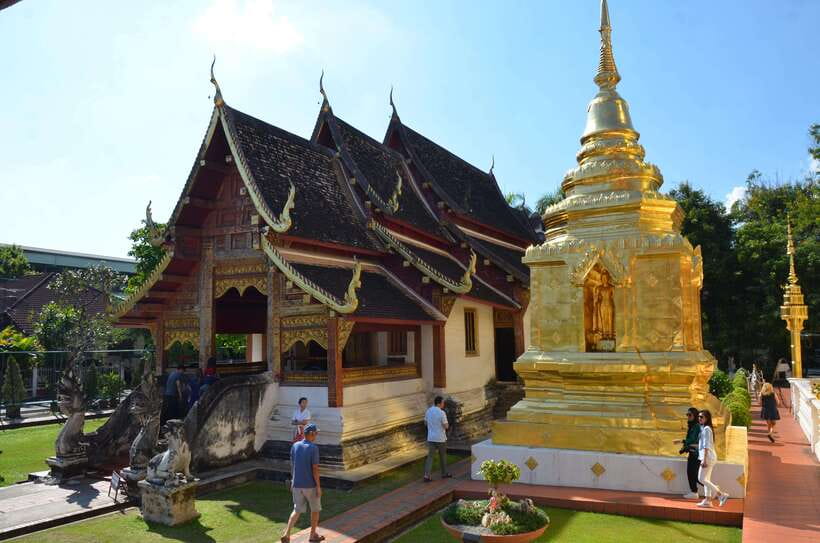
The final stop is Wat Chedi Luang, where the tour ends after about 40 minutes. The ruined chedi is the visual climax of the walk. Its scale and damaged form make it easy to picture the power the temple once represented, while the weathered brick gives it a different mood from the polished details at Wat Phra Singh.
Inside the main prayer hall, you can see a majestic standing Buddha. The combination of the vast chedi and the Buddha image gives the last stop plenty of weight, even after three hours of walking.
Ending here is also convenient. You are not required to return to the first meeting point, and you can continue exploring the surrounding old city afterward. The tour ends at Wat Chedi Luang Varaviharn, so plan your afternoon from there rather than assuming transportation back to your hotel is included.
The entrance fee is another 50 THB, separate from the tour price. Add the two fees to the $21 cost when comparing this walk with other activities. Even with that extra payment, the package remains inexpensive for three hours of guiding and four significant temples.
What the guides add to the experience
The strongest part of this activity is the human guide. The names vary by departure, but Jen, Pun, Danny, Jane, Faan, Jackie, and others have led recent tours. Their approach appears to differ slightly, but the useful pattern is clear: expect explanations about Chiang Mai’s past, Buddhism, temple design, and local customs in English.
Jen has been praised for warmth, humor, and patience. Pun is noted for answering questions and explaining the significance of each site. Danny is appreciated for clear English, a considerate pace, and his experience as a former monk. Jane has helped people find the meeting point through WhatsApp and kept the group moving without making it feel rushed.
That personal attention is easier in a small group. The limit is 10 people, but some departures have had only two, four, or six participants. A tiny group can feel almost like a private walk, though you should not book expecting that every time.
The guide can also help with ordinary practical matters. One guide pointed out restrooms for older walkers, while others offered coffee and food suggestions. These small touches matter because they turn a formal sightseeing route into a useful introduction to spending time in Chiang Mai.
Heat, clothing, and the practical side of walking
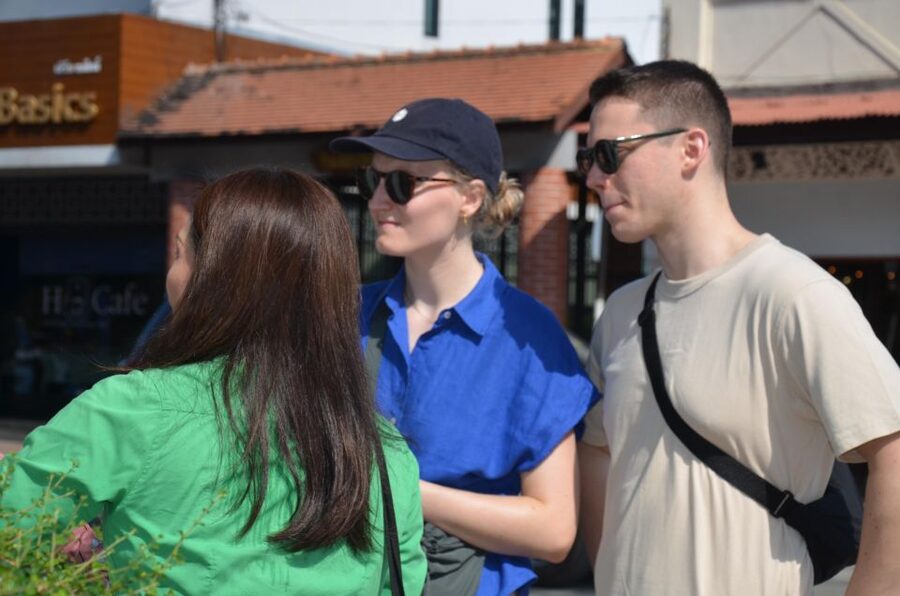
Three hours is not a long tour on paper, but Thailand’s climate changes how it feels. Wear comfortable walking shoes and light, comfortable clothing that still covers your shoulders and knees. Bring a hat, sunscreen, and cash for the temple fees.
An umbrella or raincoat is important from July through mid-October, the rainy season. Rain can arrive quickly, so do not rely only on a forecast checked at breakfast. A bottle of water is included, but you should still prepare for outdoor walking.
Large bags and luggage are not allowed. This is especially important if you are arriving in Chiang Mai or changing hotels on the day of the tour. Leave suitcases elsewhere and carry only what you need.
The route is best for people who can walk and stand comfortably. It is not considered suitable for pregnant women or people with back problems. If you need frequent seated breaks, ask before booking rather than hoping the pace will work out.
Temple etiquette is part of the experience, not an annoying extra rule. Covering your knees and shoulders shows respect and prevents an avoidable problem at the entrance. A scarf can help if your clothing is borderline, but dressing appropriately from the start is easier.
Is $21 a fair price?
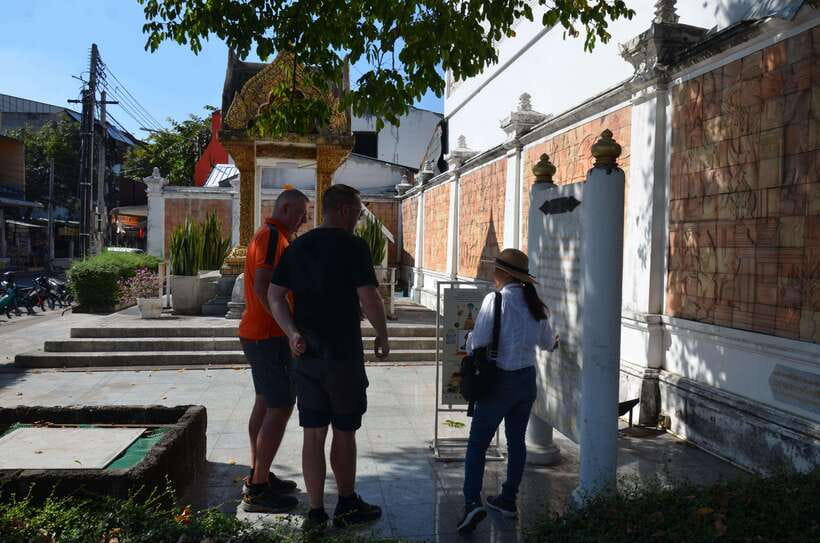
Yes, provided you want explanation rather than only photographs. For $21 per person, you receive a three-hour guided route, a local English-speaking guide, a small group, and a bottle of water. The extra 100 THB for Wat Phra Singh and Wat Chedi Luang is modest, but it should be included in your budget.
The value is strongest for a first visit. You receive a framework for understanding Lanna architecture, Chiang Mai’s founding, royal connections, Buddhist practice, and the purpose of different temple buildings. Afterward, you can return to the places you liked best and look at them with more confidence.
The value is lower if you already know these temples well or prefer to explore without a schedule. You will have less freedom than on a solo walk, and the three-hour route gives each stop a set amount of time. Wat Phan Tao, in particular, receives only about 15 minutes.
This is also a low-impact way to see the old city. Walking avoids a vehicle for a short route and lets you discover local streets at ground level. It is a sensible choice if you want to keep the sightseeing simple and reduce unnecessary transport.
Who should book this walking tour?
I would recommend it most strongly to first-time visitors, people interested in history and religion, and anyone who wants a gentle orientation before exploring Chiang Mai alone. It also suits solo visitors who want company without joining a huge group.
Families with older children may enjoy the variety, provided everyone can handle the heat and walking. Older adults can join if they are comfortable on foot, and the guides have shown care with pace and restroom stops. Still, the activity is specifically not suitable for people with back problems or pregnant women.
You should choose a different plan if you want a food tour, a night experience, or transport between distant sights. Food is not included, and this route is focused on temples, history, architecture, and the old town.
Should you book it?
Book this tour if you want Chiang Mai’s temples to make sense, not just look beautiful. The combination of Wat Chiang Man, Wat Phra Singh, Wat Phan Tao, Wat Chedi Luang, and the Three Kings Monument covers the old city’s essential sights in a manageable morning or afternoon.
The best reasons to book are the small group, the strong guide feedback, the low price, and the range of buildings. Skip it if you dislike walking in heat, need a fully seated activity, or prefer to set your own timing. For most first-time visitors who can walk comfortably, this is a practical and worthwhile start in Chiang Mai.
FAQ
How long does the Chiang Mai temple walking tour last?
The tour lasts three hours.
Where does the tour begin?
You meet your guide at Wat Chiang Man. Look for the Beyond Experience sign inside the temple grounds.
Where does the tour finish?
The tour finishes at Wat Chedi Luang Varaviharn.
Which places are visited?
The route includes Wat Chiang Man, the Three Kings Monument, Wat Phra Singh, Wat Phan Tao, and Wat Chedi Luang.
Are temple entrance fees included?
No. Wat Phra Singh costs 50 THB and Wat Chedi Luang costs 50 THB. Food is also not included.
What language is the tour offered in?
The tour is offered in English with a live local guide.
What should I wear?
Wear comfortable clothes with your shoulders and knees covered. Bring comfortable shoes, a hat, sunscreen, cash, and a scarf. During the rainy season, bring an umbrella or raincoat.
Just added around Chiang Mai
- Chiang Rai Wonders: White, Blue & Red Temples and Hot Spring★ 5.0 · 3 reviews
- Chiang Rai White Temple Blue Temple and Hill Tribe Village Tour★ 3.5 · 3 reviews
- Private Chiang Mai City Tour including Wat Doi Suthep, Wat Suan Dok (SHA Plus)★ 5.0 · 3 reviews
- Workshop Making Herbal ball & herbal inhaler★ 4.3 · 3 reviews
- Chiang Mai Mae Ping River Cruise and Thai Farmer House Visit★ 4.0 · 3 reviews
- Phoenix Zipline Adventure Park – Chiang Mai Thrills★ 4.0 · 3 reviews
- Private: 3 days 2 night trip: ChaingMai-Chaingrai- The Golden Triangle trip★ 5.0 · 3 reviews
- Monk trails hike, Wat Phalat, Monk chanting, Wat Doi Suthep.★ 5.0 · 3 reviews
Historical Tours, compared.
1 Day Sukhothai Historical Park from Chiang Mai Private Tour
Read our review →
Old Town History and Culture Walking Tour at Chiang Mai
Read our review →

Browse the lists this tour appears in