
Reviewed · CHIANG MAI STREET FOOD TOURS
Chiang Mai: Local Food and Markets Guided Walking Tour
Chiang Mai’s best food lessons often happen beside a market stall, not in a formal cooking class. This 150-minute walking tour takes you from Chansom Memorial Bridge through flower sellers and market lanes to small food stops serving steamed dumplings, Chinese-style fried dough, mango sticky rice, and Hakka noodles.
I like two things here. A local guide makes unfamiliar food easy to try, and the route introduces parts of Chiang Mai you could easily pass by alone. I also like the flexible start times and the chance to book on the same day, subject to availability.
The main drawback is that food is not included in the $48 price. You pay for each tasting yourself, usually in cash. The late 2:30 pm departure can also miss some of the named restaurants, so morning is the safer choice if you want the full route.
In This Review
- Key points to know before you book
- What this Chiang Mai food walk is really about
- Starting with Khao Kriab Pak Moh at Lung Khajohn Wat Ket
- A colorful pause at Ton Lamyai Flower Market
- Pa thong ko at Go Neng, with a little visual comedy
- Warorot Market, Chiang Mai’s main food stop
- Mango sticky rice for the sweet course
- Hakka-style noodles at Thana Ocha
- What the guide adds to the food
- Price, extra food costs, and overall value
- Timing, walking, and who should choose it
- Should you book the Chiang Mai market food tour?
- FAQ
- How long does the Chiang Mai food and markets tour last?
- What is the meeting point?
- Where does the walking tour finish?
- What foods might I taste?
- Is food included in the tour price?
- What languages are available?
- Are hotel pickup and drop-off included?
- Is there a vegan option?
- Is the 2:30 pm start a good choice?
- What should I bring?
Key points to know before you book
- Four very different tastes: Try Khao Kriab Pak Moh dumplings, dinosaur-shaped pa thong ko, mango sticky rice, and Hakka-style noodles with tofu, fish sausage, and wontons.
- A market walk with a food guide: The route links Ton Lamyai Flower Market and Warorot Market, with explanations of ingredients, customs, and local eating habits.
- Morning departures work best: Several restaurants close by early afternoon, while the 2:30 pm slot may use replacement stalls.
- Plan for a real walk: One visitor covered about 2.5 miles, and another described the pace as brisk.
- Bring cash for tastings: The food costs extra, and paying separately at every stop can be less convenient than an all-inclusive tour.
- A good first-day activity: You get food ideas, market bearings, and restaurant recommendations for the rest of your Chiang Mai stay.
What this Chiang Mai food walk is really about
This is not a grand banquet or a long sit-down meal. It is a short, guided introduction to the food districts east of Chiang Mai’s old city, where market shopping, flower selling, Chinese-Thai cooking, snacks, and everyday meals all overlap.
The meeting point is Chansom Memorial Bridge, also called Khua Khaek, opposite Ton Lamyai Flower Market. From there, you walk between several stops rather than riding from restaurant to restaurant. That matters because the streets and markets are part of the lesson.
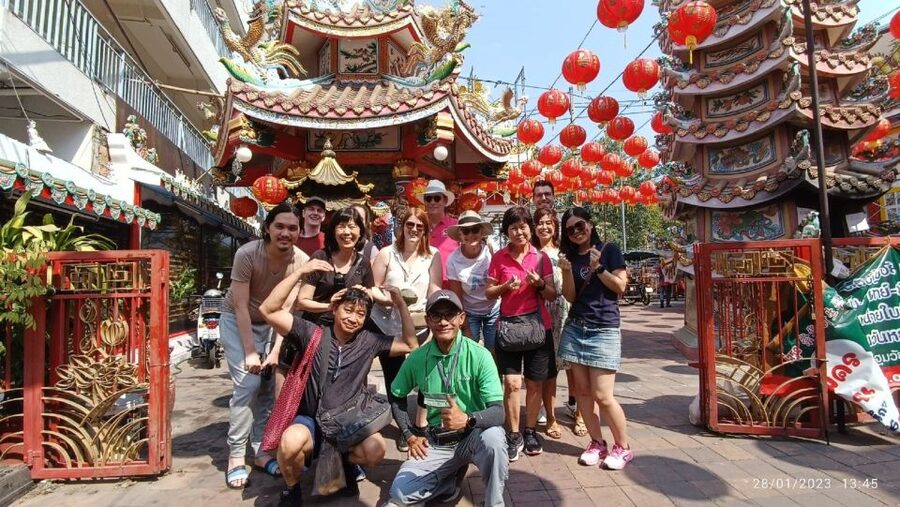
Your guide may be named Koi, Nom, Patty, Banana, Nancy, Sunny, or another member of the TripGuru Thailand team. The strongest part of the experience depends on having a guide who explains what you are seeing instead of simply pointing out the next place to eat. Guides who have led this route, including Koi, Nom, Patty, and Banana, have been praised for explaining local customs, helping with orders, and adjusting when a shop is closed or crowded.
The tour is offered in English and Thai. It is also GSTC-certified, with carbon-emissions offset credits included. That does not change the food itself, but it gives the walk a lower-impact structure than a private vehicle-based food outing.
More street food walks in Chiang Mai:
- Small-Group Chiang Mai Evening Street Food Tour
★ 4.5 · 826 reviews - Chiang Mai: Evening Local Street Food Market Tour
★ 4.8 · 604 reviews - Northern Flavours Chiang Mai Food Tour with 15+ Tastings
★ 5.0 · 513 reviews
Starting with Khao Kriab Pak Moh at Lung Khajohn Wat Ket
The first food stop is Lung Khajohn Wat Ket, known for Khao Kriab Pak Moh. These are sweet, steamed rice-skin dumplings, commonly filled with peanuts. Their soft wrapper and sweet filling make them a gentle opening course, especially if you are still learning which Thai flavors suit you.
This is a useful stop for anyone nervous about ordering street food. Your guide can help you understand what you are eating and how it fits into the local snack tradition. One of the tour’s strengths is that you are not asked to guess from a tray of unfamiliar items.
The stop may be busy, and availability can change. A guide has sometimes pre-ordered food when the first place was crowded, which helps keep this short route moving. Still, do not expect a long tasting session at every stop. The aim is variety, not a full serving of each dish.
A colorful pause at Ton Lamyai Flower Market
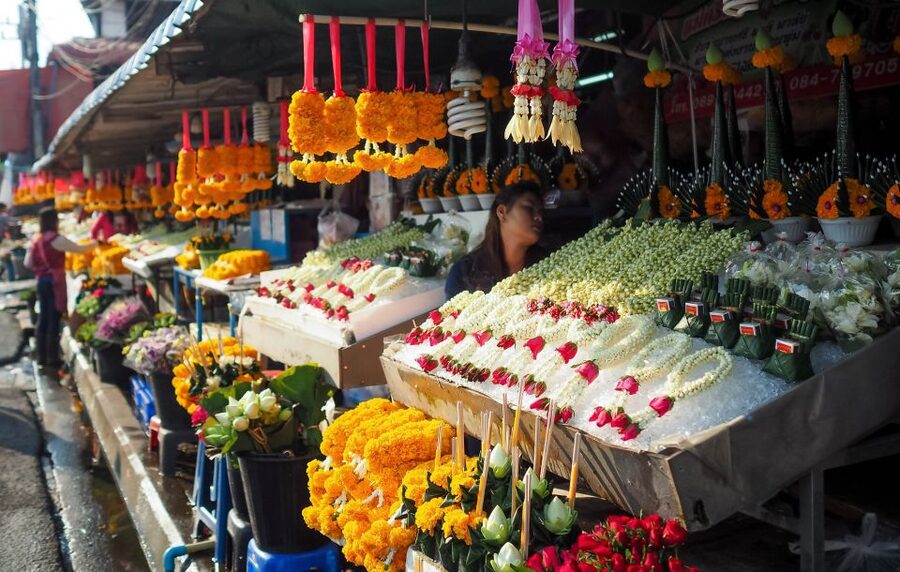
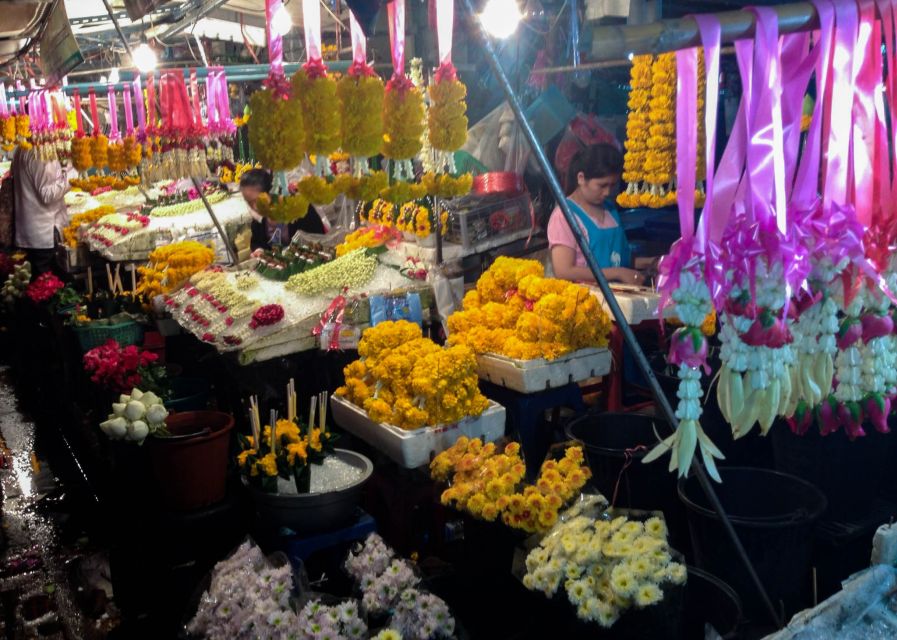
After the dumplings, the route passes through Ton Lamyai Flower Market. Fresh flowers and herbs brighten the walk, and this is more than a quick photo stop. The market shows another side of Chiang Mai’s daily food culture, where herbs, flowers, produce, and prepared snacks share the same commercial space.
You can take photos here, but keep an eye on the pace. This is a walking tour with several food stops, not a free hour to shop. The route finishes at Ton Lam Yai Market according to the listed plan, so the flower market is both an early landmark and a useful place to remember for later exploration.
The market can also help you get your bearings. If you are staying near the old city, you will learn where this side of the Ping River fits into your Chiang Mai map. Several people have found the tour useful on their first day because it gives them ideas for restaurants, markets, and evening food visits afterward.
Pa thong ko at Go Neng, with a little visual comedy
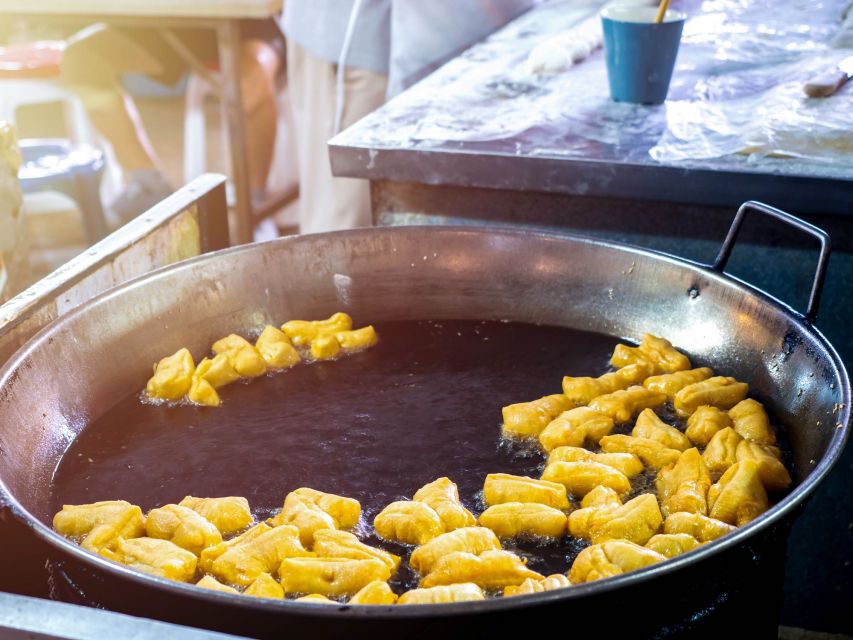
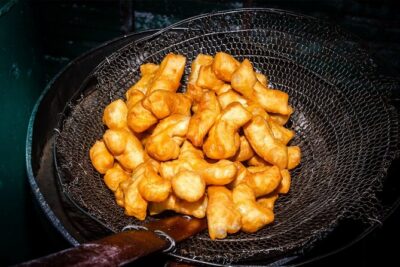
At Go Neng, you taste pa thong ko, deep-fried Chinese-style dough. The pieces are made in unusual shapes, and some resemble small dinosaurs. The shape is part of the fun, but the important point is that pa thong ko is a familiar local snack, not a dish made only for tour groups.
This stop provides a different texture from the steamed dumplings. Expect fried dough rather than a filled pastry. You may find it best as a shared bite, since the tour continues with more food soon afterward.
The unusual shapes make this a good stop for families, but the tour is not specifically designed for young children. One guide received praise for adapting to a picky five-year-old, which suggests that a flexible guide can help, though you should not expect a separate children’s menu.
If you take the morning departure, the markets are likely to be opening or already active. A morning visit can feel calmer than a later one, and it gives you more time before restaurants begin closing. One morning participant enjoyed reaching the market as it opened, before it filled with people.
More food tours in Chiang Mai:
- The 10 Tastings of Chiang Mai With Locals: Private Street Food Tour
★ 5.0 · 216 reviews - Taste of Chiang Mai: Michelin Guide & Street Food Tour
★ 4.9 · 159 reviews - Chiang Mai: Food Tour by Songtheaw Truck with 15+ Tastings
★ 4.9 · 157 reviews - Go where the locals go, Eat what the locals eat! Food Tour with Local Foodies
★ 5.0 · 138 reviews
Warorot Market, Chiang Mai’s main food stop
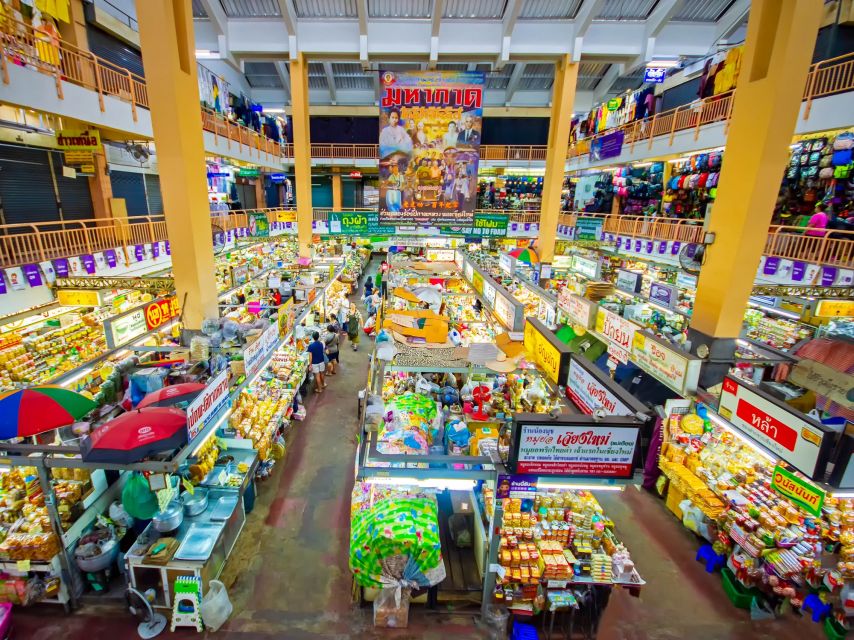
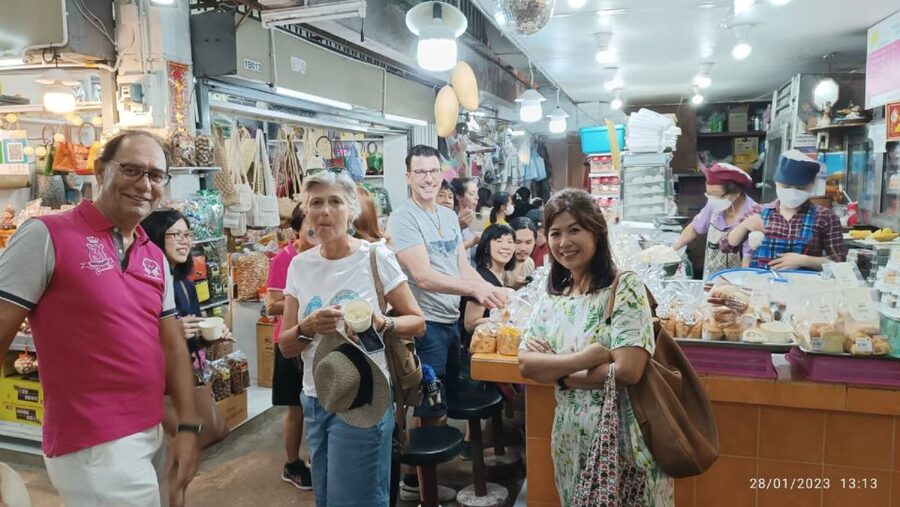
Warorot Market is the broadest part of the walk. It sells snacks, produce, clothing, and other goods, so this is where the food tour becomes a market tour as well.
Your guide can point out ingredients and explain how locals use them. This is where the experience earns its keep for first-time visitors. A stall full of dried goods or prepared food can be hard to read on your own, but a guide who knows the market can turn it into a series of small discoveries.
The route does not ask you to buy everything you see. Instead, you visit selected food stops and then have time to notice the wider market. One practical benefit is that you can ask for recommendations for other meals during your stay. Guides have also suggested restaurants, night markets, and other food places beyond the scheduled stops.
The walking can be fast. Allow roughly 2.5 miles if your group follows a longer version of the route, and wear shoes that are comfortable on city streets and market floors. This is not the right pick if you want to avoid walking in heat or need a slow, fully accessible route.
Mango sticky rice for the sweet course
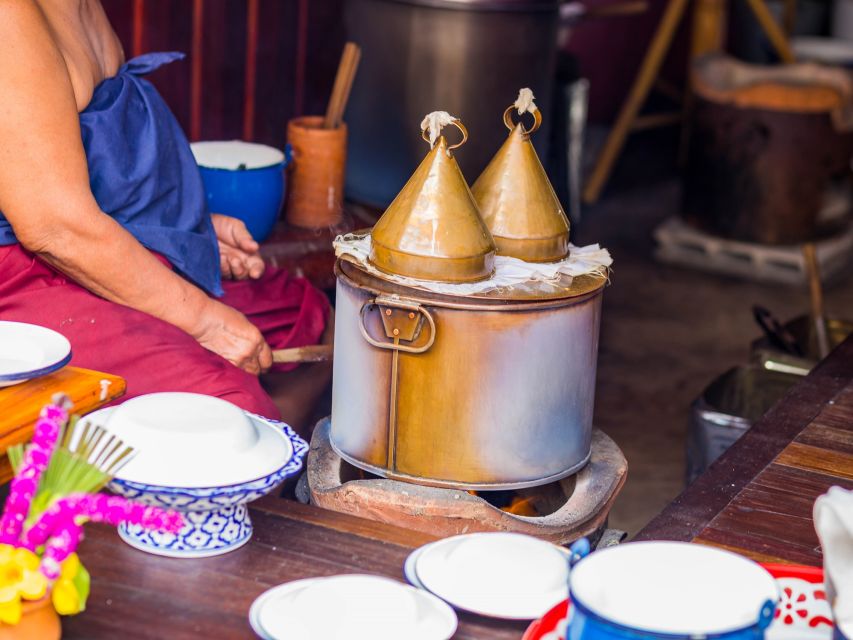
Inside the Warorot area, the guide takes you to a particular stall for mango sticky rice. This is the tour’s familiar Thai dessert, but eating it as part of a market route gives it useful context.
You may already know mango sticky rice from Thai restaurants at home. Here, you can compare the fresh dessert with less familiar snacks from earlier in the walk. The sweet rice, mango, and coconut flavors also offer a break before the final savory dish.
Do not eat a large breakfast before a morning tour, and do not plan a heavy lunch immediately beforehand. Several stops come close together, and the portions can add up. One person described arriving hungry as the best approach, which is sound advice.
Food portions and stalls can vary by the day. You pay for the mango sticky rice yourself, along with the other tastings. Carry small amounts of Thai baht if possible, since taking out your wallet at every stop is one of the less convenient parts of the arrangement.
Hakka-style noodles at Thana Ocha
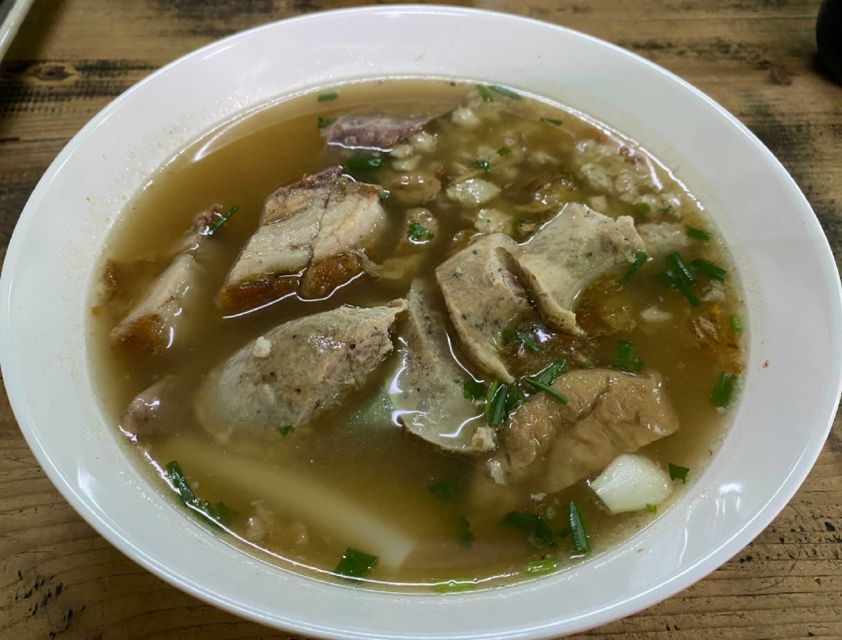
The final named stop is Thana Ocha, where you try Hakka-style noodles with Hakka stuffed tofu, fish sausage, and wontons. This is the most substantial dish on the route and works as a savory finish after the sweets and fried dough.
The dish also shows Chiang Mai’s Chinese influence. The tour is not limited to stereotypical Thai dishes. It presents the city as a place where local, Chinese, and regional food traditions meet in ordinary restaurants and market stalls.
Several tasters rated the first dumplings and final noodle soup as the best stops. That makes sense structurally: the dumplings are distinctive, while the noodle dish feels like a proper meal. If you are mainly interested in Chiang Mai’s savory food, pay particular attention here.
The final stop may change if the restaurant is closed or if the timing does not work. The 2:30 pm departure is the risky option for anyone determined to follow the advertised list. Many of the named restaurants close by early afternoon, so the guide may take you to other street-food stalls instead. That can still provide authentic food, but it will not be exactly the same route.
What the guide adds to the food
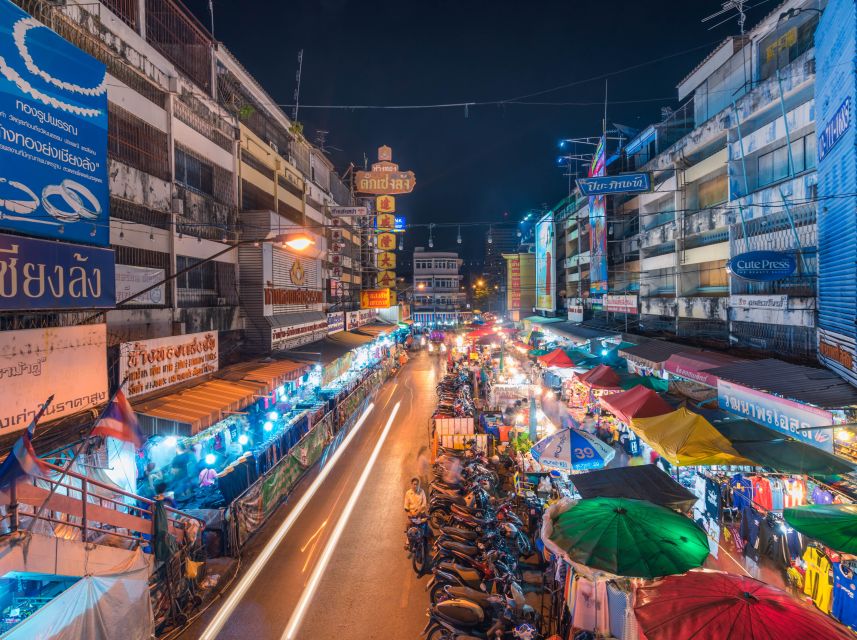
The food is the reason to book, but the guide is what prevents this from becoming a simple list of purchases. A good guide explains what locals eat, how dishes are prepared, which seasonings go with them, and why certain foods became part of Chiang Mai’s customs.
The best guide reports describe help with ordering, seating, photos, and shopping bags. One guide even carried bags for a participant. Those small actions matter in a crowded market, especially when you are balancing food, cash, and a camera.
The guiding quality may vary from person to person. The overall rating is 4.3 from 175 reviews, which is strong but not flawless. One four-star account found the walk too quick and wanted more explanation. Another said the guide mainly moved from stop to stop. If you prefer a slow food seminar with long conversations at every dish, look for a longer tour.
On the other hand, the short format suits you if you want a clear introduction without spending half a day on one activity. Guides have often adjusted when a shop was closed, too busy, or affected by a holiday. That flexibility is important in Chiang Mai, where market hours and food-stall availability can shift.
Price, extra food costs, and overall value
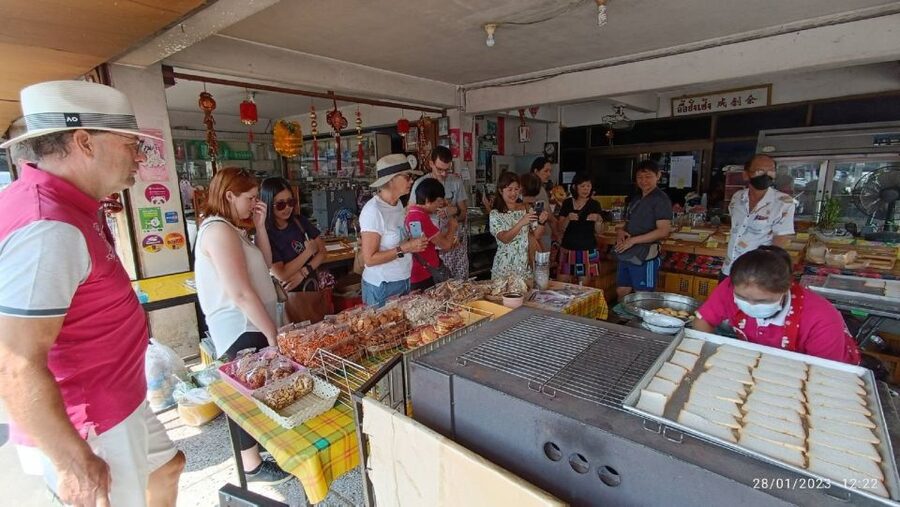
The stated price is $48 per person, with food and tastings not included. That makes the real cost higher, although the individual food purchases are described as reasonably priced.
You are paying for a local English or Thai-speaking guide, route planning, interpretation, and the work of finding places that may be hard to identify on your own. You are not paying for transportation, a hotel transfer, or an all-you-can-eat meal.
The value is best if you are new to Chiang Mai, unsure how to order, or short on time. In 150 minutes, you get several distinct foods, two major markets, flower stalls, and advice for later meals. The tour can also save you from spending your first days trying to decode menus and market counters alone.
It is less attractive if you already know the markets well or want many tastings included in one price. One four-star account compared it with a lower earlier price and felt the short route had only four or five stops. At the current stated price of $48, check the final booking total and budget extra cash for the food before deciding.
Timing, walking, and who should choose it
Choose a morning slot if you want the named restaurants, fresh market activity, and a less hurried pace. Lunch and early afternoon can work well too, but the later 2:30 pm departure may require substitute stalls.
Leave extra time to reach Chansom Memorial Bridge. Morning traffic can be heavy and unpredictable, and the guide can wait only 10 minutes after the scheduled meeting time. Be at the bridge 10 minutes early, looking for the TripGuru sign.
Wear comfortable shoes and bring a hat, sunglasses, sunscreen, insect repellent, a camera, and cash. Chiang Mai’s heat can make a short route feel longer, especially when you are walking and eating in quick succession.
This experience is not suitable for people with mobility impairments, pregnant women, or people with heart or respiratory problems. It also has no vegan option, so vegans should not book it. Anyone with serious food allergies should confirm details before booking, since the supplied information does not list allergen controls.
Cancellation is free up to 24 hours before the activity for a full refund, and you can reserve now and pay later. The team sends an email the evening before to confirm the pickup time and meeting point, though here pickup means meeting the guide rather than hotel transport.
Should you book the Chiang Mai market food tour?
Book it if you want a compact introduction to Chiang Mai food, prefer local markets to polished restaurants, and like having someone explain what to order. It is especially useful on your first day, when the guide can help you find more food for the rest of your stay.
Choose a morning departure, arrive hungry, carry cash, and expect a brisk walk. If you want a slow pace, included meals, vegan choices, or a long list of tastings, this is not the best match.
For most food-curious visitors, the appeal is simple: you get four contrasting bites, two market areas, flower stalls, and a guide who can make unfamiliar food feel approachable. The route is short, but it gives you a practical start in Chiang Mai’s everyday food world.
FAQ
How long does the Chiang Mai food and markets tour last?
The activity lasts 150 minutes, or two and a half hours.
What is the meeting point?
Meet at Chansom Memorial Bridge, also called Khua Khaek, opposite Ton Lamyai Flower Market.
Where does the walking tour finish?
The listed finish point is Ton Lam Yai Market.
What foods might I taste?
Possible tastings include Hakka-style noodles, mango sticky rice, pa thong ko deep-fried dough sticks, and Khao Kriab Pak Moh steamed rice-skin dumplings.
Is food included in the tour price?
No. The guide and walking tour are included, but food and tasting expenses are paid separately.
What languages are available?
The tour is offered in English and Thai.
Are hotel pickup and drop-off included?
No. Hotel pickup and drop-off are not included. You must reach the meeting point yourself.
Is there a vegan option?
No vegan option is available.
Is the 2:30 pm start a good choice?
The late start may use alternative food stalls because several named restaurants close by early afternoon. Morning slots are recommended if you want to follow the listed route more closely.
What should I bring?
Bring comfortable shoes, sunglasses, a hat, a camera, sunscreen, insect repellent, and cash.
More Walking Tours in Chiang Mai
- Chiang Mai: 3 Hour Old City and Temples Guided Walking Tour
★ 4.6 · 1,568 reviews - Chiang Mai: Historic Temples and City Guided Walking Tour
★ 4.7 · 650 reviews - Chiang Mai: Temple And City Walking Tour Part I
★ 4.7 · 244 reviews - Chiang Mai Untouched Elephant: Nature Walk & Waterfall Trek
★ 4.7 · 77 reviews
Just added around Chiang Mai
- Chiang Rai Wonders: White, Blue & Red Temples and Hot Spring★ 5.0 · 3 reviews
- Chiang Rai White Temple Blue Temple and Hill Tribe Village Tour★ 3.5 · 3 reviews
- Private Chiang Mai City Tour including Wat Doi Suthep, Wat Suan Dok (SHA Plus)★ 5.0 · 3 reviews
- Workshop Making Herbal ball & herbal inhaler★ 4.3 · 3 reviews
- Chiang Mai Mae Ping River Cruise and Thai Farmer House Visit★ 4.0 · 3 reviews
- Phoenix Zipline Adventure Park – Chiang Mai Thrills★ 4.0 · 3 reviews
- Monk trails hike, Wat Phalat, Monk chanting, Wat Doi Suthep.★ 5.0 · 3 reviews
- Tok Sen Massage at Fah Lanna Spa in Chiang Mai★ 4.5 · 3 reviews
Chiang Mai Street Food Tours, compared.
Small-Group Chiang Mai Evening Street Food Tour
Read our review →
Northern Flavours Chiang Mai Food Tour with 15+ Tastings
Read our review →
The 10 Tastings of Chiang Mai With Locals: Private Street Food Tour
Read our review →
Taste of Chiang Mai: Michelin Guide & Street Food Tour
Read our review →
Go where the locals go, Eat what the locals eat! Food Tour with Local Foodies
Read our review →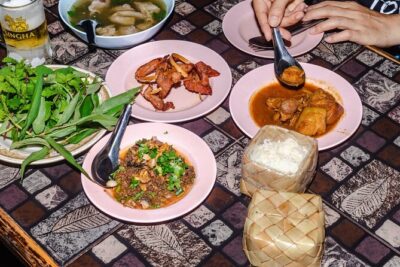
Lanna Kingdom Chiang Mai Food Tour with 15+ Tastings
Read our review →Browse the lists this tour appears in