
Reviewed · MEDITATION & MONK CHAT RETREATS
Chiang Mai Temples Visit Walking Tour with Ex-Monk Guide Part 2
Chiang Mai’s temples make more sense when someone explains what you are seeing. This three-and-a-half-hour walk visits four very different places, from the city’s first temple to a Tai Yai sanctuary and a quiet Lanna-style chanting hall. Guide Katoon, an ex-monk, adds something unusual: you can ask practical questions about Buddhist life, not just architectural ones.
I like the tour for two clear reasons. First, the route gives you variety without asking you to cross the whole city. Second, Katoon’s patient, question-friendly style works well for families, including children. The main consideration is the afternoon heat, since this is a walking tour with no bottled water included.
In This Review
- Key things to know
- Why an ex-monk changes the temple visit
- Starting at Three Kings Monument at 1 p.m.
- Wat Chiang Man and the beginning of Chiang Mai
- Wat Pa Pao and Chiang Mai’s Tai Yai connection
- Wat Chiang Yuen and its Burmese colonial gate
- Wat Lok Molee and traditional Lanna design
- What the walking format means for you
- A good choice for families and curious beginners
- Is $25.92 a fair price?
- Practical details before you book
- Who should book this Chiang Mai temple walk?
- FAQ
- Where does the Chiang Mai temple walking tour begin?
- What time does the tour start?
- How long does the tour last?
- Which temples are included?
- Is the guide a former monk?
- Is bottled water included?
- Can I cancel for a full refund?
Key things to know
- Katoon’s former monastic life gives you a direct way to ask about Buddhism, temple customs, and his own time as a monk.
- Four temples in one compact visit show different sides of Chiang Mai’s religious and cultural past.
- Wat Chiang Man dates to 1296, making it an important starting point for understanding the city.
- Wat Pa Pao represents the Tai Yai community, with a story tied to an 1883 foundation.
- The tour suits families, with past groups including children as young as two and seven.
- The $25.92 price is reasonable if you want interpretation rather than simply walking past temple buildings.
Why an ex-monk changes the temple visit
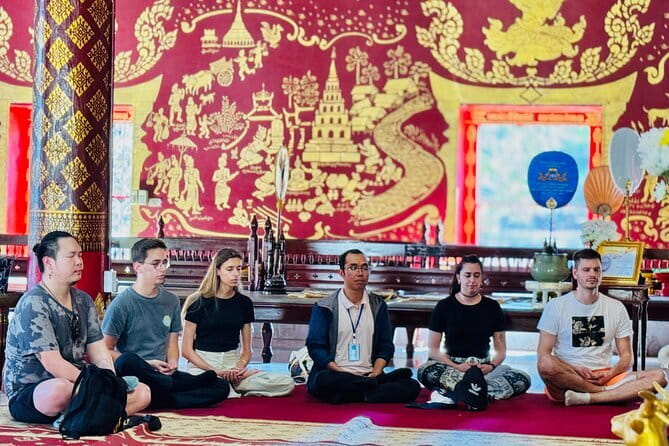
Many temple tours give you dates, names, and a quick explanation of the Buddha images. This one aims at the questions that often come up after you remove your shoes: Why do people bow? What is the proper way to show respect? How does a monk live? What is the difference between a Buddhist practice and a prayer?
Katoon is identified as an ex-monk, and that shapes the tone of the visit. He can explain temples from personal experience while still guiding you through their art and history. The point is not to turn the afternoon into a formal religious lesson. It is to help you understand what the buildings mean to the people who use them.
That personal angle is especially useful if you are new to Buddhism. One family group learned how to show respect in a temple and discussed the idea that this action is not quite the same as prayer. Those small corrections matter. They help you avoid treating a sacred place like a photo stop.
Katoon also appears comfortable with questions. Families with three children described him as caring and patient, and another family found that he answered questions about both Buddhism and his past as a monk. If you prefer a guide who welcomes conversation rather than delivering a fixed speech, this is a good match.
More meditation and monk chat sessions in Chiang Mai:
- Wat Phra That Doi Suthep spiritual Sunrise Tour with an Ex-monk
★ 5.0 · 798 reviews - Spiritual Sunrise Wat Doi Suthep, Pha Lat, Alms & Meditation
★ 4.9 · 674 reviews - Chiang Mai: Elephant Sanctuary, Monk Trail & Doi Suthep Tour
★ 4.9 · 563 reviews
Starting at Three Kings Monument at 1 p.m.
The tour begins at Three Kings Monument, a central meeting point on Prapokklao Road in Chiang Mai’s old city. The guide gives an introduction here before the walking begins. The scheduled opening stop lasts about 10 minutes and has no admission charge.
This is a sensible place to start because it lets you meet the guide and get the basic plan before entering the temples. You can also use this moment to ask about temple etiquette, the walking pace, and the order of the stops.
The 1 p.m. start is practical for a half-day schedule. You still have the morning free, then spend the afternoon with the temples. The trade-off is heat. Chiang Mai can be warm, and a three-and-a-half-hour walk is more comfortable if you bring your own water and dress for outdoor conditions while still following temple clothing rules.
The group can include up to 20 people. That is small enough for a guided walk to work well, though it is not a private tour. If you want extended one-to-one conversation with Katoon, the group size may limit the time available for every question.
Wat Chiang Man and the beginning of Chiang Mai
The first major stop is Wat Chiang Man, with about 45 minutes set aside for the visit. Built in 1296, it is regarded as the first temple constructed in Chiang Mai, so it gives the tour a strong historical starting point.
The value here is not only the age of the building. This is where the city’s early identity begins to connect with its Buddhist institutions. Instead of viewing the temple as an isolated monument, you can ask Katoon to explain how a temple functions within the city and why its images, halls, and rituals matter.
A 45-minute visit gives you enough time for a proper explanation without making the tour feel stuck in one place. You can expect the focus to include Buddhist beliefs, the temple’s role, and details of its design. The supplied description does not identify every image or structure included, so you should treat this as a guided introduction rather than a specialist architectural survey.
For first-time temple visitors, this stop may be the most useful. You start with a landmark that carries both religious and city history, then use Katoon’s explanations to build a vocabulary for the three temples that follow.
Wat Pa Pao and Chiang Mai’s Tai Yai connection
The route continues to Wat Pa Pao, with around 30 minutes here. This temple is described as the first temple of the Ngiaw, or Tai Yai, community in Chiang Mai. Its foundation dates to 1883, during the reign of Prachao Intawichayont, and it was established by Lady Bua Lhai, a Tai Yai concubine of the king.
This stop broadens the story beyond the standard account of Chiang Mai’s Lanna rulers. The temple connects the city with the Tai Yai people and gives you a chance to see how different communities have shaped northern Thailand’s religious life.
Thirty minutes is enough for a focused visit, but it is shorter than the time at Wat Chiang Man and Wat Lok Molee. That means you will likely get the key historical and cultural points rather than a long period for quiet observation.
I like this part of the route because it gives the tour a human story. You are not simply collecting temple names. You are learning why a particular community built a place of worship and how that place became part of Chiang Mai.
More walking tours in Chiang Mai:
- Chiang Mai: 3 Hour Old City and Temples Guided Walking Tour
★ 4.6 · 1,568 reviews - Chiang Mai: Historic Temples and City Guided Walking Tour
★ 4.7 · 650 reviews - Chiang Mai: Temple And City Walking Tour Part I
★ 4.7 · 244 reviews - Chiang Mai: Local Food and Markets Guided Walking Tour
★ 4.3 · 175 reviews
Wat Chiang Yuen and its Burmese colonial gate
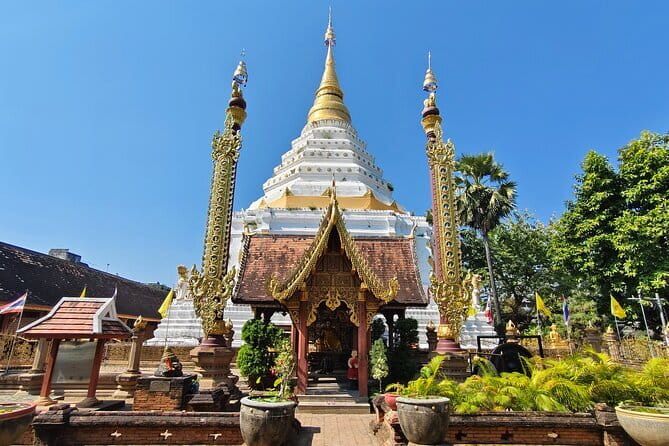
The next stop is Wat Chiang Yuen, also scheduled for about 30 minutes. Its most noted features include an ancient Burmese colonial gate and a beautiful pavilion. The temple also has several other distinctive details and played an important role in the Lanna kingdom.
This is a useful contrast with Wat Pa Pao. The earlier stop highlights a Tai Yai community, while Wat Chiang Yuen brings in Burmese influence and Lanna history. Together, they show that northern Thai culture did not develop from one source alone.
The Burmese colonial gate should give you a clear visual detail to look for as you arrive. Ask Katoon to point out how the gate and pavilion fit into the temple compound, and how the site’s history relates to the wider Lanna kingdom.
Again, the half-hour timing keeps the overall tour moving. You get enough time to listen, look closely, and ask questions, but not enough for a long independent wander. This is best for someone who wants a guided overview of several sites rather than a single temple study.
Wat Lok Molee and traditional Lanna design
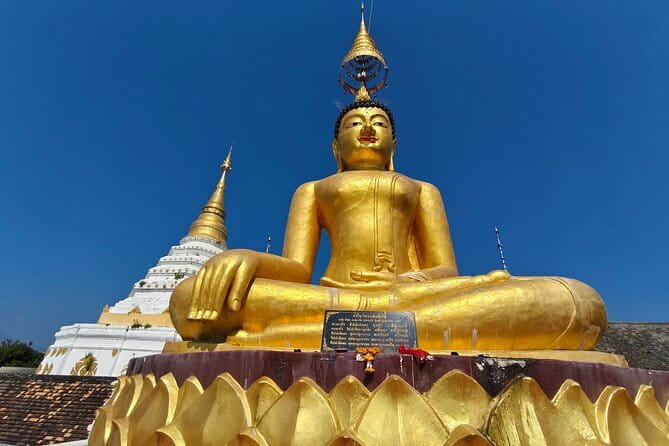
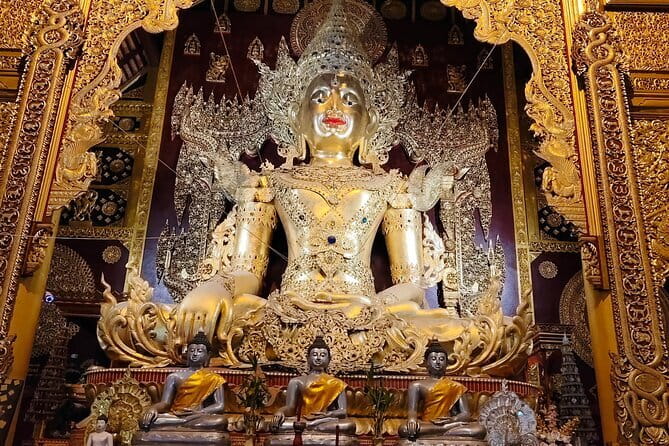
The final temple is Wat Lok Molee, where the visit lasts around 45 minutes. The highlight listed for the site is a beautiful wooden chanting hall in traditional Lanna architecture.
This stop sounds like a fitting close because it shifts attention toward craftsmanship and worship. After hearing about city origins, Tai Yai connections, and Burmese influence, you finish with a structure that expresses northern Thai design.
The wooden chanting hall also gives Katoon a natural way to explain how Buddhist spaces are used. The tour’s larger theme is not only what temples look like, but how people relate to them through chanting, respect, teaching, and quiet reflection.
The 45-minute allocation allows more breathing room than the two middle stops. You can take in the hall’s details without rushing straight back to the meeting point. Since the activity ends where it began, you do not need to arrange a pickup from a distant temple.
What the walking format means for you
The walking format is one of the tour’s strengths. You move between sites at ground level, with time to notice the old city and the changing character of each temple. You are not looking through a vehicle window or arriving at each stop with no sense of connection between them.
At the same time, walking demands a little preparation. The tour runs from 1 p.m. for approximately three hours and 30 minutes, and bottled water is not included. Bring your own water and wear comfortable shoes. The information provided does not specify transport between stops, so you should think of this as a genuine walking experience rather than a vehicle-supported temple circuit.
The route is close to public transportation, which helps if you are staying outside the old city. The meeting point and end point are both Three Kings Monument, making the return simple. You can continue exploring the old city afterward without having to find your way back from an unfamiliar neighborhood.
Most people can participate, according to the tour information. Still, the length and afternoon conditions make it worth considering your own walking comfort, particularly if you are traveling with very young children or anyone who tires quickly.
A good choice for families and curious beginners
The strongest fit is for people who want context and conversation. Katoon’s approach has worked for groups with children, including a family with children aged two and seven. His patience matters here, since younger visitors may ask direct questions or need the pace to feel relaxed.
Families should also appreciate that the tour is not presented as a silent art history lecture. Children can ask about monks, temple behavior, and Buddhist practice in plain terms. That makes the temples easier to understand and less likely to blur together.
The tour also suits adults who want to learn about Buddhism without signing up for a meditation retreat. The experience includes spiritual themes, but you are primarily visiting temples and talking with a guide. You should expect cultural explanation and personal insight, not a formal course in Buddhist philosophy.
If your main goal is photography, you may find the pace limiting at some stops. The schedule gives you about 30 to 45 minutes at each temple, and the guide’s explanations are a central part of the value. This is better for seeing fewer details with meaning than racing around to collect images.
Is $25.92 a fair price?
At $25.92 per person, the tour sits in the accessible half-day range. The price is easiest to justify if you would otherwise visit the temples without understanding their connections. You are paying for an English or Chinese-speaking guide with a TAT license, plus a planned route through four sites and an opportunity to ask questions.
Admission is listed as free at the stops, and bottled water is not included. The tour also does not include all fees and taxes, so check the final booking price carefully. The important value is the guide rather than entrance tickets.
A self-guided visit could cost less, especially since the temples listed do not carry an admission charge in the tour details. But you would need to research the history, work out the walking order, and find someone who can explain Buddhist customs. For many visitors, Katoon’s former monastic experience is the part that makes the price worthwhile.
The tour is booked on average 11 days ahead. That does not guarantee it will sell out, but it is a useful planning clue. If this experience fits your schedule, booking ahead is sensible.
Practical details before you book
Confirmation arrives at the time of booking, and the activity uses a mobile ticket. The meeting point is Three Kings Monument, QXRP+3WX, Prapokklao Road, in the Si Phum area of Chiang Mai. The tour begins at 1 p.m. and returns to the same point.
The guide speaks English or Chinese and holds a TAT license. The group size can reach 20 people, so you should expect a shared experience rather than a private walk.
Plan for respectful temple clothing and bring water. The provided details do not spell out a dress code, but temple visits call for modest clothing and considerate behavior. Katoon can explain the customs once the tour begins, yet it is better to arrive prepared.
Free cancellation is available up to 24 hours before the start time for a full refund. Changes or cancellations made inside that 24-hour window are not accepted, and poor weather can lead to a new date or a full refund. The experience requires good weather, so keep a little flexibility in your plans during rainy periods.
Who should book this Chiang Mai temple walk?
I would choose this tour if you want four temples explained through Buddhism, local history, and community traditions. It is particularly well suited to first-time visitors, families, and anyone who has questions that a guidebook cannot answer easily.
I would be less likely to choose it if you want a private tour, a long meditation session, or a slow architectural study of one temple. The group may reach 20 people, the schedule keeps moving, and the focus is broad.
The best reason to book is Katoon’s former monastic background. That detail gives the visit a personal angle and helps turn unfamiliar customs into understandable ones. If you bring water, wear comfortable clothes, and arrive ready to ask questions, the $25.92 cost offers solid value for a thoughtful afternoon in Chiang Mai.
FAQ
Where does the Chiang Mai temple walking tour begin?
The tour begins at Three Kings Monument on Prapokklao Road in the Si Phum area of Chiang Mai.
What time does the tour start?
The scheduled start time is 1 p.m.
How long does the tour last?
The experience lasts approximately three hours and 30 minutes.
Which temples are included?
The route includes Wat Chiang Man, Wat Pa Pao, Wat Chiang Yuen, and Wat Lok Molee, with the introduction and meeting point at Three Kings Monument.
Is the guide a former monk?
Yes. Guide Katoon is described as an ex-monk who explains Buddhism, temple customs, and his past monastic life.
Is bottled water included?
No. Bottled water is not included, so you should bring your own.
Can I cancel for a full refund?
Yes. You can cancel at least 24 hours before the start time for a full refund. Cancellations or changes made less than 24 hours before the start are not accepted.
Just added around Chiang Mai
- Chiang Rai Wonders: White, Blue & Red Temples and Hot Spring★ 5.0 · 3 reviews
- Chiang Rai White Temple Blue Temple and Hill Tribe Village Tour★ 3.5 · 3 reviews
- Private Chiang Mai City Tour including Wat Doi Suthep, Wat Suan Dok (SHA Plus)★ 5.0 · 3 reviews
- Workshop Making Herbal ball & herbal inhaler★ 4.3 · 3 reviews
- Chiang Mai Mae Ping River Cruise and Thai Farmer House Visit★ 4.0 · 3 reviews
- Phoenix Zipline Adventure Park – Chiang Mai Thrills★ 4.0 · 3 reviews
- Monk trails hike, Wat Phalat, Monk chanting, Wat Doi Suthep.★ 5.0 · 3 reviews
- Tok Sen Massage at Fah Lanna Spa in Chiang Mai★ 4.5 · 3 reviews
Meditation & Monk Chat Retreats, compared.
Wat Phra That Doi Suthep spiritual Sunrise Tour with an Ex-monk
Read our review →
Spiritual Sunrise Wat Doi Suthep, Pha Lat, Alms & Meditation
Read our review →
Elephant Sanctuary, Monk Trail & Doi Suthep Tour
Read our review →
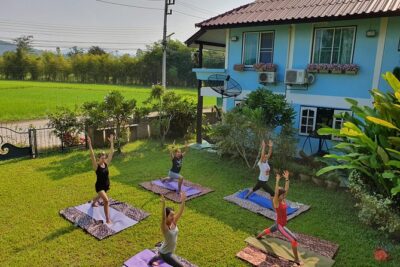
Half-Day Yoga, Meditation, and Thai Cultural Immersion in Chiang Mai
Read our review →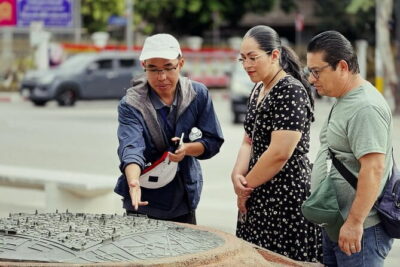
Chiang Mai Temples Visit Walking Tour with Ex-Monk Guide Part 1
Read our review →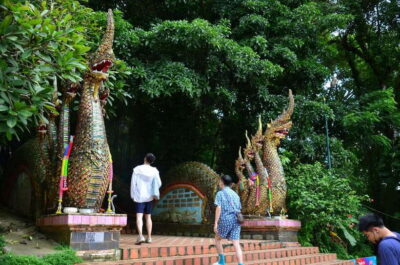
Hike on Monk’s Trail and Doi Suthep Private Tour
Read our review →Browse the lists this tour appears in