
Reviewed · MEDITATION & MONK CHAT RETREATS
Chiang Mai: Evening Chanting & Meditation
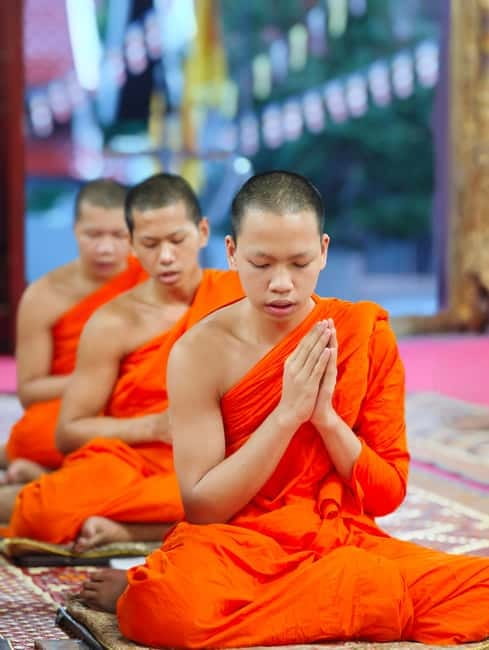
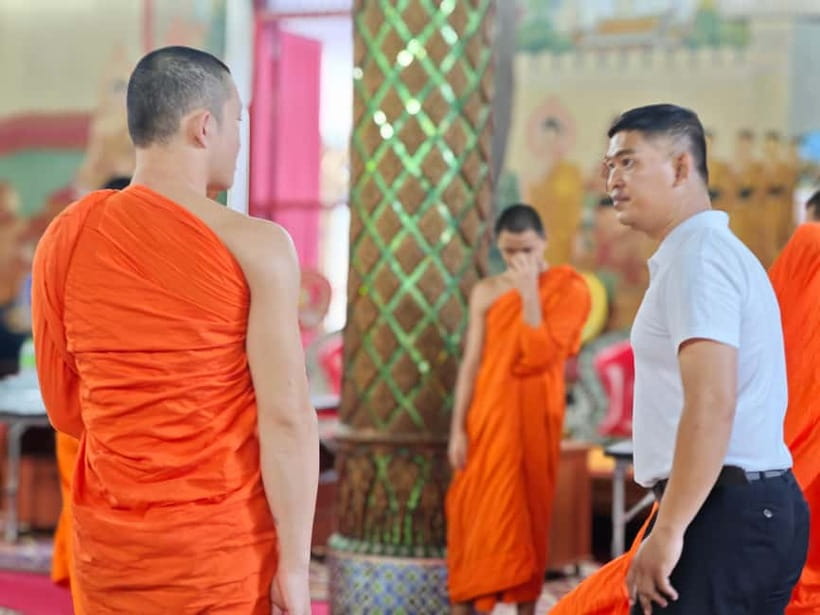
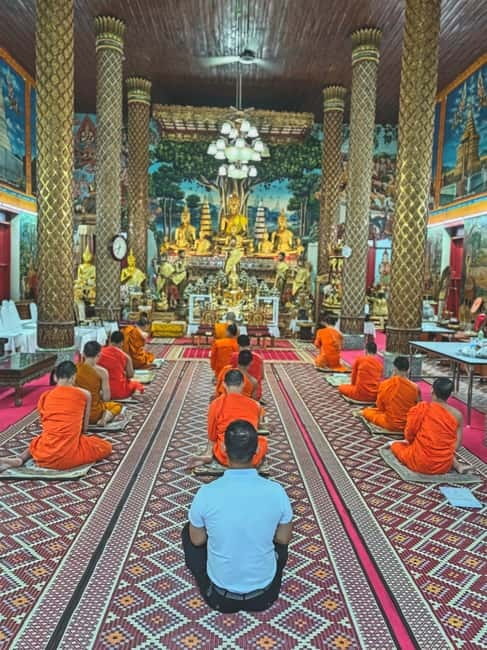
At Wat Chai Sri Phoom, the main event is not a temple talk with a quick photo stop. You sit near the monastic community as monks chant, then take part in meditation and Metta, a practice of wishing well-being for loved ones, the dead, and all living beings. The chanting lasts about 40 to 50 minutes, giving the evening a steady, calming rhythm.
I like two things here. First, the experience gives you access to a working Buddhist ritual rather than a staged cultural show. Second, guides such as Son, a former monk of 13 years, can explain both the words and the daily life behind them. The main consideration is that the chants are not provided in English, so you should expect explanation around the ritual rather than a translation of every line.
In This Review
- Key points to know
- What this Chiang Mai temple evening is really like
- Meeting the guide near Wat Lok Moli
- Settling into the temple grounds
- Listening to 40 to 50 minutes of chanting
- The 15-minute guided meditation
- Metta, or sending good wishes
- Conversation with monks and lay practitioners
- The guides: Son, Earth, and Big
- What the $20 price buys you
- Who should book this experience
- Practical tips for a respectful evening
- Should you book Chiang Mai Evening Chanting and Meditation?
- FAQ
- How long does the evening chanting and meditation experience last?
- How much does the experience cost?
- Where does the experience meet?
- Where does the chanting take place?
- Is transportation included?
- Is meditation included?
- How long does the chanting last?
- What languages are available?
- What should I bring?
- Can children or wheelchair users join?
Key points to know
- Chant beside the monks: Join an evening ritual that usually lasts 40 to 50 minutes.
- Practice Metta: Send kind wishes to family, people who have died, and all beings.
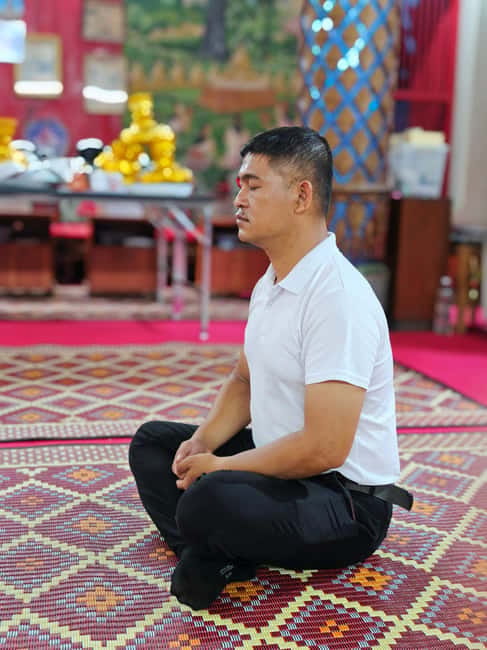
- Meditate for 15 minutes: A guide leads a short silent session after the chanting.
- Ask real questions: Senior monks and lay practitioners may discuss Buddhism, temple life, and everyday practice.
- Bring temple manners: Dress modestly, arrive 15 minutes early, and silence your phone.
- Check the meeting point: The instructions name Wat Lok Moli, while the experience takes place at Wat Chai Sri Phoom and the listed itinerary refers to a food-tour meeting point.
What this Chiang Mai temple evening is really like
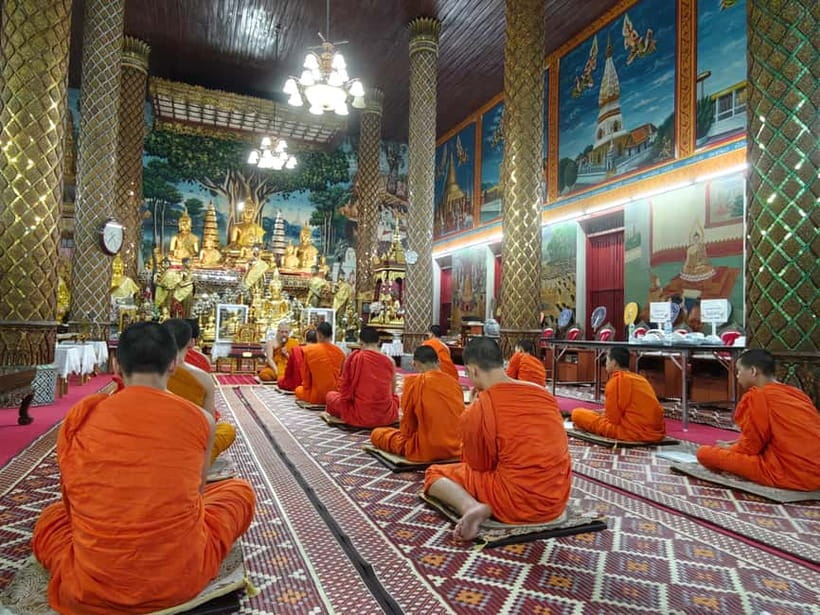
This is a small, quiet cultural experience built around participation. You are not simply shown a Buddhist temple and sent on your way. The evening asks you to sit still, listen carefully, and follow a ritual that has its own pace.
The advertised duration is three hours, although the formal guided portion is also described as about two hours. In practice, the timing may stretch if the monks stay afterward for questions. One account describes a long conversation after meditation, so do not treat the end time as minute-perfect.
The experience is offered in English and Thai. English explanations come from the guide, while the chanting itself remains a traditional Buddhist recitation. That distinction matters. You will understand the purpose and setting, but you should not expect every chant to be translated line by line.
More meditation and monk chat sessions in Chiang Mai:
- Wat Phra That Doi Suthep spiritual Sunrise Tour with an Ex-monk
★ 5.0 · 798 reviews - Spiritual Sunrise Wat Doi Suthep, Pha Lat, Alms & Meditation
★ 4.9 · 674 reviews - Chiang Mai: Elephant Sanctuary, Monk Trail & Doi Suthep Tour
★ 4.9 · 563 reviews
Meeting the guide near Wat Lok Moli
The meeting instructions say to meet the guide in front of Wat Lok Moli. The itinerary also names A Chef’s Tour Chiang Mai Food Tours as the starting and ending point, while the activity description places the main temple experience at Wat Chai Sri Phoom. Because these details do not match perfectly, confirm the exact meeting point and temple before setting out.
The guide may be Son, also identified as Paponsonkl in one account, or another member of the team such as Earth or Big. Son is a former monk and spent 13 years in monastic life, which gives him a useful connection to the ritual. Earth and Big have also led the experience, with clear explanations and patient answers to questions.
Arrive at least 15 minutes early. That gives you time to find the guide, settle down, and adjust your clothing before entering the temple setting. You will need comfortable clothes, a bottle of water, and enough quiet time to shift out of sightseeing mode.
Settling into the temple grounds
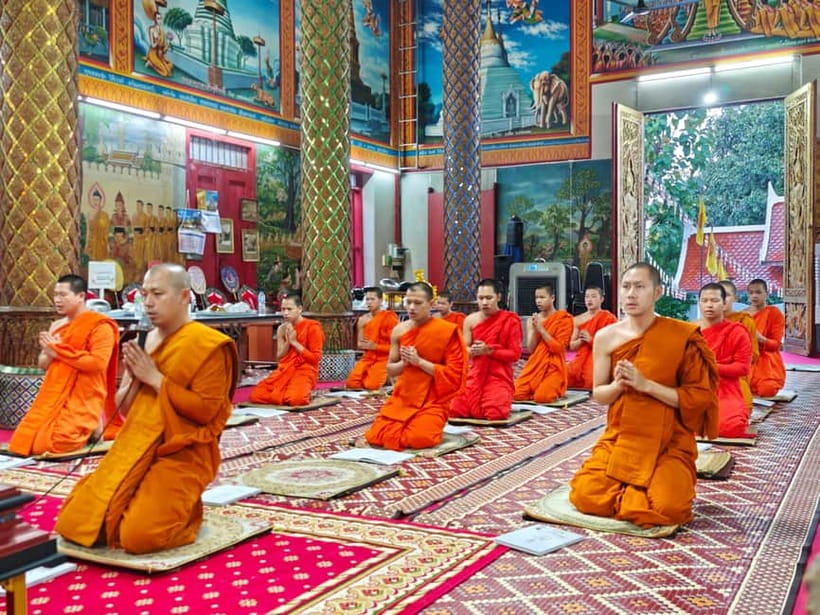
The opening stage is simple. You arrive, meet the guide, and sit in or near the temple grounds as evening begins. The point is to slow down before the formal practice starts.
This pause is valuable because Chiang Mai can keep you moving all day. After markets, meals, traffic, and temple visits, sitting without a schedule can feel unfamiliar. The guide helps you understand what will happen, so you are less likely to worry about using the wrong gesture or missing an instruction.
Dress modestly out of respect for the temple. The supplied guidance does not set out a detailed dress code, but covered, comfortable clothing is the sensible choice. Silence your mobile phone before the session begins, and leave the camera in your bag during the ritual. Smoking and flash photography are not allowed.
Listening to 40 to 50 minutes of chanting
The chanting is the heart of the evening. Resident monks recite sacred texts together, using a measured rhythm that can feel very different from a normal guided tour. You sit and listen, with the option to join where the guide indicates.
The sound is central. Rather than treating the prayer as background music, you are encouraged to notice the repeated tones and the way the voices fill the room. Even if you do not understand Pali or Thai, the cadence gives you something concrete to focus on.
This is also where expectations matter. An English translation of the chant is not provided, so anyone hoping to follow the precise meaning of every passage may find the session limited. The guide explains the Buddhist setting and practice, but the ritual itself remains in its original form.
I see that as a fair trade for an authentic setting. A fully translated performance might be easier to follow, but it could also turn the prayer into a presentation. Here, the unfamiliar language is part of the experience. You listen first, then ask questions afterward.
A few more Chiang Mai half-days to weigh up
- Chiang Mai: Doi Suthep and Wat Umong Enchanting Evening Tour
★ 4.6 · 1,811 reviews - Small-Group Chiang Mai Evening Street Food Tour
★ 4.5 · 826 reviews - Chiang Mai: Evening Cooking Class and Local Market Visit
★ 4.9 · 648 reviews - Chiang Mai: Evening Local Street Food Market Tour
★ 4.8 · 604 reviews
The 15-minute guided meditation
After the chanting, the evening shifts into silence. The guided meditation lasts about 15 minutes, long enough to give you a taste of the practice without demanding a major commitment from a first-time meditator.
You are guided to quiet your thoughts and pay attention to the present moment. The supplied information does not specify a particular posture or meditation technique, and it warns that the experience is not suitable for people with back problems. If sitting for 15 minutes may cause pain, consider this carefully before booking.
For someone new to meditation, this short session is one of the strongest parts of the program. You do not need previous experience, and the guide introduces the practice in a temple setting rather than in a hotel room or classroom.
Still, keep your expectations realistic. A quarter-hour of meditation may leave you calmer, but it is not a full course in Buddhist meditation. Think of it as a practical introduction and a chance to notice how your mind responds when the usual distractions are removed.
Metta, or sending good wishes
Metta is the warmest part of the evening. You are guided to extend wishes of well-being to people you love, those who have passed away, and all beings.
This gives the experience a personal focus. Instead of treating Buddhism as a set of distant ideas, you apply one practice to your own life. You might think of family members, friends, or someone you are grieving. The focus is not on belief or performance. It is on cultivating goodwill.
The practice also gives structure to the quiet after chanting. You are not left wondering what to think about. The guide leads you through a simple sequence, allowing the feeling of compassion to grow from familiar relationships toward a wider circle.
If you prefer a purely academic tour, this may feel more personal than expected. If you are open to taking part, it is likely to be more meaningful than simply hearing a description of Metta from a guidebook.
Conversation with monks and lay practitioners
The formal meditation is not necessarily the end. Senior monks may share guidance with younger monks and lay practitioners, and the group may have a chance to listen or ask questions.
This is where the former-monastic guides add real value. Son has explained Buddhist philosophy, the life of monks, Thai culture, and practical ways Buddhist ideas apply to everyday situations. He has also stayed afterward to answer questions, which is useful if you want to move beyond general facts.
Questions can cover daily monastic life, the Buddha’s teachings, meditation, and the role of Buddhism in Thai society. The precise conversation will depend on the monks present and the group’s interests, so no one should expect a fixed lecture.
Some evenings may include a short blessing from the monks. That is described as part of at least one experience, but it should not be treated as guaranteed for every departure.
The exchange is the main reason I would choose this program over a standard temple visit. Chiang Mai has many beautiful wats, but architecture alone tells you little about how a religious community spends its evening. Here, you have a chance to hear from people who actually practice within that community.
The guides: Son, Earth, and Big
Son receives the clearest praise in the available information. His background as a monk of 13 years allows him to explain the ceremony from personal experience, and his English is described as strong. He combines Buddhist philosophy with stories about monastic life, which makes the subject easier to understand.
Earth has led the experience with a calm, clear approach, answering questions and explaining each stage. Big has also been singled out for patience and kindness. Since guides can vary, your evening may feel more like a discussion than a set script.
That is a strength, but it also means the quality depends partly on the guide assigned to you. The experience provider is Journey D Travel, and the listed languages are English and Thai. If you have a detailed question, ask it directly rather than assuming the evening includes a formal talk on that subject.
What the $20 price buys you
At $20 per person, this is good value if you want personal context along with the ritual. The price includes the guided meditation, the chanting experience, and explanations of Buddhist philosophy and practice.
It does not include transport, food, drinks, or personal expenses. You need to make your own way to the meeting point and return afterward. That is not a serious drawback in central Chiang Mai, but it does make the meeting-point issue important.
The value is not in the number of sights visited. You are paying for access, interpretation, and a structured introduction to a living practice. A normal temple visit costs less, but it will not usually put you in this guided sequence of chanting, meditation, Metta, and discussion.
Free cancellation is available up to 24 hours before the activity for a full refund, and you can reserve now and pay later. Check the available start times because this is an evening program and the exact schedule can vary.
Who should book this experience
I would recommend it to adults and older children who are sincerely curious about Buddhism, meditation, or Thai temple life. It suits people who prefer a calm cultural activity to another food stop or nightlife outing.
It is especially useful for first-time visitors to Buddhist practice. You receive enough explanation to follow the evening without needing prior study, and the short meditation keeps the commitment manageable.
It also suits experienced meditators who want a chance to ask a former monk practical questions. Do not expect a specialist retreat or advanced instruction, but you can gain a direct connection to local practice.
Children under 10 are not accepted. The activity is also not suitable for wheelchair users or people with back problems. Since the event involves sitting quietly and observing temple customs, it will not suit someone looking for constant movement or entertainment.
Practical tips for a respectful evening
Keep these points in mind:
- Arrive 15 minutes early.
- Wear modest, comfortable clothing.
- Bring water, but do not expect meals or drinks to be supplied.
- Silence your phone before chanting begins.
- Do not smoke or use flash photography.
- Ask before taking photographs around the temple or monastic community.
- Confirm whether the guide is meeting you at Wat Lok Moli or another stated location.
- Leave room in your schedule for questions after meditation.
The best attitude is simple: listen first, ask politely, and follow the guide’s instructions. You do not need to know Buddhist etiquette in advance. You do need to show respect for a religious service that is taking place with or without tourists.
Should you book Chiang Mai Evening Chanting and Meditation?
Book it if you want a quiet, participatory evening and are willing to sit without needing every word translated. The combination of chanting, a 15-minute meditation, Metta, and conversation with monks offers more substance than a quick temple tour.
The strongest reason to go is the guide’s lived experience. Son, Earth, and Big can help turn an unfamiliar ritual into something you can understand and connect with. The main drawbacks are the lack of an English chant translation, the possible sitting discomfort, and the unclear meeting-point details.
For $20, I think it is a worthwhile choice for curious adults who want a respectful look at Buddhist practice. Confirm the location, arrive early, dress properly, and treat the evening as a religious encounter rather than a performance.
FAQ
How long does the evening chanting and meditation experience last?
The advertised duration is three hours. The guided portion is also described as about two hours, and conversations with the monks may continue afterward.
How much does the experience cost?
The price is $20 per person.
Where does the experience meet?
The meeting instructions say that the guide waits in front of Wat Lok Moli. Other details refer to A Chef’s Tour Chiang Mai Food Tours and Wat Chai Sri Phoom, so confirm the exact meeting location before departure.
Where does the chanting take place?
The experience is described as taking place at Wat Chai Sri Phoom in Chiang Mai Province.
Is transportation included?
No. Transportation to and from Wat Chai Sri Phoom is not included.
Is meditation included?
Yes. The activity includes a guided meditation session lasting about 15 minutes.
How long does the chanting last?
The chanting generally lasts about 40 to 50 minutes.
What languages are available?
The live tour guide speaks English and Thai.
What should I bring?
Bring water and wear comfortable clothes. You should also dress modestly for the temple setting.
Can children or wheelchair users join?
Children under 10 are not suitable for the activity. It is also not suitable for wheelchair users or people with back problems.
Just added around Chiang Mai
- Chiang Rai Wonders: White, Blue & Red Temples and Hot Spring★ 5.0 · 3 reviews
- Chiang Rai White Temple Blue Temple and Hill Tribe Village Tour★ 3.5 · 3 reviews
- Private Chiang Mai City Tour including Wat Doi Suthep, Wat Suan Dok (SHA Plus)★ 5.0 · 3 reviews
- Workshop Making Herbal ball & herbal inhaler★ 4.3 · 3 reviews
- Chiang Mai Mae Ping River Cruise and Thai Farmer House Visit★ 4.0 · 3 reviews
- Phoenix Zipline Adventure Park – Chiang Mai Thrills★ 4.0 · 3 reviews
- Monk trails hike, Wat Phalat, Monk chanting, Wat Doi Suthep.★ 5.0 · 3 reviews
- Tok Sen Massage at Fah Lanna Spa in Chiang Mai★ 4.5 · 3 reviews
Meditation & Monk Chat Retreats, compared.
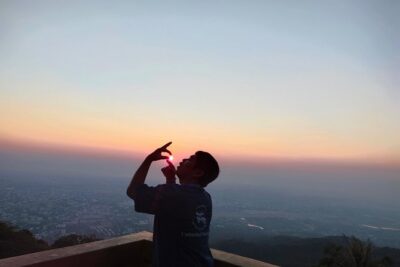
Wat Phra That Doi Suthep spiritual Sunrise Tour with an Ex-monk
Read our review →
Spiritual Sunrise Wat Doi Suthep, Pha Lat, Alms & Meditation
Read our review →
Elephant Sanctuary, Monk Trail & Doi Suthep Tour
Read our review →
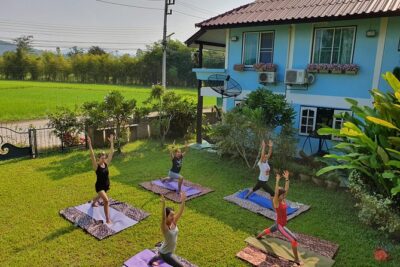
Half-Day Yoga, Meditation, and Thai Cultural Immersion in Chiang Mai
Read our review →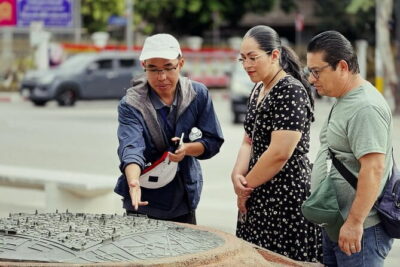
Chiang Mai Temples Visit Walking Tour with Ex-Monk Guide Part 1
Read our review →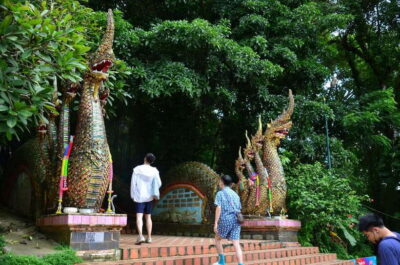
Hike on Monk’s Trail and Doi Suthep Private Tour
Read our review →
Half Day Umong Temple and Monk Chanting at Doi Suthep Temple ( Private tour)
Read our review →Browse the lists this tour appears in