
Reviewed · THAI COOKING CLASSES
We Cook Thai Home Garden Cooking School
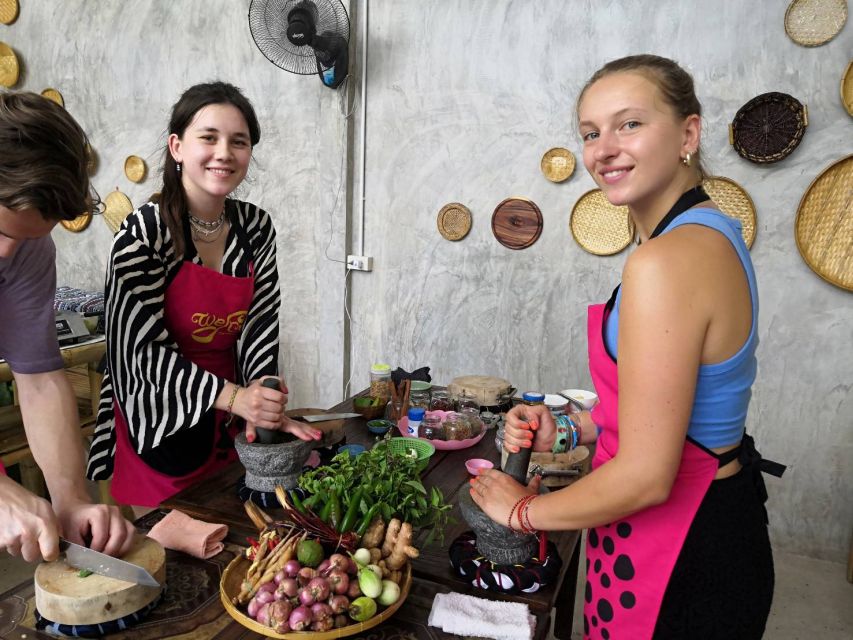
Thai cooking makes more sense once you know the ingredients by sight, smell, and touch. This class begins at a local Chiang Mai market, where Mam introduces you to herbs, vegetables, sauces, fruits, spices, and several types of eggplant before you return to her home garden kitchen.
I like the one-wok-per-person setup, which gives you real control instead of watching a chef do all the work. I also like the generous menu choice: you select dishes from several categories, then sit down to eat a large meal in the garden. The main consideration is the amount of food. Come hungry, especially for the morning class, and expect a long, filling half-day.
- Market first: Learn what Thai ingredients look and smell like before cooking with them.
- Your own wok: Work independently while Mam helps with each step.
- A six-category menu: Choose dishes to suit your taste and cooking level.
- Home garden setting: Cook in an open-air kitchen, then eat at a separate dining area.
- Good practical extras: Recipes, a certificate, ingredients, and a seasonal snack are included.
- Easy planning: Morning and evening classes are available, with evening pickup listed from 4:00 to 4:30 pm.
In This Review
- Starting at the Market With Mam
- Returning to the Home Garden Kitchen
- Choosing From Six Thai Food Categories
- One Wok, Real Hands-On Cooking
- A Meal Big Enough to Replace Lunch
- What the $32 Price Covers
- Morning or Evening: Which Class Fits You?
- Height Rules and Family Practicalities
- Dietary Needs and Menu Choices
- Who Will Get the Most From This Class?
- Should You Book We Cook Thai Home Garden Cooking School?
- FAQ
- How long does the cooking class last?
- How much does the experience cost?
- Is transportation included?
- Is the class available in the morning and evening?
- How many dishes will I cook?
- Do I need cooking experience?
- Are vegetarian options available?
- Can children join the cooking class?
Starting at the Market With Mam
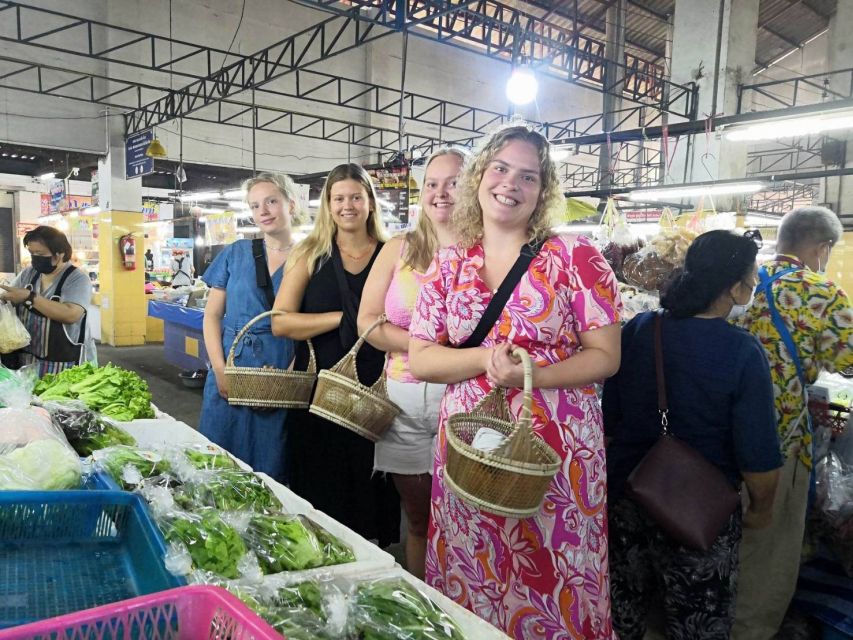
The class begins with a trip to a local market in Chiang Mai Province. This is more than a quick shopping stop. Mam uses the market to explain the building blocks of Thai cooking, including herbs, vegetables, rice, fruit, spices, and sauces.
That opening matters because Thai ingredients can be confusing when you first see them. Several kinds of basil may look similar. Eggplants come in different shapes and sizes. Fresh herbs can be hard to identify in a grocery store at home, where labels may be limited or written in unfamiliar names.
Mam helps you connect each ingredient with its taste and purpose. You may handle and smell produce, learn how it is used, and see ingredients that are common in everyday Thai cooking but not always needed for your chosen recipes. That makes the market visit useful even if you already know a few Thai dishes.
I like this part because it gives the meal a local context. You are not simply handed premeasured ingredients in a classroom. You first see where the food comes from and how it is sold. The experience also helps you shop for Thai ingredients later, either in Chiang Mai or back home.
The market can be lively and crowded, and you will be on your feet before the cooking starts. That is part of the experience, but it is worth wearing comfortable shoes and avoiding a tight schedule immediately afterward.
Returning to the Home Garden Kitchen
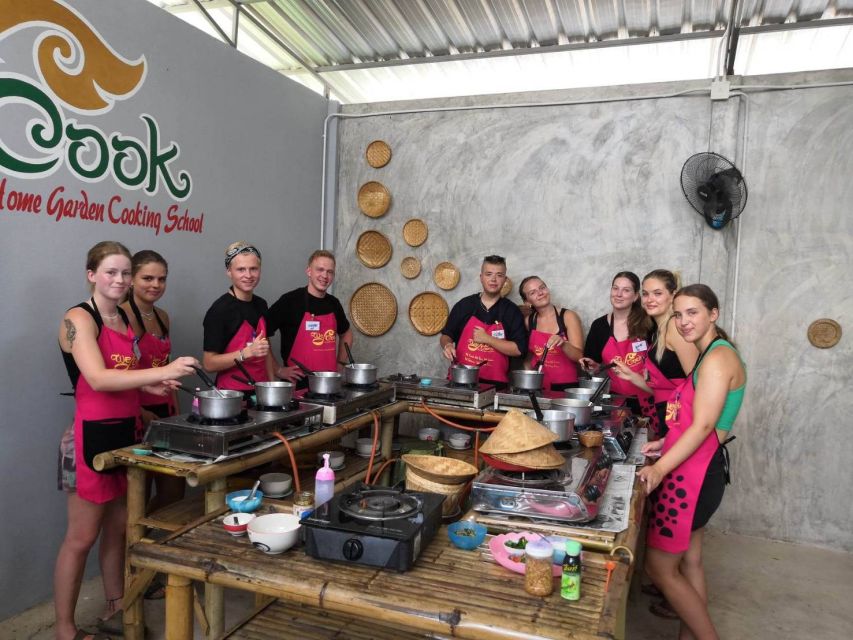
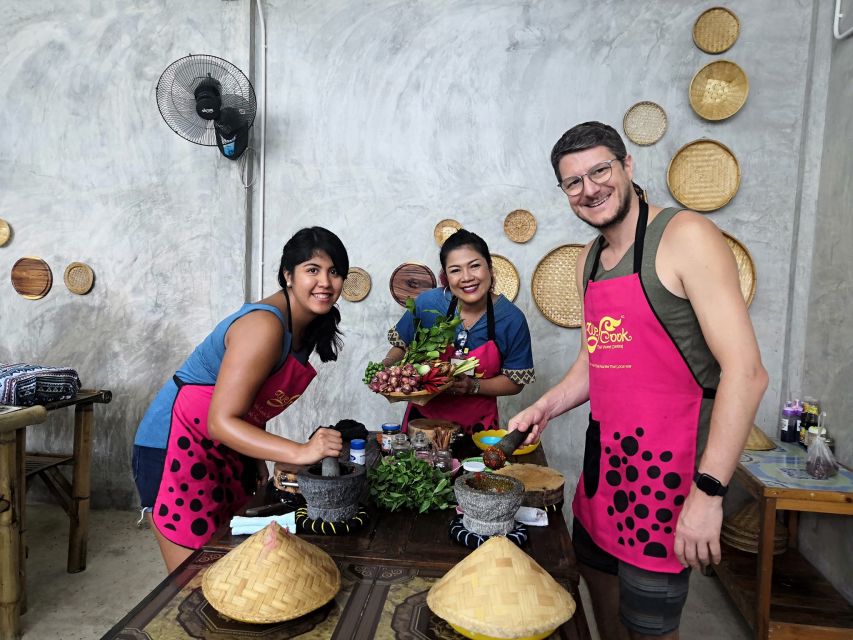
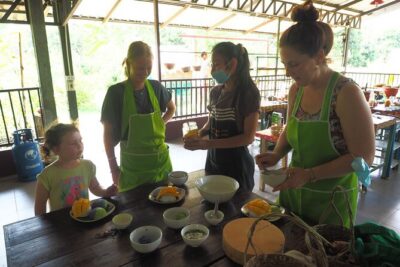
After the market, you continue to Mam’s home, where the cooking takes place in a garden setting. The kitchen is open-air, and the dining area is separate, so you can concentrate on cooking first and enjoy a proper sit-down meal afterward.
That separation is a small but worthwhile detail. In some cooking classes, you eat at the same counter where you have been chopping and frying. Here, the meal feels more like a relaxed lunch or dinner once the work is done. The garden setting also adds a home-cooked feel without giving up the practical setup needed for a class.
Previous participants describe a clean kitchen area and a pleasant garden with a fish pond. The fish are not the point of the class, but they add a light, homey touch while you wait for the next dish or feed them between tasks.
The class suits beginners because Mam demonstrates each step and then guides you as you work. You do not need formal cooking experience. The teaching approach focuses on signs such as texture, smell, appearance, and timing, rather than forcing you to follow a rigid recipe without understanding what is happening in the wok.
That is helpful for Thai food. A curry paste can behave differently depending on its moisture. Noodles can go from firm to soft quickly. Vegetables may need different cooking times. Learning what to look for gives you a better chance of repeating the dishes in your own kitchen.
More Thai cooking classes in Chiang Mai:
- Half-Day Thai Cooking Class at Organic Farm in Chiang Mai
★ 5.0 · 19,087 reviews - Chiang Mai: Cooking Class, Market & Thai Herbs Garden Tour
★ 4.9 · 4,824 reviews - Chiang Mai: Authentic Cooking Class with Market & Farm Visit
★ 4.9 · 4,546 reviews
Choosing From Six Thai Food Categories
The activity is described as a six-category meal, with one dish selected from each category. The supplied details also describe five-course experiences, so the exact number of dishes may vary by menu or class format. Confirm the current choices when you book if six dishes are important to you.
The choices can include well-known Thai favorites such as:
- Pad Thai
- Papaya salad
- Khao soi
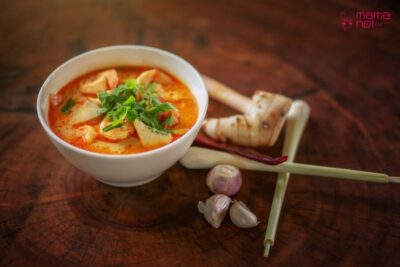
- Tom yum
- Mango sticky rice
- Massaman curry
- Vegetable spring rolls
- Thai noodle soup
- Khao pad gai, or chicken fried rice
You are not limited to one style of food. You can choose noodles, soup, curry, a main dish, a starter, salad, and dessert according to the options available that day. This makes the class more useful than a fixed menu if you already have a favorite Thai dish in mind.
I would choose a mix rather than six dishes from one category. A curry teaches you about paste and coconut-based cooking. A salad shows how Thai food balances sour, salty, sweet, and spicy flavors. A noodle dish gives you a different set of techniques, while mango sticky rice provides a simple and satisfying finish.
The menu also works well for couples or friends with different tastes. You can choose chicken, vegetables, noodles, or curry according to your own preference. Vegetarian cooking is available, and the host has accommodated food issues when informed in advance.
Do not assume every requested dish will always be available. Market ingredients and daily menus can affect the choices. The best approach is to tell Mam your preferences and dietary needs early, then select from the dishes she can provide.
One Wok, Real Hands-On Cooking
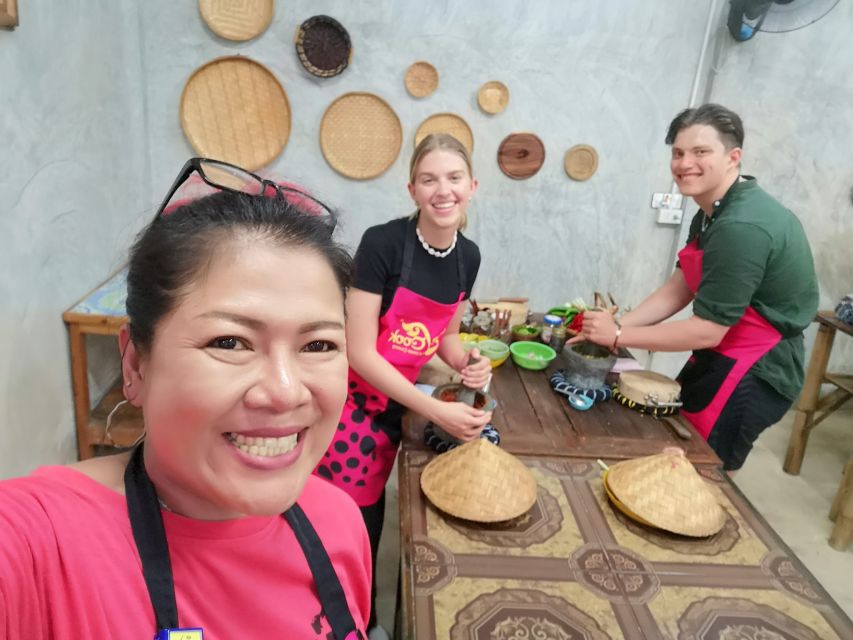
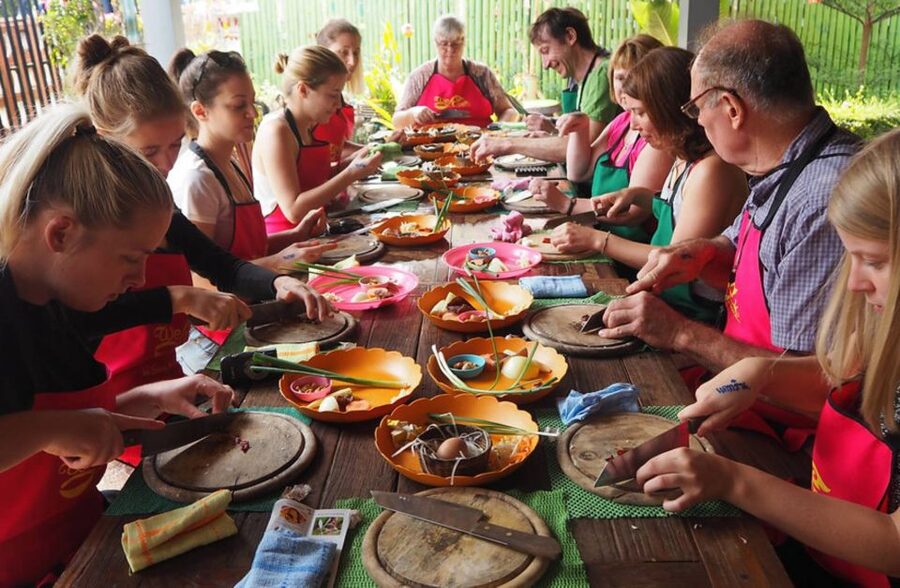
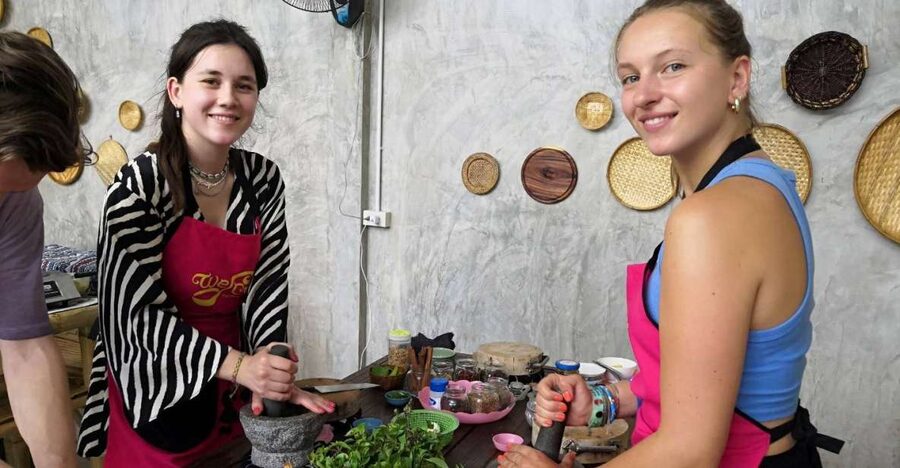
The most important practical feature is one wok per person. You are not standing behind a demonstration table while someone else cooks your lunch. You prepare and cook your own food, with Mam stepping in to guide you when needed.
For a beginner, this setup can feel more active than expected. You will need to pay attention to the order of ingredients, manage the heat, and follow instructions while cooking. Mam’s patient manner helps keep the process friendly rather than stressful.
The class is designed for all skill levels. A person who has never cooked can follow along, while a more experienced home cook can ask about sauces, spices, texture, and ways to reproduce the food later.
The reviews repeatedly praise Mam’s calm, encouraging teaching. She helps each person individually and keeps the mood light. That is especially useful in a small class, where you can ask questions without holding up a large group.
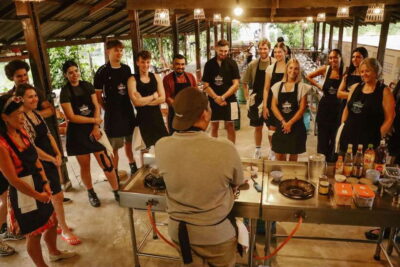
Group size can vary. Some sessions have had only three or four people, while other classes have been set up for around 10 or 11. The listed capacity may reach 12. A small group gives you more personal help, but you should not book on the assumption that every session will be intimate.
The work is practical and physical. You will chop, mix, fry, stir, and assemble several dishes. If you prefer a cooking show where you simply watch, this is not the right choice. If you want to learn by doing, the setup gives you good value.
A Meal Big Enough to Replace Lunch
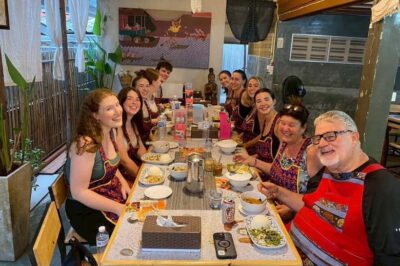
Once the dishes are ready, you sit down and eat what you cooked. This is not a small tasting menu. You prepare several dishes, and the combined meal can be too much for one person to finish.
The morning class begins early enough that eating breakfast beforehand may leave you struggling by lunchtime. For the evening class, a heavy late lunch could have the same effect. I would keep your earlier meal light and plan to take your time at the table.
Leftovers may be packed to take away, including desserts such as mango sticky rice. That is useful because several dishes can be filling even before you reach the final course. It also means the class can provide another meal later, adding to the value of the $32 price.
The food is the payoff, but the meal also lets you compare your own results. You can taste how a curry differs from a salad, or see how the same core flavors appear in soup, noodles, and fried dishes. Mam can explain what went right and what you might change next time.
You should expect the meal to reflect your own cooking, not restaurant-level perfection. That is part of the appeal. If your noodles are slightly soft or your spice level is cautious, you will know what to adjust when you make the dish again.
Same city, a completely different sort of day:
- Chiang Mai: Elephant Sanctuary, Waterfall & Bamboo Rafting
★ 4.9 · 9,160 reviews - Chiang Mai: Doi Inthanon National Park Eco-Friendly Tour
★ 4.6 · 6,667 reviews - Chiang Mai: Elephant Sanctuary & Waterfall Group Tour
★ 4.9 · 5,780 reviews - Chiang Mai: Chiang Rai Temples, Karen Tribe and Hot Springs
★ 4.7 · 5,401 reviews
What the $32 Price Covers
At $32 per person, this is strong value for a half-day activity. The fee includes an English-speaking guide, the market visit, a welcome snack or seasonal fruit, ingredients, your own wok, the cooking lesson, the meal, a cookbook, and a certificate.
Transport is also included from and to your residence within a 3-kilometer radius of central Chiang Mai. The activity information specifically lists pickup for the evening course, with pickup scheduled from 4:00 to 4:30 pm. Check the exact pickup details for your selected session, especially if you are staying outside the included area.
The price compares well with the amount of food and instruction provided. You are getting a market tour, several recipes, personal cooking space, a full meal, and materials to use after the trip. The cookbook is particularly useful because Thai cooking often depends on ingredient combinations that are hard to remember after a single lesson.
The certificate is a pleasant extra, though the real value is the skill you take home. If you cook even a few of the recipes again, the class becomes more than a one-time meal.
Personal expenses are not included. The activity price covers the listed program, but you should budget separately for anything not mentioned.
Morning or Evening: Which Class Fits You?
The morning and evening options suit different Chiang Mai schedules.
The morning class is useful if you want the rest of the day free. You will visit the market, cook, and finish with a substantial meal. It may be the quieter choice at the market, but the early start means you should not eat a large breakfast.
The evening option works well after a morning of sightseeing. Pickup is listed from 4:00 to 4:30 pm, giving you a clear start window. You will still need to check availability because the exact starting time can change.
The duration is listed as 270 minutes to five hours. That is a wide range, so allow a full half-day rather than trying to squeeze the class between two fixed appointments. The market, several dishes, and the meal all take time, and rushing would weaken the best parts of the experience.
The class is wheelchair accessible according to the activity details. Still, the market visit and home setting may involve practical movement between areas, so you should confirm any specific access needs before booking.
Height Rules and Family Practicalities
Participants must be at least 120 centimeters tall. This rule relates to the height of the wok and cooking safety, so small children cannot take part as full cooking participants.
A child under 120 centimeters, or a parent who wants to accompany a young child, can join as a visitor. The visitor price is THB300 per person and includes two dishes in one cooking course. This gives families an option, but it is not the same as having a full individual wok and the full menu.
The class can suit older children and teenagers who meet the height requirement. One family cooked together with three teenage boys, and the hands-on format worked well for them. The key point is that children need to be tall enough and able to follow cooking instructions safely.
The class also suits older adults. A participant in their seventies with no previous cooking experience was able to enjoy the lesson, helped by Mam’s patient instruction. You do not need to be a serious cook to get something from the class.
Dietary Needs and Menu Choices
Vegetarian options are available. The host has also adjusted dishes for food issues, but you should share your needs before the class rather than waiting until ingredients are being prepared.
Thai food can include fish sauce, shrimp paste, oyster sauce, peanuts, coconut, and chili. The supplied information does not promise that every allergy can be handled, so ask specific questions when booking if cross-contact is a concern.
The menu choice is one of the class’s best features. You can lean toward familiar food such as Pad Thai and fried rice, or use the class to try Khao soi, Massaman curry, papaya salad, and Tom yum.
I would tell Mam not only what you cannot eat, but also what you want to learn. If your goal is to recreate northern Thai food, Khao soi may be a better pick than a second noodle dish. If you want a useful everyday meal, curry and fried rice may travel well to your home kitchen.
Who Will Get the Most From This Class?
You should book this if you want to connect Thai food with the ingredients and techniques behind it. It is particularly good for first-time visitors to Chiang Mai, home cooks, couples, families with taller children, and solo participants who like meeting others around a shared meal.
It is also a good choice if you want a cultural activity that is more personal than a standard restaurant meal. Cooking in Mam’s home garden and visiting her local market gives the class an everyday Chiang Mai feel.
You may want a different activity if you dislike group instruction, cannot spend up to five hours on cooking, or want a tightly controlled professional kitchen. The class is friendly and practical, but it is still a busy food session with several dishes and plenty of eating.
The 4.9 rating from 378 reviews reflects especially strong praise for Mam’s warmth, patience, energy, and ability to help cooks at different levels. I would give those qualities real weight when comparing classes. Thai cooking becomes far less intimidating when the teacher explains what to notice instead of simply telling you to copy a recipe.
Should You Book We Cook Thai Home Garden Cooking School?
I would book this class if you want a full, hands-on food experience at a modest price. The market visit gives the cooking real context, the individual wok keeps you involved, and the meal, recipes, and certificate add practical value.
Choose the morning session if you want your afternoon free and can handle a large early meal. Choose the evening course if pickup from central Chiang Mai suits your plans. Tell Mam about dietary needs and confirm the current number of dishes, since the experience is described as six categories while many sessions have produced five dishes.
Bring an appetite, comfortable shoes, and enough time to enjoy the food without rushing. If those details fit your day, this is one of the more useful ways to turn a Chiang Mai meal into a skill you can carry home.
FAQ
How long does the cooking class last?
The duration is listed as 270 minutes to five hours. You should allow a full half-day for the market visit, cooking, and meal.
How much does the experience cost?
The price is $32 per person.
Is transportation included?
Free transportation to and from your residence is included within a 3-kilometer radius of Chiang Mai downtown. Pickup is specifically listed for the evening course, from 4:00 to 4:30 pm.
Is the class available in the morning and evening?
Yes. You can choose a morning or evening class, subject to availability and the starting times shown when you book.
How many dishes will I cook?
The activity is described as one dish from each of six categories. Some class descriptions and experiences refer to five dishes or five courses, so confirm the current menu and dish count when booking.
Do I need cooking experience?
No. The class is suitable for all cooking levels, and each participant has one wok with guidance from Mam.
Are vegetarian options available?
Yes. Vegetarian options are available. You should provide your dietary requirements before the class.
Can children join the cooking class?
Full participants must be at least 120 centimeters tall. Anyone under that height can join as a visitor for THB300 per person and receive two dishes in one cooking course.
Just added around Chiang Mai
- Chiang Rai Wonders: White, Blue & Red Temples and Hot Spring★ 5.0 · 3 reviews
- Chiang Rai White Temple Blue Temple and Hill Tribe Village Tour★ 3.5 · 3 reviews
- Private Chiang Mai City Tour including Wat Doi Suthep, Wat Suan Dok (SHA Plus)★ 5.0 · 3 reviews
- Workshop Making Herbal ball & herbal inhaler★ 4.3 · 3 reviews
- Chiang Mai Mae Ping River Cruise and Thai Farmer House Visit★ 4.0 · 3 reviews
- Phoenix Zipline Adventure Park – Chiang Mai Thrills★ 4.0 · 3 reviews
- Monk trails hike, Wat Phalat, Monk chanting, Wat Doi Suthep.★ 5.0 · 3 reviews
- Tok Sen Massage at Fah Lanna Spa in Chiang Mai★ 4.5 · 3 reviews
Thai Cooking Classes, compared.
Half-Day Thai Cooking Class at Organic Farm in Chiang Mai
Read our review →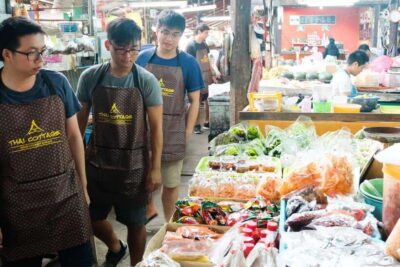
Cooking Class, Market & Thai Herbs Garden Tour
Read our review →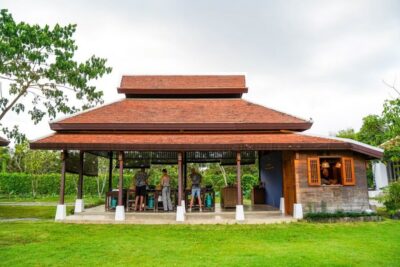
Authentic Cooking Class with Market & Farm Visit
Read our review →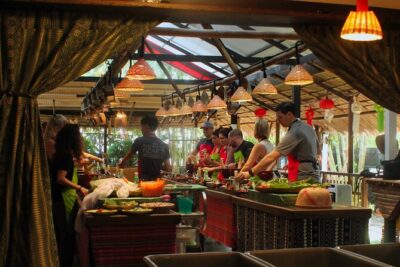
Browse the lists this tour appears in