
Reviewed · THAI COOKING CLASSES
Northern Thai Cooking Experience in Chiangmai
Northern Thai cooking gets its own spotlight here, with two versions of Khao Soi at the heart of the lesson. You also fry local snacks, make a herbal drink, prepare several savory dishes, and finish with coconut-based desserts.
I like the practical recipes, which keep the flavors of Northern Thailand but make the methods easier to repeat at home. I also like the small maximum of 10 people and the friendly English-speaking instruction. The one drawback is that the menu changes by day, so you may not cook every dish you hoped for.
In This Review
- Key points to know before booking
- Why this Chiang Mai cooking class is about more than Khao Soi
- Meeting at Kotchasarn Road and getting started
- Fried snacks and a Northern Thai welcome
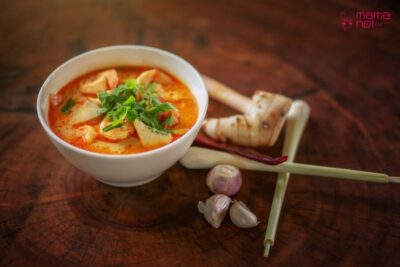
- Learning two ways to make Khao Soi
- The changing menu and what you may cook
- Thai desserts finish the meal
- Friendly instruction and useful English support
- Dietary needs and ingredient adjustments
- Take-home curry pastes and the value of the $42.15 price
- Who will get the most from this class
- Booking, cancellation, and timing advice
- Should you book this Northern Thai cooking experience?
- FAQ
- Where does the cooking class start?
- Where does the activity end?
- How long does the Northern Thai cooking class last?
- Is pickup available?
- Are vegetarian and vegan menus available?
- Can ingredients be adjusted for allergies?
Key points to know before booking
- Khao Soi takes center stage: Learn both the original preparation and an easier version of Chiang Mai’s famous noodle curry.
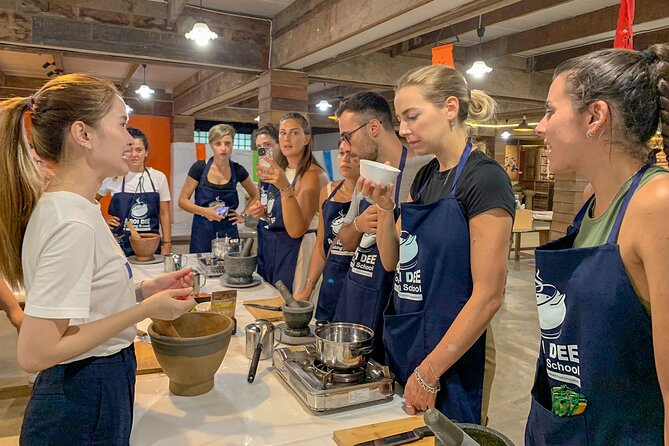
- You cook, not just watch: Fry the opening snacks, prepare several dishes, and make dessert before sitting down to eat.
- The menu changes daily: You may cook Pad Thai, papaya salad, stir-fried noodles, holy basil chicken, or other listed dishes.
- Northern flavors continue at home: FDA-approved Khao Soi and Hung Lei curry pastes are available to take away after class.
- Small groups keep the lesson personal: The class accepts a maximum of 10 people, with ingredients adjusted for allergies.
- The meeting point is central: Start at the McDonald’s on Kotchasarn Road, with pickup offered and the activity ending there.
Why this Chiang Mai cooking class is about more than Khao Soi
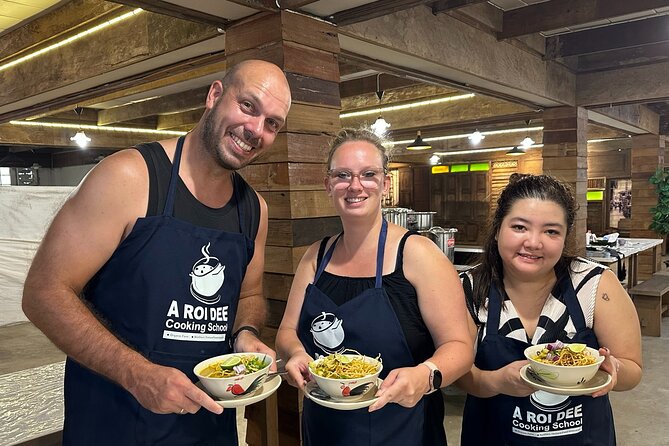
Khao Soi is the right dish to anchor a Chiang Mai cooking class. It is closely tied to Northern Thailand, yet it can seem complicated at first, with curry, noodles, coconut milk, herbs, and contrasting textures all sharing one bowl.
This class handles that challenge sensibly by teaching both the original method and a simplified version. That matters if you want to cook the dish in your own kitchen, where you may not have every local ingredient or the time to follow a long traditional process.
I like that the class does not treat Northern food as a single famous noodle dish. The menu can include everyday Thai favorites such as Pad Thai, papaya salad, stir-fried rice noodles with soy sauce, and chicken with holy basil. That gives you a wider look at Thai cooking, from curry and noodles to salads, stir-fries, and sweets.
The setting is a historic cooking establishment with a long connection to Northern Thai food. The useful point for you is not simply the age of the place. It is the focus on keeping local food approachable, so you leave with methods you can actually use rather than a one-time meal you cannot reproduce.
More Thai cooking classes in Chiang Mai:
- Half-Day Thai Cooking Class at Organic Farm in Chiang Mai
★ 5.0 · 19,087 reviews - Chiang Mai: Cooking Class, Market & Thai Herbs Garden Tour
★ 4.9 · 4,824 reviews - Chiang Mai: Authentic Cooking Class with Market & Farm Visit
★ 4.9 · 4,546 reviews
Meeting at Kotchasarn Road and getting started
The advertised meeting point is the McDonald’s at 17/1 Kotchasarn Road in Chang Khlan, Chiang Mai. The activity ends back at this same point. Pickup is also offered, so check the booking details carefully if you would rather not make your own way there.
The location is near public transportation, which helps if you are staying in or around central Chiang Mai. Still, allow time to find the exact meeting spot. A clear central landmark is useful, but a busy road can make quick meetups less effortless than they sound.
The class lasts about five hours. That is long enough for real hands-on cooking, but it is also a substantial block of your day. I would avoid scheduling a major afternoon activity immediately afterward. You will be cooking, eating, and likely carrying home some new food ideas, so give the class room in your schedule.
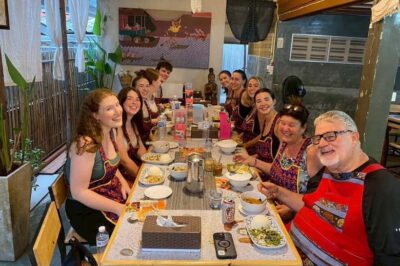
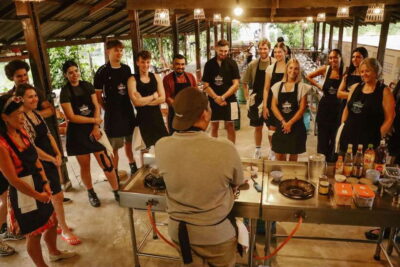
The group limit of 10 is one of the better features. A cooking class can become frustrating when several people need help at once. A small group gives you a better chance to ask about texture, heat, ingredients, and substitutions without waiting through a large crowd.
Fried snacks and a Northern Thai welcome
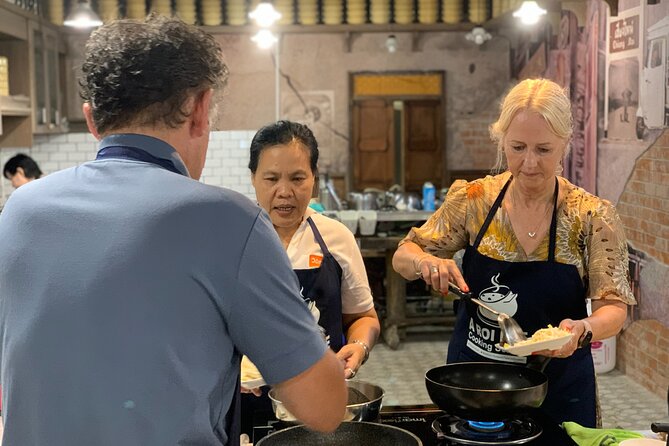
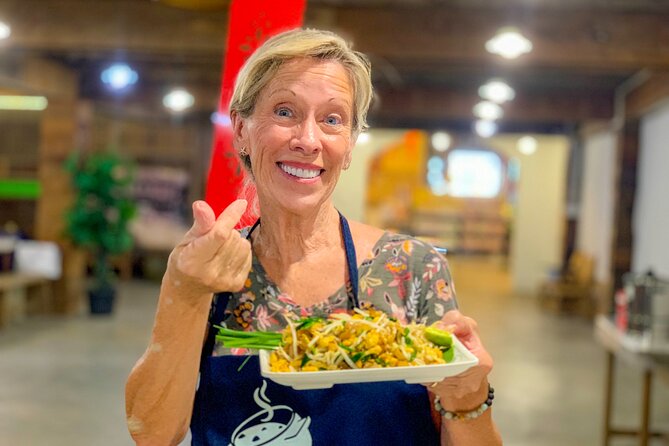
The class begins with a Northern Thai chili dipping sauce and local fried snacks. You do not simply find a plate waiting on the table. You get to fry the crackers yourself, then eat them with the sauce.
That is a small but smart opening lesson. Frying gives you an immediate cooking task before the more involved dishes begin. It also introduces the balance that runs through Northern Thai food: a strong dipping sauce paired with something crisp and mild.
A herbal drink follows. This helps break up the meal and gives you another taste of local ingredients before you start on the main menu. The exact drink is not specified, so do not book this expecting one particular herb or recipe.
The welcome also sets the tone. You are not rushed straight into a long list of instructions. You get a snack, a drink, and a first taste of the flavors you will work with. For a beginner, that gentle start can make the five-hour format feel less intimidating.
Learning two ways to make Khao Soi
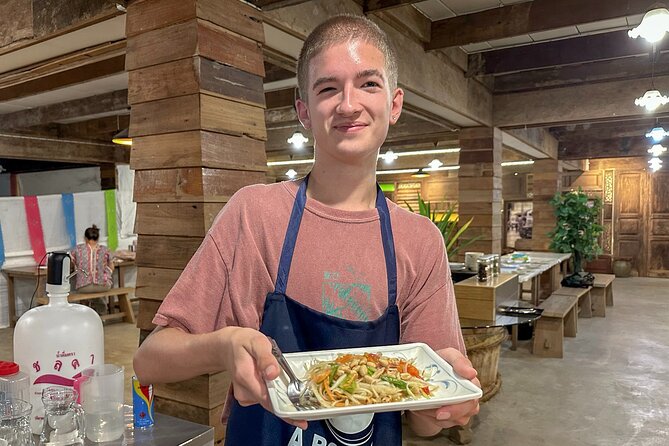
The Khao Soi section is the main reason I would choose this class over a general Thai cooking lesson. You learn the original dish and an easier version, which gives you both culinary context and practical value.
The original preparation helps you understand what makes Khao Soi special. The simplified recipe is aimed at the problem you will face after returning home: finding suitable ingredients and managing the steps without a professional kitchen.
You should pay close attention to the differences between the two versions. Ask which ingredients carry the most flavor, which steps can be shortened, and which substitutions affect the final dish. Those details are more useful than simply copying a recipe card.
Khao Soi also makes a good teaching dish because it combines several cooking ideas in one bowl. You work with noodles, curry, and layered flavor, then compare the result with a quicker method. Even if you never make the dish again, the lesson can help you understand how Northern Thai cooking builds taste.
The class aims to keep the traditional flavor while making the process easier for home cooks. That balance is important. A recipe can be technically traditional but useless if it requires ingredients you cannot find or techniques you cannot repeat.
Same city, a completely different sort of day:
- Chiang Mai: Elephant Sanctuary, Waterfall & Bamboo Rafting
★ 4.9 · 9,160 reviews - Chiang Mai: Doi Inthanon National Park Eco-Friendly Tour
★ 4.6 · 6,667 reviews - Chiang Mai: Elephant Sanctuary & Waterfall Group Tour
★ 4.9 · 5,780 reviews - Chiang Mai: Chiang Rai Temples, Karen Tribe and Hot Springs
★ 4.7 · 5,401 reviews
The changing menu and what you may cook
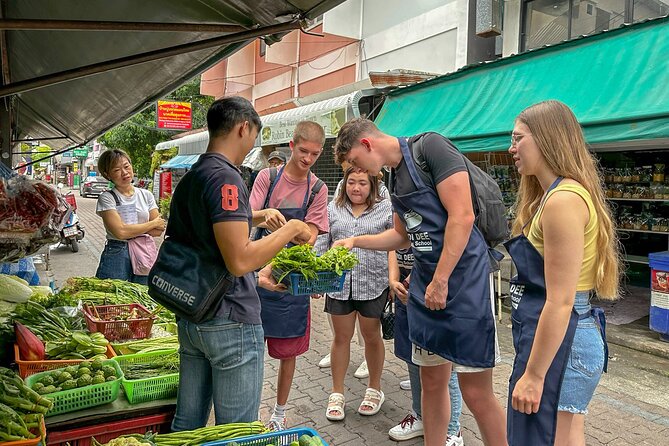
The menu changes each day. This keeps the class from feeling locked into one fixed formula, but it also means you should not assume every listed dish will appear on your date.
Possible savory dishes include Pad Thai, papaya salad, stir-fried rice noodles with soy sauce, and stir-fried chicken with holy basil. These choices give you a useful mix of cooking styles. You may be cutting and seasoning a fresh salad, working with noodles, or managing the quick heat of a wok-style stir-fry.
Pad Thai is a familiar choice, but it still has value in a class setting. You can focus on the balance of sweet, salty, sour, and savory flavors instead of treating it as a dish you simply order at a restaurant.
Papaya salad brings a different lesson. It depends on fresh ingredients, pounding and mixing, and careful control of heat and acidity. If you like food with a sharp kick, this may be one of the more memorable parts of the day. If you are sensitive to chili, ask about the spice level before preparation.
Holy basil chicken offers another useful skill: cooking a fast stir-fry without losing the character of the herbs and sauce. The listed dish uses chicken, but the class also provides vegan and vegetarian options. Ask about the exact substitute for your session rather than assuming every dish will be adapted in the same way.
One account of the class describes preparing five additional dishes and a tea after the opening snacks. That suggests a generous amount of cooking, but the daily menu is flexible, so the precise number and selection can vary.
Thai desserts finish the meal
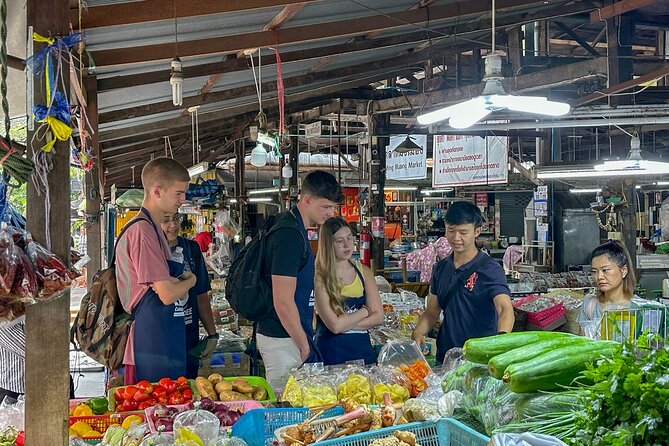
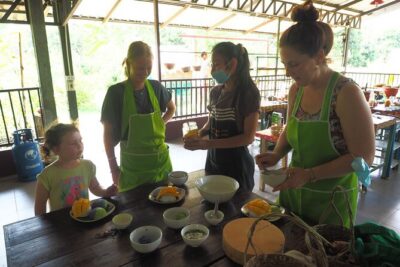
Dessert is not an afterthought here. The class includes traditional sweets such as banana in coconut milk and sweet sticky rice with longan.
These dishes are simpler than the savory preparations, but they show another side of Thai cooking. Coconut milk creates richness, while fruit adds sweetness and fragrance. Sticky rice with longan also gives you a chance to work with a texture that is different from noodles and stir-fries.
I like having dessert at the end because it rounds out the lesson. You are not only learning dishes that visitors often seek out at lunch or dinner. You also get recipes that may be easier to make at home when you want a small Thai-style treat.
The final tasting session is the payoff for all that work. You sit down and eat what you prepared, rather than leaving with a few samples. That makes the class feel like both a lesson and a meal.
Friendly instruction and useful English support
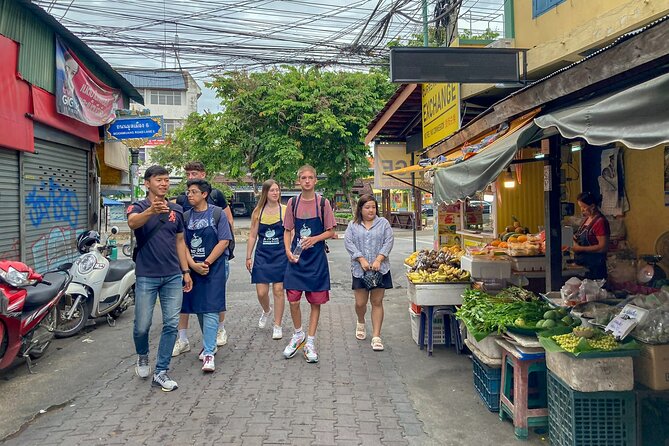
The instruction is designed for all skill levels. You do not need to arrive with professional knife skills or experience cooking Thai food.
The guide and driver speak very good English, according to the experience details, and the staff are described as friendly and eager to share. That matters because cooking classes depend on clear explanations. You need to understand not only what to add, but when to add it and what the food should look or smell like at each stage.
I would still ask questions throughout the class. If a recipe seems easy to repeat, ask for the amounts and substitutions. If it tastes different from what you expected, ask which ingredient created the change. The class is most useful when you treat the instructors as a source of practical kitchen advice, not just as people leading you from one station to the next.
Because the group is capped at 10, you should have a better chance to receive direct help. The class is still shared, so the pace may not match your own perfectly. Confident cooks may want more detail, while beginners may need extra time. The small group helps, but it cannot remove every difference in cooking speed.
Dietary needs and ingredient adjustments
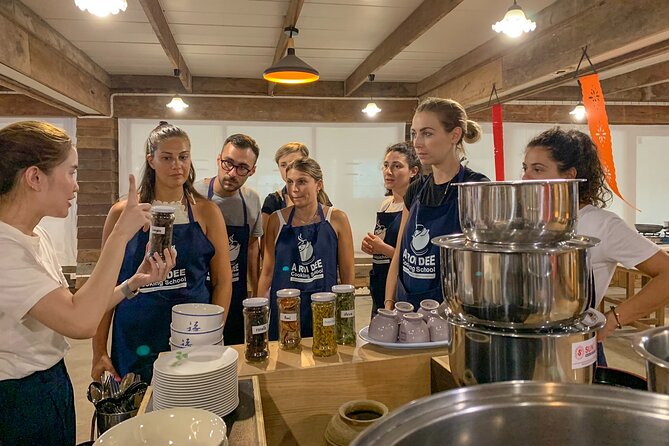
Vegetarian and vegan menus are available. Ingredients can also be adjusted for allergies.
That is encouraging, but you should give the provider clear information when booking and confirm it again at the start of the class. Thai cooking often uses sauces, pastes, seafood products, and other ingredients that are not always obvious from a dish name.
Do not assume that a vegetarian version is automatically vegan. Ask specifically about fish sauce, oyster sauce, shrimp paste, eggs, and other ingredients if they matter to your diet. The provider says adjustments are possible, but the exact replacement will depend on the dish of the day.
For allergies, be specific. Naming the ingredient and explaining how serious the reaction is will give the staff the best chance to help. The menu changes daily, so early notice is especially useful.
Take-home curry pastes and the value of the $42.15 price
The price is $42.15 per person. For a five-hour class that includes instruction, several dishes, snacks, a herbal drink, dessert, and a sit-down tasting, that is a fair price if you want an active food experience rather than a quick demonstration.
The value improves if you use what you learn later. A cooking class becomes expensive when the recipe stays in a notebook. Here, the simplified Khao Soi method is meant to be repeated at home, and take-home FDA-approved local ingredients are available after class.
The available products include Khao Soi curry paste and Hung Lei curry paste. These can help you recreate Northern Thai flavors without trying to assemble every spice and paste from scratch. The information does not say that the pastes are included in the $42.15 price, so treat them as an optional extra purchase.
The class also replaces at least one restaurant meal, since you eat the dishes you prepare. I would not book it only to save money on lunch. Book it for the combination of food, instruction, and the chance to continue cooking after you return home.
The daily menu is the main value question. If you are determined to learn one specific dish, especially Pad Thai or papaya salad, confirm the schedule before booking. If you are happy to learn the menu offered that day, the changing format works in your favor.
Who will get the most from this class
I would recommend this class to first-time visitors who want a direct introduction to Northern Thai food. It also suits people who enjoy cooking and want recipes that are less demanding to repeat at home.
It is a good fit for couples, families, and small groups of friends because the work ends with a shared meal. The maximum of 10 keeps the scale manageable without making the class feel private.
Vegetarians, vegans, and people with food allergies can consider it, provided they communicate their needs in advance. The provider specifically offers menu options and ingredient adjustments.
You may want to skip it if you dislike spending several hours in a kitchen or if you want a tightly fixed menu. The changing daily selection is part of the appeal, but it can be a weakness for a person booking around one favorite dish.
The class is also less suited to a very short Chiang Mai visit if your schedule is packed. Five hours is a serious commitment. For anyone with the time, though, it offers more substance than a quick tasting stop.
Booking, cancellation, and timing advice
The experience is often booked about 32 days ahead, so reserve early if your Chiang Mai dates are fixed. Confirmation is received at booking, and mobile tickets are offered.
Free cancellation is available until 24 hours before the start time for a full refund. Changes or cancellations made less than 24 hours ahead are not accepted for a refund. The local Chiang Mai cut-off time applies.
A minimum number of participants is required. If the class is canceled because that minimum is not reached, you are offered another date or experience, or a full refund.
I would choose a day when you can arrive rested and keep the rest of your schedule light. A five-hour cooking class is most enjoyable when you are not watching the clock.
Should you book this Northern Thai cooking experience?
Book it if you want to learn the food of Chiang Mai through your own hands. The strongest reasons are the two Khao Soi methods, the small group, the friendly English support, and the useful take-home curry pastes.
The changing menu is the only major point to weigh. Check the dish schedule if one recipe matters most to you. Otherwise, let the day’s menu introduce you to several parts of Thai cooking, from fried snacks and chili dip to noodles, stir-fries, salads, and coconut desserts.
At $42.15, the class offers good value for five hours of cooking and eating, especially if you use the easier recipes at home. For a practical, food-focused morning or afternoon in Chiang Mai, I would put this on the shortlist.
FAQ
Where does the cooking class start?
The meeting point is McDonald’s at 17/1 Kotchasarn Road, Tambon Chang Khlan, Chiang Mai 50100, Thailand.
Where does the activity end?
The activity ends back at the same meeting point.
How long does the Northern Thai cooking class last?
The class lasts approximately five hours.
Is pickup available?
Yes. Pickup is offered, although the listed meeting point is the McDonald’s on Kotchasarn Road.
Are vegetarian and vegan menus available?
Yes. Vegetarian and vegan menu options are available.
Can ingredients be adjusted for allergies?
Yes. Ingredients can be adjusted for allergies. Provide your requirements when booking so the cooking school can prepare appropriately.
Just added around Chiang Mai
- Chiang Rai Wonders: White, Blue & Red Temples and Hot Spring★ 5.0 · 3 reviews
- Chiang Rai White Temple Blue Temple and Hill Tribe Village Tour★ 3.5 · 3 reviews
- Private Chiang Mai City Tour including Wat Doi Suthep, Wat Suan Dok (SHA Plus)★ 5.0 · 3 reviews
- Workshop Making Herbal ball & herbal inhaler★ 4.3 · 3 reviews
- Chiang Mai Mae Ping River Cruise and Thai Farmer House Visit★ 4.0 · 3 reviews
- Phoenix Zipline Adventure Park – Chiang Mai Thrills★ 4.0 · 3 reviews
- Monk trails hike, Wat Phalat, Monk chanting, Wat Doi Suthep.★ 5.0 · 3 reviews
- Tok Sen Massage at Fah Lanna Spa in Chiang Mai★ 4.5 · 3 reviews
Thai Cooking Classes, compared.
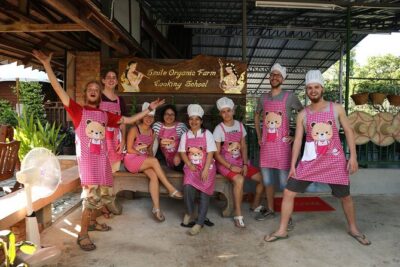
Half-Day Thai Cooking Class at Organic Farm in Chiang Mai
Read our review →
Cooking Class, Market & Thai Herbs Garden Tour
Read our review →
Authentic Cooking Class with Market & Farm Visit
Read our review →
Browse the lists this tour appears in