
Reviewed · LANNA CULTURE EXPERIENCES
Lanna Heritage Walking Tour: A Journey Through History
Chiang Mai’s past is easier to understand when you follow it on foot. This private walk links city gates, old temples, royal monuments, a local market, and a former prison site that may conceal part of an early palace. Lanna history is not treated as a dusty timeline here. It is tied to the streets you are walking through.
I like the route’s temple variety, from the oldest surviving temple in Chiang Mai to the wooden elegance of Wat Pan Tao. I also like the chance to ask questions as you go, especially with Richard, the guide praised for changing one visitor’s perspective through his thoughtful explanations. The main consideration is pace: four hours on foot, with temple visits and market stops, may feel long in hot weather.
In This Review
- Key points at a glance
- Tha Phae Gate sets the story
- Wat Chiang Man and the moat
- Three Kings Monument and Chiang Mai’s public past
- The former prison site and a city still being restored
- Wat Phra Singh brings royal history into focus
- Wat Pan Tao and traditional Lanna woodwork
- Wat Chedi Luang closes the walking route
- What the $45 price covers
- Practical matters before you go
- Who will get the most from this walk
- Should you book the Lanna Heritage Walking Tour?
- FAQ
- How long does the Lanna Heritage Walking Tour last?
- Where does the tour start?
- Is the tour private?
- Which temples are included?
- Are entrance fees and refreshments included?
- What should I wear and bring?
Key points at a glance
- Richard’s personal guiding style: The English-speaking guide leads a private group, giving you room to ask about Lanna architecture, politics, religion, and daily life.
- A clear historical route: Tha Phae Gate, the moat, Three Kings Monument, old government sites, and major temples help connect Chiang Mai’s past.
- Wat Chiang Man and Wat Chedi Luang: You see both the city’s oldest temple and one of its most powerful architectural symbols.
- A taste of ordinary Chiang Mai: Sompet Local Market adds fruit, snacks, and everyday local life to the temple schedule.
- A rare renovation stop: A former women’s prison site is being restored after evidence of an early Lanna royal palace was found.
- Useful inclusions: Hotel transfers, entrance fees, water, local snacks, and a café drink are covered in the $45 price.
Tha Phae Gate sets the story
The tour begins at Tha Phae Gate, either with hotel pickup or by meeting at the gate. This is a good starting point because Chiang Mai’s old center was not planned as a random cluster of temples. Its walls, gates, and moat helped protect the Lanna capital.
Your guide begins with the Lanna Kingdom’s formation, its prosperous period, and its later decline under Burmese control. The story also includes a striking interruption: Chiang Mai was abandoned for about 20 years. You’ll hear how the city regained independence around 250 years ago, later became part of Siam, and avoided direct colonization by major foreign powers.
That last point gives the opening talk useful scale. You are not only hearing about one northern Thai city. You are learning how Lanna fit into the wider political story of Siam and Southeast Asia.
The discussion continues into subjects that are often missed on a standard temple visit, including the teak industry boom, Chiang Mai during World War II, and the city’s present-day character. I like this broad time span because it keeps the tour from treating Chiang Mai as a place frozen in the past.
More Lanna culture experiences in Chiang Mai:
- Lanna Kingdom Chiang Mai Food Tour with 15+ Tastings
★ 5.0 · 84 reviews - Khantoke Dinner and Cultural Show At Old Chiang Mai Cultural Center
★ 4.5 · 19 reviews - Chiang Mai : Traditional Lanna Bamboo Fan Weaving
★ 5.0 · 17 reviews
Wat Chiang Man and the moat
A roughly 15-minute walk leads to Wat Chiang Man, Chiang Mai’s oldest temple. The stop lasts about 20 minutes and includes a guided visit, local food or snack opportunities, and time around the nearby market area.
The temple is valued here for its old stone carvings, which help show the early shape of the Lanna Kingdom. Your guide can place the architecture in context instead of simply pointing out decorative details. If you are interested in how northern Thai design differs from styles elsewhere, this is one of the most useful early stops.
The route also follows the historic city moat. Its practical purpose becomes easier to grasp when you see how the old center was arranged. Bring sports shoes, as requested, and expect an urban walk rather than a gentle stroll through a park. The heat and hard surfaces are the main physical challenges.
Sompet Local Market supplies a welcome change of mood. You can sample fresh fruit and local snacks while watching ordinary shopping take place around you. This is not a formal cooking class or a full meal, so do not arrive expecting lunch. It is a short food stop that adds taste and daily routine to the historical material.
Three Kings Monument and Chiang Mai’s public past
The next section brings you to the Three Kings Monument, a central Chiang Mai landmark honoring the city’s revered monarchs. The stop lasts about 15 minutes and combines sightseeing with an explanation of the figures and their role in local memory.
You also pass Chiang Mai’s first government school, established in 1900 during the reign of King Rama VI. The detail matters because it shows the city moving beyond royal and religious institutions into modern public administration and education.
Nearby, a museum occupies a building that once served as a royal palace and later became an administrative center. The route passes the museum rather than listing a full museum visit, so you should not count on an extended indoor exhibition session. Even so, the building’s changing use helps explain how Chiang Mai’s old center adapted as political control and government systems changed.
The former prison site and a city still being restored
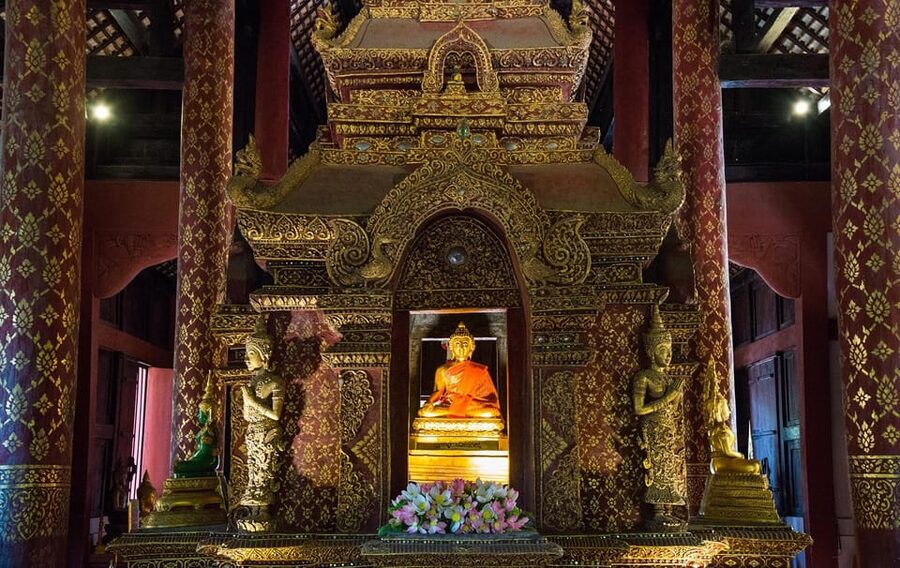
One of the tour’s more unusual elements is the renovation site that was once used as a women’s prison. Archaeological evidence there points to an early Lanna royal palace, and the area is intended to become a historical park.
I like this stop because it shows that Chiang Mai’s past is still being researched. You are not only looking at finished monuments with tidy explanations. You are seeing a place where historians and preservation workers are still working out what stood there and how it should be presented.
The condition of a renovation site can be less polished than a temple courtyard. That is part of the point, but it may not suit you if you want every stop to look finished and photo-ready. Your guide’s explanation is likely more important here than the physical appearance of the site.
More historic sites in Chiang Mai:
- Chiang Mai: Historic Temples and City Guided Walking Tour
★ 4.7 · 650 reviews - Chiang Mai: Historic Old City Bike Tour – Morning or Night
★ 4.7 · 263 reviews - Chiang Mai: Historic Old City Bike Tour – Morning or Night
★ 5.0 · 202 reviews - Chiang Mai: Private Historic Old City Bike Tour – Night
★ 4.7 · 143 reviews
Wat Phra Singh brings royal history into focus
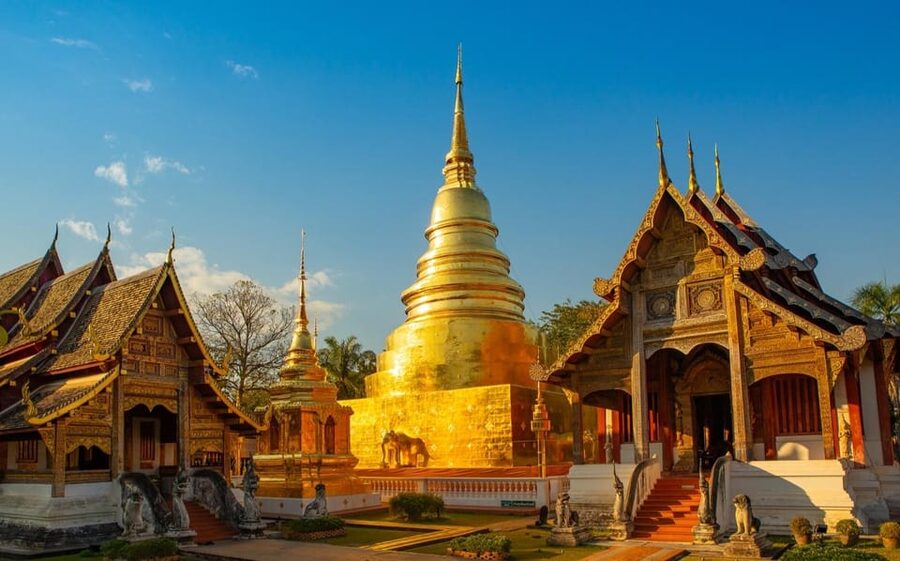
Wat Phra Singh receives about 30 minutes, followed by a 15-minute break. It is one of Chiang Mai’s major historic temples, and the guide explains how its importance changed across different periods.
This is a good place to listen for the difference between a temple as a religious center and a temple as a political symbol. In Chiang Mai, important temples are tied to royal authority, civic identity, art, and the survival of Lanna traditions. The tour’s value comes from connecting those threads rather than treating each building as an isolated stop.
The break afterward is practical. You receive a coffee or another drink at a local café, giving your feet time to recover and your mind a pause from dates and dynasties. Chiang Mai is well known for its coffee culture, but the tour promises a drink rather than a specific café or roast, so keep your expectations flexible.
Wat Pan Tao and traditional Lanna woodwork
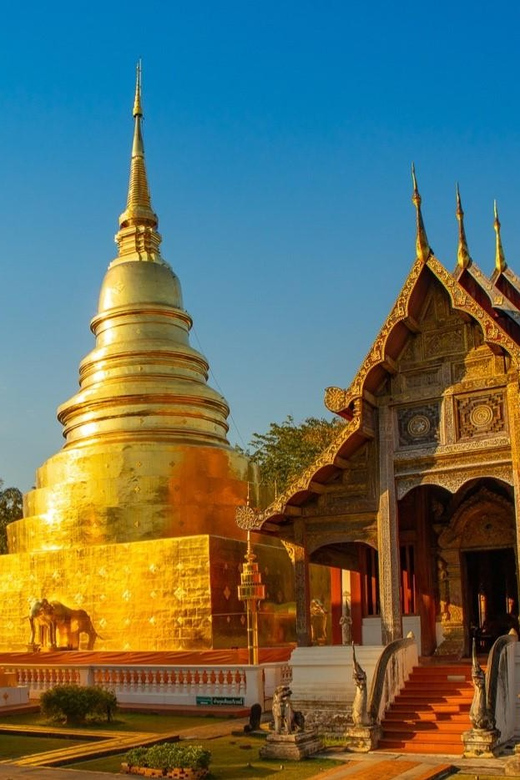
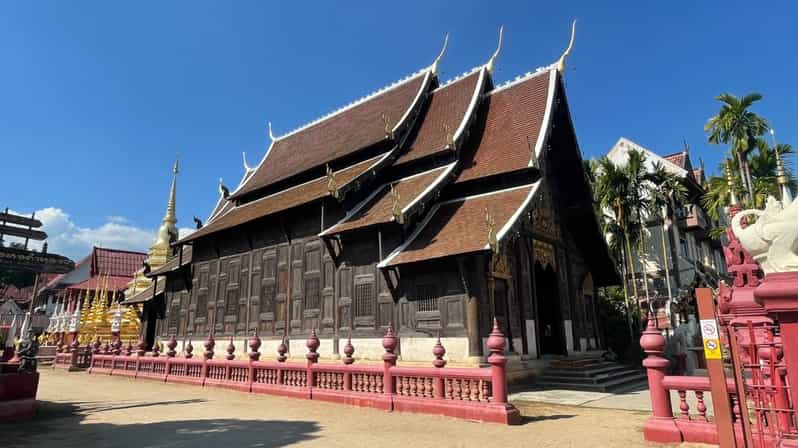
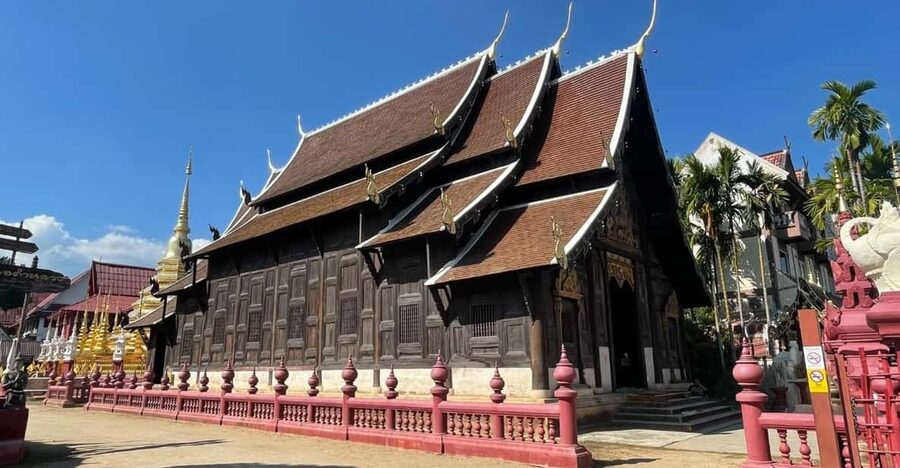
Wat Pan Tao is a shorter 15-minute visit, but it gives the route a different visual character. The temple is a prime example of traditional Lanna architecture and was originally part of the old royal palace.
That former palace connection makes the stop more than a quick wooden temple visit. You can compare its design with the masonry and stone details seen earlier. I find that architectural contrasts often make a history walk easier to remember, especially when your guide explains why a building’s materials and form matter.
Because the visit is brief, you should not expect a long period for quiet study or photography. The strength of Wat Pan Tao is its place within the larger story: royal space, religious use, and surviving northern design all meet in one stop.
Wat Chedi Luang closes the walking route
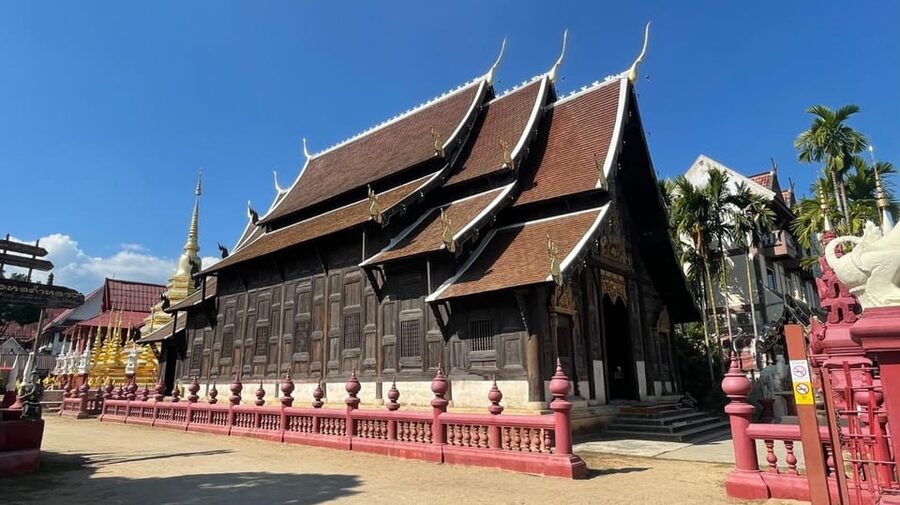
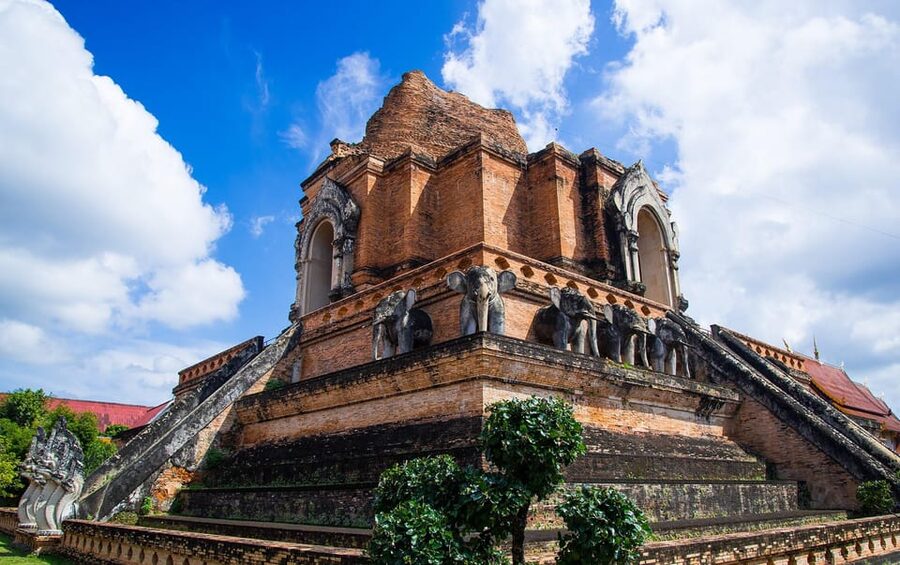
The final major visit is Wat Chedi Luang, with about 30 minutes set aside for the temple and its history. Its great chedi is one of Chiang Mai’s defining sights, and the site carries the weight of many important events in the city’s past.
This is a fitting ending because the temple gathers several themes from the day: royal power, religious life, construction, damage, survival, and civic identity. Your guide explains the events connected with the temple and why it remains important to Chiang Mai.
By this point, you have moved from the city’s defensive edge to its oldest temple, civic monuments, government history, market life, royal sites, and major religious centers. The route does not simply pile up temples. It gives you a way to read the old city as a living place shaped by power, trade, belief, and change.
What the $45 price covers
At $45 per person, this is a strong value if you want interpretation rather than just transportation between sights. The fee includes an English-speaking local guide, entry fees, a bottle of water, local snacks, a café drink, and two-way hotel transfer.
The private-group format is especially important. On a large group walk, questions about Lanna politics or architectural differences can be difficult to fit in. Here, you have more control over the conversation, and Richard’s strong feedback for answering many questions makes that flexibility worth noting.
The tour does not include lunch, other meals, personal purchases, travel insurance, or special requests. Since the market stop is for samples and local snacks, plan to eat before or after the walk if you need a full meal.
Hotel pickup adds convenience, though you can also meet at Tha Phae Gate. The four-hour duration includes walking, visits, a market stop, and a café pause. Starting times depend on availability, so confirm the schedule before booking.
Practical matters before you go
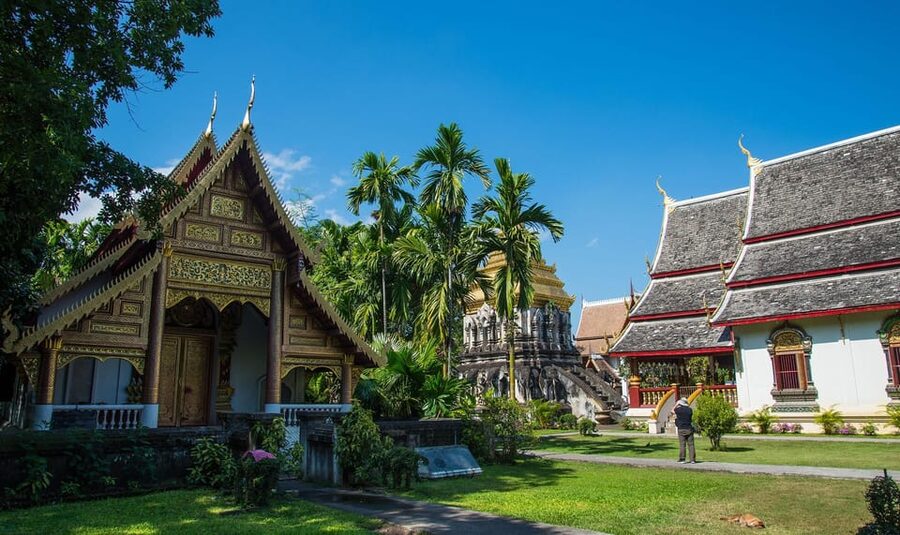
Wear sports shoes. The route includes repeated walking between sites, city streets, and temple grounds, and comfortable footwear will make the final temple more enjoyable.
Dress respectfully for Buddhist temples. Short skirts are not allowed, and suitable clothing is also a sign of respect toward the people and places you visit. Alcohol and drugs are prohibited.
The experience is not suited to children under eight or people over 80. The supplied information does not give a specific mobility rating, so anyone concerned about walking or standing should ask the provider before booking.
The tour is offered in English and is led as a private group. Cancellation is free up to 24 hours in advance, and you can reserve now and pay later, which helps if your Chiang Mai schedule is still moving around.
Who will get the most from this walk
I would choose this tour if you want Chiang Mai’s old city explained in historical order. It suits first-time visitors who want more than photographs, architecture fans curious about Lanna design, and repeat visitors looking for the political and civic story behind familiar temples.
It is also a good match if you prefer private guiding. Richard’s name appears in the strongest personal feedback, with one visitor describing a changed perspective after time spent learning from him alone. Another highly positive assessment highlights his kindness, openness, and ability to handle many questions.
The tour may be less suitable if you dislike walking, need a slow schedule, or want a food-focused experience. The market snacks and coffee are pleasant additions, but this is primarily a history and architecture tour.
Should you book the Lanna Heritage Walking Tour?
Book it if you want a four-hour introduction to Chiang Mai that connects temples with royal power, public institutions, Burmese rule, Siamese politics, teak, war, and modern city life. The private format, included admission, hotel transfer, snacks, and café drink make $45 a fair price.
I would be most likely to book this early in a Chiang Mai stay, then use what I learn to explore the old city on my own later. Just wear proper shoes, dress for temples, eat enough beforehand, and allow for the heat. If you want a relaxed ride or a full meal, choose another type of tour. If you want the city’s past explained by a local guide who welcomes questions, this is a well-focused choice.
FAQ
How long does the Lanna Heritage Walking Tour last?
The tour lasts four hours, including walking, temple visits, the local market, a café break, and historical explanations.
Where does the tour start?
You can be picked up from your hotel or meet the guide at Tha Phae Gate in Chiang Mai.
Is the tour private?
Yes. The experience is offered for a private group with a live English-speaking guide.
Which temples are included?
The route includes Wat Chiang Man, Wat Phra Singh, Wat Pan Tao, and Wat Chedi Luang.
Are entrance fees and refreshments included?
Yes. Entry fees, a bottle of drinking water, local snacks, and one coffee or other café drink are included. Lunch and other meals are not included.
What should I wear and bring?
Bring sports shoes and dress respectfully for Buddhist temples. Short skirts, alcohol, and drugs are not allowed.
More Walking Tours in Chiang Mai
- Chiang Mai: 3 Hour Old City and Temples Guided Walking Tour
★ 4.6 · 1,568 reviews - Chiang Mai: Temple And City Walking Tour Part I
★ 4.7 · 244 reviews - Chiang Mai: Local Food and Markets Guided Walking Tour
★ 4.3 · 175 reviews - Chiang Mai Untouched Elephant: Nature Walk & Waterfall Trek
★ 4.7 · 77 reviews
Just added around Chiang Mai
- Chiang Rai Wonders: White, Blue & Red Temples and Hot Spring★ 5.0 · 3 reviews
- Chiang Rai White Temple Blue Temple and Hill Tribe Village Tour★ 3.5 · 3 reviews
- Private Chiang Mai City Tour including Wat Doi Suthep, Wat Suan Dok (SHA Plus)★ 5.0 · 3 reviews
- Workshop Making Herbal ball & herbal inhaler★ 4.3 · 3 reviews
- Chiang Mai Mae Ping River Cruise and Thai Farmer House Visit★ 4.0 · 3 reviews
- Phoenix Zipline Adventure Park – Chiang Mai Thrills★ 4.0 · 3 reviews
- Private: 3 days 2 night trip: ChaingMai-Chaingrai- The Golden Triangle trip★ 5.0 · 3 reviews
- Monk trails hike, Wat Phalat, Monk chanting, Wat Doi Suthep.★ 5.0 · 3 reviews
Lanna Culture Experiences, compared.
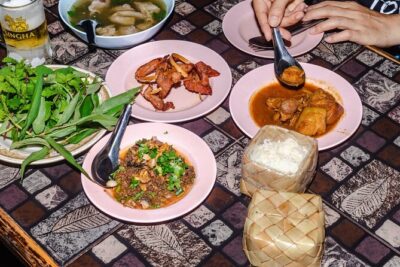
Lanna Kingdom Chiang Mai Food Tour with 15+ Tastings
Read our review →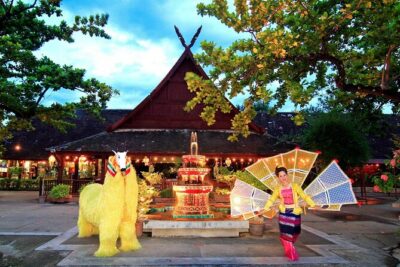
Khantoke Dinner and Cultural Show At Old Chiang Mai Cultural Center
Read our review →
Browse the lists this tour appears in