
Reviewed · CHIANG MAI TEMPLE TOURS
Discover Wiang Kum Kam Ancient City with Wat Chiang Man Visit
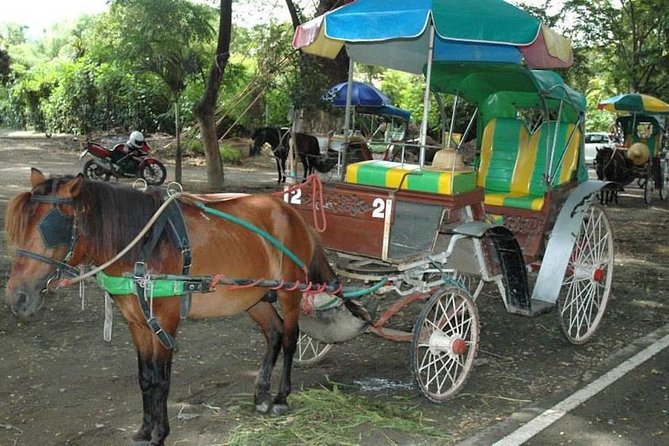
Wiang Kum Kam gives you a quieter look at Chiang Mai’s past, with old brick temples scattered around the former capital beside the Ping River. A horse-drawn carriage ride adds a pleasant, old-fashioned way to move between parts of the archaeological site.
I like the mix of outdoor ruins and the City Arts and Cultural Centre, which helps connect the temple remains to the wider story of Chiang Mai. I also like that hotel pickup, drop-off, and a guide are included for $43.93. The main catch is Monday: the museum is closed, so the guide must replace it with visits to local craft businesses.
In This Review
- Key points to know
- Why Wiang Kum Kam is worth your morning
- Wat Chedi Liam begins the ancient-city visit
- Wiang Kum Kam reveals Chiang Mai before Chiang Mai
- The City Arts and Cultural Centre connects the pieces
- The guide makes the difference
- What the $43.93 price includes
- Who will get the most from this tour
- Practical planning before you book
- Should you book Discover Wiang Kum Kam?
- FAQ
- How long does the tour last?
- What locations are included?
- Is hotel pickup included?
- Is the horse-drawn carriage ride included?
- Is admission to the sites included?
- Is the City Arts and Cultural Centre open on Mondays?
- Are food and drinks included?
- Can one person book the tour?
Key points to know
- Wiang Kum Kam was once King Mangrai’s capital: The ruins show an earlier chapter of northern Thailand before the capital moved to Chiang Mai.
- Wat Chedi Liam is an easy first stop: You get about 30 minutes at this notable temple within the ancient settlement.
- The carriage ride changes the pace: It gives you a scenic way to see the ruins instead of walking the entire area.
- The museum fills in the gaps: Photos, maps, artifacts, and an audio-visual display explain Chiang Mai from its first settlers to its modern city.
- Monday visits follow a different plan: The City Arts and Cultural Centre is closed, so craft businesses take its place.
- The tour stays small enough to manage: The maximum group size is 30 people, with a minimum of two required for the activity to operate.
Why Wiang Kum Kam is worth your morning
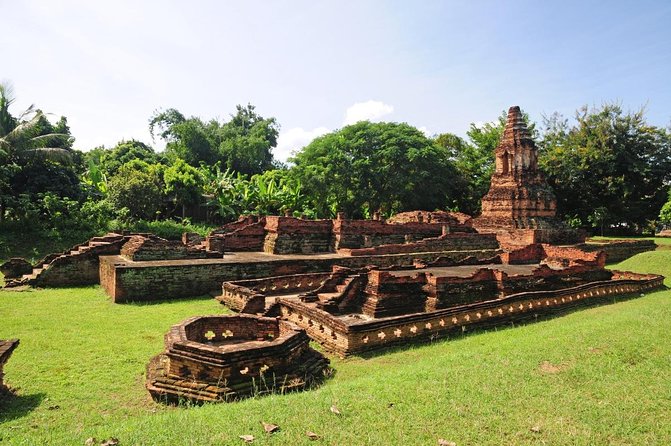
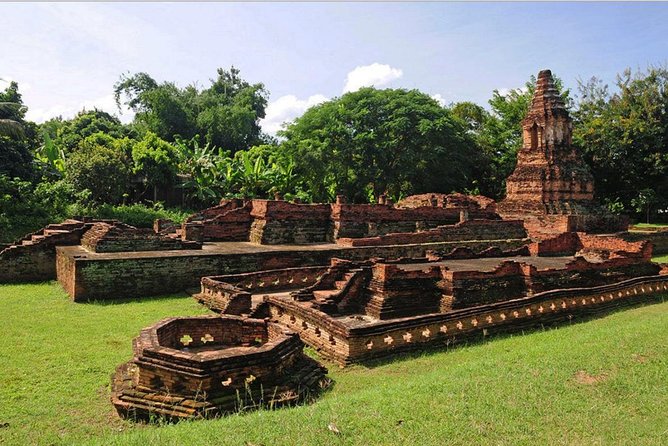
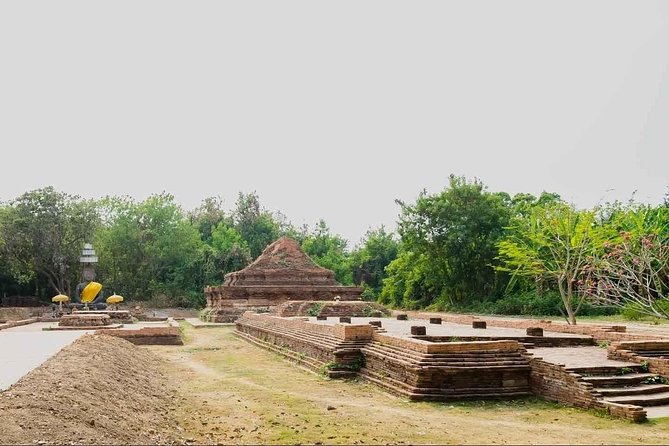
Chiang Mai is often introduced through its Old City temples, but Wiang Kum Kam shows you what came before. King Mangrai the Great built this settlement as his capital before moving the seat of power to Chiang Mai. Today, the former city is an archaeological area with ruined temples and historic remains spread through the countryside along the Ping River.
That setting gives the visit a different feel from a standard temple circuit. You are not simply moving from one intact shrine to another. You are seeing fragments of an older capital, then using the guide’s explanation to understand how those fragments fit together.
I find this kind of stop especially useful early in a Chiang Mai visit. The City Arts and Cultural Centre later adds maps, images, objects, and displays that help place Wiang Kum Kam in the larger story. The result is a half-day that moves from physical remains to museum context without trying to cover every major sight in town.
The tour lasts about three and a half hours. That is long enough to make the trip worthwhile, but short enough to leave most of your day free for markets, meals, or more temples.
More temple tours in Chiang Mai:
- Chiang Mai: Doi Suthep and Wat Umong Enchanting Evening Tour
★ 4.6 · 1,811 reviews - Chiang Mai: Doi Suthep, Wat Umong, and Pha Lat Sunrise Tour
★ 4.7 · 1,425 reviews - Chiang Mai: Wat Pha Lat & Wat Phra That Doi Suthep Tour
★ 4.8 · 1,207 reviews
Wat Chedi Liam begins the ancient-city visit
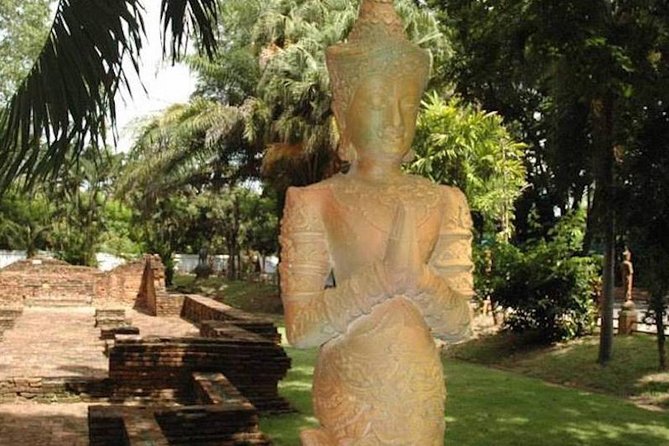
The first stop is Wat Kuu Kham, also called Wat Chedi Liam, one of the temples within Wiang Kum Kam. You have about 30 minutes here, with admission included.
The stop works well as an introduction because you can begin with one clear temple before moving into the wider archaeological area. Your guide provides live commentary, so you are not left trying to guess which sections are original, restored, or connected to the settlement’s past.
Do not expect a full morning at this one temple. Thirty minutes is enough for an initial look and explanation, but not for a slow, detailed study of every feature. The short visit also means the tour keeps moving, which matters when the entire outing is limited to half a day.
Wear clothing suitable for temple grounds. The supplied information does not list a formal dress code, but respectful clothing is a sensible choice at religious sites in Thailand. Comfortable shoes also help, since the experience includes several stops and time around ruins.
Wiang Kum Kam reveals Chiang Mai before Chiang Mai
The main visit to Wiang Kum Kam lasts about one hour. This is the heart of the experience, and it is where the tour earns its historical value.
The settlement was built by King Mangrai the Great as his capital before he transferred the capital to Chiang Mai. That detail gives the ruins a clear purpose. You are not looking at unrelated old structures. You are seeing the remains of an earlier political center in northern Thailand.
The site includes ruined temples and archaeological remains, and the guide’s commentary is important here. Without explanation, scattered brick walls and old religious structures can blur together. With a guide, you can follow the story of how the settlement fits into the development of Chiang Mai.
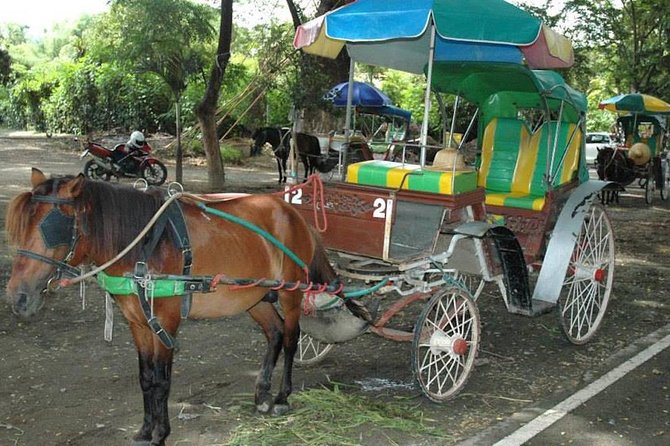
The carriage ride is another reason to choose this tour rather than simply arranging an independent visit. It gives you a scenic way to move through the area and breaks up the walking. The pace is gentler than a hurried vehicle transfer, and it suits a historic district where the point is to look around rather than rush from one address to the next.
At the same time, this is not a full archaeological research visit. You have roughly an hour for Wiang Kum Kam, so the guide must select the most useful stops. If you want to inspect every ruin at length, an independent visit with more time may suit you better. If you want the broad story, a few key temples, and a carriage ride without handling local transport yourself, the guided format is more practical.
One especially useful detail is that the tour visits historical places that some larger Chiang Mai programs leave out. The experience is aimed at giving you a sense of the former capital, not simply ticking off the best-known Old City temples.
The City Arts and Cultural Centre connects the pieces
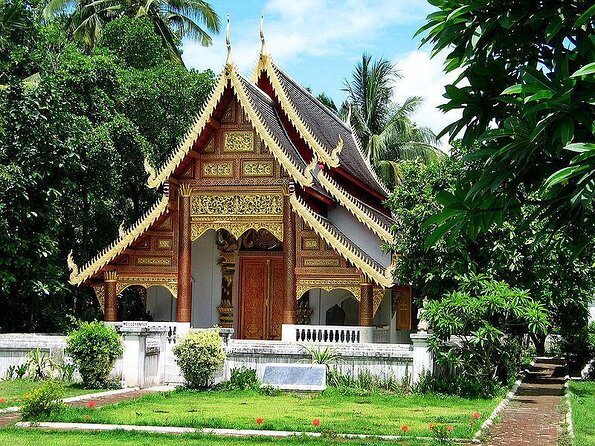
The final scheduled stop is the Chiang Mai City Arts and Cultural Centre, with about one hour inside. It sits in the Old City behind the Three Kings Monument, in a restored former provincial government hall dating from the 1920s.
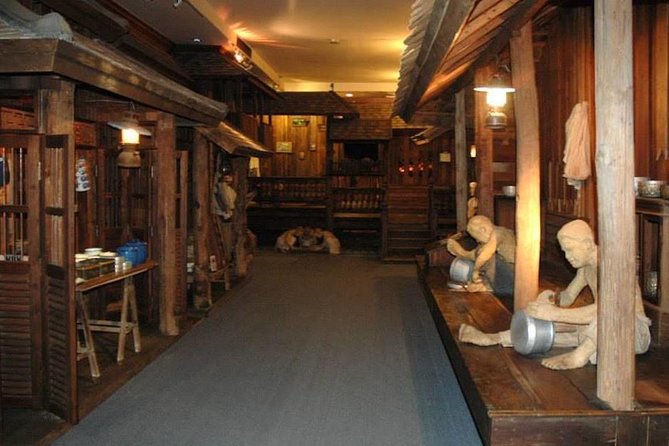
This museum stop gives the morning a needed second layer. The ruins show you physical traces of the past. The centre explains Chiang Mai through photos, old objects, maps, and an audio-visual presentation that covers the city from its first settlers to the modern era.
You can also see a small-scale replica of a traditional wooden village. That kind of display helps make the material more readable, especially if you are still getting familiar with northern Thailand’s history. The museum is not just a collection of temple objects. It provides an organized account of how the city developed.
The location behind the Three Kings Monument also makes this a useful orientation stop. You finish the tour in the heart of the Old City rather than at a remote site, although the included return transfer means you can still go back to your hotel.
There is one important scheduling issue. The centre is closed on Mondays. The tour can still operate, but the guide replaces the museum visit with several craft-business visits. One supplied account describes an umbrella business as a particularly enjoyable stop, along with other welcoming local workshops. Guide Pong was praised for being easy to talk with, entertaining, and well informed, which matters even more when the planned museum visit is unavailable.
If the museum is a major reason you are booking, avoid Monday. If you are open to seeing local craft work instead, Monday can still offer a worthwhile change of plan. Just know that the day becomes less museum-focused and more oriented toward local production and shopping-related stops.
A few more Chiang Mai half-days to weigh up
- Chiang Mai: 3 Hour Old City and Temples Guided Walking Tour
★ 4.6 · 1,568 reviews - Chiang Mai: Historic Temples and City Guided Walking Tour
★ 4.7 · 650 reviews - Chiang Rai Day Trip from Chiang Mai City with Golden Triangle
★ 4.5 · 531 reviews - Chiang Mai: Historic Old City Bike Tour – Morning or Night
★ 4.7 · 263 reviews
The guide makes the difference
Live commentary is included throughout the tour, and that is more valuable here than it might be on a simple sightseeing drive. Wiang Kum Kam is spread across an archaeological area, and the meaning of the ruins is not always obvious at a glance.
A good guide can explain why the settlement matters, point out the role of each temple, and connect the former capital to Chiang Mai’s later growth. The tour provider does not name the guide in advance, so you cannot request Pong as a standard feature. Still, Pong is one useful example of the kind of guide the experience can provide: clear, sociable, and able to adjust when the schedule changes.
The Monday account also shows why flexibility matters. Instead of treating the museum closure as the end of the cultural portion, the guide shifted to craft businesses. That is a practical response, though it means the exact experience depends on the day and the guide’s handling of the alternative stops.
Language upgrades are available for Spanish, French, German, and Russian. These require a private-tour upgrade plus an additional 800 baht for the whole party. The standard information does not specify the regular tour language, so you should confirm language arrangements before booking if that affects your decision.
What the $43.93 price includes
At $43.93 per person, the price is reasonable for a three-and-a-half-hour guided outing with transportation. You are paying for more than entrance access. The package includes hotel pickup and drop-off from Chiang Mai hotels, the guide, the carriage ride, the guided visit to Wiang Kum Kam, Wat Chedi Liam, the Three Kings Monument, and admission to the City Arts and Cultural Centre.
That bundled cost is useful if you do not want to arrange transport to an archaeological site outside the main Old City area. It also removes the work of deciding which ruins to visit and how to connect them.
Food, drinks, and snacks are not included. Since the experience is only about three and a half hours, that is not a serious problem, but you should eat beforehand or plan a meal afterward. The tour information does not promise a meal break.
Transfers from Four Seasons Resort and Veranda Resort cost an extra 500 baht each way. That surcharge can change the value calculation for guests staying at those properties. The standard hotel transfer is otherwise included for Chiang Mai hotels.
The maximum group size is 30 people. That is not a private or intimate tour, and the amount of personal attention can vary in a group of that size. Still, it is capped rather than open-ended, and the guide-led format gives you more structure than going alone.
At least two people are needed for the activity to run. A single person can book, but the reservation depends on availability and the minimum group requirement. If the operator cancels because that minimum is not met, you can receive a full refund or be offered another date or experience.
Who will get the most from this tour
I would choose this tour if you want Chiang Mai history explained in plain terms and prefer a short organized outing to a day-long excursion. It suits first-time visitors who want more than the central temples but do not want to spend a full day on archaeology.
Families may also find the carriage ride helpful, especially for children who would lose interest during a long walking tour. Children aged one and younger are complimentary, while children aged 11 and younger must be accompanied by a paying adult.
The tour is also a good fit for anyone who values door-to-door transport. Hotel pickup and drop-off save time, particularly if you are staying away from the Old City. Most people can participate, according to the supplied details, though no specific accessibility information is provided.
I would be more cautious if you want a private, slow-paced study of temples. A maximum group of 30 and a fixed schedule mean you will not control the pace at every site. I would also think twice if your main goal is shopping or craft work, since those visits are an alternative only when the museum is closed on Monday.
Practical planning before you book
Choose a non-Monday date if you want the full visit to the City Arts and Cultural Centre. On other days, the museum provides the clearest overview of Chiang Mai’s past. On Monday, you will instead visit craft businesses, including the possibility of an umbrella workshop.
Build your day around the three-and-a-half-hour duration, but allow some flexibility around pickup and drop-off. The tour includes roundtrip transportation, though the supplied details do not give exact pickup times or a detailed vehicle schedule.
Bring water and any snacks you need because food and drinks are excluded. Dress respectfully for the temple stop and wear footwear you can manage comfortably around historic ruins.
Free cancellation is available if you cancel at least 24 hours before the local start time. Changes or cancellations made inside that window are not refunded, and changes are not accepted less than 24 hours before the start. Check the final booking details carefully, especially if you are booking as a solo participant or staying at one of the resorts with a transfer surcharge.
Should you book Discover Wiang Kum Kam?
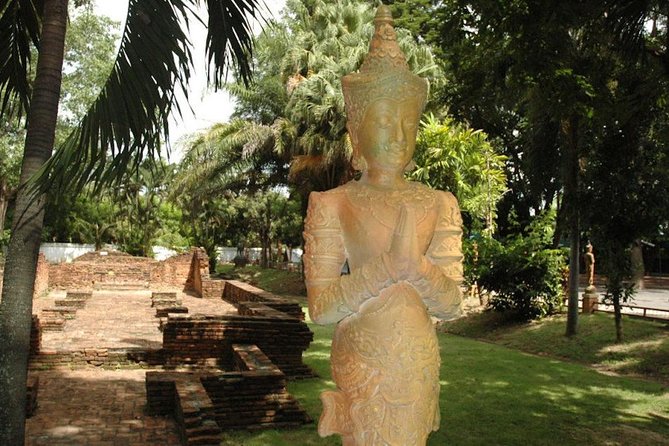
Book it if you want a well-shaped introduction to Chiang Mai’s earlier capital, with a guide, hotel transport, a carriage ride, and a useful museum finish. The strongest part is the combination of Wiang Kum Kam’s ruins and the City Arts and Cultural Centre. One shows you the remains, while the other helps explain them.
Pick another option if you need a private tour, a long archaeological visit, or a guaranteed museum stop on Monday. For most visitors with three and a half hours to spare, though, the $43.93 price covers a sensible range of sights and removes much of the transport guesswork. It is a practical way to see a quieter side of Chiang Mai without giving up the rest of your day.
FAQ
How long does the tour last?
The tour lasts approximately three hours and 30 minutes.
What locations are included?
The tour includes Wat Kuu Kham, also known as Wat Chedi Liam, the Wiang Kum Kam archaeological site, the Three Kings Monument, and the Chiang Mai City Arts and Cultural Centre.
Is hotel pickup included?
Yes. Roundtrip transportation from and to Chiang Mai hotels is included.
Is the horse-drawn carriage ride included?
Yes. The horse-drawn carriage ride is included in the tour.
Is admission to the sites included?
Admission to Wat Chedi Liam and Wiang Kum Kam is listed as free. Admission to the Chiang Mai City Arts and Cultural Centre is included.
Is the City Arts and Cultural Centre open on Mondays?
No. The centre is closed on Mondays. The tour can still operate, with visits to craft businesses replacing the museum stop.
Are food and drinks included?
No. Food, drinks, and snacks are not included.
Can one person book the tour?
A single person may book, but at least two people are required for the activity to take place, so solo bookings depend on availability.
Just added around Chiang Mai
- Chiang Rai Wonders: White, Blue & Red Temples and Hot Spring★ 5.0 · 3 reviews
- Chiang Rai White Temple Blue Temple and Hill Tribe Village Tour★ 3.5 · 3 reviews
- Private Chiang Mai City Tour including Wat Doi Suthep, Wat Suan Dok (SHA Plus)★ 5.0 · 3 reviews
- Workshop Making Herbal ball & herbal inhaler★ 4.3 · 3 reviews
- Chiang Mai Mae Ping River Cruise and Thai Farmer House Visit★ 4.0 · 3 reviews
- Phoenix Zipline Adventure Park – Chiang Mai Thrills★ 4.0 · 3 reviews
- Monk trails hike, Wat Phalat, Monk chanting, Wat Doi Suthep.★ 5.0 · 3 reviews
- Tok Sen Massage at Fah Lanna Spa in Chiang Mai★ 4.5 · 3 reviews
Chiang Mai Temple Tours, compared.
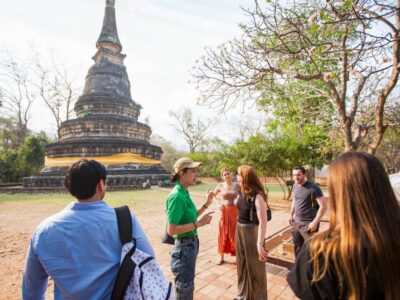
Doi Suthep and Wat Umong Enchanting Evening Tour
Read our review →
Doi Suthep, Wat Umong, and Pha Lat Sunrise Tour
Read our review →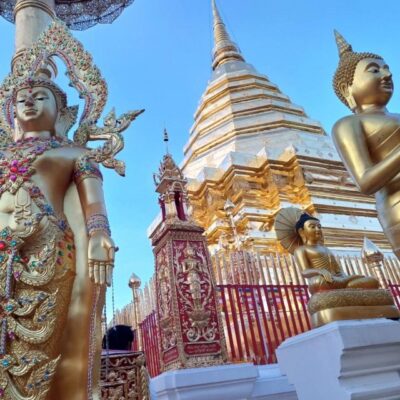


Spiritual Sunrise Wat Doi Suthep, Pha Lat, Alms & Meditation
Read our review →
Chiangmai to Chiangrai: 3 Temples, Hot Springs& Lalitta Cafe
Read our review →
Best seller!! Amazing Night tour, Doi Suthep + Wat umong – Top Must visit!
Read our review →Browse the lists this tour appears in