
Reviewed · DOI SUTHEP TEMPLE TOURS
Chiang Mai: Doi Suthep, Wat Umong, and Pha Lat Sunrise Tour
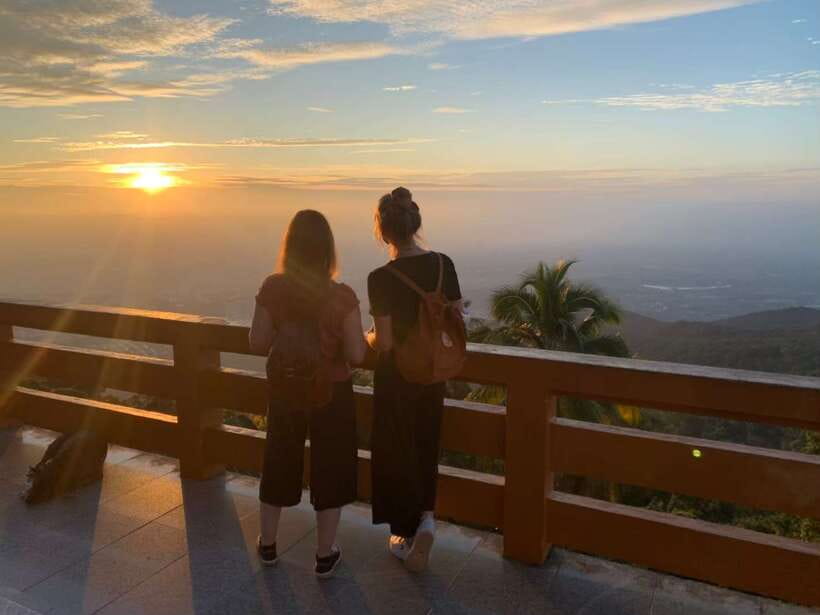
The best part of this Chiang Mai morning tour is arriving at Doi Suthep before the crowds, when the golden temple is quiet and the city below begins to catch the first light. You climb 309 steps, see the famous pagoda, then move into the forest for Wat Pha Lat and Wat Umong.
I like the strong mix of places: the grand mountaintop shrine, a quiet jungle temple, and Wat Umong’s old tunnels. I also like the guides who bring real cultural context. James, who spent five years living with monks, has been especially good at explaining Buddhist teachings and temple customs. The drawback is simple: you must wake very early, and the advertised four hours can run closer to five or five and a half.
In This Review
- Key points to know before booking
- Why the early alarm is worth it
- Climbing Doi Suthep before the day begins
- Kruba Srivichai and the road into the forest
- Walking to Wat Pha Lat, the Hidden Temple
- Wat Umong’s tunnels and 700 years of quiet
- Transport, timing, and group size
- What to pack and how to behave
- Who will get the most from this tour
- Should you book it?
- FAQ
- How long does the Chiang Mai sunrise temple tour last?
- What temples are included?
- How many steps are there at Doi Suthep?
- Is hotel pickup included?
- Where is the meeting point option?
- What languages are available?
- Is the sunrise guaranteed?
- What should I wear?
- Are food and drinks included?
Key points to know before booking
- Sunrise comes before the crowds: Doi Suthep is at its calmest in the early morning, though cloud or rain can block the view.
- The 309 steps are real exercise: Wear firm, comfortable shoes and take your time.
- Wat Pha Lat adds a forest walk: This quieter temple feels very different from Doi Suthep and is often a favorite stop.
- Wat Umong brings tunnels and woodland: The 700-year-old temple offers a change of pace at the end.
- Guides can shape the experience: James, Matt, Nuttaya, Leela, Cookie, and others have been praised for clear explanations and warm personalities.
- Plan for changing timing: Pickup, traffic, group size, and stop closures can make the tour longer than four hours.
Why the early alarm is worth it
This is not a sleep-in sightseeing trip. Hotel pickup can begin around 5 a.m., with some participants waking at 4 a.m. for the meeting and loading time. That sounds harsh on paper, but the early start solves two common Chiang Mai problems: heat and crowds.
At Doi Suthep, you have a better chance of enjoying the temple before the main daytime rush. The quiet also changes how the place feels. You may hear monks chanting, see morning activity, and have enough space to look closely at the shrine rather than simply follow a stream of visitors.
The sunrise is not guaranteed. Rain and cloud have occasionally hidden it, but the temple visit still works well in dim morning light and later daylight. Bring a light sweater, especially from November through the cooler months. One participant specifically wished for a thicker sweatshirt, and that is sensible advice for a pre-dawn mountain visit.
The tour price is $32 per person, including transport, a guide, entry fees, hotel pickup and drop-off where available, water in a glass bottle, and carbon offset credits. For a half-day outing with three temple areas, that is good value, particularly if you want a guide to explain what you are seeing rather than arrange separate rides.
More Doi Suthep temple tours:
- Chiang Mai: Doi Suthep and Wat Umong Enchanting Evening Tour
★ 4.6 · 1,811 reviews - Chiang Mai: Wat Pha Lat & Wat Phra That Doi Suthep Tour
★ 4.8 · 1,207 reviews - Wat Phra That Doi Suthep spiritual Sunrise Tour with an Ex-monk
★ 5.0 · 798 reviews
Climbing Doi Suthep before the day begins
The first major stop is Wat Phra That Doi Suthep, Chiang Mai’s famous mountaintop temple. The approach involves 309 steps. The staircase is lined by the familiar naga figures, and the climb gives you a clear sense that this is an active place of worship, not just a photo stop.
You do not need to race upward. The guide leads the group, explains the setting, and allows time to recover. If stairs are difficult for you, this is the point to think carefully before booking, since the climb is central to the experience.
At the top, the golden chedi is the visual focus. You can take photos, look across Chiang Mai, and listen as the guide explains the temple’s place in local Buddhism. The exact sunrise view depends on weather, but the high position gives you a memorable outlook over the city when the air is clear.
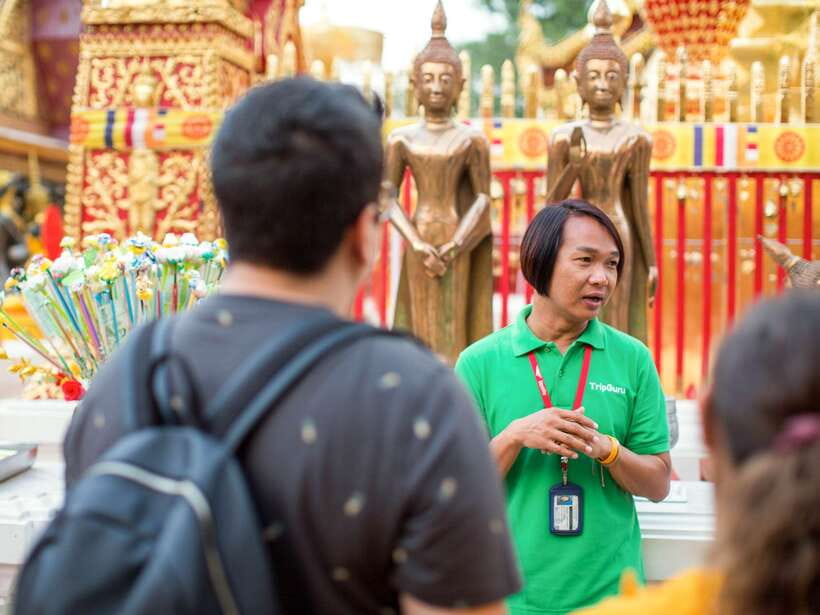
The best guides make this stop more than a quick circuit. James, also called James Bond by some participants, has former monk experience and explains Buddhist ideas in plain English. Other guides praised for their teaching and warmth include Matt, Nuttaya, Leela, Cookie, Chatsuda, Peter, and Tom Tem. You cannot choose a particular guide unless the operator confirms it, but the repeated strength of the guiding is an important reason to consider this tour.
There may also be a chance to take part in simple temple customs, such as lighting candles or making flower and food offerings. Offerings are optional and are not included in the price. If your guide suggests buying suitable items at a 7-Eleven, bring cash and treat the activity as participation in a living religious practice, not a staged show.
Dress matters here. Clothing that exposes shoulders, underarms, backs, or knees is not allowed in some places on the route. Shorts, short skirts, and sleeveless shirts are specifically listed as unsuitable. A light shirt that covers your shoulders and trousers or a longer skirt will save you trouble.
Kruba Srivichai and the road into the forest
The Kruba Srivichai Monument is a short but useful stop, normally about 30 minutes. The monument honors Kruba Srivichai, a revered northern Thai monk connected with the road and pilgrimage route leading toward Doi Suthep.
Your guide can use this pause to explain the role of monks in Thai communities and the way religious figures can become part of local identity. Several guides have used this stop to talk about monastic life, Buddhist practice, and the story of Doi Suthep.
This is not the largest or most dramatic stop, so do not expect a long visit. Its value comes from the context. After seeing the grand temple above, you get a clearer idea of the people and religious traditions tied to the mountain.
Walking to Wat Pha Lat, the Hidden Temple
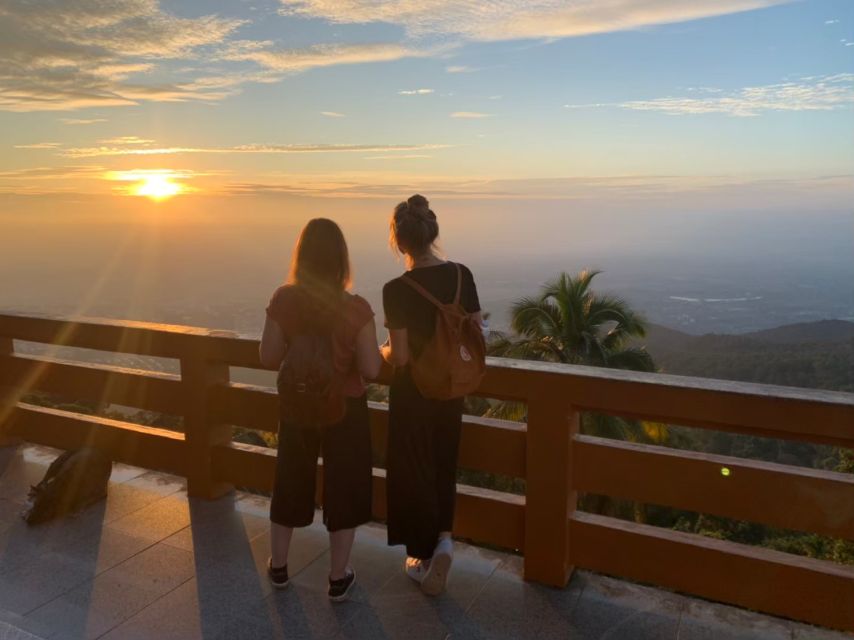
Wat Pha Lat is reached through the forest, and this is where the tour changes character. Instead of a large, famous shrine with a broad city view, you find a quieter temple surrounded by trees, statues, small shrines, and natural sounds.
The walk is part of the appeal. Wear shoes with a good grip, since a jungle path can be uneven or damp. Insect repellent is also a sensible item to pack. The supplied information describes the visit as taking about an hour, giving you time to look around rather than hurry through.
Pha Lat helps explain the older pilgrimage connection between the lower mountain and Doi Suthep. It feels more intimate than the mountaintop temple, and many people find it the most peaceful part of the morning. The stonework, statues, and forest setting make it a good place to slow down.
There is one practical caution: Wat Pha Lat has occasionally been closed. In that case, the guide should tell you in advance, and the stop may be missed. Andrew’s private tour had this change, but the guide adjusted the explanations and continued with Doi Suthep and Wat Umong. A closure is disappointing, so keep expectations flexible.
More temple tours in Chiang Mai:
- Chiang Mai – Doi Suthep Temple & Wat Pha Lat Hike
★ 4.6 · 740 reviews - Spiritual Sunrise Wat Doi Suthep, Pha Lat, Alms & Meditation
★ 4.9 · 674 reviews - Chiangmai to Chiangrai: 3 Temples, Hot Springs& Lalitta Cafe
★ 4.5 · 659 reviews - Chiang Mai – Doi Suthep Temple & Wat Pha Lat Hike
★ 5.0 · 657 reviews
Wat Umong’s tunnels and 700 years of quiet
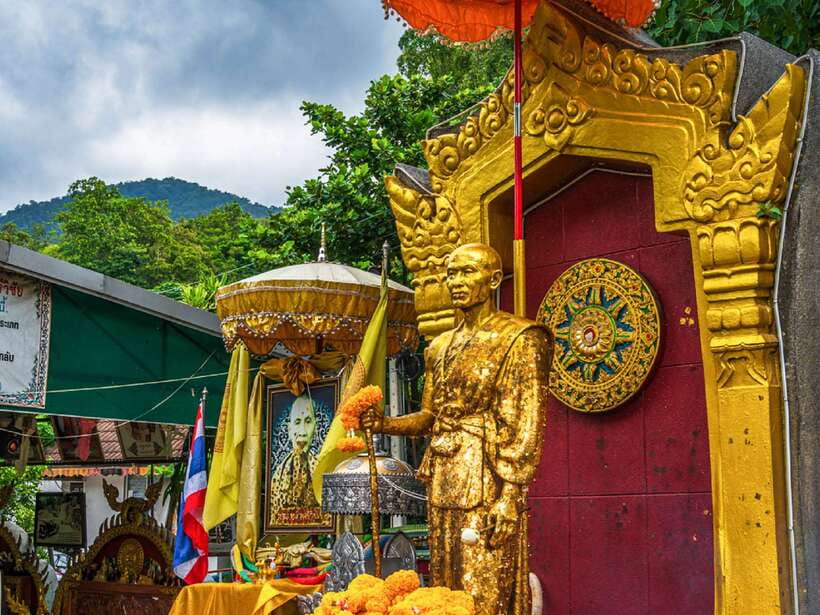
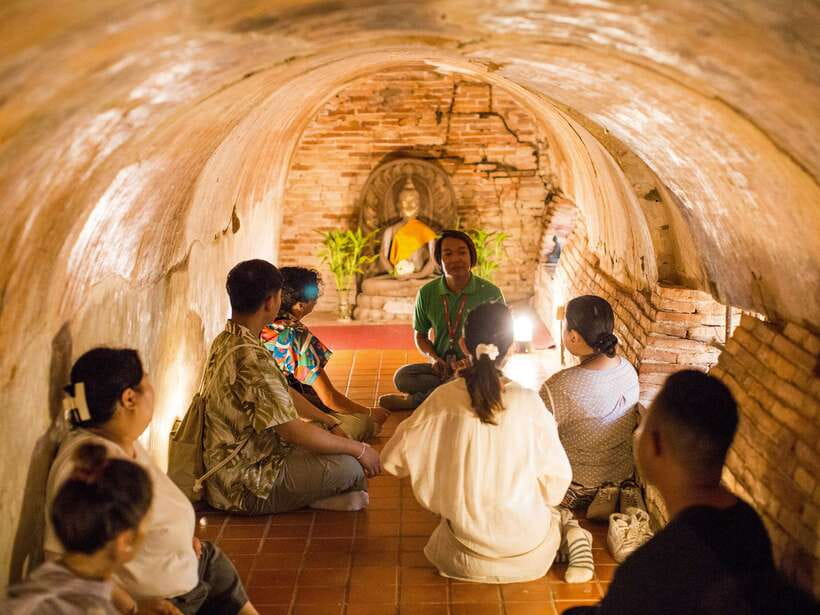
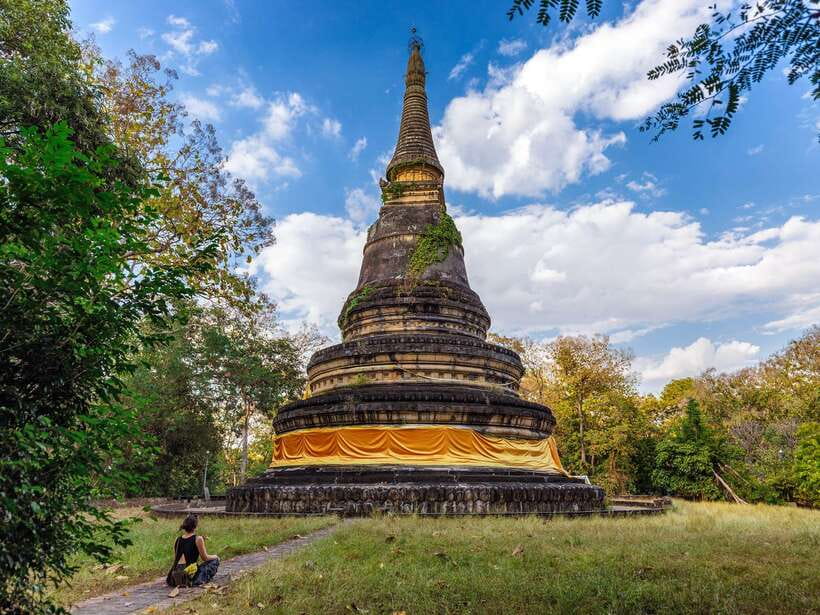
The last temple is Wat Umong, a 700-year-old forest temple built in 1297. It gives you a different view of Chiang Mai religious architecture, with woodland paths and underground tunnels replacing the open mountaintop setting.
The tunnels are the main feature. Their dark, enclosed passages create a strong contrast with the bright gold and open views at Doi Suthep. The chedi adds another architectural focus, while the surrounding forest keeps the stop calm and spacious.
I would save enough energy for Wat Umong. One parent found that a 10-year-old became too tired for the final temple, which is understandable after the pre-dawn start and several visits. The driver allowed the child to rest in the air-conditioned vehicle with the door open and kept watch, but families should still consider the pace carefully.
Wat Umong is also a good reason to book this tour instead of a Doi Suthep-only trip. Doi Suthep gives you the headline view and famous pagoda. Wat Umong offers a quieter, more reflective finish, and its design is noticeably different.
Transport, timing, and group size
The tour uses an air-conditioned vehicle and includes transport back to Chiang Mai. Hotel pickup is offered from major downtown areas within about 5 kilometers of Tha Pae Gate, including parts of the Old City and areas around Chang Klan Road, Thapae Road, Wualai Road, the night bazaar, Ton Lam Yai Market, and Warorot Market.
If you select the meeting-point option, meet at Tha Pae Gate in front of McDonald’s. The guide carries a TripGuru sign. Be ready 10 minutes early. For hotel pickup, wait in your hotel lobby, not by a roadside or shopping mall, since pickup is limited to hotels and registered accommodations.
The operator sends pickup details by email the evening before. Check that message carefully, since the exact time and meeting point depend on your booking option.
The stated duration is four hours, but the day can run longer. The route includes driving, the climb, three temple visits, possible pickup delays, and traffic on the return. One outing ran about five to five and a half hours, while a private trip from a 5 a.m. pickup returned just after 9 a.m. If you have a fixed brunch, flight, or cooking class afterward, leave a generous buffer.
Small groups are available. That matters on a tour like this, since you will have more room to hear the guide and ask questions. Transport has received particularly strong marks, with 90 percent of participants giving it a perfect score. The vehicle is air-conditioned, and the driver is expected to drive carefully, though mountain roads and early traffic can still affect timing.
What to pack and how to behave
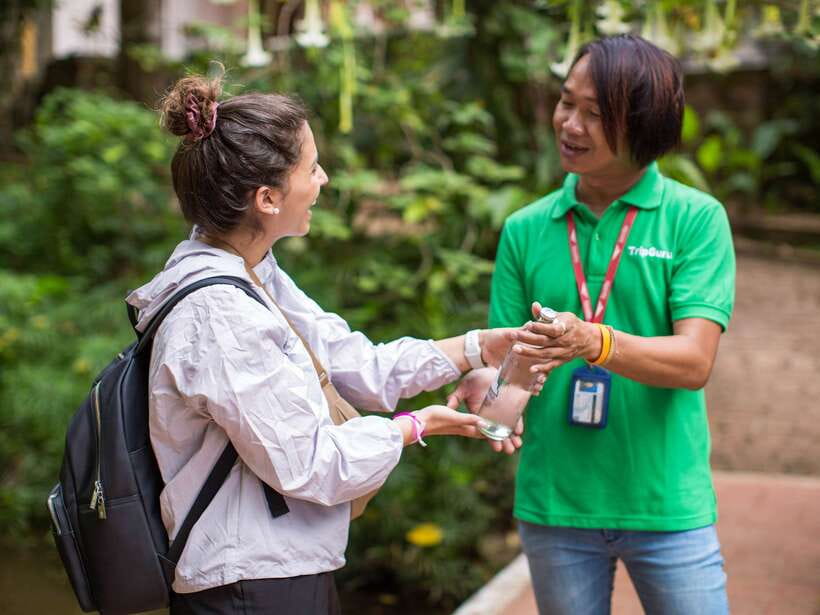
Bring comfortable shoes, sunscreen, sunglasses, a hat, insect repellent, a camera, and cash. The tour includes a glass bottle of drinking water, but meals and other drinks are not included. An early snack or coffee stop may be possible, but do not count on breakfast being provided.
Wear modest clothes from the start. Knees and shoulders should be covered, and some locations also restrict exposed backs and underarms. If you want to make an offering, cash lets you buy suitable items along the way.
Keep your voice low during prayers and meditation. Ask before photographing monks, shrines, or private religious activity. If you receive a blessing or join an offering, follow your guide’s instructions and take part respectfully.
The sustainability measures are practical rather than flashy. Water is provided in glass bottles, and the operator offsets carbon emissions through credits. That does not erase the impact of driving up the mountain, but it offers a lower-impact approach than a tour with disposable plastic bottles and no environmental plan.
Who will get the most from this tour
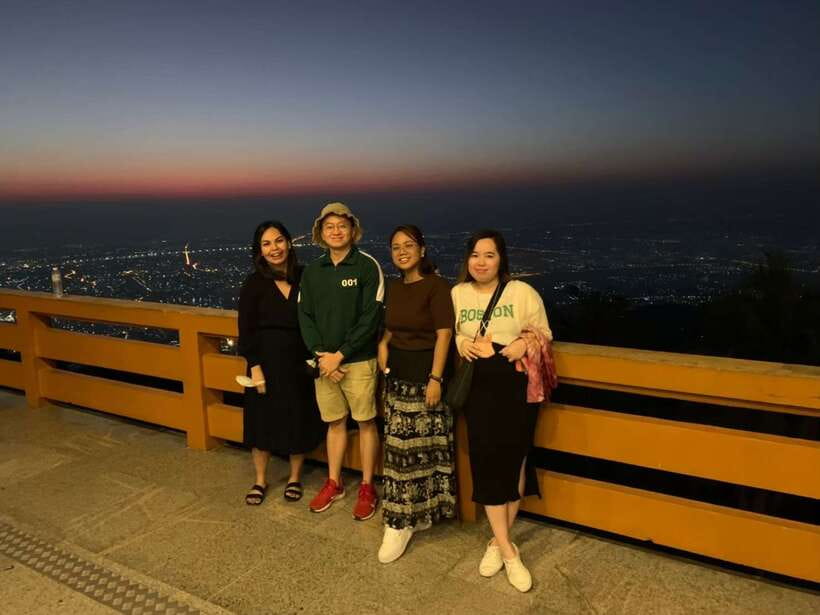
I would choose this tour if you want three very different temple settings in one morning and prefer an informed guide to a self-guided visit. It suits first-time visitors who want a clear introduction to northern Thai Buddhism, temple etiquette, and local religious customs.
It is also a good fit for photographers. The sunrise, city view, gold chedi, forest statues, tunnels, and morning temple activity give you varied subjects. Conditions change quickly, so bring a camera but do not build your whole decision around a perfect sunrise.
Families can enjoy it, but the early start and 309 steps may be demanding for young children. Anyone who dislikes pre-dawn departures, walking, or modest dress rules should consider a later temple outing instead.
English and Spanish guiding are available. The strongest personal accounts describe guides who are funny, patient, and easy to understand, with former monk experience adding unusual depth. Still, guide assignment varies, so book for the route and structure rather than expecting one named person.
Should you book it?
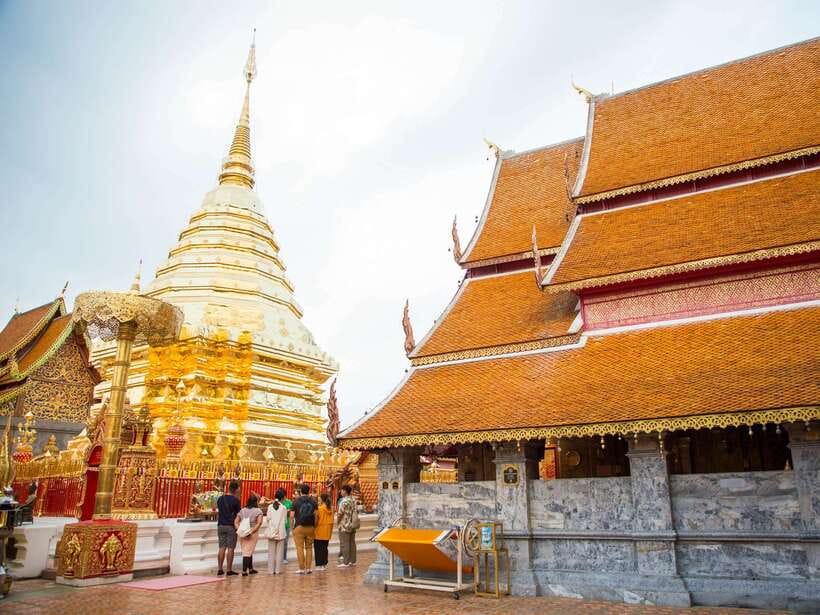
Book this tour if you can handle the early alarm. The combination of a quiet Doi Suthep, a forest walk to Wat Pha Lat, and Wat Umong’s tunnels offers more range than a standard temple transfer. At $32, the package also covers the main costs that would otherwise add up quickly.
Skip it if you need a guaranteed sunrise, cannot manage 309 steps, or have a tight morning schedule. For everyone else, this is a well-priced way to meet Chiang Mai before the city gets busy, learn from a strong local guide, and see sacred places with some time for quiet.
FAQ
How long does the Chiang Mai sunrise temple tour last?
The advertised duration is four hours. Actual timing can be longer, sometimes around five to five and a half hours, depending on pickup, traffic, group size, and the pace of the visits.
What temples are included?
The route includes Wat Phra That Doi Suthep, Wat Pha Lat, and Wat Umong. It also stops at the Kruba Srivichai Monument.
How many steps are there at Doi Suthep?
The climb to Doi Suthep Temple involves 309 steps.
Is hotel pickup included?
Yes, hotel pickup and drop-off are included for selected downtown areas within about 5 kilometers of Tha Pae Gate and the Old City area.
Where is the meeting point option?
Meet at Tha Pae Gate, in front of McDonald’s. Your guide will hold a TripGuru sign, and you should arrive 10 minutes before pickup.
What languages are available?
The tour is available with a live guide in English or Spanish.
Is the sunrise guaranteed?
No. Rain and cloud can affect the sunrise and the city view. The temples remain open for exploration even when the view is obscured.
What should I wear?
Wear clothing that covers your shoulders and knees. Shorts, short skirts, and sleeveless shirts are not allowed, and some locations also restrict exposed backs and underarms.
Are food and drinks included?
A glass bottle of drinking water is included. Meals and other drinks are not included. Temple offerings are optional and cost extra.
More Morning in Chiang Mai
- Half Day Morning Wat Pha Lat & Wat Phra That Doi Suthep Tour
★ 4.8 · 269 reviews - Chiang Mai: Historic Old City Bike Tour – Morning or Night
★ 4.7 · 263 reviews - Cooking Morning Class Chiang Mai Visit Organic Garden and Market
★ 5.0 · 211 reviews - Chiang Mai: Historic Old City Bike Tour – Morning or Night
★ 5.0 · 202 reviews
Just added around Chiang Mai
- Chiang Rai Wonders: White, Blue & Red Temples and Hot Spring★ 5.0 · 3 reviews
- Chiang Rai White Temple Blue Temple and Hill Tribe Village Tour★ 3.5 · 3 reviews
- Private Chiang Mai City Tour including Wat Doi Suthep, Wat Suan Dok (SHA Plus)★ 5.0 · 3 reviews
- Workshop Making Herbal ball & herbal inhaler★ 4.3 · 3 reviews
- Chiang Mai Mae Ping River Cruise and Thai Farmer House Visit★ 4.0 · 3 reviews
- Phoenix Zipline Adventure Park – Chiang Mai Thrills★ 4.0 · 3 reviews
- Tok Sen Massage at Fah Lanna Spa in Chiang Mai★ 4.5 · 3 reviews
- Private: 3 days 2 night trip: ChaingMai-Chaingrai- The Golden Triangle trip★ 5.0 · 3 reviews
Doi Suthep Temple Tours, compared.
Doi Suthep and Wat Umong Enchanting Evening Tour
Read our review →
Wat Phra That Doi Suthep spiritual Sunrise Tour with an Ex-monk
Read our review →
4-Hour Doi Suthep & Hmong Hill Tribe Village from Chiang Mai
Read our review →
Spiritual Sunrise Wat Doi Suthep, Pha Lat, Alms & Meditation
Read our review →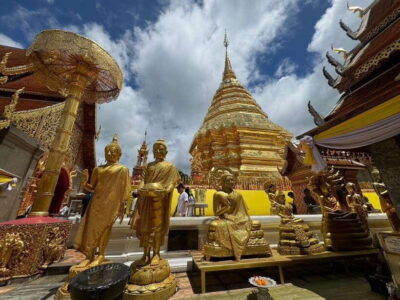
Elephant Sanctuary, Monk Trail & Doi Suthep Tour
Read our review →Browse the lists this tour appears in