
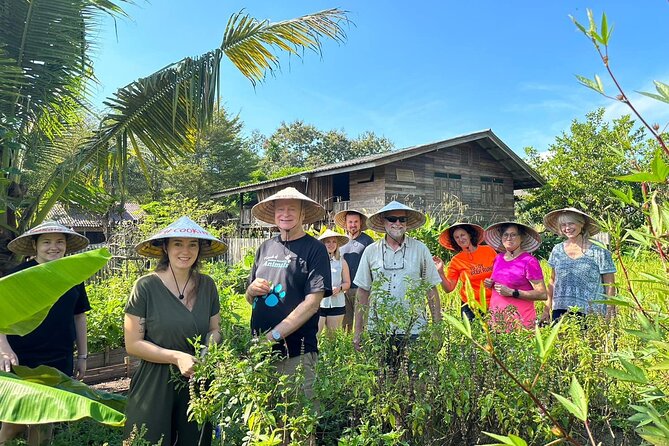
Reviewed · THAI COOKING CLASSES
Cooking Class with Organic Farm in Chiang Mai
The best part of this Chiang Mai cooking class is that you do not simply watch a chef work. You choose six Thai dishes, pick herbs and vegetables from a 1.6-acre organic farm, and cook each one at your own station. The market stop adds a useful look at everyday countryside food before the class begins.
I like the small maximum of 12 people, which should give the class a friendly, hands-on feel. I also like the choice of dishes, from Pad Thai and green curry to papaya salad, Tom Yum, Khaw Soi, and mango sticky rice. The main thing to consider is the six-hour schedule. It is a full morning and afternoon, and the generous meal may be more food than you expect.
In This Review
- Key points at a glance
- Why this class works better than a standard cooking demonstration
- Starting at Tha Phae Gate at 9 a.m.
- The market visit puts Thai ingredients in context
- A 30-minute ride to a 1.6-acre organic farm
- Choosing six dishes from six Thai cooking groups
- Salad choices
- Stir-fried dishes
- Soup choices
- Curry paste and curry
- Dessert
- Your own station keeps the lesson practical
- Vegetarian cooking and first-time students
- How the price compares with the day you get
- What to know before you book
- Who should book this Chiang Mai farm cooking class
- Should you book it?
- FAQ
- What time does the cooking class start?
- Where is the meeting point?
- How long does the experience last?
- How many dishes can I cook?
- Can vegetarians join the class?
- What happens if the class is canceled?
Key points at a glance
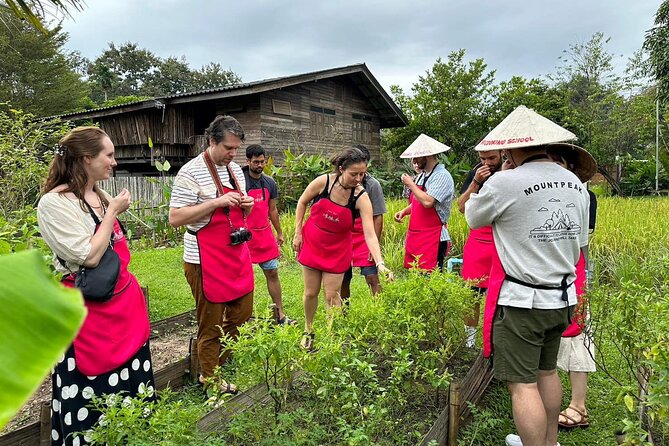
- Six dishes, six menu choices: Pick one dish from each group: salad, stir-fry, soup, curry paste, curry, and dessert.
- A working organic farm: Explore 1.6 acres with more than 20 types of plants and gather ingredients for your meal.
- Market visit first: See local ingredients and daily buying habits before heading about 30 minutes to the farm.
- Small-group format: The class accepts a maximum of 12 people, with an individual cooking station for each participant.
- Transport included: Pickup is offered, with the stated meeting point at Tha Phae Gate and return to Chiang Mai afterward.
- Useful take-home souvenir: A recipe book helps you repeat the dishes at home.
Why this class works better than a standard cooking demonstration
Many cooking classes leave you seated while an instructor chops, stirs, and plates the food. This one is built around doing the work yourself. You select dishes, handle the ingredients, cook at your own station, and then eat what you made.
That difference matters. Thai cooking depends on balance: hot, sour, salty, sweet, creamy, and fresh flavors often appear in the same meal. When you prepare six different dishes, you get a clearer sense of how those flavors fit together instead of learning one recipe in isolation.
The class also connects food with its source. You visit a local market before reaching the farm, then walk among the plants and taste fresh herbs. The result is more than a recipe lesson. You get a practical view of how ingredients move from market and garden to the plate.
The class has a maximum of 12 people. That is large enough to keep the setting social, but small enough that an individual cooking station should not feel like a token gesture. Instructors including Gayle and Lily have led sessions with a playful, encouraging approach. Lily, in particular, is described as funny and well informed, while Gayle has been praised for helping first-time students feel at ease.
More Thai cooking classes in Chiang Mai:
- Half-Day Thai Cooking Class at Organic Farm in Chiang Mai
★ 5.0 · 19,087 reviews - Chiang Mai: Cooking Class, Market & Thai Herbs Garden Tour
★ 4.9 · 4,824 reviews - Chiang Mai: Authentic Cooking Class with Market & Farm Visit
★ 4.9 · 4,546 reviews
Starting at Tha Phae Gate at 9 a.m.
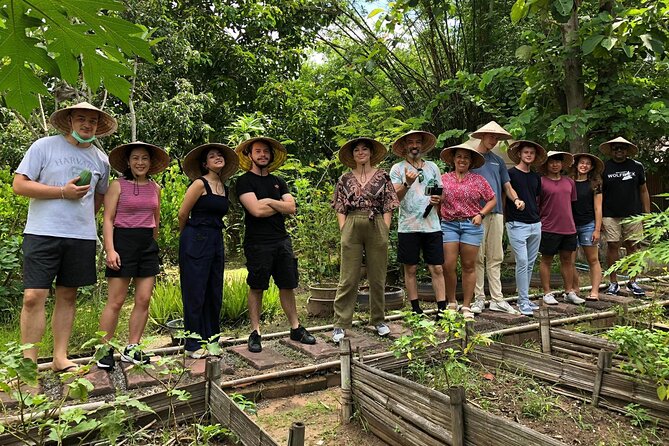
The listed start time is 9 a.m., and the meeting point is Tha Phae Gate on Tha Phae Road. Pickup is also offered, with transport from hotels in Chiang Mai city included in the experience description.
Tha Phae Gate is a useful central reference point, but you should check the exact pickup arrangement after booking. The information gives both a meeting point and pickup service, so the practical details may depend on your hotel and the day’s schedule.
Allow the full six hours. This is not a short lesson squeezed between temple visits. The schedule includes transport, a market stop, time at the farm, ingredient gathering, cooking six dishes, eating, and the return journey.
That longer format is part of the value. You are not rushed through a single recipe, and the trip into the countryside gives the day a change of pace from central Chiang Mai. If you have a tightly packed sightseeing plan, though, place this activity on a day when you can give it your full morning and afternoon.
The market visit puts Thai ingredients in context
The first stop is a local market. This is not just a shopping errand before class. It gives you a chance to see the ingredients used in ordinary Thai cooking and to observe a slice of countryside life around Chiang Mai.
The market helps answer questions that a recipe card cannot. What does fresh lemongrass look like before it is trimmed? How are herbs grouped for sale? Which vegetables are common in northern Thai kitchens? You may already recognize items such as chilies, basil, eggplant, or green papaya, but seeing them in a local buying setting makes them easier to identify later.
The stop is also useful if you plan to cook Thai food at home. A recipe may call for a particular herb or curry ingredient, yet the ingredient can be hard to recognize in an unfamiliar market. Seeing and tasting items at the start of the day gives the cooking lesson a firmer base.
The available details do not specify exactly how long you stay at the market, so do not expect a full market tour with every stall explained. Think of it as a focused introduction before the farm visit.
A 30-minute ride to a 1.6-acre organic farm
After the market, the group travels about 30 minutes by car to the farm. The ride takes you away from Chiang Mai’s central streets and into a quieter setting, which is a welcome part of the day for anyone who wants more than an indoor kitchen.
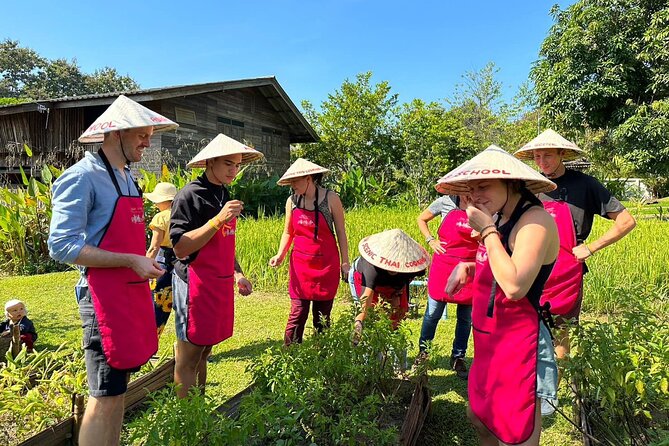
The farm covers about 1.6 acres and grows more than 20 types of plants. You have time to walk around, see what is growing, and taste fresh herbs. This is one of the class’s strongest features because the garden is not merely decoration. You use ingredients from it in the cooking session.
The organic setting also gives you a better feel for the character of Thai food. Many dishes depend on a handful of fresh ingredients used at the right moment. Picking herbs yourself makes their smell and texture memorable in a way that a premeasured bowl on a classroom table cannot.
You should keep your expectations sensible. This is a cooking class held at a farm, not a full agricultural tour. The supplied details promise garden exploration, plant tasting, and ingredient picking, but they do not describe farm work, animal visits, or a guided lesson on organic certification.
Same city, a completely different sort of day:
- Chiang Mai: Elephant Sanctuary, Waterfall & Bamboo Rafting
★ 4.9 · 9,160 reviews - Chiang Mai: Doi Inthanon National Park Eco-Friendly Tour
★ 4.6 · 6,667 reviews - Chiang Mai: Elephant Sanctuary & Waterfall Group Tour
★ 4.9 · 5,780 reviews - Chiang Mai: Chiang Rai Temples, Karen Tribe and Hot Springs
★ 4.7 · 5,401 reviews
Choosing six dishes from six Thai cooking groups
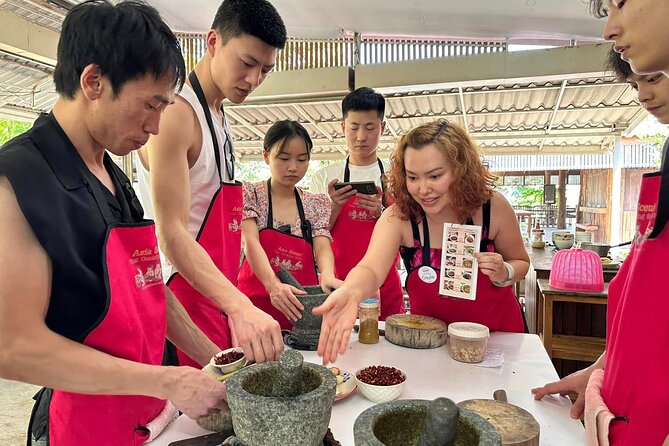
You choose six dishes, with one selection from each of six categories. That gives you plenty of control over the meal and lets you favor familiar favorites or try something new.
Salad choices
The salad menu includes spicy chicken salad, papaya salad, and glass noodle salad. Papaya salad is a good choice if you want a dish with crisp texture and a strong hot-sour profile. Glass noodle salad offers a lighter, more delicate base, while spicy chicken salad gives you a more substantial option.
Vegetarian substitutions are possible. The class has accommodated vegetarian cooking by teaching ingredient changes, but you should explain your needs clearly when booking or at the start of the lesson.
Stir-fried dishes
Your choices include Pad Thai, Pad See Uw, hot basil stir-fry, and cashew chicken. Pad Thai is the familiar entry point, but Pad See Uw gives you a chance to work with broad rice noodles and a darker, savory sauce. Hot basil stir-fry is a good pick if you want a punchier dish, while cashew chicken is milder and hearty.
Having several stir-fry choices makes the class useful for different comfort levels. You can choose a well-known dish or use the opportunity to learn something less familiar.
Soup choices
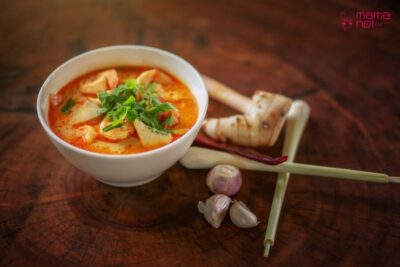
The soup group includes coconut milk soup, Tom Yum, and Tom Sab. Coconut milk soup should appeal if you like creamy, fragrant broths. Tom Yum is the sharper, more sour and spicy direction, while Tom Sab gives you another traditional soup style.
The benefit of making soup yourself is learning how quickly the flavor can change. The order in which you add herbs, paste, broth, and other ingredients matters. The class lets you taste and adjust rather than simply accepting a finished bowl.
Curry paste and curry
You choose one curry paste and one curry dish. Paste options include red, green, Massaman, Panang, and Khaw Soi. The curry choices repeat those styles, with red curry, green curry, Massaman curry, Panang curry, and Khaw Soi.
This pairing is particularly useful. You can see how a curry paste becomes part of a finished dish, rather than treating the paste as a mysterious jarred ingredient. Khaw Soi is especially appealing in Chiang Mai because it connects the cooking class with northern Thailand’s famous noodle curry.
The choice between several curry styles also lets you set the spice level and richness you prefer. If you are unsure, ask the instructor for guidance before selecting. The available information does not promise a fixed spice scale, but a hands-on instructor can help you make a sensible choice.
Dessert
Dessert choices are deep-fried banana, banana in coconut milk, and sticky rice with mango. These are simple dishes compared with curry, but they complete the meal and show how Thai cooking uses coconut, fruit, and sticky rice in sweet preparations.
Mango sticky rice is the obvious choice if you want a classic Thai dessert. Banana in coconut milk is softer and more restrained, while fried banana adds crisp texture.
Your own station keeps the lesson practical
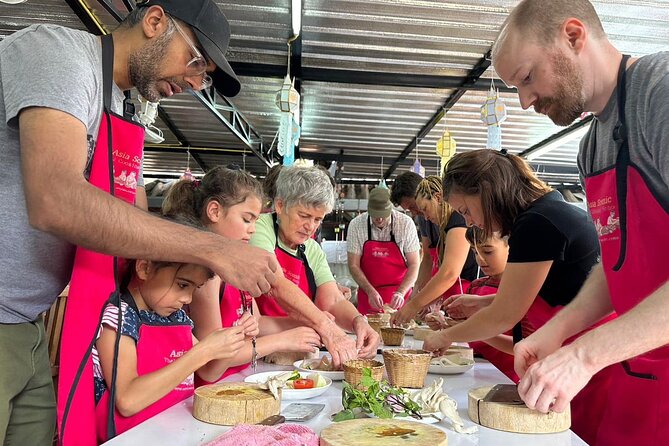
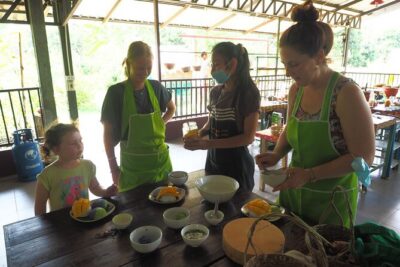
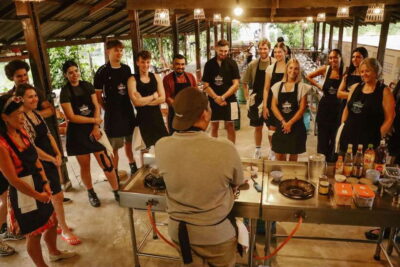
At the farm, you cook at an individual station. This is a major advantage for beginners. You can follow the process with your own ingredients instead of standing behind someone else or taking turns with one shared pan.
The instructor and certified chef cover the basics of Thai cuisine while you prepare the dishes. Because you make six items, the lesson should show several techniques and flavor combinations, from salads and soups to stir-fries, curry paste, curries, and dessert.
The class is designed to be fun, but it is also useful. You are not only eating a meal prepared by someone else. You are building a set of recipes you can repeat, and the recipe book gives you a reference once you return home.
The amount of food is another practical point. Six dishes can make a very large meal, especially if you are cooking alone. People who love to eat will appreciate the generous spread. If you have a small appetite, share dishes with your group rather than trying to finish everything yourself.
Vegetarian cooking and first-time students
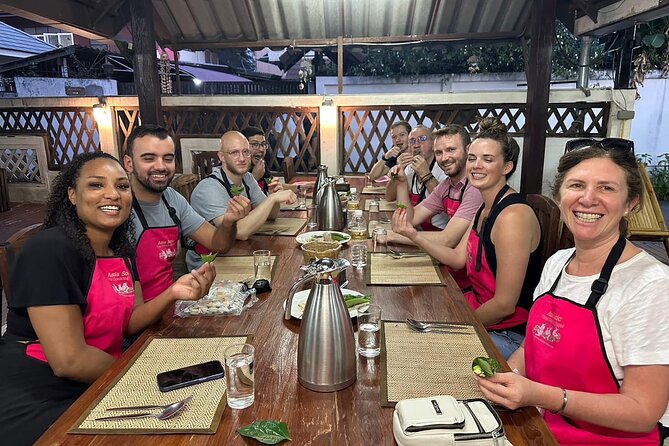
This class suits beginners. The instructors have worked with students cooking Thai food for the first time, and the format lets you learn one step at a time at your own station.
Vegetarians are also well served, provided you communicate your requirements. Substitutions have been taught for vegetarian participants, so you should be able to adapt dishes such as Pad Thai, curry, soup, or stir-fry. Still, the information does not list a separate vegetarian menu, so do not assume every dish is automatically meat-free.
Families can consider the class for children aged 5 to 11, though the adult should judge whether a six-hour cooking day fits the child. Hot pans, knives, and a long schedule require attention. The activity information specifically identifies children between 5 and 11 years old, and any mismatch between the booking details and the actual party may lead to an extra charge.
How the price compares with the day you get
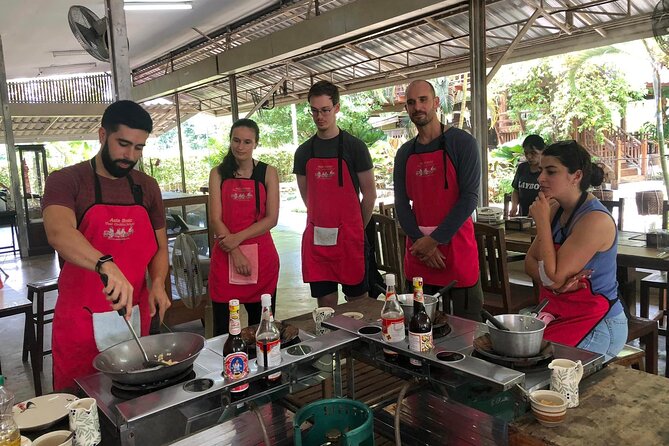
At $46.95 per person, this is a fair price for a six-hour activity that includes transport, a market visit, a farm outing, six cooked dishes, the meal itself, and a recipe book.
The value is strongest if you use the cooking time well. You are not paying simply for lunch. You are paying for instruction, ingredients, access to the garden, and a full day away from the city. The individual station and small maximum group also make the hands-on format more worthwhile than a large demonstration class.
The price is less attractive if you are looking only for a quick meal or a short introduction to Thai food. In that case, six hours may feel excessive. But for someone who wants to learn several recipes and understand Thai ingredients, the combination is strong.
The activity is commonly reserved about 18 days ahead. That is a useful planning signal, particularly if you are visiting Chiang Mai during a busy season. Since the class requires a minimum number of participants and good weather, a little advance planning is sensible.
What to know before you book
The activity includes free cancellation up to 24 hours before the start time. Changes or cancellations made within 24 hours are not refunded, and changes inside that window are not accepted.
Bad weather can also affect the schedule. If the class is canceled for weather or because the minimum number of participants is not reached, you are offered another date, an alternative activity, or a full refund.
The tour ends back at the meeting point, according to the stated end information. Since pickup is offered from Chiang Mai city hotels, confirm whether your accommodation qualifies and where you should wait. Mobile tickets make the booking easy to carry on your phone.
You should also tell the provider about vegetarian needs, children’s ages, and the number of people in your party when you reserve. Accurate details matter because extra charges can apply if the booking information does not match the group at the start.
Who should book this Chiang Mai farm cooking class
I would choose this experience if you want food, countryside, and practical instruction in one day. It suits first-time cooks, people who enjoy eating as much as cooking, vegetarians who are willing to request substitutions, and anyone who wants to take home more than photographs.
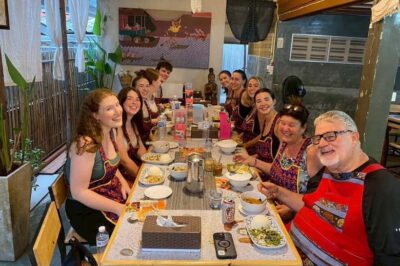
It is also a good fit for couples, families with suitable children, and small groups of friends. The six-menu format means people with different tastes can make different dishes and compare them over the shared meal.
I would hesitate if you dislike long activities, have a strict sightseeing schedule, or want a highly specialized culinary course. The experience teaches the basics rather than advanced restaurant technique. It is also not the right choice if you want to spend the whole day inside the old city.
Should you book it?
Yes, if you want a friendly, active introduction to Thai food and do not mind giving the activity six hours. The market, organic garden, individual station, broad menu choices, and recipe book make this more useful than a simple cooking demonstration.
The strongest reasons to book are the chance to pick ingredients yourself and the ability to cook six different dishes. Vegetarian instruction is available, and instructors such as Gayle and Lily bring a relaxed tone that helps beginners.
Skip it if your priority is a short excursion or if you prefer to choose a single dish and finish quickly. For everyone else, the $46.95 price buys a substantial day with food, instruction, transport, and a clear connection to Chiang Mai’s countryside cooking.
FAQ
What time does the cooking class start?
The activity starts at 9 a.m.
Where is the meeting point?
The listed meeting point is Tha Phae Gate on Tha Phae Road in Chiang Mai. Pickup from hotels in Chiang Mai city is also offered.
How long does the experience last?
The cooking class and farm experience last approximately six hours.
How many dishes can I cook?
You can choose and prepare six dishes, selecting one from each of six groups: salad, stir-fried dish, soup, curry paste, curry, and dessert.
Can vegetarians join the class?
Yes. Vegetarian substitutions can be taught, but you should communicate your dietary needs when booking or before cooking begins.
What happens if the class is canceled?
If the class is canceled because of poor weather or because the minimum number of participants is not reached, you are offered another date, an alternative activity, or a full refund. You can also cancel for a full refund up to 24 hours before the start time.
More Workshops in Chiang Mai
- Thai and Akha Cooking Class in Chiang Mai
★ 5.0 · 4,358 reviews - Chiang Mai: Cooking Class with Market and Pickup
★ 4.9 · 1,365 reviews - Chiang Mai: Evening Cooking Class and Local Market Visit
★ 4.9 · 648 reviews - Cooking Class with Organic Farm in Chiang Mai at Mama Noi
★ 5.0 · 502 reviews
More Farms in Chiang Mai
- Chiang Mai: Cooking Class with Organic Farm at Mama Noi
★ 4.9 · 1,151 reviews - Full Day Thai Cooking at Farm (Chiang Mai)
★ 5.0 · 1,127 reviews - Chiang Mai: HALF-DAY COOKING COURSE at a Thai Cooking Farm
★ 4.9 · 705 reviews - The Rice Barn Thai Cooking Farm Chiangmai
★ 5.0 · 603 reviews
Just added around Chiang Mai
- Chiang Rai Wonders: White, Blue & Red Temples and Hot Spring★ 5.0 · 3 reviews
- Chiang Rai White Temple Blue Temple and Hill Tribe Village Tour★ 3.5 · 3 reviews
- Private Chiang Mai City Tour including Wat Doi Suthep, Wat Suan Dok (SHA Plus)★ 5.0 · 3 reviews
- Workshop Making Herbal ball & herbal inhaler★ 4.3 · 3 reviews
- Chiang Mai Mae Ping River Cruise and Thai Farmer House Visit★ 4.0 · 3 reviews
- Phoenix Zipline Adventure Park – Chiang Mai Thrills★ 4.0 · 3 reviews
- Private: 3 days 2 night trip: ChaingMai-Chaingrai- The Golden Triangle trip★ 5.0 · 3 reviews
- Monk trails hike, Wat Phalat, Monk chanting, Wat Doi Suthep.★ 5.0 · 3 reviews
Thai Cooking Classes, compared.
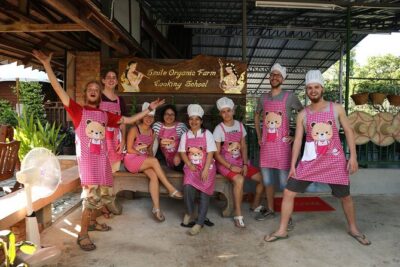
Half-Day Thai Cooking Class at Organic Farm in Chiang Mai
Read our review →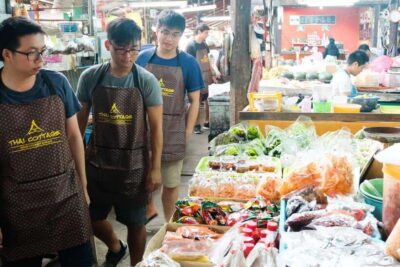
Cooking Class, Market & Thai Herbs Garden Tour
Read our review →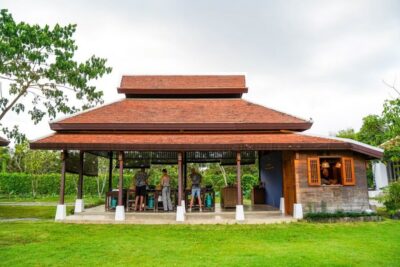
Authentic Cooking Class with Market & Farm Visit
Read our review →
Browse the lists this tour appears in