
Reviewed · THAI COOKING CLASSES
Chiang Mai : Traditional Northern Cooking Class
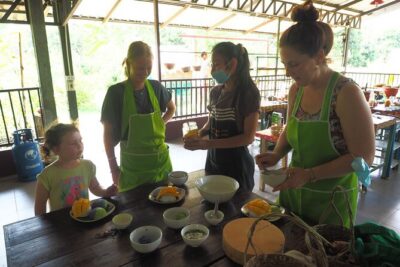
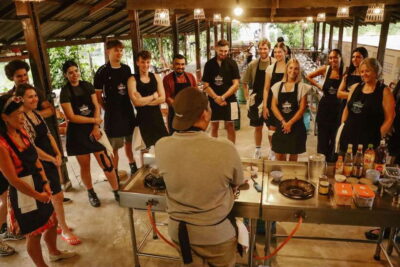
Northern Thai cooking is at its best when it stays close to the fire, the herbs, and the family kitchen. This three-hour class with Baannoi Nornmuan gives you hands-on work with sticky rice, pork curry, chicken khao soi, chili sauce, and eggs grilled on banana leaf. I like the charcoal cooking and the chance to ask questions as you work, rather than simply watching a chef perform. I also like the small group of up to 10, which gives the session a personal feel.
The setting and cooking style are intentionally simple. You may be working on a porch with real ingredients and natural cooking materials, not in a polished demonstration kitchen. That is part of the charm, though anyone seeking a glossy, restaurant-style class should know this is a down-to-earth experience.
In This Review
- Key points to know
- Why Northern Thai food deserves its own class
- Starting with sticky rice and the basics
- Building Northern curry with pork
- Making chicken khao soi from scratch
- Chili sauce and the balance of heat
- Grilling eggs on banana leaf
- A three-hour class with a small-group feel
- What the $38 price gives you
- Who will enjoy this class most
- Practical planning for your Chiang Mai day
- The best reasons to book, and the reasons to pause
- Should you book Baannoi Nornmuan?
- FAQ
- How long does the Traditional Northern Cooking Class last?
- How much does the class cost?
- Where does the cooking class take place?
- What dishes will I prepare?
- Is khao soi included?
- Is the class taught in English?
- How many people can join the class?
- Is the experience wheelchair accessible?
- Can I cancel for a refund?
- Can I reserve the class and pay later?
Key points to know
- Cook five Northern Thai staples: Prepare sticky rice, pork curry, chicken khao soi, chili sauce with pork, and grilled eggs.
- Use traditional methods: Charcoal heat and banana leaves bring a more direct connection to Northern cooking.
- Small class size: A maximum of 10 participants allows room for questions and shared preparation.
- Fresh ingredients are ready to use: You can focus on technique, flavor balance, and cooking rather than shopping.
- English and Thai instruction: The class is designed for both English-speaking and Thai-speaking participants.
- Good value at $38: Three hours of guided cooking and a full meal make this a reasonable Chiang Mai food experience.
Why Northern Thai food deserves its own class
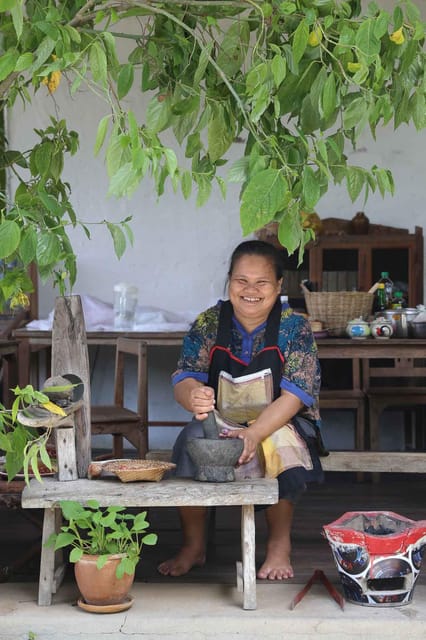
Many visitors arrive in Chiang Mai knowing pad Thai, green curry, and mango sticky rice. Northern cooking has a different character. It makes strong use of sticky rice, chili pastes, herbs, noodles, pork, smoky cooking, and sauces designed to be eaten with several dishes at once.
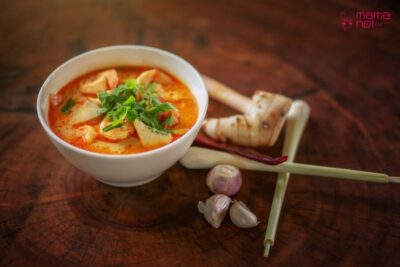
Khao soi is the most famous example. The dish combines noodles with a spiced curry broth, chicken, and contrasting textures. Soft noodles give the bowl its comfort, while the seasoning and noodle texture keep it from tasting flat.
The other dishes help you see the wider picture. Sticky rice is not just a side dish. It is a basic part of the meal, and getting its texture right matters. Chili sauce shows how Northern cooks balance heat with savory ingredients. Grilled eggs on banana leaf add a striking cooking technique that makes use of a natural surface rather than a standard pan.
I like this mix because you are not spending three hours making one complicated dish. You get several small lessons in how Northern meals work together.
More Thai cooking classes in Chiang Mai:
- Half-Day Thai Cooking Class at Organic Farm in Chiang Mai
★ 5.0 · 19,087 reviews - Chiang Mai: Cooking Class, Market & Thai Herbs Garden Tour
★ 4.9 · 4,824 reviews - Chiang Mai: Authentic Cooking Class with Market & Farm Visit
★ 4.9 · 4,546 reviews
Starting with sticky rice and the basics
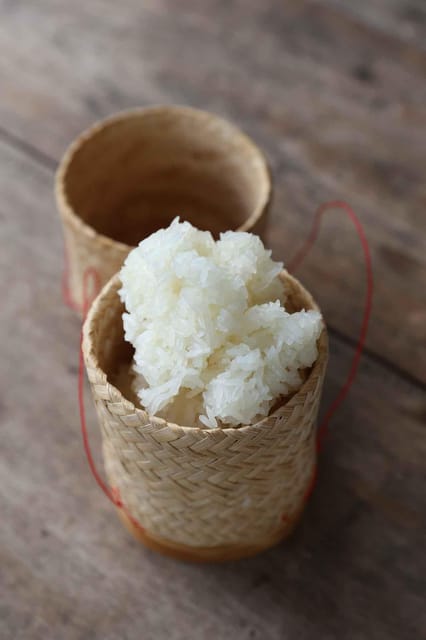
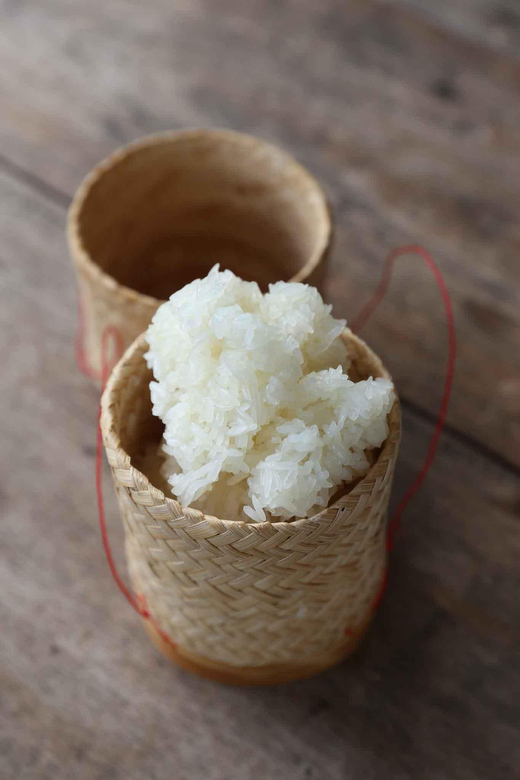
The class begins with sticky rice, one of the clearest ways to understand Northern Thai food. The goal is not simply to produce cooked rice, but to reach the right texture and flavor for eating by hand alongside curry and chili sauce.
You will learn the preparation method and the details that affect the final result. The supplied information does not give a minute-by-minute schedule, so the exact order may vary, but sticky rice is one of the central skills covered during the session.
This is useful for beginners because it gives you a simple reference point. Once you understand how sticky rice should feel, you can better judge how it works with a moist curry or a thick chili sauce. The class also lets you see how one staple supports several different dishes.
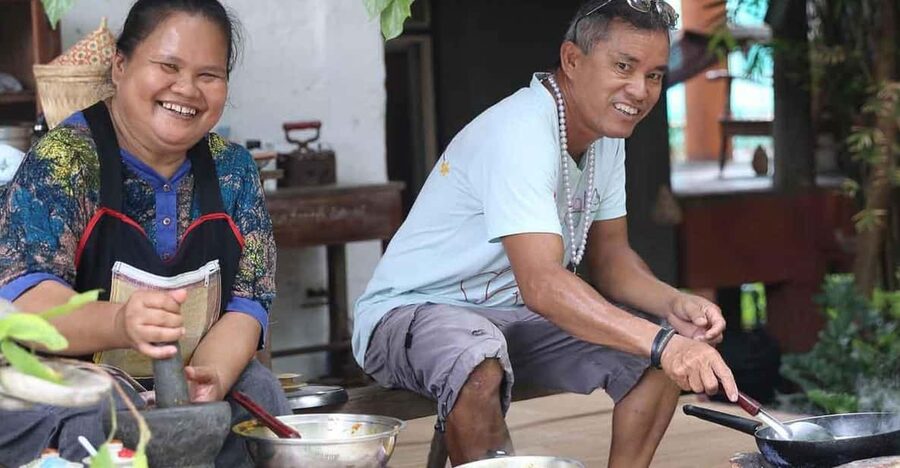
The food is prepared together, so you should expect to participate rather than sit back. Fresh ingredients are provided and ready for use, which keeps the pace moving during a three-hour class. That is convenient, though it also means you will not be visiting a market or choosing ingredients yourself.
Building Northern curry with pork
The pork curry is where spices, herbs, and cooking technique come together. You will work through the process of creating a Northern-style curry and learn how the ingredients develop a full flavor without relying only on heat.
The experience is especially useful if you normally buy curry paste in a jar. Here, you can see how the dish is assembled and ask questions while preparing it. The instructors speak English and Thai, and the small class format should make it easier to clarify a step when you need help.
Do not expect the curry to be presented as a single restaurant plate with an elaborate garnish. The appeal is in learning the method and tasting the result with sticky rice. It is a practical lesson you can take home, especially if you pay attention to the balance between the curry, pork, rice, and chili sauce.
The class has received its strongest praise for being friendly, well organized, and genuine. That fits the format: staff prepare the fresh ingredients, work alongside you, and keep the focus on making food together. The tone sounds more like a family cooking session than a formal culinary school.
Making chicken khao soi from scratch
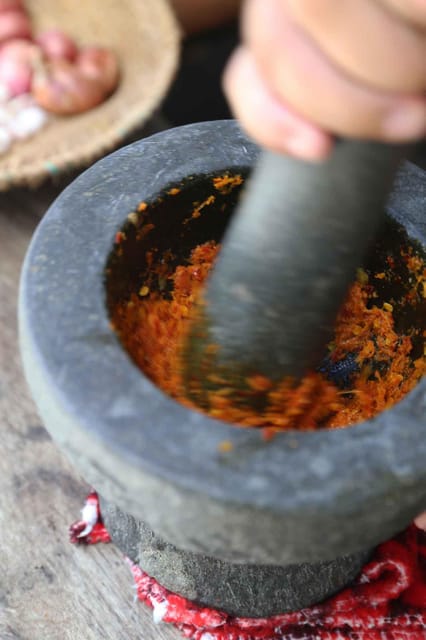
Khao soi is likely to be the main event for many people. This Northern noodle soup pairs chicken with a fragrant curry broth and noodles, creating one of Chiang Mai’s signature meals.
You will learn how to make the soup and bring its elements together. The description calls it a traditional noodle soup, with silky noodles, spices, and several textures. The provided details do not specify every garnish or the exact noodle preparation, so you should not book this expecting a fixed list of toppings beyond the stated chicken khao soi.
Still, the lesson has real value. Khao soi can look simple in a restaurant bowl, but its appeal depends on getting the broth, seasoning, noodles, and chicken to work as one dish. Cooking it yourself makes those parts easier to understand.
I would save questions for this section. Ask how the spice balance is judged, which ingredients give the broth its character, and how the noodles should be handled. The class is specifically built around participation and questions, so you get more from it if you stay curious rather than rushing through each step.
Same city, a completely different sort of day:
- Chiang Mai: Elephant Sanctuary, Waterfall & Bamboo Rafting
★ 4.9 · 9,160 reviews - Chiang Mai: Doi Inthanon National Park Eco-Friendly Tour
★ 4.6 · 6,667 reviews - Chiang Mai: Elephant Sanctuary & Waterfall Group Tour
★ 4.9 · 5,780 reviews - Chiang Mai: Chiang Rai Temples, Karen Tribe and Hot Springs
★ 4.7 · 5,401 reviews
Chili sauce and the balance of heat
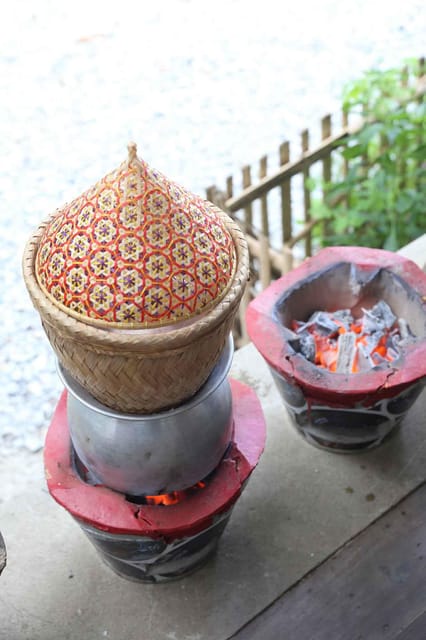
The homemade chili sauce with pork gives you a look at a different side of Northern cooking. It is not just a hot condiment added at the end. It needs enough savory depth and balance to work with sticky rice and the other dishes.
This is a good lesson for anyone who finds Thai food either too hot or too mild. Northern sauces are about contrast. Heat matters, but so do salt, texture, meat, herbs, and the food used for dipping.
Because you prepare the sauce yourself, you can pay attention to how each ingredient changes the final taste. The class information does not specify the exact chili varieties or spice level, so you should ask the instructor about those details at the start if you have a low tolerance for heat.
The friendly teaching style matters here. A sauce can go wrong quickly if the balance is off, and direct guidance is more useful than a recipe card alone. You can also ask how to adjust the seasoning when making it at home.
Grilling eggs on banana leaf
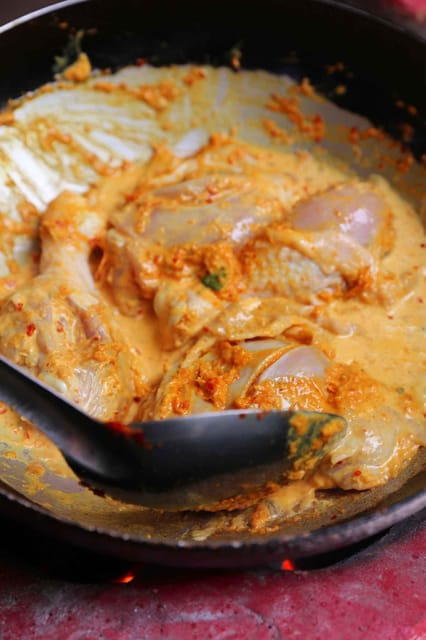
The most unusual item on the menu is the grilled egg cooked on banana leaf. It is a small dish, but it may be the part you remember most clearly.
This technique connects the food to natural cooking materials and charcoal heat. You are not simply frying an egg in a pan. You get to see how banana leaf is used as part of the cooking process and how smoky heat affects the result.
The activity has been described as taking place on a porch over charcoal, with a simple, family-run feel. That setting may be exactly what you want if you prefer food experiences that show ordinary cooking methods rather than a staged performance.
There is a practical tradeoff. Charcoal cooking and an informal porch setup may be less controlled than an indoor kitchen. Heat, smoke, and timing can feel less predictable. For me, that is a plus when the goal is to understand how the food is traditionally made, but it may not suit someone who wants a highly polished class.
A three-hour class with a small-group feel
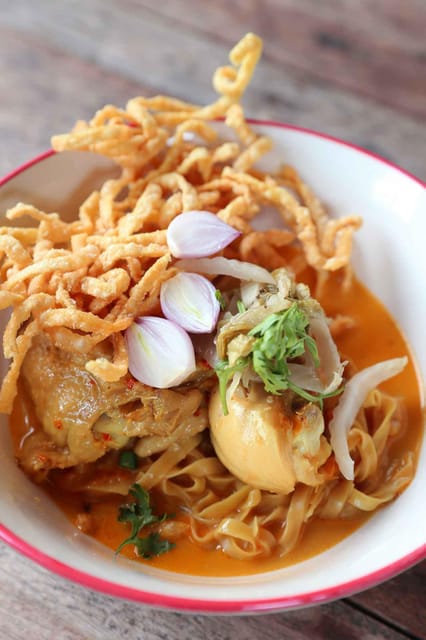
Three hours is enough time to cook several dishes without turning the experience into a full-day commitment. You will have time to prepare the ingredients, follow the cooking steps, ask questions, and eat what you make.
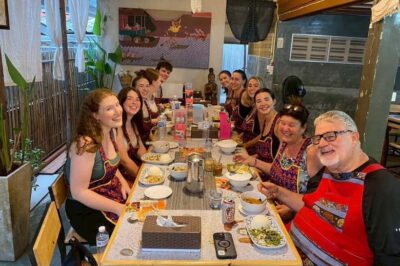
The group limit of 10 is important. Cooking classes can become frustrating when one instructor is trying to guide a large crowd around a single table. A small group gives you a better chance to handle the ingredients yourself and get help when needed.
The class is taught in English and Thai. The supplied information does not name the individual instructors, so you should not expect to choose a particular guide by name. The experience is provided by Baannoi Nornmuan, and the cooking is described as being led by family members.
That family connection helps explain the relaxed style. The strongest praise centers on kind staff, professional organization, good food, and a genuine atmosphere. I would choose this class for its human scale, not for elaborate production values.
What the $38 price gives you
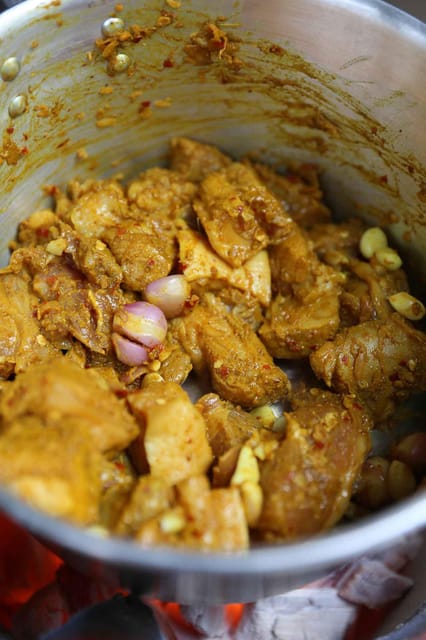
At $38 per person, this class sits in a sensible range for a three-hour food activity in Chiang Mai. You are paying for instruction, ingredients, cooking time, and a meal made from several Northern dishes.
The value is strongest if you take part fully. A short demonstration followed by a small tasting would not justify the price as well. Here, you prepare sticky rice, pork curry, chicken khao soi, chili sauce with pork, and grilled eggs on banana leaf. That is a broad menu for one session.
The fresh ingredients also matter. You avoid the common problem of a cooking class that feels like reheating prepared food. You will work with ingredients that are ready for you to use, then eat the finished dishes.
There are limits. The information does not include a market visit, hotel pickup, recipe booklet, drinks, or a named chef. Do not assume those extras are included. If your main goal is shopping for herbs or learning to select produce, this may not be the right class.
For a visitor who wants a focused introduction to Northern cuisine, I consider $38 fair. You get both a meal and a set of cooking ideas that can continue to shape how you eat in Chiang Mai.
Who will enjoy this class most
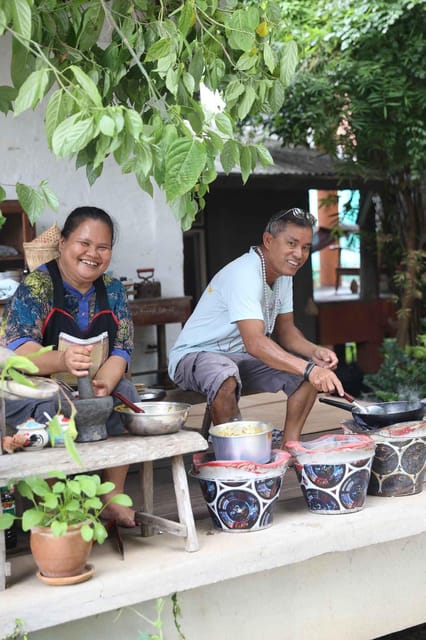
This experience suits first-time visitors who want more than a restaurant meal. It also works well for people who enjoy food but have little cooking experience, since the session is guided and the ingredients are prepared for use.
Families and couples may appreciate the shared work, while solo participants can benefit from the small group. Anyone curious about charcoal cooking, chili balance, or khao soi will find a clear reason to attend.
The class may be less suitable if you dislike spicy food, though the available information does not state how the spice level can be adjusted. Ask the instructor before cooking if that is a concern.
It is also not ideal for someone seeking advanced professional training. The emphasis is on tradition, participation, and a friendly family setting. You will learn useful techniques, but this is a cultural food experience rather than a chef certification course.
The activity is wheelchair accessible, which makes it a practical option for many visitors. Since no further details are provided about the exact cooking stations, it is sensible to confirm any specific access needs before booking.
Practical planning for your Chiang Mai day
The class lasts three hours, and starting times depend on availability. That makes it easy to fit into a Chiang Mai itinerary, but you should leave enough space around it so you are not hurrying to another booking.
You will be eating several dishes, so arrive ready for a substantial meal. The menu includes sticky rice, two meat-based preparations, noodles, chili sauce, and grilled eggs. If you have dietary restrictions, ask about them before reserving because the stated menu includes pork and chicken.
English and Thai are the available teaching languages. The small group should help, but cooking still moves at a steady pace. Wear something practical and be ready to work around heat and food preparation, especially during the charcoal portion.
The booking terms are flexible: you can reserve now and pay later, and cancellation is free up to 24 hours before the activity for a full refund. Those terms are useful if your Chiang Mai schedule is still changing.
The best reasons to book, and the reasons to pause
I would book this class if I wanted to understand what makes Northern Thai cooking different from the Thai food served abroad. The menu covers the region’s essential ideas: sticky rice, curry, chili sauce, noodles, pork, chicken, herbs, banana leaf, and charcoal.
I would also book it for the setting. Cooking on a porch with family members, fresh ingredients, and real heat sounds more personal than a staged kitchen demonstration. The food is the focus, and the class keeps its feet on the ground.
I would pause if I wanted a market tour, a long lesson on ingredients, or a luxury cooking studio. Those features are not included in the information provided. I would also confirm food restrictions and access details ahead of time if they are important to your plans.
With a top rating from eight submitted ratings and repeated praise for friendly staff, good organization, delicious food, and an authentic atmosphere, this is a strong pick for a hands-on Chiang Mai food activity.
Should you book Baannoi Nornmuan?
Book it if you want to cook and eat several Northern Thai dishes in three hours, with a small group and a relaxed family feel. The strongest reasons are the charcoal cooking, the unusual banana-leaf egg, and the chance to make khao soi instead of simply ordering it.
Skip it if you want a market visit, a high-end kitchen, or advanced culinary training. For most food-curious visitors, though, $38 is a fair price for a genuine introduction to Northern flavors and techniques.
FAQ
How long does the Traditional Northern Cooking Class last?
The class lasts three hours.
How much does the class cost?
The price is $38 per person.
Where does the cooking class take place?
The experience takes place in Chiang Mai Province, Thailand.
What dishes will I prepare?
The menu includes sticky rice, Northern curry with pork, chicken khao soi, chili sauce with pork, and grilled egg on banana leaf.
Is khao soi included?
Yes. You will prepare khao soi with chicken, the traditional Northern noodle soup.
Is the class taught in English?
Yes. Instruction is available in English and Thai.
How many people can join the class?
The class is limited to 10 participants.
Is the experience wheelchair accessible?
Yes, the activity is listed as wheelchair accessible.
Can I cancel for a refund?
Yes. You can cancel up to 24 hours in advance for a full refund.
Can I reserve the class and pay later?
Yes. You can reserve your place and pay nothing at the time of booking.
More Workshops in Chiang Mai
- Thai and Akha Cooking Class in Chiang Mai
★ 5.0 · 4,358 reviews - Chiang Mai: Cooking Class with Market and Pickup
★ 4.9 · 1,365 reviews - Chiang Mai: Cooking Class with Organic Farm at Mama Noi
★ 4.9 · 1,151 reviews - Chiang Mai: Evening Cooking Class and Local Market Visit
★ 4.9 · 648 reviews
Just added around Chiang Mai
- Chiang Rai Wonders: White, Blue & Red Temples and Hot Spring★ 5.0 · 3 reviews
- Chiang Rai White Temple Blue Temple and Hill Tribe Village Tour★ 3.5 · 3 reviews
- Private Chiang Mai City Tour including Wat Doi Suthep, Wat Suan Dok (SHA Plus)★ 5.0 · 3 reviews
- Workshop Making Herbal ball & herbal inhaler★ 4.3 · 3 reviews
- Chiang Mai Mae Ping River Cruise and Thai Farmer House Visit★ 4.0 · 3 reviews
- Phoenix Zipline Adventure Park – Chiang Mai Thrills★ 4.0 · 3 reviews
- Monk trails hike, Wat Phalat, Monk chanting, Wat Doi Suthep.★ 5.0 · 3 reviews
- Tok Sen Massage at Fah Lanna Spa in Chiang Mai★ 4.5 · 3 reviews
Thai Cooking Classes, compared.
Half-Day Thai Cooking Class at Organic Farm in Chiang Mai
Read our review →
Cooking Class, Market & Thai Herbs Garden Tour
Read our review →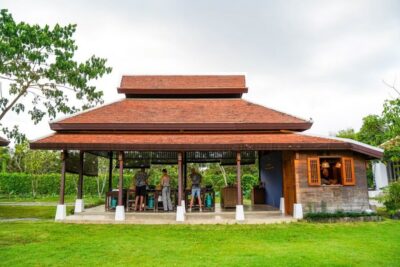
Authentic Cooking Class with Market & Farm Visit
Read our review →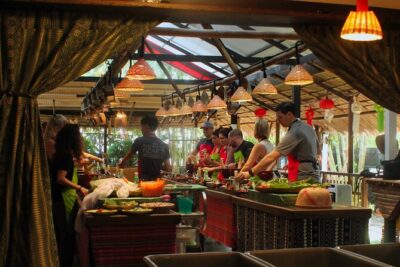
Browse the lists this tour appears in