
Reviewed · ETHICAL ELEPHANT SANCTUARY VISITS
Chiang Mai: Ethical Elephant Feeding & Shower Program
The best part of this Chiang Mai visit is its simple focus: you feed rescued elephants, watch them move freely, and join them in a purpose-built rain shower. You also learn how elephant waste becomes paper, which gives the short visit a useful conservation angle beyond the usual photo stop.
I like the small time commitment and the chance to prepare natural dietary supplements rather than simply hand over fruit. I also like the calm viewing platform, where you can watch feeding and bathing without needing a full-day program. The main drawback is that transportation, meals, and the towel are not included, so you need to plan those details yourself.
In This Review
- Key points at a glance
- A short elephant visit with a clear purpose
- Meeting the elephants and learning the ground rules
- Feeding fresh fruit from the viewing platform
- Preparing natural dietary supplements
- Cooling off under the elephant rain shower
- A regular shower, dry clothes, and a final goodbye
- Making elephant paper at the Education Center
- What the $30 price really covers
- Who will enjoy this program most
- Packing tips for a hot, wet morning or afternoon
- Should you book Chiang Mai’s Feed and Shower program?
- FAQ
- Where does the experience take place?
- How long does the activity last?
- How much does the experience cost?
- Is transportation included?
- What languages are available?
- What activities are included?
- Is elephant food included?
- Are meals included?
- What should I bring?
- Can I cancel for a refund?
Key points at a glance
- Feed from a viewing platform: Give the elephants fresh seasonal fruit and vegetables while watching their behavior at close range.
- Join the outdoor rain shower: Help cool the elephants with a custom-built shower designed to resemble rainfall.
- Learn practical elephant care: Your guide explains behavior, history, safety, food, and natural dietary supplements.
- Turn waste into paper: The Elephant Poop Paper class shows how elephant excrement can be recycled into a useful product.
- Fits a busy Chiang Mai schedule: The experience lasts 2 to 4 hours, making it easier to pair with other plans.
- Guide On may lead your visit: On has received special praise for making the program fun and informative.
A short elephant visit with a clear purpose
Elephant Jungle Sanctuary Chiang Mai offers a compact introduction to its rescued elephants. You are not signing up for a full-day camp with a long list of activities. Instead, the visit concentrates on feeding, observing, bathing, and learning.
That focus matters. A short program can be a better choice if you have only a few days in Chiang Mai or if you are not sure how much time you want to spend at an elephant sanctuary. You still get close to the animals, but the schedule leaves room for temples, markets, or other plans later in the day.
I would approach this as an educational animal encounter, not a performance. The elephants are there to eat, cool down, roam, and receive care. Your job is to follow the guide, keep your movements respectful, and let the animals set the mood.
The visit costs $30 per person. That is a fair price for a two to four hour program that includes elephant food, a drink, accident insurance, the feeding and shower activities, and the elephant paper lesson. It is not an all-inclusive outing, though. You pay separately for transportation, meals, and any optional workshop such as the tie-dye handkerchief activity.
More elephant sanctuary visits in Chiang Mai:
- Chiang Mai: Elephant Sanctuary, Waterfall & Bamboo Rafting
★ 4.9 · 9,160 reviews - Chiang Mai: Elephant Sanctuary & Waterfall Group Tour
★ 4.9 · 5,780 reviews - Chiang Mai: Elephant Sanctuary Feeding Program Half-Day Tour
★ 4.8 · 4,527 reviews
Meeting the elephants and learning the ground rules
Your visit begins at Elephant Jungle Sanctuary Chiang Mai. The exact meeting point can vary according to the option you book, so check your confirmation carefully before setting out. The activity ends back at the meeting point.
The first stage is a briefing on elephant behavior, background, and safety. This is more than a formality. A large elephant can look gentle and relaxed, yet its size and movement demand space and attention. Listen closely when the guide explains where to stand, how to approach, and when to step back.
The guide speaks English and Thai. You can expect clear explanations of how the elephants live, what they eat, and how the sanctuary cares for them. One guide named On has been singled out for making the visit especially enjoyable, so if On leads your group, expect a lively layer of explanation alongside the practical instructions.
I like that the program begins with information before contact. It helps you understand what you are seeing rather than treating the elephants as a backdrop for photographs. The briefing also gives families and first-time elephant visitors a useful sense of control.
The pace may feel less exciting for a few minutes if you arrive eager to feed the animals right away. Still, this is the part that helps the rest of the visit run well. Your experience improves when you know how to behave around the elephants.
Feeding fresh fruit from the viewing platform
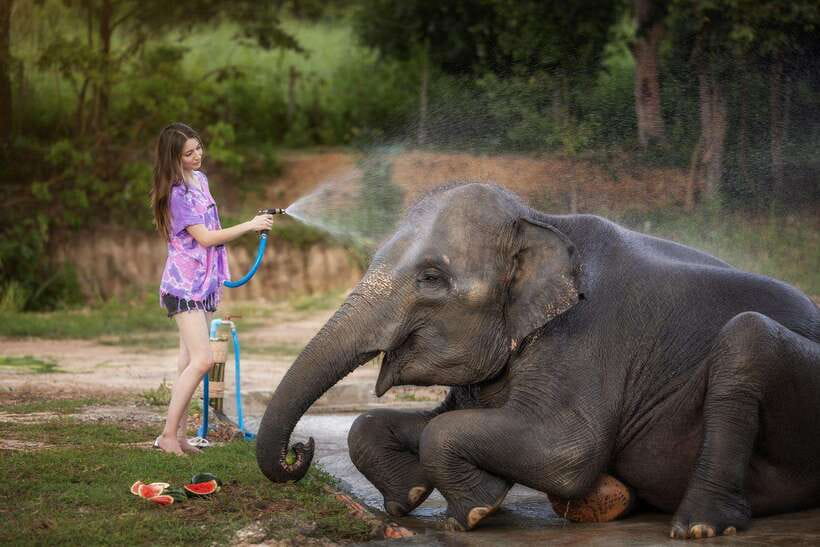
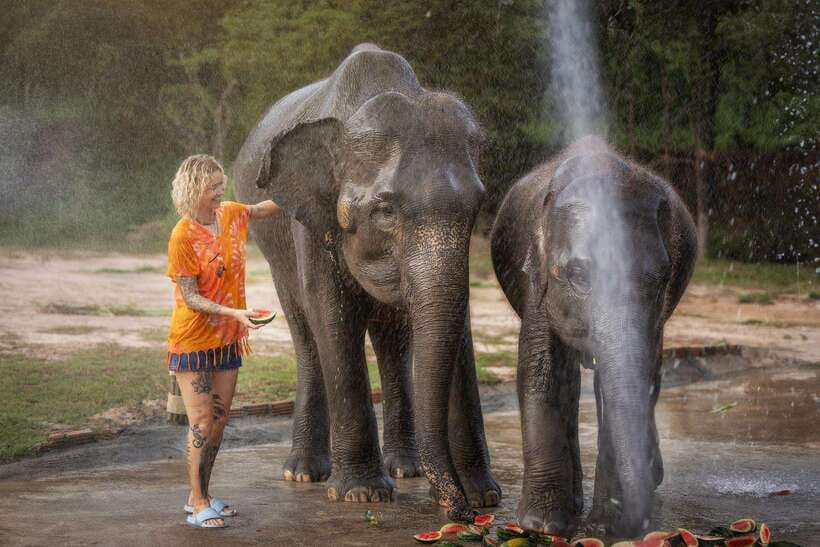
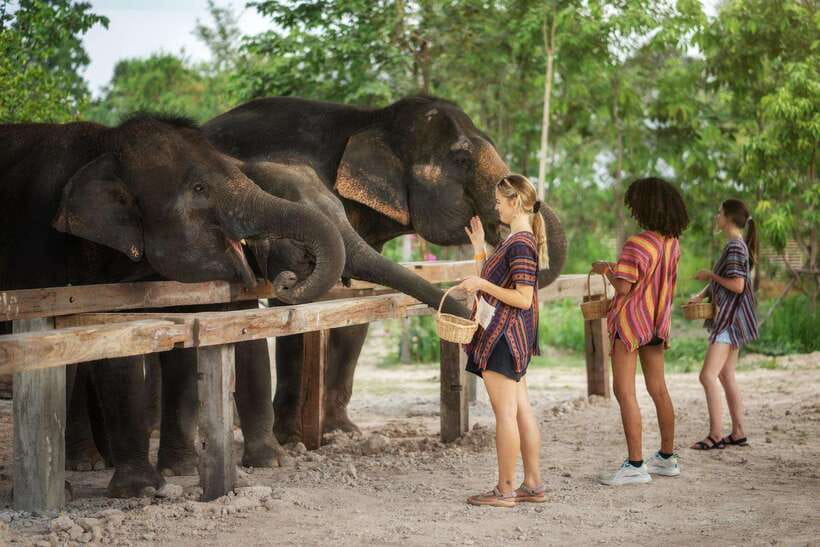
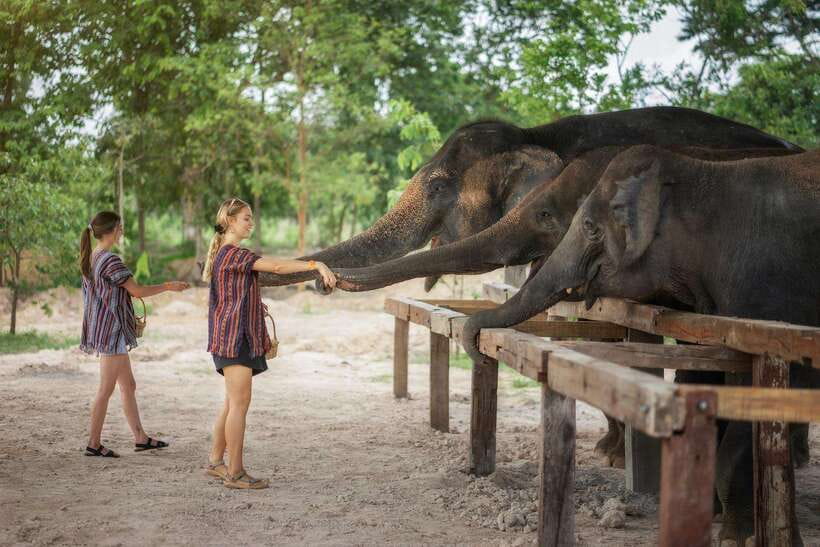
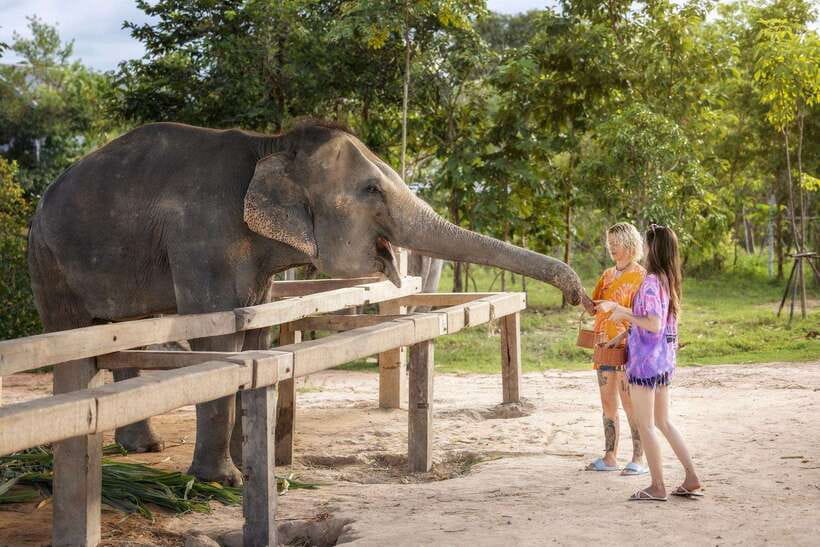
The feeding session is the main close-up encounter. You give the elephants fresh seasonal fruit and vegetables from a specially built viewing platform, then watch how they use their trunks to collect food.
A platform offers two advantages. First, you get a clear view without having to crowd the animals. Second, it creates a defined place for feeding, which makes it easier for the guide to manage the interaction and explain what is happening.
You will learn fun facts about elephant care and feeding as you offer the food. The season affects the produce, so the exact fruit and vegetables may vary. That small change is a reminder that feeding is part of daily care, not just a staged trick for visitors.
I like this activity because it gives you something to do while keeping the elephant’s needs central. You are not simply standing beside an animal for a quick picture. You are handling food, watching behavior, and learning why particular foods are offered.
Keep your camera ready, but do not let it take over. A phone held too close or constant movement can distract you from the guide’s instructions. The best photographs will come when you remain calm and allow the elephants to approach the feeding area naturally.
This is also a good point to notice the difference between seeing an elephant and observing one. Watch the trunk, the pace of eating, and the way the animals respond to food and to one another. Those small actions are the real content of the visit.
Preparing natural dietary supplements
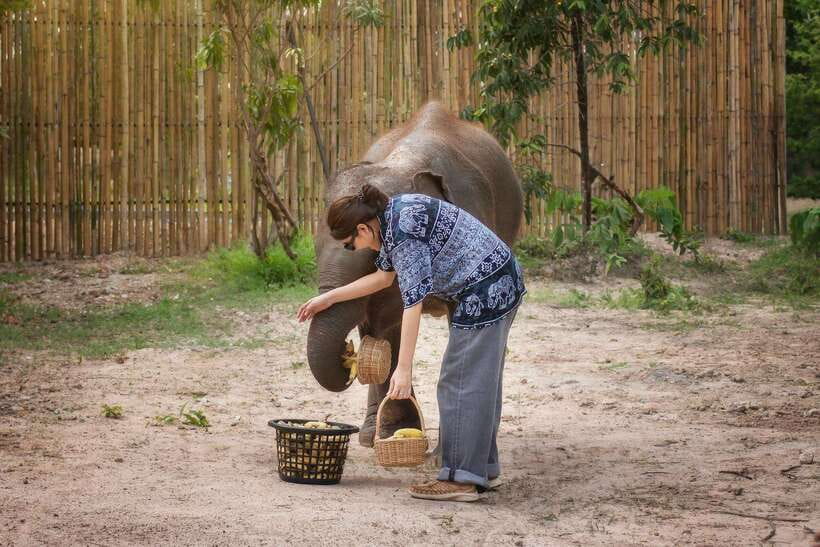
After feeding, you help with the preparation of natural dietary supplements. This part adds a practical look at the work behind elephant care.
The program does not present feeding as a single basket of fruit handed over for entertainment. You get some idea of the planning involved in keeping rescued elephants healthy. The guide can connect the preparation work with the animals’ diet and daily needs.
For you, this activity is less dramatic than the rain shower. That is precisely why it is useful. It slows the visit and shows that responsible care includes routine tasks, not only close contact and memorable photographs.
Families may find this especially helpful because it gives children a hands-on activity with an educational purpose. Adults who want a little more context about sanctuary work should also appreciate it. The program remains accessible even if you have no previous knowledge of elephants.
The supplied information does not specify the exact ingredients or preparation method, so do not expect a fixed recipe to be the same on every visit. What you can count on is participation in preparing natural supplements as part of the care program.
Same city, a completely different sort of day:
- Half-Day Thai Cooking Class at Organic Farm in Chiang Mai
★ 5.0 · 19,087 reviews - Chiang Mai: Doi Inthanon National Park Eco-Friendly Tour
★ 4.6 · 6,667 reviews - Chiang Mai: Chiang Rai Temples, Karen Tribe and Hot Springs
★ 4.7 · 5,401 reviews - Chiang Mai: Cooking Class, Market & Thai Herbs Garden Tour
★ 4.9 · 4,824 reviews
Cooling off under the elephant rain shower
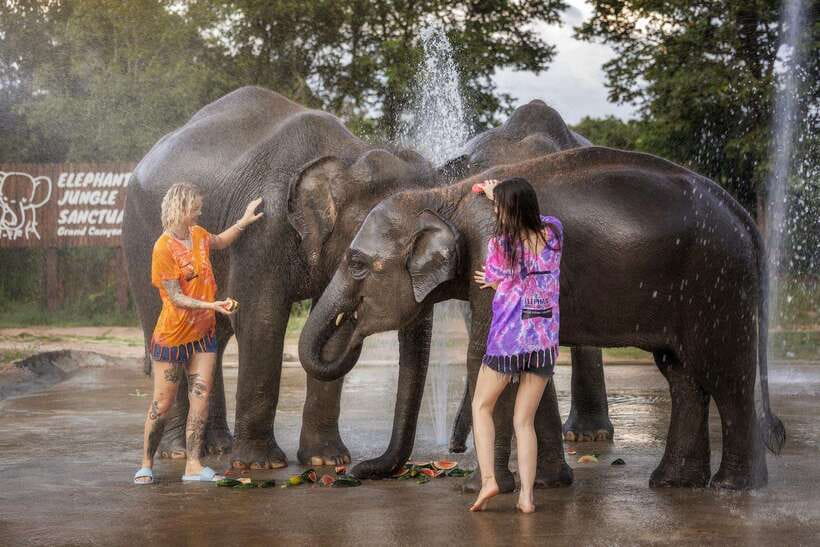
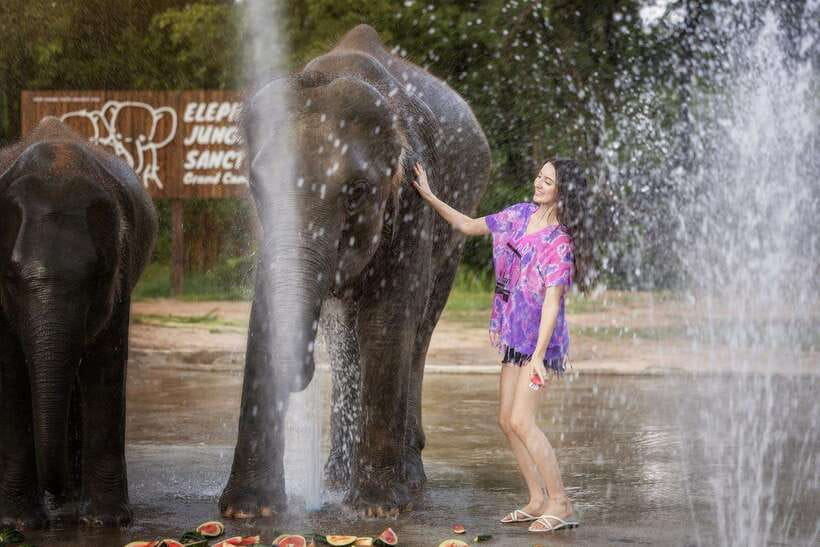
The most playful section is the outdoor Elephant Rain Shower. This custom-built shower is designed to simulate rain, and you join the elephants as they cool down.
You should expect to get wet. Bring swimwear, a towel, and clothes you can change into afterward. The sanctuary provides shower and changing facilities for your regular rinse and dry clothes, but your own towel is on the packing list.
The shower gives you a direct way to share part of the elephants’ cooling routine without turning the activity into a ride or a performance. You help create the spray, watch the elephants respond, and enjoy a lighthearted moment with the group.
I like the contrast between this section and the feeding platform. Feeding is slower and observational. The shower is active and social. Together, the two activities give you different ways to spend time around the animals.
The shower may be the wrong fit if you want a completely dry, quiet visit. It can also be less convenient if you are carrying electronics or wearing clothing that takes a long time to dry. Pack a waterproof bag for your phone and camera, even though the provided information does not list one among the inclusions.
Respect the guide’s directions here. The elephants may be close, but they remain powerful animals. Enjoy the water, keep your attention on the animals, and avoid treating the moment like a free-for-all.
A regular shower, dry clothes, and a final goodbye

After the elephant shower, you take a regular shower and change clothes using the available facilities. This practical step makes a big difference if you have other plans in Chiang Mai afterward.
You should still bring your own towel. A free drink is included for each ticket, but meals are not. Water is essential in Chiang Mai’s heat, so carry extra drinking water even if you plan to use the included drink.
The goodbye comes after the shower and changing period. Because this is a short program, the farewell arrives fairly soon after the main activities. That can feel abrupt if you want a full day with the elephants, but it is also what keeps the visit manageable for a busy schedule.
I would avoid booking another activity with a tight arrival time immediately afterward. The stated duration is two to four hours, not a fixed length that guarantees an exact finish. Leave some space for changing, walking around the center, and getting back to your next plan.
Making elephant paper at the Education Center
The Elephant Poop Paper class is one of the most unusual parts of the program. It teaches you how elephant excrement can be recycled into paper as part of the sanctuary’s sustainability work.
The subject may sound silly at first, but the lesson has a practical point. Elephants produce a great deal of waste, and turning it into paper gives that material another use. The activity connects animal care with waste reduction in a way that is easy to understand and remember.
You should not expect this to be a large craft workshop with a long list of finished products. It is presented as a special class within the sanctuary program. The value lies in seeing how an everyday byproduct can be handled creatively.
Afterward, you can take your time at the EJS Education Center. This is a good place to slow down and gather the information you may have missed during the more active portions of the visit.
The optional tie-dye handkerchief workshop is not included in the $30 price, but you can add it at checkout. If you like hands-on crafts, it may extend the visit in a useful way. If you are trying to keep costs low or have a packed day, skip it and stick with the included elephant paper lesson.
What the $30 price really covers
At $30 per person, this program offers a reasonable middle ground between a quick photo stop and a full-day elephant experience. You receive elephant food, one free drink per ticket, accident insurance, the feeding session, supplement preparation, the rain shower, and the paper-making class.
The value is strongest for three kinds of visitors. You will likely find it worthwhile if you have limited time, want direct contact without committing to a whole day, or prefer an activity that includes some conservation education.
The price is less attractive if you expect transport, lunch, towels, or a long schedule to be included. None of those come with the standard program. You also need to arrange your own way to and from the meeting point, which can add to the total cost.
Check the available starting times before booking. Since the activity can last from two to four hours, your chosen time affects how easily it fits with the rest of your Chiang Mai plans.
Free cancellation up to 24 hours before the activity and the reserve-now, pay-later option make the booking less rigid. Those terms are useful if your schedule is still changing, but you should still confirm the meeting point and transport plan before the day of the visit.
Who will enjoy this program most
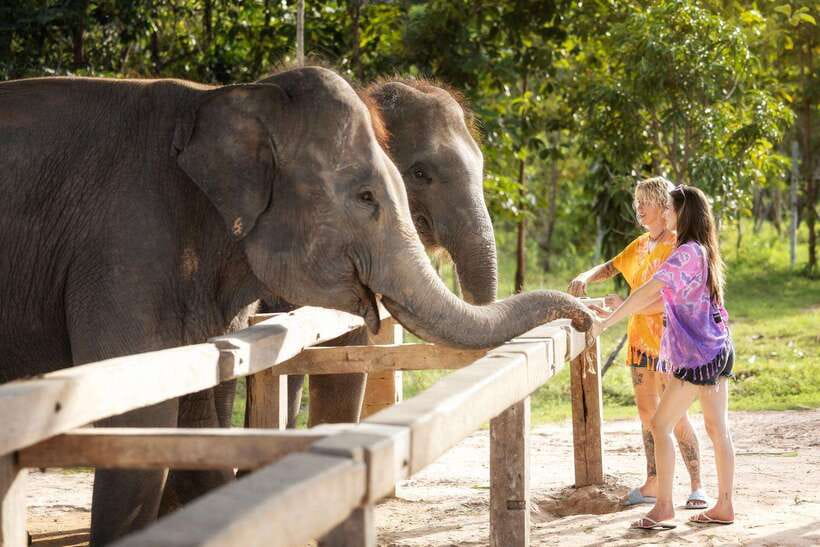
I would recommend this experience to first-time elephant visitors who want a clear introduction without spending a full day at a sanctuary. It also suits families, couples, and solo visitors who like a mix of animal observation, light activity, and simple environmental education.
The program works well for anyone who wants a short ethical encounter built around feeding and bathing rather than riding or watching a show. The supplied details emphasize rescued elephants, free roaming, guide-led safety, and care activities.
You may prefer another option if you want a long, quiet period simply observing elephants from a distance. The feeding and rain shower are close and active, so they are not designed as a purely hands-off wildlife experience.
It may also be a poor fit if you dislike getting wet, do not want to handle food, or need a program with transport and meals included. Read the inclusions carefully before comparing it with longer sanctuary visits.
Packing tips for a hot, wet morning or afternoon
Bring swimwear, a towel, a hat, sunscreen, insect repellent, comfortable clothes, and walking shoes. The advice to bring a hat and water is worth taking seriously, especially during outdoor portions of the visit.
Your passport, or a copy of it, is also required. Keep it protected from water and carry only what you need. A waterproof pouch for your phone is sensible because the rain shower is part of the program.
Wear shoes that can handle walking and wet surroundings. The information does not promise that all paths are dry or easy, so comfort matters more than style.
A camera is welcome, but protect it during the shower. Most of all, bring patience. The best moments come from watching the elephants’ behavior and following the guide, not from forcing a pose.
Should you book Chiang Mai’s Feed and Shower program?
Book it if you want a two to four hour introduction to rescued elephants with feeding, a rain shower, supplement preparation, and elephant paper-making in one visit. The $30 cost is sensible when you value variety and education, especially if your Chiang Mai schedule is tight.
Think twice if you need transportation, food, or a towel included, or if you want a full-day sanctuary experience. Plan your own route to the meeting point, bring the right clothing, and leave extra time after the activity.
For a short visit with a clear ethical focus, this is an easy option to consider. Guide On has been praised for making the experience fun, and the mix of close observation, practical care, and sustainability gives the program more substance than a simple feeding stop.
FAQ
Where does the experience take place?
The experience takes place at Elephant Jungle Sanctuary Chiang Mai in Chiang Mai Province, Thailand.
How long does the activity last?
The activity lasts between two and four hours. Available starting times should be checked before booking.
How much does the experience cost?
The listed price is $30 per person.
Is transportation included?
No. Transportation to and from the activity is not included, and the meeting point may vary according to the option booked.
What languages are available?
The live guide service is available in English and Thai.
What activities are included?
The program includes an elephant briefing, feeding fresh seasonal fruit and vegetables, preparing natural dietary supplements, joining the elephants in the outdoor rain shower, using the shower and changing facilities, making elephant paper, and visiting the EJS Education Center.
Is elephant food included?
Yes. Elephant food is included in the activity.
Are meals included?
No. Meals are not included.
What should I bring?
Bring a hat, swimwear, a towel, comfortable clothing, walking shoes, sunscreen, insect repellent, water, and a camera. You must also bring your passport, although a copy is accepted.
Can I cancel for a refund?
Yes. You can cancel up to 24 hours in advance for a full refund. The reserve-now, pay-later option is also available.
Just added around Chiang Mai
- Chiang Rai Wonders: White, Blue & Red Temples and Hot Spring★ 5.0 · 3 reviews
- Chiang Rai White Temple Blue Temple and Hill Tribe Village Tour★ 3.5 · 3 reviews
- Private Chiang Mai City Tour including Wat Doi Suthep, Wat Suan Dok (SHA Plus)★ 5.0 · 3 reviews
- Workshop Making Herbal ball & herbal inhaler★ 4.3 · 3 reviews
- Chiang Mai Mae Ping River Cruise and Thai Farmer House Visit★ 4.0 · 3 reviews
- Phoenix Zipline Adventure Park – Chiang Mai Thrills★ 4.0 · 3 reviews
- Monk trails hike, Wat Phalat, Monk chanting, Wat Doi Suthep.★ 5.0 · 3 reviews
- Tok Sen Massage at Fah Lanna Spa in Chiang Mai★ 4.5 · 3 reviews
Ethical Elephant Sanctuary Visits, compared.

Elephant Sanctuary, Waterfall & Bamboo Rafting
Read our review →

Elephant Sanctuary Feeding Program Half-Day Tour
Read our review →
Elephant Sanctuary, Long Neck & Sticky Waterfall
Read our review →

3-in-1: Doi Inthanon Tour, Elephant Sanctuary, and Trekking Trail
Read our review →
Chiang Mai Elephant Sanctuary, Bamboo Rafting and Waterfall Tour
Read our review →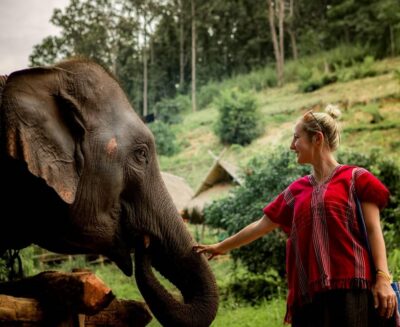
Browse the lists this tour appears in