
Reviewed · CITY TOURS
Chiang Mai: Ancient City Tour of Wiang Kum Kam
Wiang Kum Kam gives you a look at Chiang Mai before Chiang Mai. This former capital along the Ping River was built by King Mangrai the Great, then abandoned after flooding and only brought back to public attention in the 1980s. The horse-drawn carriage adds a pleasant old-fashioned touch as you move among temple ruins.
I like the easy hotel pickup and the fact that the carriage ride is already paid for. I also like the mix of outdoor ruins and the City Arts and Cultural Centre, which helps explain what you are seeing. The drawback is that some travelers may find the sites less dramatic than Chiang Mai’s famous temples in the Old City, especially if they expect a large archaeological park.
In This Review
- Key points to know before booking
- Why Wiang Kum Kam is worth your morning
- The carriage ride through Wiang Kum Kam
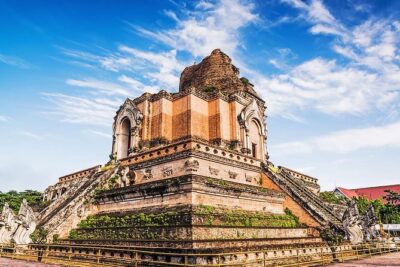
- Wat Chedi Liam, the first temple stop
- Exploring the former capital for one hour
- The Three Kings Monument and city context
- Inside the City Arts and Cultural Centre
- What the $47.07 price includes
- Who should book this tour
- Practical advice for a smoother visit
- Should you book the Wiang Kum Kam tour?
- FAQ
- How long does the Wiang Kum Kam tour last?
- What is included in the tour price?
- Is the horse-drawn carriage ride included?
- Is hotel pickup provided?
- How many people can join the group?
- Can a solo customer book the tour?
- Is the Chiang Mai City Arts and Cultural Centre open every day?
- Are food and drinks included?
- Are children allowed to join?
- Can I cancel for a full refund?
Key points to know before booking
- Wiang Kum Kam was once a capital: King Mangrai the Great built the settlement before moving his capital to Chiang Mai.
- The carriage ride is included: You do not need to arrange or pay for it separately during the tour.
- Wat Chedi Liam anchors the visit: This temple is one of the clearest introductions to the old settlement.
- The Arts and Cultural Centre adds useful context: Photos, maps, objects, and audio-visual displays connect the ruins to Chiang Mai’s wider story.
- The group stays small: The maximum is 15 people, which is more manageable than a large coach tour.
- The Monday schedule matters: The Arts and Cultural Centre is closed on Mondays, although the tour can still operate.
Why Wiang Kum Kam is worth your morning
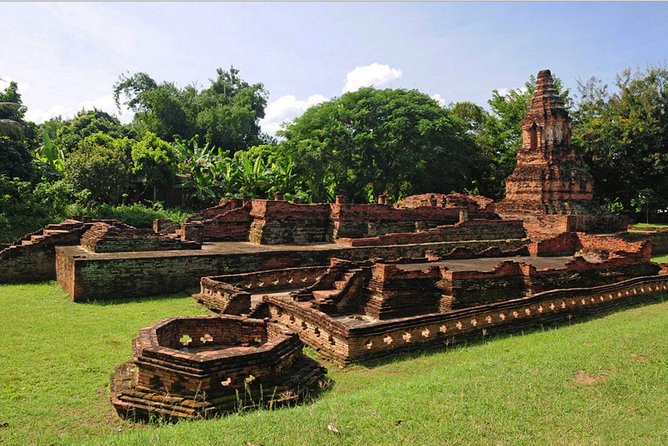
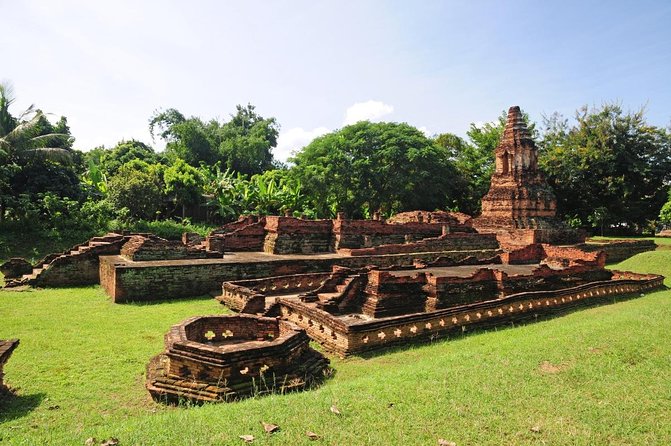
Many people come to Chiang Mai for its Old City temples and stop there. Wiang Kum Kam offers a different kind of visit. It is not one grand monument surrounded by intact walls. It is a spread-out archaeological area with ruined temples and traces of a former settlement along the Ping River.
That scattered layout is exactly why the carriage matters. Instead of treating the area as a quick temple stop, you move through a historic district at a slower pace. The ride is also part of the pleasure. It gives the outing a traditional feel without asking you to pay for transport on the spot.
You will spend around three and a half hours on the full experience, including transport from and back to your Chiang Mai hotel. That makes it a good fit for a morning or afternoon when you want to see something beyond the central city without giving up an entire day.
The history is unusually layered. Wiang Kum Kam was built by King Mangrai the Great as his capital before Chiang Mai became the main seat of power. Flooding later buried parts of the settlement, and several ruins were not excavated until the 1980s. That detail helps explain why the area can feel less polished and less obvious than the Old City. You are looking at a place that was lost, covered, and gradually brought back into view.
A few more Chiang Mai half-days to weigh up
- Chiang Mai: 3 Hour Old City and Temples Guided Walking Tour
★ 4.6 · 1,568 reviews - Chiang Mai: Historic Temples and City Guided Walking Tour
★ 4.7 · 650 reviews - Chiang Rai Day Trip from Chiang Mai City with Golden Triangle
★ 4.5 · 531 reviews
The carriage ride through Wiang Kum Kam
The horse-drawn carriage is included in the price, and it is one of the most distinctive parts of the outing. You are not simply being driven from one modern attraction to another. The carriage helps you take in the old settlement at a calm pace while your guide explains the temples and their place in the former capital.
The tour is capped at 15 people. That is still a group experience, but it is small enough to feel more personal than a full-size bus excursion. The exact carriage arrangements can depend on the day’s operation, so do not assume you will have a private carriage unless that is specifically confirmed.
The ride also changes your expectations. Wiang Kum Kam is not presented as a single compact ruin with every feature visible at once. The area includes several temple sites, and the carriage links them in a practical way. You get a sense of the setting rather than just a photograph of one temple facade.
For families, the carriage can be a useful reason to choose this tour. Children 11 and younger must travel with a paying adult, while children aged 1 and younger are complimentary. Older children may find the ride more engaging than a long indoor history visit, though the tour still includes plenty of explanation and sightseeing.
Wat Chedi Liam, the first temple stop
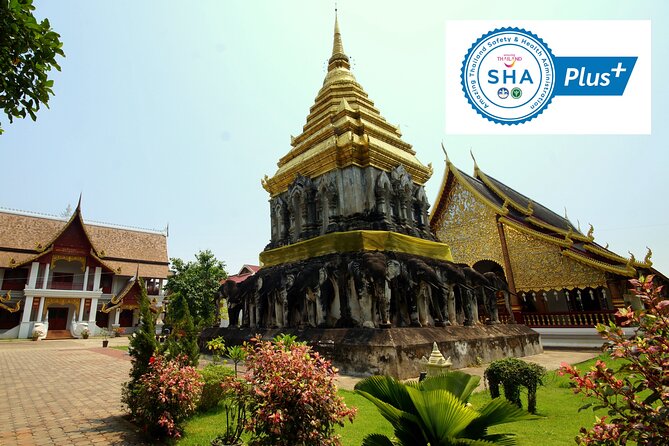
The visit begins at Wat Kuu Kham, also called Wat Chedi Liam. This is one of the temples within the old Wiang Kum Kam settlement, and you have about 30 minutes here.
That short stop is enough to get your bearings and begin seeing the difference between a working city temple and an archaeological site. The temple is part of the larger story of Wiang Kum Kam, so your guide’s explanation is important. Without context, you might see an old structure and move on. With context, you can place it within the former capital built by King Mangrai.
Admission is listed as free, which keeps the tour’s total cost predictable. You will not need to set aside another entrance fee for this stop. The 30-minute visit also keeps the pace moving, which is useful if you prefer a broad introduction to the area rather than a long study of one building.
You should not expect an hour here. The stop is designed as an opening look at the ancient city, not as a stand-alone temple tour. If you are especially interested in religious architecture or photography, the time may feel brief. If you want to see several places in one morning, the limited stop works well.
Exploring the former capital for one hour
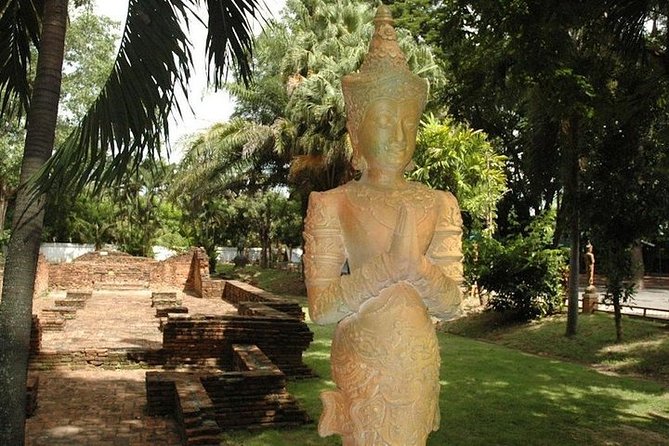
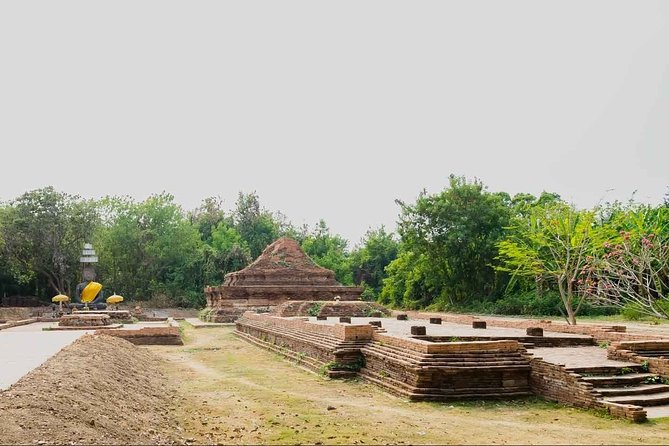
The main Wiang Kum Kam portion lasts about an hour. This is where the settlement’s larger story comes together: the Ping River setting, the former capital, the ruined temples, and the long period when parts of the area were hidden below flood deposits.
The most useful thing to remember is that Wiang Kum Kam is a historic zone rather than a single perfectly preserved city. The remains can feel spread out. That is why I would book this tour for the explanation and the overall view, not only for dramatic ruins.
Your guide’s role matters here. A guide associated with the tour, Mr Boy, is specifically noted for timely hotel pickup and for explaining the history of each temple. Another guide was praised for explaining how some ruins were uncovered from the river bottom in the 1980s. Those details are the sort of information that turns a basic sightseeing ride into a more meaningful visit.
The tour’s first review score was 4 out of 5 across three ratings, so the experience has a mixed but generally positive record. The strongest praise centers on the guide and the historical explanations. One criticism was that Wiang Kum Kam felt less worthwhile than attractions closer to a hotel in Chiang Mai’s Old City. That is a fair point if your main goal is to see ornate, active temples with very little travel time.
I would frame the choice this way: the Old City gives you easier access and more immediately impressive buildings, while Wiang Kum Kam gives you a slower visit to a former capital and a better sense of Chiang Mai’s earlier setting. Pick based on the kind of history you want, not on the promise of the biggest ruins.
Same city, a completely different sort of day:
- Half-Day Thai Cooking Class at Organic Farm in Chiang Mai
★ 5.0 · 19,087 reviews - Chiang Mai: Elephant Sanctuary, Waterfall & Bamboo Rafting
★ 4.9 · 9,160 reviews - Chiang Mai: Doi Inthanon National Park Eco-Friendly Tour
★ 4.6 · 6,667 reviews - Chiang Mai: Elephant Sanctuary & Waterfall Group Tour
★ 4.9 · 5,780 reviews
The Three Kings Monument and city context
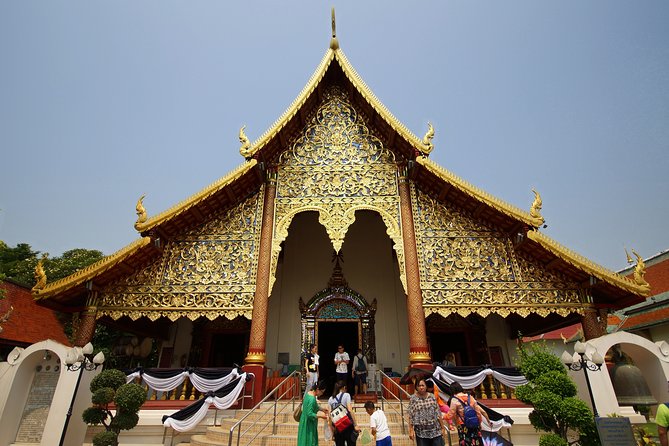
The tour also includes the Three Kings Monument, an important reference point in central Chiang Mai. The monument sits in front of the City Arts and Cultural Centre, so the two parts of the visit fit together naturally.
The monument helps connect the older settlement outside the center with the city you see today. After hearing about King Mangrai and the earlier capital, you get a clearer sense of how Chiang Mai’s political center shifted. The stop is not presented as a long independent visit, but it adds a useful landmark to the day.
This is also a practical chance to see how the tour moves between two types of history. Wiang Kum Kam gives you open-air ruins and a carriage ride. The Three Kings Monument and the Arts and Cultural Centre place Chiang Mai’s past in the middle of the modern Old City.
Inside the City Arts and Cultural Centre
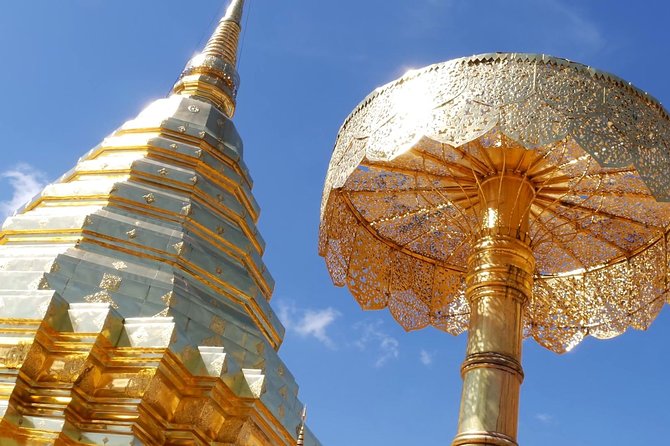
You get about an hour at the Chiang Mai City Arts and Cultural Centre. It is located behind the Three Kings Monument, inside a restored provincial government hall dating from the 1920s.
This is the indoor portion of the tour, and it gives the morning a needed change of pace. The displays include photographs, old objects, maps, and an audio-visual presentation covering Chiang Mai from its first settlers through the modern city. A small-scale model of a traditional wooden village adds a visual look at older local life.
I particularly like this stop for anyone who wants more than temple photographs. The ruins can raise questions about who built the settlement, why the capital moved, and how Chiang Mai developed afterward. The museum-style displays help fill in those gaps.
The center is closed on Mondays, but the tour can still operate. You should check the day of your booking carefully. The available information does not specify the replacement program, so do not assume that another museum or extra temple stop will automatically be added.
An hour is a sensible amount of time here. You can take in the main displays without turning the tour into a full museum day. If indoor exhibits are not your priority, this part may feel slower. If you enjoy maps, photographs, and visual history, it may be the most useful stop of all.
What the $47.07 price includes
At $47.07 per person, this is priced as a budget-friendly group tour rather than a private historical excursion. The value comes from bundling several services into one booking:
- Round-trip transportation from Chiang Mai hotels
- A guided visit to Wiang Kum Kam and its ruined temples
- A horse-drawn carriage ride
- The Three Kings Monument
- Admission to the Chiang Mai City Arts and Cultural Centre
The carriage is important to the value calculation. You do not need to pay separately during the tour, and you avoid the trouble of arranging local transport between the scattered sites.
The hotel transfer also matters. Wiang Kum Kam is outside the compact core of the Old City, and arranging your own transport can add time and cost. A shared pickup may take longer than a direct private car, especially if other passengers are collected, but it removes much of the planning.
Food, drinks, and snacks are not included. Bring your own water and plan to eat before or after the tour. Do not expect a meal break to be built into the three-and-a-half-hour schedule.
If you are a solo customer, you can book, but the activity needs at least two people to operate and a single booking remains subject to availability. That is worth checking before you build your day around it.
Who should book this tour
This tour suits you best if you want a clear introduction to Chiang Mai’s earlier capital without spending a full day on a private guide. It is also a good choice if you like having transport, admissions, and a distinctive local ride arranged in advance.
History-minded visitors will get the most from it. The story of a capital built by King Mangrai, later affected by flooding, and partly excavated in the 1980s gives the ruins a strong sense of place. The Arts and Cultural Centre is especially helpful if you want background rather than isolated facts.
Families may like the carriage ride and the shorter stops. The tour does not require you to spend hours at one site, and the mix of outdoor and indoor visits keeps the morning varied. Still, young children who need constant activity may find the museum explanations slow.
You may want to skip it if your Chiang Mai schedule is very short and you have not yet seen the central Old City. You may also be disappointed if you expect towering ruins, a large walled archaeological park, or a fully excavated ancient city. Wiang Kum Kam is more about scattered remains and the story behind them.
The small maximum group of 15 is a useful middle ground. You get the lower cost of a shared tour without the scale of a large coach group. For Spanish, French, German, or Russian guidance, a private tour upgrade is available for an additional 800 Thai baht for the whole party.
Practical advice for a smoother visit
Wear comfortable clothing for moving between temple sites, and bring water since food and drinks are not provided. The schedule is compact, so have your camera ready before each stop rather than expecting long free periods.
Confirm your hotel pickup details when booking. One successful pickup was handled promptly by Mr Boy, but shared transport still depends on the day’s group and route. Keep your morning or afternoon reasonably open around the stated three-and-a-half-hour duration.
If the Arts and Cultural Centre is important to you, avoid Monday. The tour may still run that day, but the center itself will be closed. Also remember that the activity requires at least two people and that children 11 and younger need a paying adult with them.
The cancellation terms are straightforward: you can receive a full refund if you cancel at least 24 hours before the start time. Changes or cancellations made inside that window are not accepted for a refund. If the minimum number is not reached and the operator cancels, you are offered another date or experience, or a full refund.
Should you book the Wiang Kum Kam tour?
Book it if you want a low-cost, well-organized way to see a former capital, ride through its temple zone by carriage, and add a useful museum visit in central Chiang Mai. The guide’s historical explanation is likely to be the tour’s most valuable part, especially when describing how flood-buried ruins were uncovered.
Skip it if your priority is simply the most beautiful temples close to your hotel. Wiang Kum Kam is quieter and more spread out, with ruins that require context. For the right visitor, that is the point. At $47.07, the included pickup, carriage, guide, and museum admission make it a sensible half-day history outing, as long as you arrive with realistic expectations.
FAQ
How long does the Wiang Kum Kam tour last?
The tour lasts approximately 3 hours and 30 minutes.
What is included in the tour price?
The price includes round-trip transportation from Chiang Mai hotels, a guided visit to Wiang Kum Kam, the horse-drawn carriage ride, the Three Kings Monument, and the Chiang Mai City Arts and Cultural Centre.
Is the horse-drawn carriage ride included?
Yes. The carriage ride is included, so you do not need to pay for it separately during the tour.
Is hotel pickup provided?
Yes. Round-trip transfers from Chiang Mai hotels are provided.
How many people can join the group?
The tour has a maximum group size of 15 people.
Can a solo customer book the tour?
A solo customer may book, but the activity requires at least two people to operate and the booking remains subject to availability.
Is the Chiang Mai City Arts and Cultural Centre open every day?
No. The center is closed on Mondays, although the tour can still operate on that day.
Are food and drinks included?
No. Food, drinks, and snacks are not included.
Are children allowed to join?
Yes. Children aged 11 and younger must be accompanied by a paying adult. Children aged 1 and younger are complimentary.
Can I cancel for a full refund?
Yes, if you cancel at least 24 hours before the experience start time. Cancellations or changes made less than 24 hours before the start time are not accepted for a refund.
Just added around Chiang Mai
- Chiang Rai Wonders: White, Blue & Red Temples and Hot Spring★ 5.0 · 3 reviews
- Chiang Rai White Temple Blue Temple and Hill Tribe Village Tour★ 3.5 · 3 reviews
- Private Chiang Mai City Tour including Wat Doi Suthep, Wat Suan Dok (SHA Plus)★ 5.0 · 3 reviews
- Workshop Making Herbal ball & herbal inhaler★ 4.3 · 3 reviews
- Chiang Mai Mae Ping River Cruise and Thai Farmer House Visit★ 4.0 · 3 reviews
- Phoenix Zipline Adventure Park – Chiang Mai Thrills★ 4.0 · 3 reviews
- Monk trails hike, Wat Phalat, Monk chanting, Wat Doi Suthep.★ 5.0 · 3 reviews
- Tok Sen Massage at Fah Lanna Spa in Chiang Mai★ 4.5 · 3 reviews
City Tours, compared.
3 Hour Old City and Temples Guided Walking Tour
Read our review →
Chiang Rai Day Trip from Chiang Mai City with Golden Triangle
Read our review →
The Best City Tour View Points Wat Doi Suthep, Wat Chedi Luang and Wat Pha Lat
Read our review →
Browse the lists this tour appears in