
Reviewed · CANOES & KAYAKS
No.1 Chiang Mai: Stand Up Paddle Board through Mae Taeng Forest
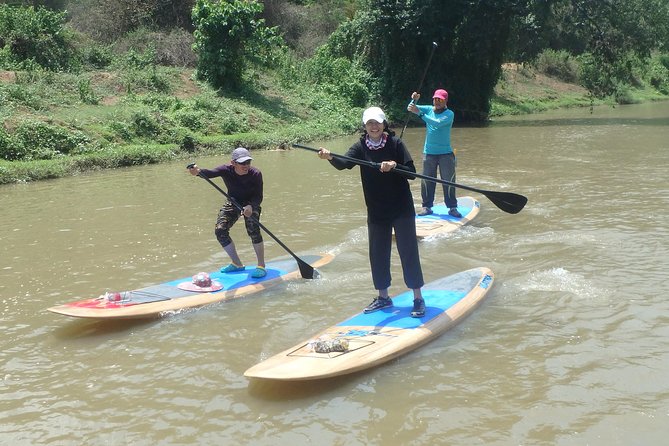
The best part of this outing is the change of pace. After an hour-long ride north from Chiang Mai, you trade traffic and temples for the slow, jungle-fringed Mae Ping River, where Class 1 currents keep the water manageable for first-time paddlers. I like the quiet setting and the chance to watch for birds and other wildlife without needing advanced river skills.
I also like the practical flexibility. You can start on a paddle board, switch to a kayak, or sit or kneel on the board if standing becomes tiring. Guides such as Aidan adjust the trip to the river and the people in front of them, which matters more here than speed. The main drawback is timing: lunch may come quite late, possibly around 3 p.m., so bring a snack.
In This Review
- Key points to know before booking
- From Chiang Mai to the Mae Ngat valley
- Getting set for a gentle river
- Paddling through Mae Taeng Forest Reserve
- SUP technique, balance, and the kayak choice
- Lunch at the mango plantation
- What $71.98 buys you
- Timing, pickup, and what to pack
- Who will enjoy this river trip most
- Cancellation and booking details
- Should you book the Mae Ping SUP trip?
- FAQ
- Where does the stand up paddle boarding take place?
- How long does the activity last?
- What time does pickup begin?
- Is hotel pickup and drop-off included?
- Can I kayak instead of paddle board?
- Is this suitable for beginners?
- What equipment is provided?
- What should I bring?
- What is the cancellation policy?
Key points to know before booking
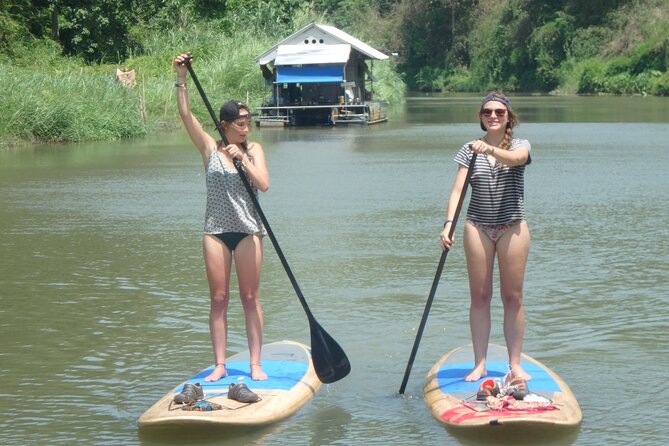
- A calm beginner river: The Mae Ping has easy Class 1 currents, with seasonal changes that can affect conditions.
- A real escape from Chiang Mai: The one-hour transfer leads to the Mae Ngat valley and Mae Taeng Forest Reserve.
- SUP or kayak: You can choose a kayak instead, or change position on the board when standing gets tiring.
- Small-group attention: The tour information lists a maximum of five people in one section and 10 or fewer in another, so confirm the group size when booking.
- Lunch is part of the day: You eat at a rustic restaurant at a mango plantation, but the meal can be late.
- Bring useful gear: Pack swimwear, dry clothes, sunscreen, and ideally water shoes. A dry bag or waterproof phone pouch is handy.
From Chiang Mai to the Mae Ngat valley
Your morning begins with hotel pickup at about 8:30 a.m. in the Chiang Mai area. The drive to the paddle-board shop and onward to the Mae Ngat valley takes time, but that is part of the appeal. This is not a quick city activity squeezed between sightseeing stops. You spend roughly an hour heading north before reaching the river.
At the shop, you receive basic paddle-board instruction. This is a useful first step if SUP is new to you, since balancing, holding the paddle, and steering all feel easier once someone demonstrates them on dry land. You can also choose a kayak instead. That option is worth considering if you want the river setting but do not care about standing on a board.
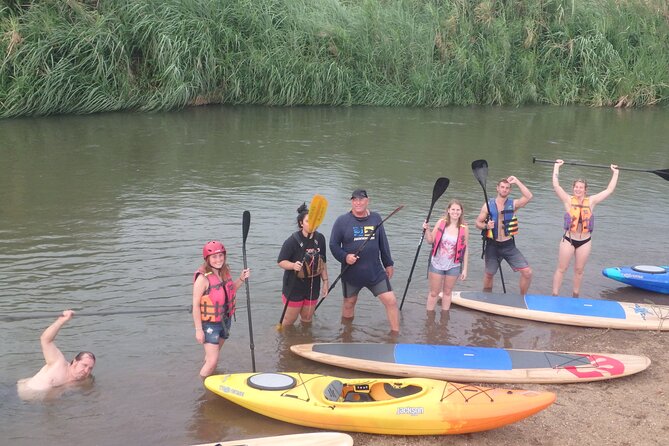
The supplied inflatable boards suit beginners up to 220 pounds, or 100 kilograms. That limit is important, so check it before paying. The operator can provide water shoes in sizes 40 to 45, and the shop sells water shoes and personal items such as waterproof phone bags.
A few more Chiang Mai half-days to weigh up
- No.1 Full-Day Chiang Mai Caving & Jungle Kayaking: Chiang Dao
★ 4.5 · 206 reviews - Chiang Mai: Ping River Night Kayaking into City Center
★ 4.8 · 144 reviews - Chiang Mai : Kayak the Jungle Rivers of Chiang Dao Valley!
★ 5.0 · 89 reviews
Getting set for a gentle river
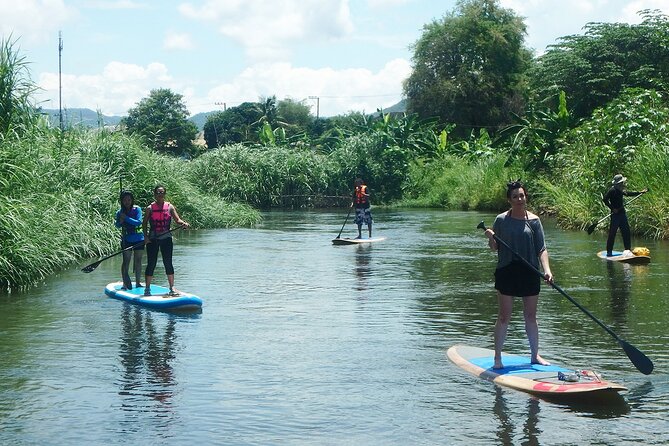
At the river, your guide gives a safety briefing and supplies the main equipment, including a life vest and helmet. You then set off behind the guide rather than trying to work out the route on your own.
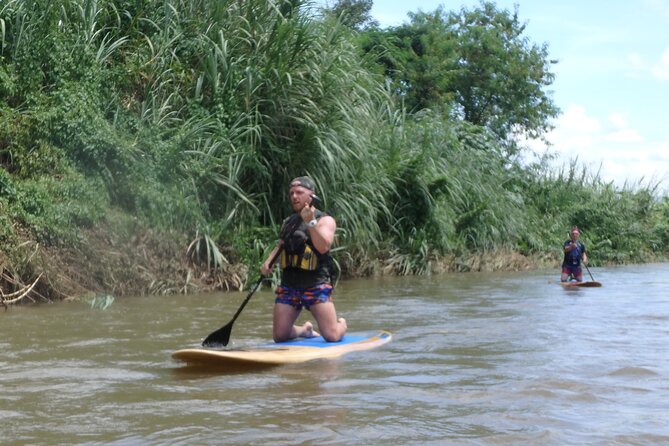
The Mae Ping here is described as calm and slow-moving, with easy Class 1 currents. In practical terms, you should expect a relaxed paddle, not whitewater. The river can still change with the season, so the exact feel of the outing depends on water conditions. Your guide can respond to that by suggesting a seated or kneeling position if standing becomes awkward.
That flexibility makes this a good first SUP trip. One first-time paddler managed the board without falling, while another found that the river was easier to handle than ocean waves. Those details point to the right expectation: you still need balance and attention, but you do not need prior river experience.
You should have a moderate level of physical fitness. Paddle boarding uses your legs, stomach, shoulders, and arms, and even gentle water can make two hours feel like real exercise. Kayaking is not effortless either, but it may be the better choice if standing for a long stretch is not appealing.
Paddling through Mae Taeng Forest Reserve
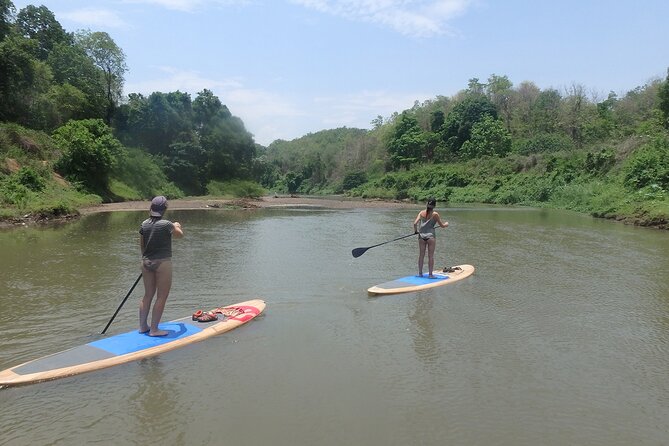
The river winds through Mae Taeng Forest Reserve, with thick green growth along the banks and a quieter feel than the waterways close to Chiang Mai. The attraction is not a list of major sights. It is the steady rhythm of paddling, the sound of the water, and the chance to look for birds and other wildlife along the banks.
You follow the guide through the easy current and receive tips on steering and improving your stroke. A good guide makes a difference here because the river is simple enough to enjoy, but not so simple that you can stop paying attention. You need to read where the water is moving and keep the board pointed in a useful direction.
Aidan has led private outings as well as small groups, and the guiding style described by the operator is flexible. On one trip, he advised using a kayak before trying SUP, since the board became tiring. That is exactly the sort of judgment you want on a river trip. The goal is not to prove that you can stand for every minute. The goal is to enjoy the river safely.
The wildlife element is best treated as a possibility, not a promise. Bring patience and keep your eyes along the trees and waterline. You may spot birds or other animals, but the outing is not a dedicated wildlife tour.
SUP technique, balance, and the kayak choice
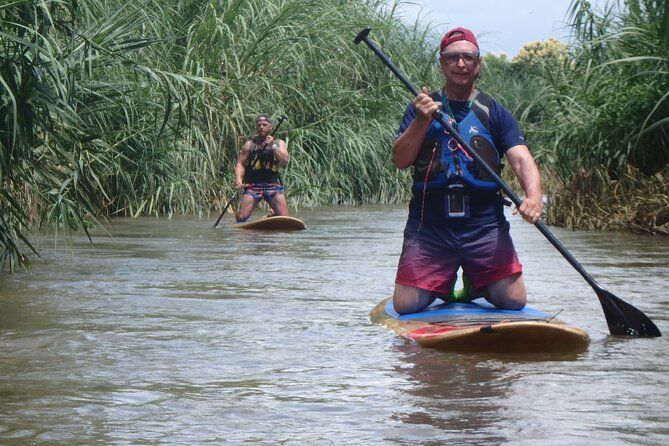
Stand up paddle boarding is easy to begin but takes focus. You may find your balance quickly, or you may prefer to paddle from your knees until the board feels stable. The tour allows both approaches, which removes much of the pressure from a first attempt.
The calm current helps. You are not battling ocean waves, and the Class 1 water gives you room to practice turning and steering. Still, the physical work builds over time. One useful lesson from the trip is that kayaking and SUP feel different even on the same river. A kayak lets you sit and use a double-ended paddle, while the board gives you a higher view and a more active balance challenge.
If you book with friends, consider splitting the time between both options if the guide permits it. The information specifically says you can choose a kayak rather than a board, and one guide has recommended kayak first, then SUP. That makes sense for people who want to try both without committing the entire outing to standing.
Apply sunscreen before departure and reapply about every hour. The open water and reflected sun can catch you even when the riverbank provides shade. Wear swimwear under your clothes, and keep a full change of dry clothes ready for the ride back.
Same city, a completely different sort of day:
- Half-Day Thai Cooking Class at Organic Farm in Chiang Mai
★ 5.0 · 19,087 reviews - Chiang Mai: Elephant Sanctuary, Waterfall & Bamboo Rafting
★ 4.9 · 9,160 reviews - Chiang Mai: Doi Inthanon National Park Eco-Friendly Tour
★ 4.6 · 6,667 reviews - Chiang Mai: Elephant Sanctuary & Waterfall Group Tour
★ 4.9 · 5,780 reviews
Lunch at the mango plantation
The meal is served at a rustic restaurant at a mango plantation. This gives the day a local, rural finish rather than sending you straight back to the city after paddling. You can refuel before the return transfer and enjoy a setting that fits the countryside around the river.
The timing deserves attention. One account placed lunch as late as 3 p.m., which is much later than many people expect from a morning tour. The total duration is listed at about four hours, yet river conditions, transfers, and the day’s schedule can affect the exact pace. Bring a snack in your day bag, especially if you eat an early breakfast or have children with you.
Lunch is included in the price, along with bottled water. The information does not specify the menu, so do not book this expecting a particular dish or a special tasting course. Think of it as a practical meal after the river, with the plantation setting adding interest.
What $71.98 buys you
At $71.98 per person, this is not the cheapest way to spend a morning in Chiang Mai. The price makes more sense when you count the hotel pickup and drop-off, transport to the Mae Ngat valley, guide, board or kayak, life vest, helmet, bottled water, and lunch.
You are also paying for access to a river area well beyond the city and for someone to manage the route and conditions. Hiring equipment on your own would not provide that same transfer or guidance. The small-group format can improve the value further, since a guide can give direct advice on balance, steering, and the choice between SUP and kayak.
The main value question is how much you want the countryside setting. If your priority is simply standing on a board for an hour, a cheaper local rental may be enough. If you want a guided outing through forest, with transport and a meal included, the price is easier to justify.
The group-size information needs a quick check before booking. The main details describe a group of 10 or fewer, while the additional information gives a maximum of five. Ask the operator which limit applies to your date. A smaller group usually matters on a beginner water activity because the guide can spend more time correcting technique and helping with equipment.
Timing, pickup, and what to pack
Pickup begins around 8:30 a.m., with the exact time confirmed for your accommodation. If your hotel does not appear in the pickup list, enter its full address and add details in the special instructions field. You can also contact the operator by phone or WhatsApp at +66 0810247046 or by email at [email protected].
Check your email on the morning of the trip for pickup instructions. The operator asks for your passport number at check-in for insurance identification, so have it available.
Pack light, but bring the things that make a wet outdoor day easier:
- Swimwear and a complete set of dry clothes
- Sunscreen, with extra application during the trip
- Water shoes if you have them
- A snack because lunch may be late
- A dry bag or waterproof phone pouch
- A towel if you have room
Water shoes are not essential for every person, but they can be useful around the riverbank. Sizes 40 to 45 may be available from the operator. The shop also sells waterproof phone bags and other personal items, though buying them there adds to your cost.
The tour is listed as allowing service animals. It also requires moderate physical fitness. Those details do not answer every mobility question, so contact the operator before booking if you need equipment or access arrangements.
Who will enjoy this river trip most
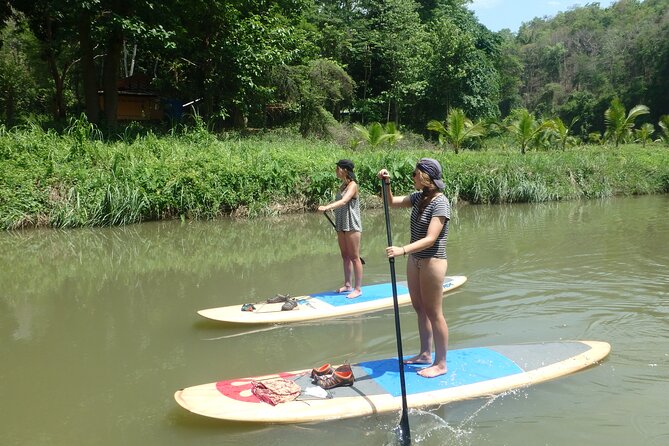
This outing suits a first-time paddle boarder who wants instruction without a difficult current. It also works well for a couple or small group with mixed interests, since one person can kayak while another uses a board.
You will likely enjoy it if you prefer natural settings to a packed sightseeing schedule. The forest reserve, calm river, and wildlife watching give the trip a quiet feel. The guide’s advice lets you work at your own level, and sitting or kneeling is always a sensible option when your legs need a break.
It may be less suitable if you want a fast, technical river run. The water is meant for easy maneuvering, not thrills. It may also frustrate anyone who dislikes a long transfer, uncertain meal timing, or a day that requires getting wet and changing clothes.
The board limit of 220 pounds, or 100 kilograms, is another practical filter. If you are above that limit, ask about the kayak option and available equipment before booking rather than assuming the board will work.
Cancellation and booking details
You receive confirmation when you book. Free cancellation is available if you cancel at least 24 hours before the local start time. Cancellations or changes made within 24 hours are not accepted for a refund.
River fees, insurance, and all fees and taxes are listed as not included, so check the final booking cost carefully. The operator also asks for passport identification at check-in for insurance purposes.
The experience is usually booked about seven days ahead. That suggests you should reserve before your Chiang Mai visit if you need a particular date, especially if you want a small group or private arrangement. The operator has accommodated private trips for schedule needs, but that should be confirmed rather than assumed.
Should you book the Mae Ping SUP trip?
Book it if you want a gentle outdoor day outside Chiang Mai, appreciate a helpful guide, and like the choice between paddle board and kayak. The forest setting, included transport, equipment, water, and lunch give the outing a solid practical package for $71.98.
Before you commit, confirm the group-size limit, ask about the expected lunch time, and check the equipment limit if you are close to 220 pounds. Bring a snack and dry clothes. If you do that, this should suit beginners and active visitors who want a quiet river outing more than a whitewater thrill.
FAQ
Where does the stand up paddle boarding take place?
The trip travels north from Chiang Mai to the Mae Ngat valley, then follows the Mae Ping River through Mae Taeng Forest Reserve.
How long does the activity last?
The full experience lasts about four hours, although transfer time, river conditions, and meal timing can affect the schedule.
What time does pickup begin?
The listed start time is 8:30 a.m. Pickup details and the exact time are confirmed for your accommodation.
Is hotel pickup and drop-off included?
Yes. Hotel pickup and drop-off in the Chiang Mai region are included.
Can I kayak instead of paddle board?
Yes. You can choose to travel by kayak rather than stand up paddle board. The guide may also advise using a kayak based on your preference or conditions.
Is this suitable for beginners?
Yes. The river has easy Class 1 currents, and the guide provides instruction and safety advice. You can also sit or kneel on the board if standing becomes tiring.
What equipment is provided?
The operator provides an inflatable paddle board or kayak, a life vest, a helmet, and bottled water. Water shoes in sizes 40 to 45 may be provided.
What should I bring?
Bring swimwear, dry clothes, sunscreen, and ideally water shoes. A snack and a dry bag or waterproof phone bag are also useful.
What is the cancellation policy?
You can cancel for a full refund up to 24 hours before the local start time. Cancellations or changes made less than 24 hours before the start are not refunded or accepted.
Just added around Chiang Mai
- Chiang Rai Wonders: White, Blue & Red Temples and Hot Spring★ 5.0 · 3 reviews
- Chiang Rai White Temple Blue Temple and Hill Tribe Village Tour★ 3.5 · 3 reviews
- Private Chiang Mai City Tour including Wat Doi Suthep, Wat Suan Dok (SHA Plus)★ 5.0 · 3 reviews
- Workshop Making Herbal ball & herbal inhaler★ 4.3 · 3 reviews
- Chiang Mai Mae Ping River Cruise and Thai Farmer House Visit★ 4.0 · 3 reviews
- Phoenix Zipline Adventure Park – Chiang Mai Thrills★ 4.0 · 3 reviews
- Monk trails hike, Wat Phalat, Monk chanting, Wat Doi Suthep.★ 5.0 · 3 reviews
- Tok Sen Massage at Fah Lanna Spa in Chiang Mai★ 4.5 · 3 reviews
Canoes & Kayaks, compared.

No.1 Full-Day Chiang Mai Caving & Jungle Kayaking: Chiang Dao
Read our review →
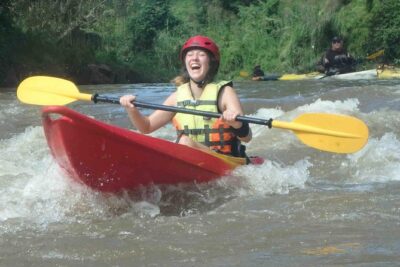
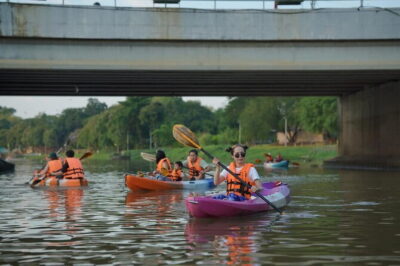
Explore kayaking through Mae Ping River on sunset
Read our review →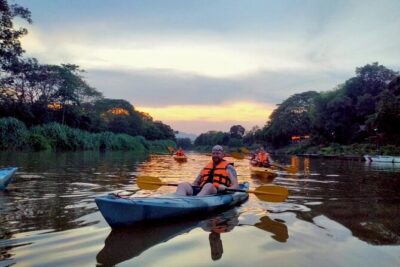
Kayak Under the Stars – 6 km to the Heart of the City
Read our review →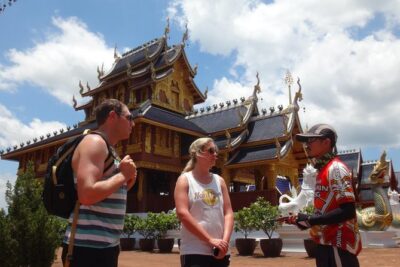
Chiang Mai Biking & River Kayak : Gentle Thrills in a Lush Valley
Read our review →
No.1 Chiang Mai: Leisure River Kayaking: Mae Taeng forest Reserve
Read our review →
Browse the lists this tour appears in