
Reviewed · DOI SUTHEP TEMPLE TOURS
Chiang Mai: 20km Downhill Mountain Biking Challenge Suthep M
From the summit of Doi Suthep National Park, you lose about 1,180 meters of elevation on a 20km mountain-bike ride toward Huay Tueng Thao Lake. The route mixes forest jeep tracks, hill tribe villages, coffee stops, viewpoints, and a long downhill run into the Mae Ping valley.
I like the careful guides, who adjust the route for mixed groups, and the smart finish: Thai lunch beside the lake, followed by a swim if you want one. The catch is simple: this is not an effortless beginner ride. Several riders found it closer to intermediate level, especially on rough downhill sections.
In This Review
- Key points before you book
- Why the Doi Suthep descent is the main event
- The Chiang Mai pickup and equipment check
- The one-hour climb to San Ku
- Forest tracks, cool air, and the first hour on wheels
- Wat Ban Khun Chang Khian and the hilltop coffee stop
- Passing the Hmong village
- Huay Tueng Thao Lake makes a good finish
- How difficult is this 20km ride?
- Guides, safety, and the value of support
- Is $60 a fair price?
- Who should book this experience?
- Should you book the Doi Suthep downhill ride?
- FAQ
- How long does the mountain-biking experience last?
- How far is the downhill ride?
- How much elevation do I lose?
- Is hotel pickup included?
- What equipment is provided?
- Is lunch included?
- Can I swim at the lake?
- Is the tour suitable for a complete beginner?
- What extra fee should I expect?
- What languages do the guides speak?
- Can I cancel the booking?
Key points before you book
- 1,550-meter mountain start: Begin high in Doi Suthep National Park and finish at the 370-meter lake.
- About 20km of riding: Expect roughly two hours on the main descent, with breaks along the way.
- Guides who adapt the ride: Tony, Golf, Tui, and Joe are among the guides praised for patience and close attention.
- Mostly off-road tracks: The route includes quiet jeep roads, forest paths, some road riding, and sections that may test a new rider.
- Lake-side reward: Lunch, free time, and swimming at Huay Tueng Thao Reservoir close the day.
- Good practical support: Bikes, helmets, gloves, pads, water, transport, first aid, and a support truck are included.
Why the Doi Suthep descent is the main event
This ride works because the mountain does most of the climbing for you. After hotel pickup in Chiang Mai, a vehicle carries you uphill, leaving your legs fresh for the descent. From the high point near San Ku, the route drops through forest and open country toward the valley.
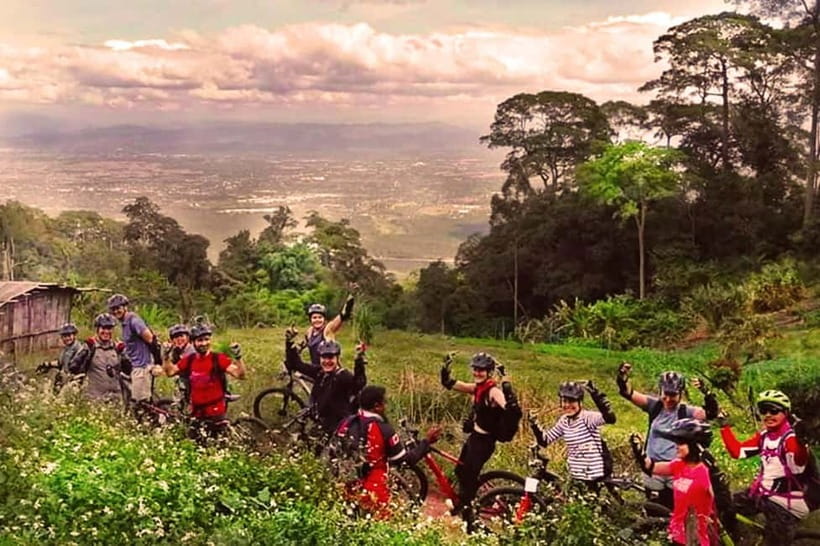
The height change is more than a number. Up top, the air is cooler and the forest feels quiet. Lower down, the views open toward Chiang Mai and the Mae Ping valley. You get a changing picture of Northern Thailand without spending the day grinding up a steep road.
The ride is not a race. Your guide leads, watches how you handle the bike, and can adjust the route or split a mixed group onto different tracks. That matters here. A group with two beginners and four intermediate riders was able to ride at different levels, rather than forcing everyone onto the same line.
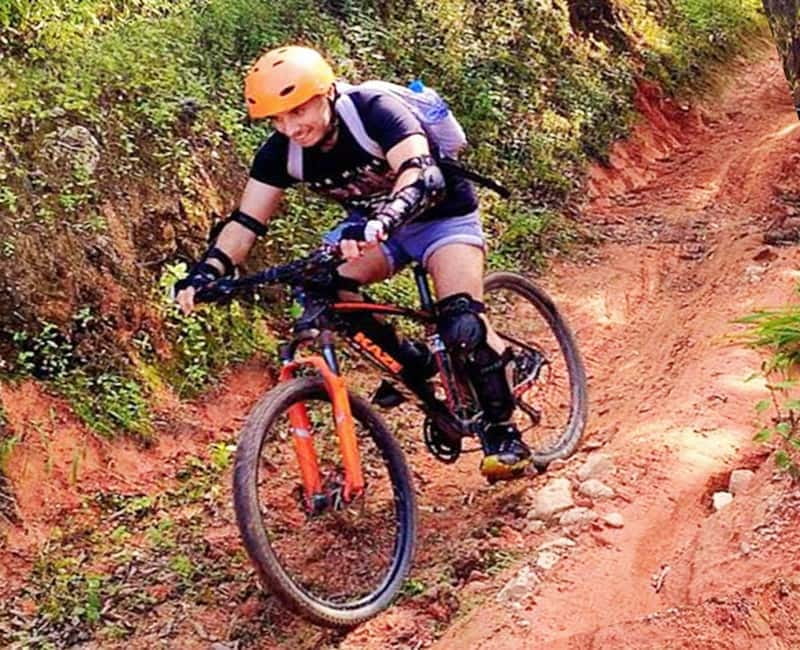
I would treat the 20km distance as a useful guide, not a promise of easy miles. Downhill riding still asks you to brake, steer, absorb bumps, and stay alert. You may not pedal much, but your hands, arms, and concentration get a workout.
More Doi Suthep temple tours:
- Chiang Mai: Doi Suthep and Wat Umong Enchanting Evening Tour
★ 4.6 · 1,811 reviews - Chiang Mai: Doi Suthep, Wat Umong, and Pha Lat Sunrise Tour
★ 4.7 · 1,425 reviews - Chiang Mai: Wat Pha Lat & Wat Phra That Doi Suthep Tour
★ 4.8 · 1,207 reviews
The Chiang Mai pickup and equipment check
Pickup is from your hotel lobby in Chiang Mai, with the day beginning around 9:30 AM. The first short transfer takes you to the Chiang Mai Mountain Biking & Kayaks base, where you get fitted with a bike and safety gear.
This is an important part of the outing, not just paperwork. You can test the bike at the pro shop, ask questions, and get a basic orientation using Google Earth. Helmets, gloves, knee and elbow pads, and a hydration backpack are provided.
The bikes are available in different sizes and are described as well maintained. Still, one rider felt the bike supplied was not ideal for a downhill trail. I would take the test ride seriously and speak up at once if the fit feels wrong. A bike that is merely acceptable on a flat road can feel very different on a rough descent.
Water is supplied for the hydration packs, with bottled water also available. The support truck carries supplies and can store valuables, which means you do not need to pack your whole day into a small backpack.
The one-hour climb to San Ku
After the equipment check and safety briefing, you ride in an air-conditioned van or, for smaller groups, a 4×4 SUV. The mountain transfer takes about 45 minutes in the main description, while the full itinerary allows roughly an hour.
The vehicle brings you to the high starting point around San Ku. Before anyone rolls downhill, the guide gives another safety and skills briefing. Expect advice on braking, body position, line choice, and how to follow the group.
This is where you should be honest about your experience. The guides have dealt with beginners, intermediate riders, and people who overestimated their ability. The best approach is to explain what you have done before and what makes you nervous. Joe has been praised for patience, while Tony, Golf, and Tui have also been singled out for attentive and friendly guiding.
The guides are not there to push you into a faster run. The stated policy is that nobody should be rushed down a mountain. That is good advice for you, too. If you need to stop, signal clearly and let the guide know.
Forest tracks, cool air, and the first hour on wheels
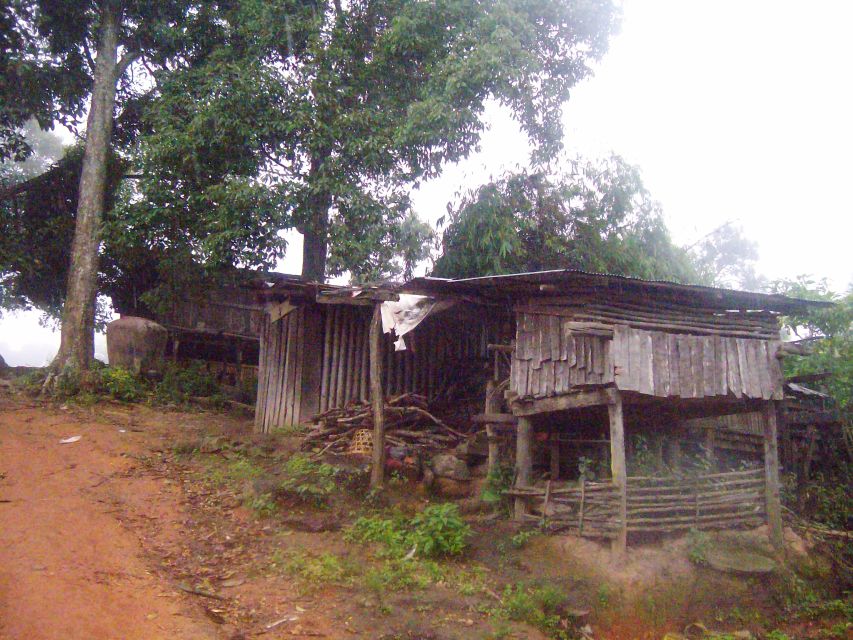
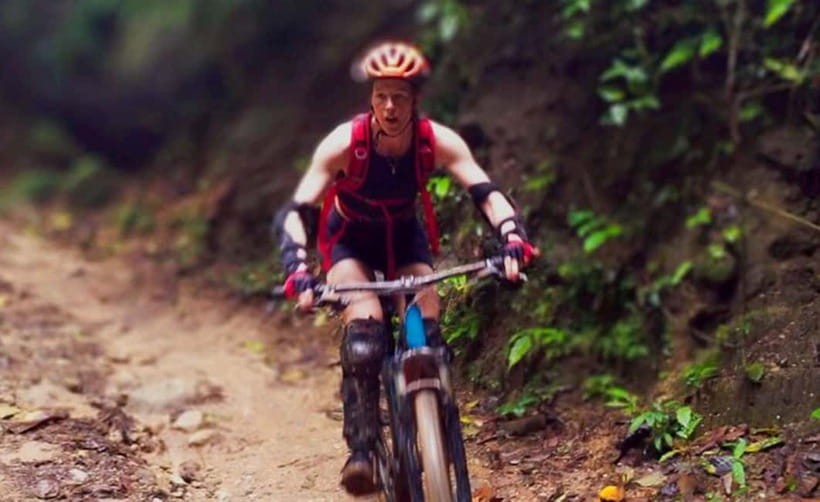
The early section takes you along off-road jeep tracks below the forest canopy. The road surface can change, and the descent calls for steady control rather than wild speed. You may find smooth flowing stretches, then rougher ground that requires more care.
This is the part that separates a pleasant bike ride from a true mountain-bike outing. You need enough confidence to control your speed and keep your eyes ahead. Braking hard on every bump can make the ride tiring, while carrying too much speed can make a turn awkward.
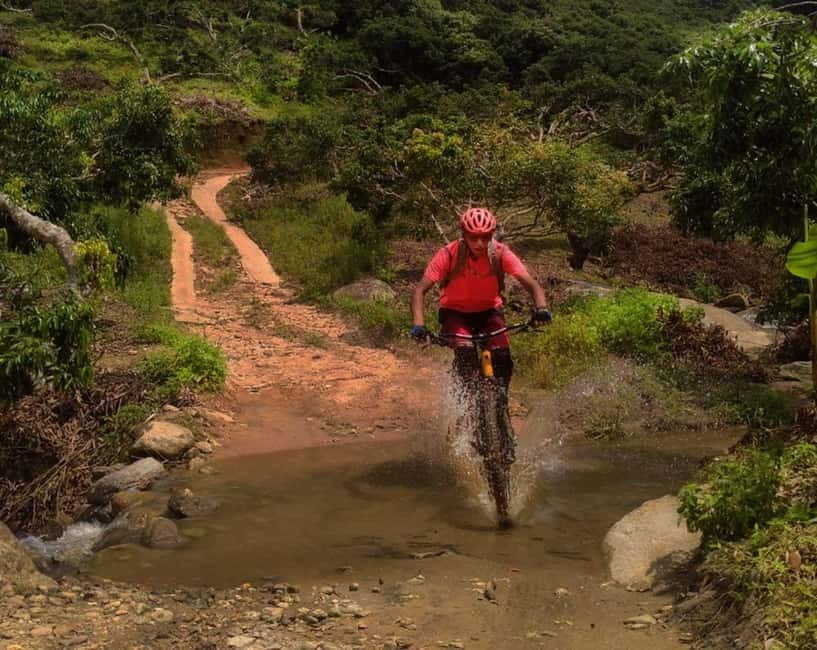
Some road riding is included, but most of the route is off-road. That balance gives you a sense of local terrain without putting you on a busy road for the whole day. The quiet tracks also let you notice the forest, highland plantations, and changing views.
The route description allows about an hour for the first ride section before a stop at Wat Ban Khun Chang Khian. Treat that timing as flexible. Group pace, trail conditions, and the guide’s decision to add or remove a more difficult section can affect the day.
More bike days in Chiang Mai:
- 3hr ATV/ Quad biking adventure in Chiang Mai
★ 5.0 · 289 reviews - Chiang Mai: Historic Old City Bike Tour – Morning or Night
★ 4.7 · 263 reviews - Chiang mai Hike & Downhill Bike Adventure –Suthep National Park
★ 4.5 · 204 reviews - Chiang Mai: Historic Old City Bike Tour – Morning or Night
★ 5.0 · 202 reviews
Wat Ban Khun Chang Khian and the hilltop coffee stop
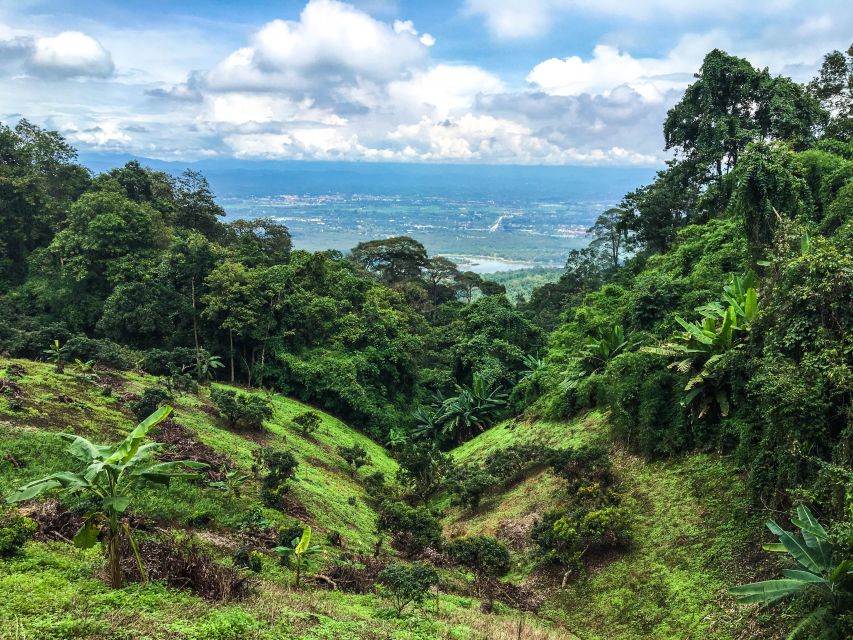
Wat Ban Khun Chang Khian provides a useful break after the first downhill section. The stop includes time for photographs, a walk, sightseeing, and views along the route.
A hilltop coffee hut is also part of the experience. It is a small detail, but a worthwhile one. After concentrating on the trail, you can put the bike aside, cool down, and look across the mountain country without a helmet in your face.
The stop also prevents the outing from becoming a nonstop athletic exercise. You get a short cultural and scenic pause before the longer ride toward the valley.
Do not count on every minute being fixed. The day is built around a safe group pace, and the guides may spend extra time helping riders or adjusting the route. If you have a firm appointment in Chiang Mai, tell the operator before setting out.
Passing the Hmong village
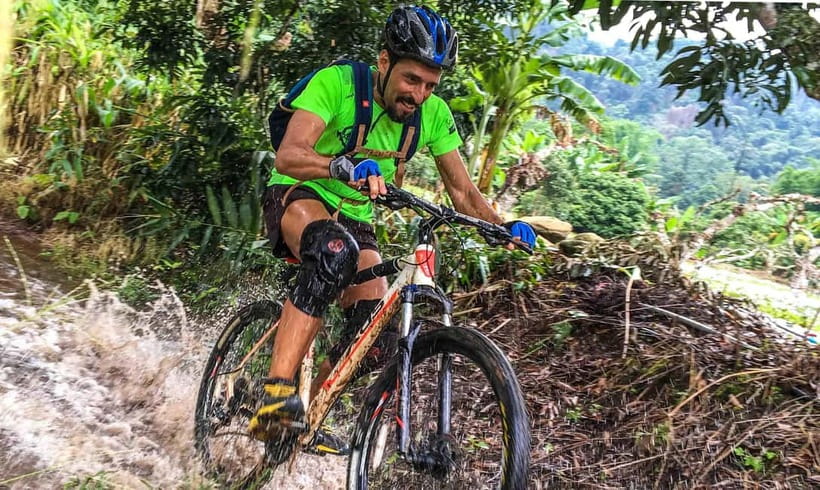
The next section takes you through a traditional village associated with the Hmong community. You ride through rather than stop for a formal cultural presentation, so the encounter is brief and part of the route itself.
That is one of the more appealing parts of this trip. You are not sealed inside a vehicle looking out at rural life. You pass through the area under your own power, with the chance to see homes, plantations, and mountain paths at a slower pace.
Keep your behavior low-key and respectful. Follow the guide’s lead about where to stop and when photographs are suitable. The village is part of a living community, not a stage set.
This section is scheduled for about two hours of mountain biking, including the main descent toward the reservoir. For many riders, it will be the heart of the day: long downhill stretches, forest shade, open views, and enough variety to keep you alert.
Huay Tueng Thao Lake makes a good finish
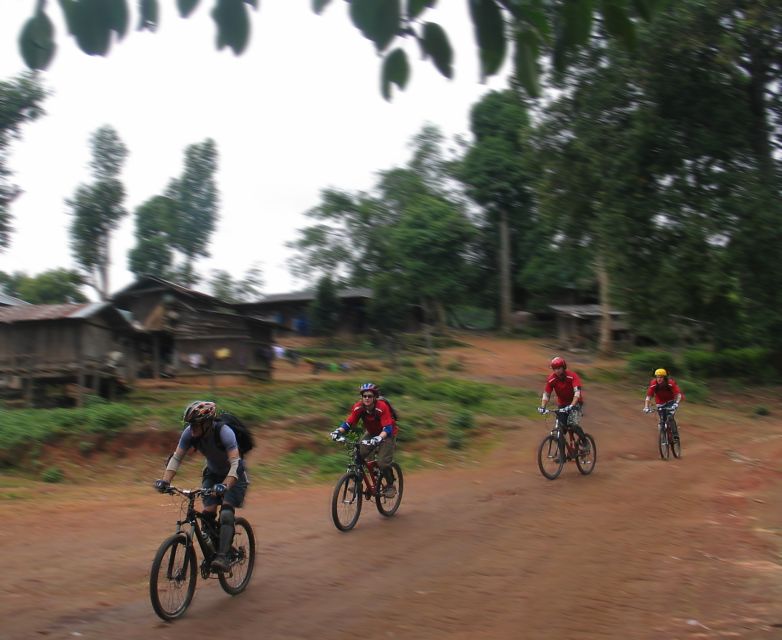
The route ends at Huay Tueng Thao Reservoir, at about 370 meters above sea level. Here the pace changes from active to easy. You get around 90 minutes for a break, photographs, lunch, sightseeing, free time, and swimming.
Lunch is served at a lake-side restaurant, with vegetarian and vegan choices available. Tell the guide about dietary restrictions early in the day rather than waiting until you sit down.
Bring a swimsuit if you want to swim. The water stop is optional, but it gives the ride a clear sense of reward. After two hours of downhill riding, a swim and a meal beside the lake can feel much better than returning straight to the van.
The lake stop also works well for people in a mixed group. Stronger riders can relax after the route, while less confident riders have time to recover without feeling they have held up the whole day.
After lunch, a vehicle takes you back to Chiang Mai in about 20 minutes. Arrival is expected around 4 PM, though the schedule can shift because the guides do not rush riders down the mountain.
How difficult is this 20km ride?
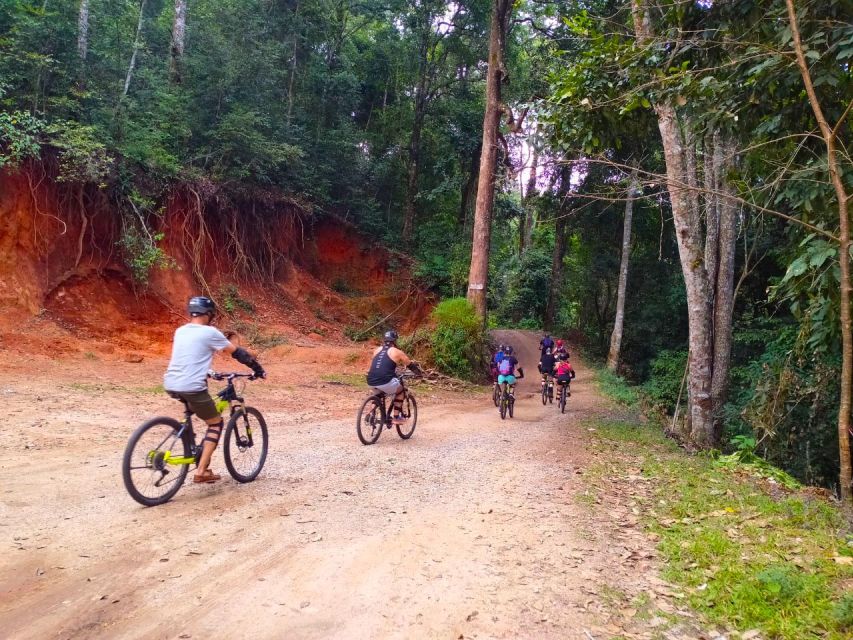
The most useful advice is to think of this as an intermediate mountain-bike ride with support for beginners, not as a casual bicycle tour.
You do not need to be an expert. The guides can adjust the route and level, and beginners have completed the outing with patient help. But you should be comfortable riding a bike, using brakes, steering over uneven ground, and staying in control on a descent.
The comments from John, Bradley, and others point to the same practical issue: a complete beginner may find parts of the ride difficult. Previous off-road experience will help, but even an active rider can discover that downhill technique is different from ordinary cycling.
I would choose this experience if you want some challenge and are willing to ride at your own pace. I would look for a gentler cycling tour if you have little recent bike experience, dislike rough tracks, or feel uneasy about downhill riding.
Firm shoes are required. Wear clothing you can move in, and bring a swimsuit if the lake appeals to you. The supplied helmet, gloves, knee pads, and elbow pads add useful protection, but they do not replace good judgment.
Guides, safety, and the value of support
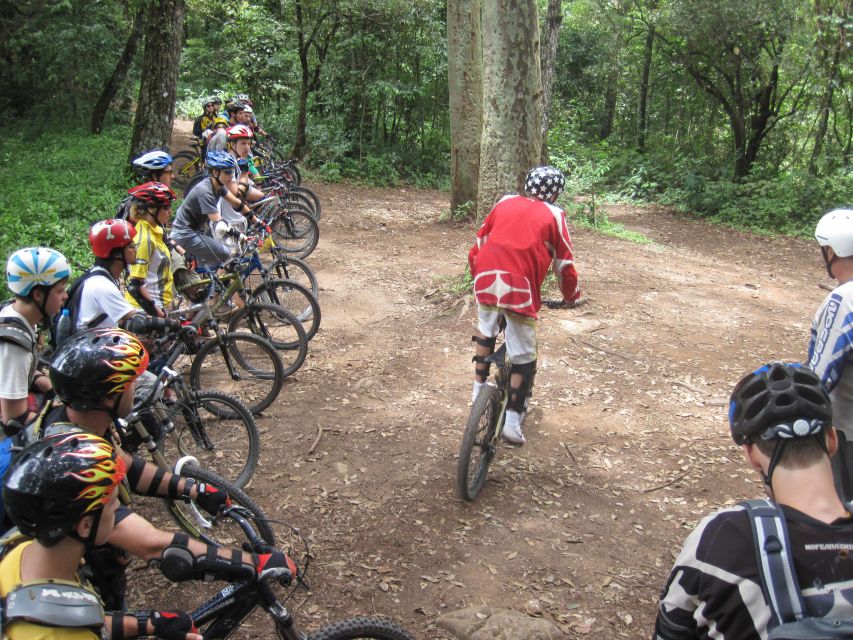
The strongest part of the operation is its human support. English and Thai are spoken, and the guides are trained in first aid and CPR. A support truck follows the outing and provides secure storage for valuables.
That combination changes how the ride feels. You are not expected to solve every problem alone if you have a mechanical issue, need assistance, or decide a section is beyond your comfort level.
The guide names that come up most positively are Tony, Golf, Tui, and Joe. The key quality attached to them is patience. Tui is noted for being patient and fun, while Tony and Golf are praised for looking after the group. Joe is described as especially patient with a less confident rider.
I would still ask for a clear bike check before leaving the shop. One lower rating focused on the bike rather than the route, so fit and equipment choice deserve your attention. A good guide can improve the experience, but the correct frame size and a bike that suits the trail matter just as much.
Is $60 a fair price?
At $60 per person, this is not the cheapest way to see Doi Suthep, but it covers a full day of useful services. You receive hotel pickup, mountain transport, a quality mountain bike, helmet, gloves, knee and elbow pads, water, a hydration backpack, lunch, professional guiding, first-aid support, and a support vehicle.
You also avoid arranging separate transport up the mountain and back from the reservoir. That saves time and removes the awkward question of how to get a bike from the summit to the lake.
The national park and lake fee, insurance, and a 250 baht charge are extra. Passport details are required at check-in for that fee. Factor it into the real cost rather than treating the advertised price as the final amount.
For me, the value is strongest if you want a guided ride rather than simply renting a bicycle. You are paying for the route planning, vehicle logistics, safety oversight, equipment, and the chance to ride with a group at a suitable level.
Who should book this experience?
You should consider it if you:
- Ride a bicycle regularly and want to try forest tracks
- Have some off-road or downhill experience
- Want views and village scenery as well as physical activity
- Prefer a guided outing with transport and equipment provided
- Like the idea of ending at a lake with lunch and swimming
- Are comfortable allowing the day to run on mountain time
You may want another activity if you have never ridden on uneven ground, need a guaranteed early return, or want a relaxed sightseeing tour with almost no physical demand.
Families or groups with mixed ability may find the adaptable route helpful, but each rider should be candid about fitness and confidence. The guides can make changes, yet nobody should assume that every section will feel easy.
Should you book the Doi Suthep downhill ride?
I would book this for the combination of altitude, forest riding, local scenery, and a lake-side finish. The strongest reasons are the long downhill route and the attentive guide team, especially if you want an active day without arranging bikes or transport yourself.
I would not book it as a first-ever cycling experience. Choose it if you can handle a bike confidently and are happy with a little rough ground. Ask for a careful bike fitting, bring firm shoes and swimwear, and tell the guide about your ability at the start.
For the right rider, this is a memorable way to connect Doi Suthep’s high forest with the Chiang Mai valley. You get speed in controlled doses, quiet mountain roads, a brief village encounter, and a very welcome meal at the water.
FAQ
How long does the mountain-biking experience last?
The activity takes one day. Pickup is scheduled around 9:30 AM, with return to Chiang Mai expected around 4 PM, though the timing can change because riders are not rushed down the mountain.
How far is the downhill ride?
The route covers about 20km from the summit area of Doi Suthep National Park to Huay Tueng Thao Lake.
How much elevation do I lose?
The ride begins at about 1,550 meters and ends at the reservoir at about 370 meters, giving you roughly 1,180 meters of downhill elevation.
Is hotel pickup included?
Yes. Pickup is included from your hotel lobby in Chiang Mai.
What equipment is provided?
A mountain bike, helmet, gloves, knee and elbow pads, water, and a hydration backpack are provided. Transportation and support from a vehicle are also included.
Is lunch included?
Yes. Lunch is served at a lake-side restaurant, and vegetarian and vegan options are available. Tell the guide about dietary restrictions.
Can I swim at the lake?
Yes. Swimming at Huay Tueng Thao Reservoir is included as free time at the end of the route. Bring a swimsuit if you want to swim.
Is the tour suitable for a complete beginner?
The guides can adjust the route and have helped beginners, but some sections may be difficult for someone with no previous mountain-bike experience. Firm shoes are required, and you should tell the guide about your ability before riding.
What extra fee should I expect?
The Doi Suthep National Park and lake fee, plus insurance, costs 250 baht and is not included. Passport details are requested at check-in.
What languages do the guides speak?
Instruction is available in English and Thai.
Can I cancel the booking?
You can cancel up to 24 hours in advance for a full refund. You can also reserve now and pay later.
More Downhill in Chiang Mai
- No.1 Chiang Mai: Epic Doi Suthep Downhill MTB Adventure
★ 4.5 · 121 reviews - No.1 Chiang Mai: Advanced Downhill Mountain Biking, Suthep N.Park
★ 4.5 · 57 reviews - No.1 Chiang Mai: Advanced XC Downhill Biking, Doi Suthep N. Park
★ 4.5 · 8 reviews - Doi Suthep National Park To Chiang Mai Beginner Downhill Mountain Biking
★ 5.0 · 4 reviews
Just added around Chiang Mai
- Chiang Rai Wonders: White, Blue & Red Temples and Hot Spring★ 5.0 · 3 reviews
- Chiang Rai White Temple Blue Temple and Hill Tribe Village Tour★ 3.5 · 3 reviews
- Private Chiang Mai City Tour including Wat Doi Suthep, Wat Suan Dok (SHA Plus)★ 5.0 · 3 reviews
- Workshop Making Herbal ball & herbal inhaler★ 4.3 · 3 reviews
- Chiang Mai Mae Ping River Cruise and Thai Farmer House Visit★ 4.0 · 3 reviews
- Phoenix Zipline Adventure Park – Chiang Mai Thrills★ 4.0 · 3 reviews
- Monk trails hike, Wat Phalat, Monk chanting, Wat Doi Suthep.★ 5.0 · 3 reviews
- Tok Sen Massage at Fah Lanna Spa in Chiang Mai★ 4.5 · 3 reviews
Doi Suthep Temple Tours, compared.
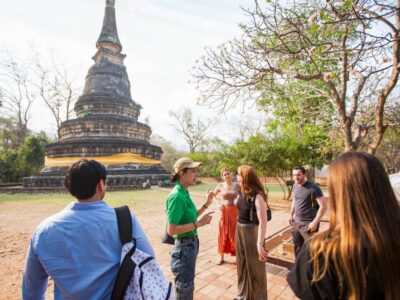
Doi Suthep and Wat Umong Enchanting Evening Tour
Read our review →
Doi Suthep, Wat Umong, and Pha Lat Sunrise Tour
Read our review →
Wat Phra That Doi Suthep spiritual Sunrise Tour with an Ex-monk
Read our review →
4-Hour Doi Suthep & Hmong Hill Tribe Village from Chiang Mai
Read our review →
Spiritual Sunrise Wat Doi Suthep, Pha Lat, Alms & Meditation
Read our review →Browse the lists this tour appears in