
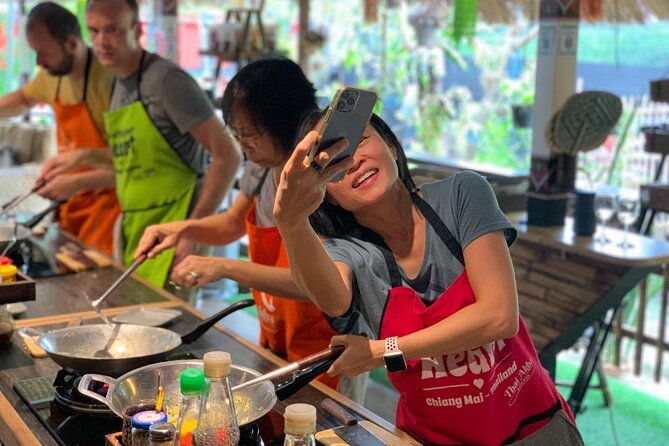
Reviewed · HILL TRIBE VILLAGE VISITS
6-Hour Akha Tribe Culture and Cooking Class in Chiang Mai
The most useful part of this Chiang Mai experience happens before the cooking begins: in the morning class, you visit a local market and buy the ingredients you will later turn into lunch. That link between market stall and cooking station gives the food some meaning, rather than leaving you with a recipe sheet and a full stomach.
I like the Akha food focus, which adds tomato dipping sauce, Akha salad, and Akha soup to the familiar Thai menu. I also like the sheer amount of food: you prepare up to 10 dishes, including curry, soup, stir-fried dishes, spring rolls, and dessert. The main consideration is pace. Six hours and a large menu can feel long if you only want a quick pad Thai lesson.
In This Review
- Key points at a glance
- What makes the Akha cooking class different
- Starting at Wat Pan Whean in central Chiang Mai
- The morning market: ingredients before recipes
- The evening option and its practical advantage
- Cooking 10 dishes, from spring rolls to curry
- Learning with On and taking the recipes home
- Dietary needs and comfort during the session
- Is $48.83 good value in Chiang Mai?
- Who should book this experience?
- Booking details worth knowing
- Should you book the Akha cooking class?
- FAQ
- How long does the Akha cooking class last?
- Where does the experience start?
- Where does the activity end?
- Is hotel pickup available?
- Does the morning class include a market visit?
- What is different about the evening class?
- How many dishes will I cook?
- Which Akha dishes are included?
- Can the class handle vegetarian or allergy-related diets?
- How far in advance can I cancel for a full refund?
Key points at a glance
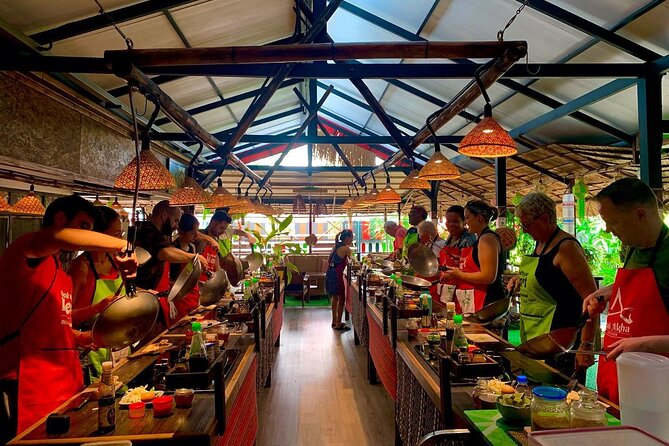
- Morning market visit: See local produce and prices before cooking, with no special tourist shopping arrangement.
- Thai and Akha recipes: Learn dishes connected to the Akha community and Thai home cooking.
- A full 10-dish session: The menu includes appetizers, soups, stir-fries, curry, Akha dishes, and dessert.
- Guide On: On is named as the cooking teacher, and the class includes a recipe book to take home.
- Choose your timing: The morning course includes the market visit, while the evening course fits neatly around a day of sightseeing.
- Small maximum group: The class accepts no more than 15 people, with pickup offered and a return to Wat Pan Whean.
What makes the Akha cooking class different
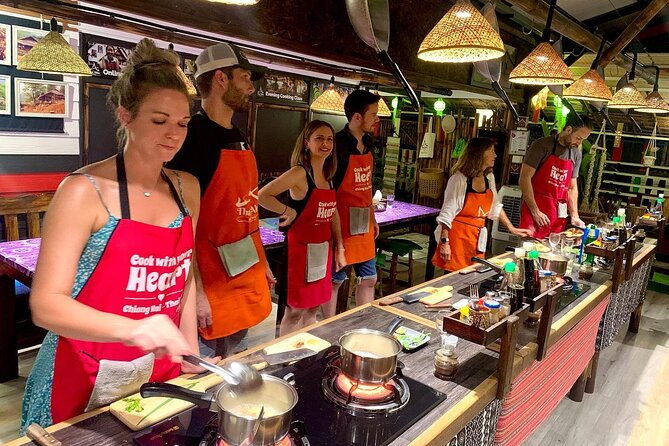
Chiang Mai has no shortage of Thai cooking schools. This one tries to do more than teach a few famous dishes. It brings in Akha food and culture, offering a look at a community that moved to Thailand in the 1900s and has kept its own cooking traditions alongside Thai influences.
That matters because food is a practical way to learn about people. You will not simply hear that Thailand has many regional traditions. You will taste the difference between familiar Thai recipes and Akha dishes such as Sapi Thong, a tomato dipping sauce, Akha salad, and Akha soup.
The class is also built around making food in quantity. Depending on the exact teaching flow, you can work through a large menu that includes papaya salad, spring rolls, several soups, four curry choices, stir-fries, Akha dishes, and two desserts. You eat what you prepare after the cooking session, so come with a serious appetite.
At $48.83 per person, the value is strongest for anyone who wants both a meal and a hands-on activity. You are not paying only for a demonstration. The fee covers a six-hour experience, market time in the morning option, instruction, ingredients, and a substantial meal. If you already know Thai cooking well, the broad menu may feel repetitive. For most first-time cooks, it is a generous package.
More hill tribe village visits from Chiang Mai:
- Chiang Mai: Chiang Rai Temples, Karen Tribe and Hot Springs
★ 4.7 · 5,401 reviews - Thai and Akha Cooking Class in Chiang Mai
★ 5.0 · 4,358 reviews - Chiang Mai: Elephant Sanctuary, Long Neck & Sticky Waterfall
★ 4.9 · 2,262 reviews
Starting at Wat Pan Whean in central Chiang Mai
The stated meeting point is Wat Pan Whean, at 50 Phra Pok Klao Road Soi 4 in the Phra Sing area of Chiang Mai. The activity ends back at this meeting point, and pickup is offered, so check the arrangements carefully when booking.
The location places the start within Chiang Mai’s central old-city area. That makes the class easier to fit around sightseeing than an activity far outside town. You should still allow time to reach the meeting point, especially if you are relying on local transport or arranging pickup.
The group can include a maximum of 15 people. That is not a private lesson, but it is small enough to keep the class from becoming a large production. Your experience will still depend on the final group size and how the kitchen is arranged, but the stated limit gives you a reasonable expectation of personal instruction.
The morning market: ingredients before recipes
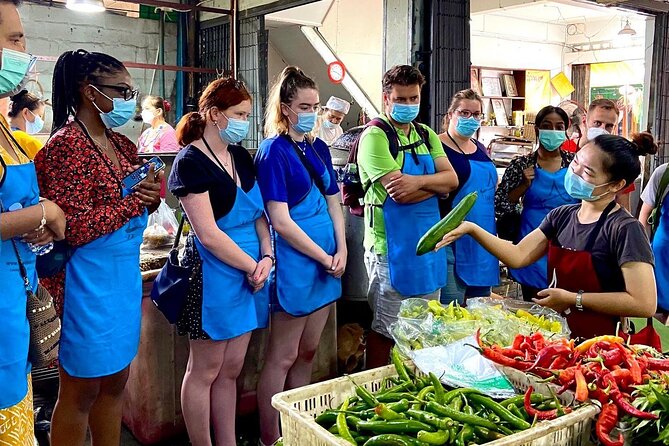
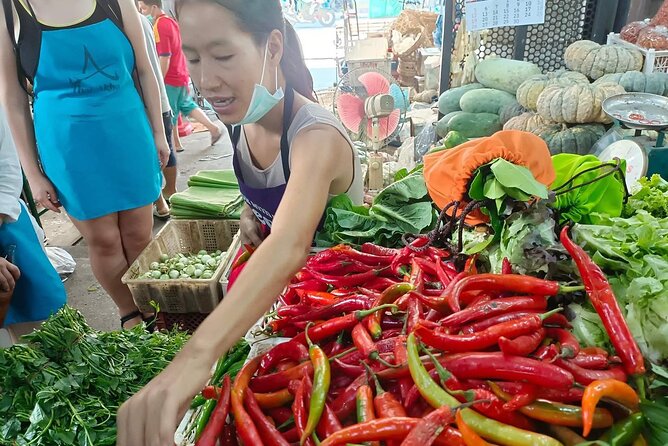
The morning course includes a visit to a local market. This is one of the most useful parts for anyone who wants to understand Thai cooking beyond a restaurant menu.
You will see the same general produce offered at different prices, a point the hosts describe with the Thai expression same same, but different. The idea is simple: ingredients that look similar can vary in quality, size, freshness, or price. It is a small lesson in how local shopping works.
The market is presented as a place where you are treated like a local shopper, not directed through a special tourist display designed to increase prices. That gives the visit a more ordinary feel. You can expect a Thai market to differ from a Western grocery store, particularly in how produce and ingredients are displayed and sold.
This portion also helps you recognize the ingredients used later in the class. That is important when you return home. A recipe is only useful if you can identify what to buy, and seeing the ingredients in their everyday setting makes the cooking lesson easier to remember.
The drawback is that market visits can be less comfortable than air-conditioned sightseeing. The class information does not promise a fixed market duration or a detailed list of every ingredient purchased, so you should treat it as an introduction rather than a specialist food tour.
The evening option and its practical advantage
The evening course is aimed at visitors with a full daytime schedule. Instead of finding a restaurant for dinner, you arrive at the class and make the meal yourself.
That timing has two clear benefits. First, it leaves the day open for temples, museums, or other Chiang Mai activities. Second, cooking outdoors is more comfortable in the evening than during the hottest part of the day. The cooking area is an outdoor setup with a Thai and Akha atmosphere, while the dining room has air-conditioning.
The evening class is also an easy choice if you want your first dinner in Thailand to be something you helped prepare. You do not need to decide where to eat afterward, since the meal is part of the session.
The morning and evening classes are not identical in purpose. The morning choice gives you the local market experience. The evening choice is better for schedule control and cooler cooking conditions. If the market is the main reason you are interested, choose morning. If you want a relaxed dinner activity after sightseeing, choose evening.
More Thai cooking classes in Chiang Mai:
- Half-Day Thai Cooking Class at Organic Farm in Chiang Mai
★ 5.0 · 19,087 reviews - Chiang Mai: Cooking Class, Market & Thai Herbs Garden Tour
★ 4.9 · 4,824 reviews - Chiang Mai: Authentic Cooking Class with Market & Farm Visit
★ 4.9 · 4,546 reviews - Chiang Mai: Cooking Class with Market and Pickup
★ 4.9 · 1,365 reviews
Cooking 10 dishes, from spring rolls to curry
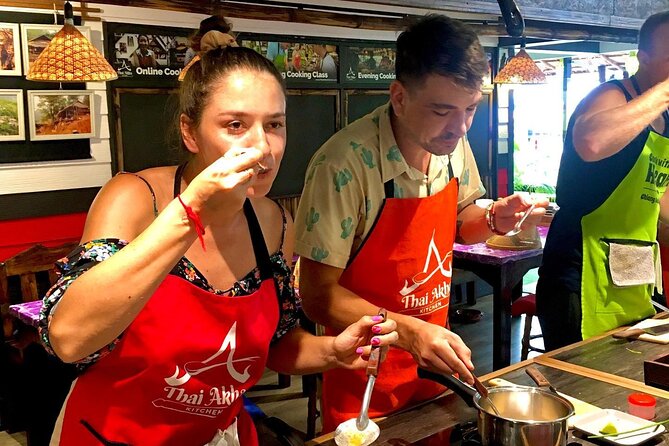
The menu is unusually broad for a six-hour lesson. You are not limited to a single main course. The food list covers several parts of Thai and Akha cooking:
Appetizers include papaya salad and spring rolls. These are useful starting dishes because they introduce fresh ingredients, seasoning, and basic preparation before you move to the stove.
Soups include chicken in coconut milk, hot and sour prawn soup, and clear soup with egg tofu. The range shows how different Thai soups can be, from creamy coconut-based broth to sharp, spicy, and sour flavors, then a lighter clear option.
Stir-fried dishes include sweet and sour vegetables, cashew nut with chicken, chicken with hot basil, and pad Thai. These are familiar choices, but learning them in a kitchen setting gives you a chance to understand the order of ingredients and the balance of sauce, protein, and vegetables.
Curries include green curry, red curry, panaeng curry, and Massaman curry, all listed with chicken. The class covers curry paste as well as curry, which is important. Thai curry is not just a matter of opening a packet and adding coconut milk. The paste is where much of the flavor begins.
Akha dishes include Sapi Thong, Akha salad, and Akha soup. These recipes are the reason to choose this class over a standard Thai cooking lesson. They provide a direct food connection to the Akha community and its traditions.
Desserts include mango with sticky rice and pumpkin in coconut milk. Ending with two sweets gives the session a full meal structure rather than a string of unrelated recipes.
You will not necessarily prepare every dish on the list in one individual portion. The description says you will create 10 dishes, while the full menu lists more than 10 possible items. That suggests the exact selection may be organized by class or choice. If a particular dish matters to you, confirm the day’s menu before booking.
Learning with On and taking the recipes home
The named teacher is On. The available class feedback specifically praises On for making the lesson fun and easy to follow, and notes that the recipes are simple enough to use later. A recipe book is provided, which is one of the most practical details in the whole experience.
That book turns the class into something more than a one-night meal. Thai recipes can be difficult to recreate if you forget the proportions or ingredient order. Having the instructions in writing gives you a better chance of making the dishes again once you are home.
The teaching style appears designed for ordinary cooks rather than professional chefs. That is good news if you are nervous around a wok or unsure how Thai flavors fit together. You should still expect active participation, not a passive cooking demonstration.
Come hungry. The food quantity is a real feature, but it also means you should not plan another large meal during or immediately after the class. Six hours is a long session, especially when you add eating time to shopping and preparation.
Dietary needs and comfort during the session
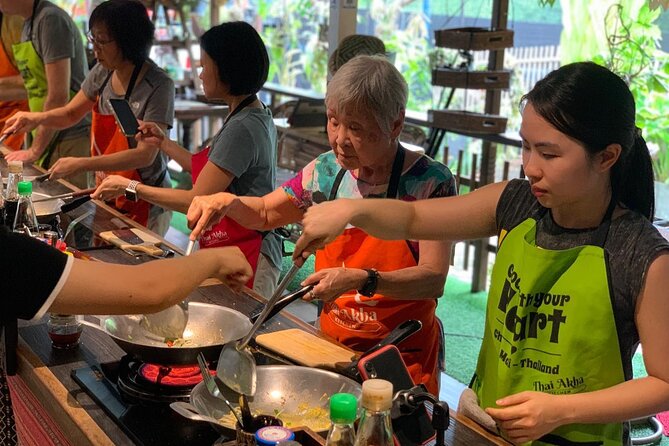
The class can accommodate special dietary requirements, including allergies, gluten intolerance, vegetarian diets, and other food needs. You should provide those details when booking rather than waiting until you arrive. The more specific you are, the easier it is for the cooking team to adjust ingredients.
Because the class includes several dishes, dietary planning may require changes across the menu. A vegetarian guest, for example, may need substitutions in more than one recipe. The available information confirms that adjustments are possible, but it does not guarantee that every listed dish will be recreated in an identical form.
The evening dining room has air-conditioning, while the cooking kitchen is outdoors. That combination makes the evening session more comfortable for eating, but you should still be ready for heat during the cooking portion. The morning class includes market time, so practical clothing and shoes are sensible choices.
Is $48.83 good value in Chiang Mai?
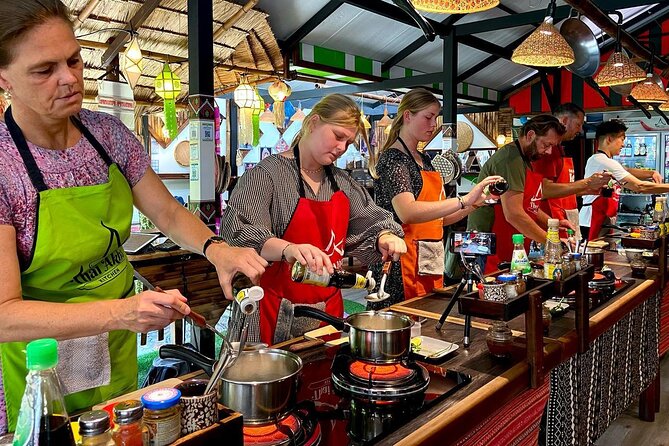
The price is $48.83 per person. For a six-hour activity, that is a fair price if you want a full meal, instruction, ingredients, and a cultural component in one booking.
The best value comes from the combination of experiences. A market visit by itself would not teach you how the ingredients are used. A cooking class by itself might not explain where the ingredients come from. Here, the morning option connects the two.
The evening option has a different kind of value. You get a planned dinner and a cooler cooking period, which can save you the effort of choosing a restaurant after a busy day. It is particularly useful for a short Chiang Mai stay, when every evening needs to do more than one job.
The value is weaker if you dislike group classes, already cook Thai food confidently, or want a short lesson focused on one or two signature dishes. The maximum of 15 people keeps the group limited, but this remains a shared class rather than a private chef session.
The activity is often booked well ahead, with an average booking point of 47 days in advance. That does not mean you must reserve that early, but it suggests that you should not leave the class until the last moment if your Chiang Mai schedule is fixed.
Who should book this experience?
I would recommend it to first-time visitors who want a meal with a story behind it. Families, couples, solo visitors, and food-focused groups can all get something useful from the format, provided they are happy to spend six hours cooking and eating.
It suits you especially well if:
- You want to learn several Thai dishes rather than one recipe.
- You are curious about Akha food and culture.
- You like seeing ingredients before they reach the cooking station.
- You need an evening activity that includes dinner.
- You have dietary requirements and want them considered in advance.
- You want a recipe book to help repeat the dishes at home.
I would be more cautious if you have limited time in Chiang Mai or dislike long food sessions. The menu is large, and the experience is designed as a full half-day or evening program, not a quick introduction.
Booking details worth knowing
Confirmation is provided at booking, and mobile tickets are accepted. The activity ends at Wat Pan Whean, even though pickup is offered, so make sure you understand where you will be collected and returned.
Free cancellation is available when you cancel at least 24 hours before the local start time. Changes or cancellations inside that window are not refunded. The activity also requires good weather. If poor weather forces a cancellation, you will be offered another date or a full refund.
Check that the booking details match your party, including children’s ages and the number of people. Extra charges may apply if the information shown at arrival does not match the actual group.
Should you book the Akha cooking class?
Book it if you want Thai food presented as part of daily life and community, not just as a list of restaurant favorites. The morning market, Akha recipes, generous menu, and recipe book give this class more substance than a basic pad Thai lesson.
Choose the morning session for the market and the clearest connection between shopping and cooking. Choose the evening session if you want a cooler kitchen, an included dinner, and an activity that leaves your daytime open.
Skip it if six hours sounds too long or if you want a tightly focused class with only a few dishes. For everyone else, the $48.83 price is reasonable, and guide On’s friendly, practical teaching style makes this a strong choice for an edible introduction to Chiang Mai culture.
FAQ
How long does the Akha cooking class last?
The activity lasts approximately six hours.
Where does the experience start?
It starts at Wat Pan Whean, 50 Phra Pok Klao Road Soi 4, in Chiang Mai’s Phra Sing area.
Where does the activity end?
The activity ends back at the meeting point at Wat Pan Whean.
Is hotel pickup available?
Pickup is offered. Confirm the pickup details when booking, since the listed meeting point is Wat Pan Whean.
Does the morning class include a market visit?
Yes. The morning class includes a visit to a local market to see local produce, prices, and everyday shopping conditions.
What is different about the evening class?
The evening class fits around a busy daytime schedule, offers a cooler time for outdoor cooking, and includes dinner after you prepare the food.
How many dishes will I cook?
You will create 10 dishes during the cooking course. The menu includes appetizers, soups, stir-fries, curry, Akha dishes, and desserts.
Which Akha dishes are included?
The listed Akha dishes are Sapi Thong, Akha salad, and Akha soup.
Can the class handle vegetarian or allergy-related diets?
Yes. Special dietary requirements, including vegetarian diets, gluten intolerance, allergies, and other needs, can be accommodated. Provide the information when booking.
How far in advance can I cancel for a full refund?
You can cancel at least 24 hours before the experience start time for a full refund. Cancellations made less than 24 hours in advance are not refunded.
More Workshops in Chiang Mai
- Chiang Mai: Cooking Class with Organic Farm at Mama Noi
★ 4.9 · 1,151 reviews - Chiang Mai: Evening Cooking Class and Local Market Visit
★ 4.9 · 648 reviews - Cooking Class with Organic Farm in Chiang Mai at Mama Noi
★ 5.0 · 502 reviews - Evening Cooking Class in Organic Farm with Local Market Tour
★ 5.0 · 394 reviews
Just added around Chiang Mai
- Chiang Rai Wonders: White, Blue & Red Temples and Hot Spring★ 5.0 · 3 reviews
- Chiang Rai White Temple Blue Temple and Hill Tribe Village Tour★ 3.5 · 3 reviews
- Private Chiang Mai City Tour including Wat Doi Suthep, Wat Suan Dok (SHA Plus)★ 5.0 · 3 reviews
- Workshop Making Herbal ball & herbal inhaler★ 4.3 · 3 reviews
- Chiang Mai Mae Ping River Cruise and Thai Farmer House Visit★ 4.0 · 3 reviews
- Phoenix Zipline Adventure Park – Chiang Mai Thrills★ 4.0 · 3 reviews
- Monk trails hike, Wat Phalat, Monk chanting, Wat Doi Suthep.★ 5.0 · 3 reviews
- Tok Sen Massage at Fah Lanna Spa in Chiang Mai★ 4.5 · 3 reviews
Hill Tribe Village Visits, compared.
Chiang Rai Temples, Karen Tribe and Hot Springs
Read our review →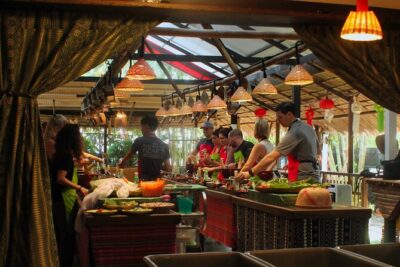

Elephant Sanctuary, Long Neck & Sticky Waterfall
Read our review →
4-Hour Doi Suthep & Hmong Hill Tribe Village from Chiang Mai
Read our review →

4 in 1 Elephants Long Neck Rafting and Sticky Waterfall Tour
Read our review →
Half Day – Small Group – Doi Suthep Temple and Hmong Village Tour
Read our review →
Browse the lists this tour appears in