
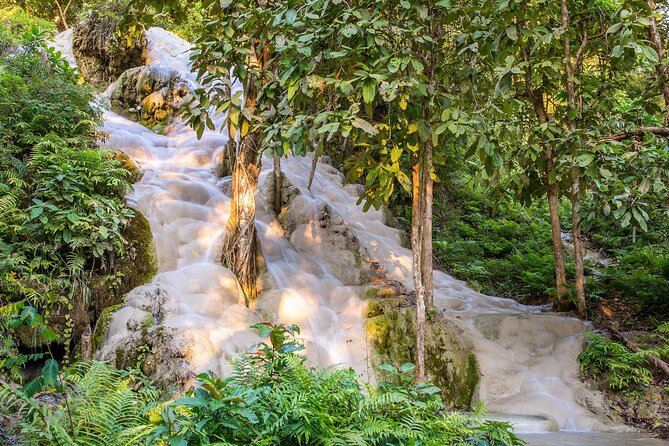
Reviewed · CHIANG DAO CAVES & COUNTRYSIDE
Chiang Dao Cave Trekking Small Group Tour – Full Day
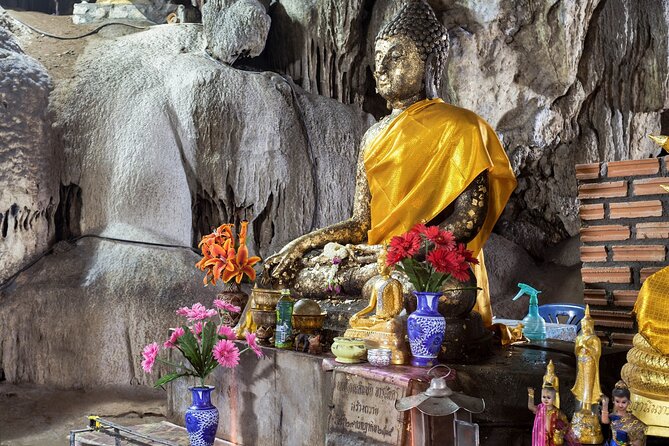
Chiang Dao Cave is not just a cool limestone cavern. It is also a working spiritual site, with Buddha statues, offerings, and a four-metre reclining Buddha set among the rock. Add the chance to climb a waterfall by walking up its rough, mineral-coated surface, and you have one of Chiang Mai’s more active day trips.
I like the personal feel of a group capped at nine, and I like that an English-speaking guide can help you understand both the cave’s natural shapes and its religious use. Guides such as Popcorn, Peter, Pranom, Nun, Tim, and Chaowit have been praised for patience, flexibility, and clear explanations. The main drawback is physical: the cave can be hot and humid, and the lantern route includes low passages that may require crawling.
In This Review
- Key points to know before booking
- Why this Chiang Mai day trip is different
- From Tha Phae Gate to the northern hills
- Entering Chiang Dao Cave and its shrine rooms
- The lantern route through the darker passages
- A market meal before Buatong Sticky Waterfall
- Climbing the rough rock at Buatong
- What the $90 price includes
- How demanding is the day?
- Small-group attention and guide quality
- Who should book this excursion?
- FAQ
- What time does the tour start?
- Where does the tour begin and end?
- How large is the group?
- Is the lantern cave route included?
- Is lunch included?
- Is the Chiang Dao Cave entrance fee included?
- Should you book Chiang Dao Cave and Sticky Waterfall?
Key points to know before booking
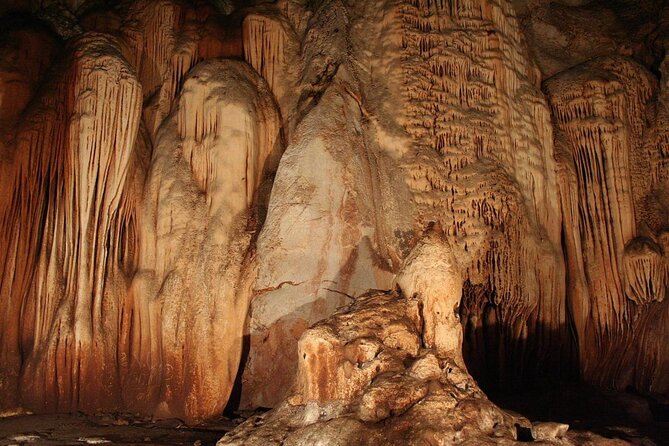
- Chiang Dao Cave combines nature and worship: Expect stalactites, stalagmites, Buddha images, and votive offerings rather than a cave tour focused only on geology.
- The dark cave route costs extra: A local guide with a lantern costs 300 THB per group of four, and the route can include tight passages.
- Buatong Sticky Waterfall is the active highlight: Mineral deposits give the rock a rough grip, allowing you to climb sections of the waterfall.
- The group maximum is nine people: This gives your English-speaking guide more time to adjust the pace and answer questions.
- Food is not included: You stop at a local market for a meal, but you pay for your own food and drinks.
- The day begins at 8:00 am: Hotel pickup is offered, though the listed meeting point is Tha Phae Gate in Chiang Mai.
Why this Chiang Mai day trip is different
Many excursions from Chiang Mai offer a scenic stop, a meal, and a quick photo opportunity. This one asks you to use your legs. You walk through a cave, consider its religious role, and later climb a waterfall. That makes it a good choice if you want more than a passive sightseeing day.
The two main stops also feel very different. Chiang Dao Cave is cool in spirit but not always cool in temperature. It is humid, dim, and filled with reminders that people come here to pray. Buatong Sticky Waterfall is open-air, playful, and physical. You move over wet rock instead of simply standing beside a waterfall railing.
The advertised duration is about six and a half hours, with roughly three hours at Chiang Dao Cave and two hours at Buatong Waterfall-Chet Si Fountain National Park. The remaining time covers the drive from Chiang Mai, market stops, and the return trip. That is a useful distinction: you are booking a compact full-day outing, not six and a half hours of nonstop trekking.
More Chiang Dao cave and countryside trips:
- No.1 Full-Day Chiang Mai Caving & Jungle Kayaking: Chiang Dao
★ 4.5 · 206 reviews - Chiang Dao Cave & 5 Hill Tribe villages
★ 5.0 · 181 reviews - From Chiang Mai: Chiang Dao Cave Trekking Full-Day Tour
★ 4.8 · 126 reviews
From Tha Phae Gate to the northern hills
The tour starts at 8:00 am. The listed meeting point is Tha Phae Gate, but hotel pickup and drop-off are included, so check the exact pickup arrangement when you book. An air-conditioned vehicle and bottled water are provided, which matters on a warm day with physical activities ahead.
The drive is part of the value, since Chiang Dao and Buatong are outside central Chiang Mai. You do not have to arrange separate transport, compare taxi prices, or work out how to combine two distant sites on your own. A small group also makes the ride more manageable than a large coach trip.
The tour may stop at Chiang Dao market before the waterfall portion. The market offers a chance to see fresh regional produce and buy a local meal. One guide, Peter, was praised for adding a stop at the market to the day, and another account describes sampling fresh corn there. Those touches are not guaranteed as a fixed menu or special tasting, but you should expect the market to be part of the local flavor of the outing.
Bring cash for lunch and snacks. Food and drinks are not included, even though bottled water is supplied. The market stop is useful because it keeps lunch tied to the places you are visiting rather than sending you to a standard restaurant chosen far from local life.
Entering Chiang Dao Cave and its shrine rooms
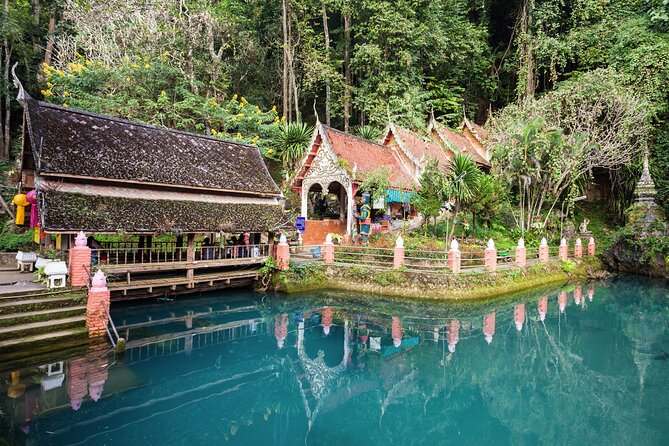
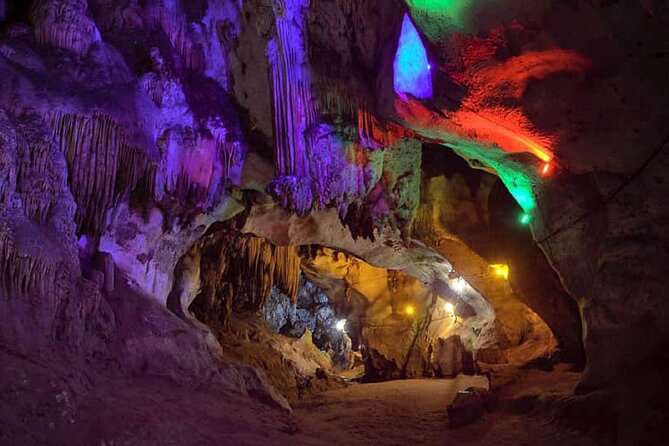
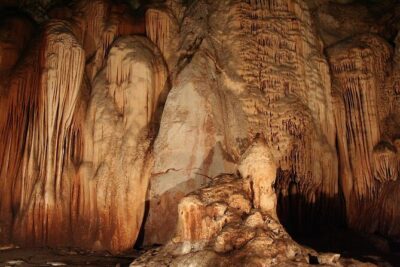
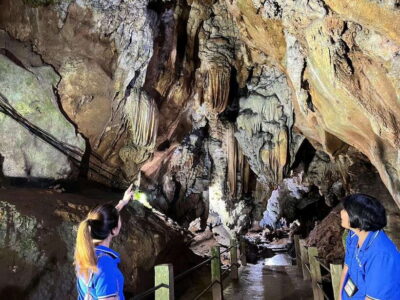
Wat Tham Chiang Dao is a complex of five limestone caverns. The easiest sections are illuminated with electric lights, so you can see the rock formations, shrines, and statues without special equipment. This portion is suitable for most people, and the tour information says most participants can take part.
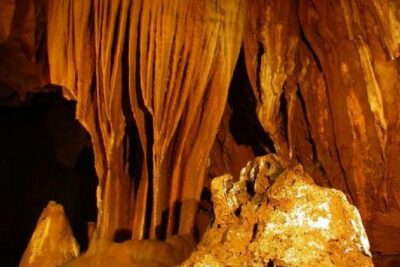
Look for the row of five seated Buddhas in the first cavern. A four-metre reclining Buddha is another important sight. Stalactites and stalagmites fill the chambers, but the religious details change the mood of the visit. Offerings and Buddha images show that this is not a cave converted into a simple attraction. It remains a place of devotion.
That combination is what I like most about Chiang Dao Cave. You get the visual drama of limestone formations, but you also get a better sense of how a natural site can become part of local religious practice. An English-speaking guide can explain the statues, cave traditions, and stories connected with the area, giving the rock shapes more meaning than they would have on their own.
Allow time for a slower pace here. The cave is not a place to rush through while taking photographs. It can be very humid and hot, and the floor may be uneven. Wear shoes with a secure grip and clothing that lets you move comfortably.
The lantern route through the darker passages

The most adventurous part of the cave is optional and costs extra. A local cave guide with a lantern costs 300 THB per group of four. This fee is separate from the 40 THB Chiang Dao Cave admission, which is included in the tour price.
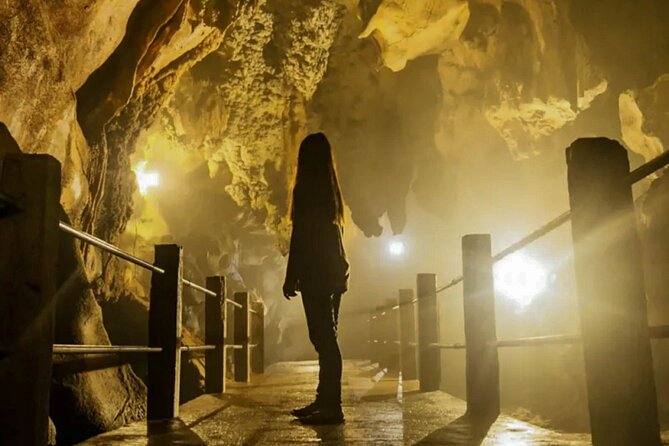
The lantern route goes beyond the electrically lit chambers. You may pass through completely dark sections, watch for bats, and squeeze through narrow openings. Some passages require crawling, though it is possible to skip the tight sections. This is not a polished walkway with constant lighting. It feels more like a proper cave exploration, which is exactly why many active visitors find it memorable.
I would strongly consider paying for the local lantern guide if you are comfortable with confined spaces. The lantern changes the experience from viewing a cave to moving through one. At the same time, do not feel pressured to join. If heat, darkness, or crawling sounds unpleasant, the lit areas still provide statues and rock formations without the same physical demands.
The guide team’s role matters here. Past guides named Popcorn, Pranom, Nun, and Chaowit have been praised for patience, safety advice, English ability, and historical explanations. One account describes Nun encouraging older participants through both the cave and waterfall. That does not remove the need for your own judgment, but a small group and an attentive guide can make the route feel more controlled.
More treks around Chiang Mai:
- 3-in-1: Doi Inthanon Tour, Elephant Sanctuary, and Trekking Trail
★ 5.0 · 1,087 reviews - Chiang Mai: Doi Inthanon Trip with Pha Dok Siew Guided Trek
★ 4.6 · 910 reviews - Chiang Mai: Doi Inthanon Park with Kew Mae Pan Hike Day Trip
★ 4.7 · 841 reviews - Chiang Mai: Doi Inthanon Park and Pha Dok Siew Trail Trek
★ 4.6 · 752 reviews
A market meal before Buatong Sticky Waterfall
After the cave, the tour heads toward a local market for lunch before continuing to Buatong Sticky Waterfall. The exact meal is not included, so your cost depends on what you choose. This arrangement keeps the tour price lower and lets you decide how much or how little to eat before the climb.
You may also pass Mae Malai Market on the return journey. These market stops add a useful local pause between the two active sites. They also break up the drive, which is welcome after spending time in a warm cave.
Eat enough to stay comfortable, but do not overdo it immediately before climbing. The waterfall is described as a hike and climb, not merely a viewpoint stop. You will want water, comfortable clothes, and shoes that can handle wet conditions.
Climbing the rough rock at Buatong
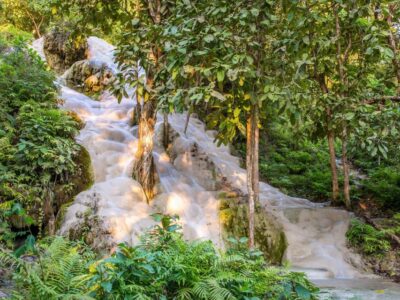
Buatong Sticky Waterfall is the surprise star for many people on this trip. Water runs over pale rock, but the mineral deposits create a rough surface with enough grip for you to climb sections of the falls. The result is unusual: instead of avoiding the water, you can walk directly up it.
The climb is active and can feel challenging, but it is also playful. You can choose how much of the waterfall you want to attempt and spend time enjoying the surrounding natural setting. Several guides, including Tim, Sunny, and Peter, were praised for making suggestions, adjusting the schedule, and helping people tackle the climb at their own pace.
You should still treat it as a real physical activity. Wet rock is not automatically safe, and balance, confidence, and footwear matter. The tour description presents the sticky surface as an aid, not a guarantee that nobody can slip. Follow your guide’s instructions and stop when the route feels beyond your comfort level.
This stop works especially well for people who want a hands-on experience. You are not just looking at a waterfall from below. You are testing the rock with your feet, moving through running water, and getting a memorable change of pace after the darker cave.
What the $90 price includes
At $90 per person, this is not the cheapest way to see either attraction. The price makes more sense if you value convenience and guided support. It includes an air-conditioned vehicle, hotel pickup and drop-off, an English-speaking guide, bottled water, insurance, and the 40 THB Chiang Dao Cave entry fee.
The transport is the biggest practical benefit. Chiang Dao Cave and Buatong Waterfall are separate outings to arrange independently, and combining them by public transport would take more planning and time. You also have one guide coordinating the day, rather than finding your way through the cave and then arranging another ride to the waterfall.
The extra charges are clear but easy to overlook. Lunch and personal expenses are not included. The lantern guide costs 300 THB for a group of four, not necessarily per person, so the per-person cost depends on your group size and how the fee is shared.
The tour is recommended by 92 percent of customers and has a 4.8 rating from 24 reviews. That is a strong record, though the sample is not huge. The praise centers on the guides, the excitement of the waterfall, and the unusual cave experience. The main criticism is also useful: one person found the cave too hot and humid and preferred the waterfall. I consider that a fair warning, not a reason to dismiss the whole trip.
How demanding is the day?
The tour is best for active people who can walk on uneven ground and manage a climb. The lit cave route is the easier option. The lantern route raises the difficulty because of darkness, tight spaces, and possible crawling. The waterfall adds wet rock and an uphill climb.
You do not need to commit to every challenge. The dark cave section is optional, and you can decide how far to climb at Buatong. That flexibility is a real advantage, especially for mixed-ability groups.
Still, do not book this expecting a gentle sightseeing circuit. The tour is designed for people looking for a challenge. Older participants have completed it with encouragement from guides, but you should be honest about your comfort with heat, confined spaces, uneven surfaces, and wet activity.
Wear practical clothes and secure footwear. The supplied information does not specify equipment rental or a dress code, so do not assume special gear is provided. Bottled water is included, but bringing any personal items you need for a physical outing is sensible.
Small-group attention and guide quality
The maximum group size is nine. That is small enough for a guide to notice when someone needs a slower pace, explain a statue without shouting across a crowd, or suggest a sensible way to approach the waterfall.
Guide quality is a major part of this experience. Popcorn is described as easygoing, patient, and good at explaining the cave. Peter, also named Peraset, was praised for flexibility and for making the market stop special. Pranom was noted for clear facts about the cave and statues. Nun received particular praise for supporting older people through the active sections, while Tim was described as engaging and informative.
Your guide may not be one of these people, and the operator assigns staff according to the booking. Still, the repeated pattern is useful: look for a guide who can handle both sides of the day, the cultural details at the cave and the practical safety needs at the waterfall.
The tour has a 4.8 rating from 24 reviews, with 92 percent recommending it. I would read those numbers alongside the nature of the activity. High satisfaction is likely when the guide is attentive and the visitor enjoys physical adventure. If you dislike caves or wet climbs, the same itinerary may feel less rewarding.
Who should book this excursion?
I would recommend it to you if you want an active break from Chiang Mai’s temples, cafés, and city streets. It suits couples, friends, solo visitors, and small groups who like a guide but do not want a large bus tour.
It is especially good for you if:
- You enjoy unusual natural sites with a cultural purpose.
- You want to climb a waterfall instead of only photographing it.
- You value hotel transport and a guide who can adjust the pace.
- You are interested in trying an optional lantern route through a darker cave.
- You want to see local markets as part of the day.
I would think twice if you dislike heat, humid caves, crawling, or wet rock. You can skip the lantern route and limit the waterfall climb, but the overall trip is still built around active stops. A person seeking a relaxed cultural day may prefer a temple or market tour with less walking and no physical challenge.
Free cancellation is available when you cancel at least 24 hours before the 8:00 am start time. Changes or cancellations inside that window are not accepted for a refund.
FAQ
What time does the tour start?
The tour starts at 8:00 am local time.
Where does the tour begin and end?
The listed meeting point is Tha Phae Gate in Chiang Mai, and the activity ends back at the meeting point. Hotel pickup and drop-off are also included, so confirm the pickup details when booking.
How large is the group?
The tour has a maximum of nine participants.
Is the lantern cave route included?
No. A local guide with a lantern costs 300 THB per group of four. The route is optional and may include dark passages and crawling through narrow openings.
Is lunch included?
No. The tour stops at a local market for food, but meals, drinks, and personal expenses are not included. Bottled water is provided.
Is the Chiang Dao Cave entrance fee included?
Yes. The 40 THB Chiang Dao Cave entrance fee is included in the tour price.
Should you book Chiang Dao Cave and Sticky Waterfall?
Book this tour if you want a hands-on day outside Chiang Mai and are willing to get warm, wet, and a little dusty. The combination is strong: a shrine-filled limestone cave followed by a waterfall you can actually climb. The included transport, small group, and English-speaking guide make the $90 price easier to justify.
My practical advice is to choose the lantern route only if tight spaces sound exciting rather than alarming. If you prefer easier sightseeing, enjoy the lit cave chambers and put your energy into Buatong. Either way, this tour offers more character and physical action than a standard day of scenic stops.
More Full-Day in Chiang Mai
- Full Day Thai Cooking at Farm (Chiang Mai)
★ 5.0 · 1,127 reviews - Care Pride Elephants: Full-Day Tour Experience
★ 5.0 · 658 reviews - Doi Inthanon National Park Eco-Friendly Full Day Tour
★ 4.5 · 248 reviews - Chiang Mai: Full-Day Kerchor Elephant Eco Park Tour & Trek
★ 4.6 · 224 reviews
Just added around Chiang Mai
- Chiang Rai Wonders: White, Blue & Red Temples and Hot Spring★ 5.0 · 3 reviews
- Chiang Rai White Temple Blue Temple and Hill Tribe Village Tour★ 3.5 · 3 reviews
- Private Chiang Mai City Tour including Wat Doi Suthep, Wat Suan Dok (SHA Plus)★ 5.0 · 3 reviews
- Workshop Making Herbal ball & herbal inhaler★ 4.3 · 3 reviews
- Chiang Mai Mae Ping River Cruise and Thai Farmer House Visit★ 4.0 · 3 reviews
- Phoenix Zipline Adventure Park – Chiang Mai Thrills★ 4.0 · 3 reviews
- Monk trails hike, Wat Phalat, Monk chanting, Wat Doi Suthep.★ 5.0 · 3 reviews
- Tok Sen Massage at Fah Lanna Spa in Chiang Mai★ 4.5 · 3 reviews
Chiang Dao Caves & Countryside, compared.
No.1 Full-Day Chiang Mai Caving & Jungle Kayaking: Chiang Dao
Read our review →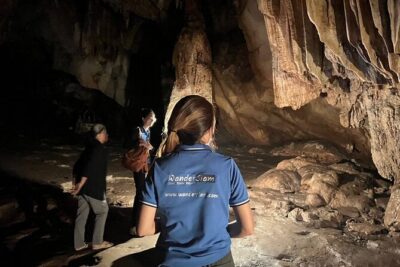
Chiang Mai Day Tour: Chiang Dao Cave and Hill Tribes
Read our review →
Private tour Chiang Dao cave ,Temples,Sticky waterfall
Read our review →Browse the lists this tour appears in