
Reviewed · CHIANG RAI & WHITE TEMPLE DAY TRIPS
Chiang Mai: Chiang Rai Temples and Long-Neck Karen Village
Chiang Rai’s White Temple is the star of this long day from Chiang Mai, with mirrored walls, Buddhist symbols, and strange modern artwork that rewards a slow look. I like the mix of famous sights and lesser-known stops, especially the deep-blue Blue Temple and Wat Huay Pla Kang’s giant Guan Yin statue.
I also like that the $61 price covers transport, lunch, entrance fees, water, a guide, and insurance. The drawback is the distance and pace: you spend much of the day on the road, and some stops may feel rushed. The Karen village and hot springs also offer less natural, quiet atmosphere than their names may suggest.
In This Review
- Key points to know before booking
- Why the White Temple earns top billing
- Mae Kachan Hot Springs: useful break, modest setting
- The Blue Temple brings color and calm
- Wat Huay Pla Kang and the giant Guan Yin
- The Long-Neck Karen village needs a respectful approach
- What the small-group van means for your day
- Lunch and what the $61 price covers
- Clothing, shoes, and the physical effort
- Who will get the most from this Chiang Rai day trip
- Should you book it?
- FAQ
- How much does the tour cost?
- How long does the activity last?
- What is included in the price?
- How many people are in the group?
- Which temples does the tour visit?
- Is lunch included?
- What should I wear?
- Can I cancel the booking?
Key points to know before booking
- The White Temple is the visual highlight: Sparkling mirrors, white carvings, and powerful Buddhist imagery make this the stop to savor.
- The Blue Temple offers a strong contrast: Its dark-blue interior and gold details feel cooler, calmer, and more dramatic than the White Temple.
- Mae Kachan Hot Springs is a practical rest stop: You can soak your feet and boil eggs, but the setting is near a parking area rather than a remote natural spring.
- Wat Huay Pla Kang includes a giant Guan Yin statue: An elevator ride brings you high above the surrounding countryside for broad views.
- The Karen village requires thoughtfulness: Ask before photographing people, and treat shopping as a direct way to support local craft work.
- This is a full, road-heavy day: The small group is limited to 12, but traffic, delays, and guide pacing can affect how much time you get at each stop.
Why the White Temple earns top billing
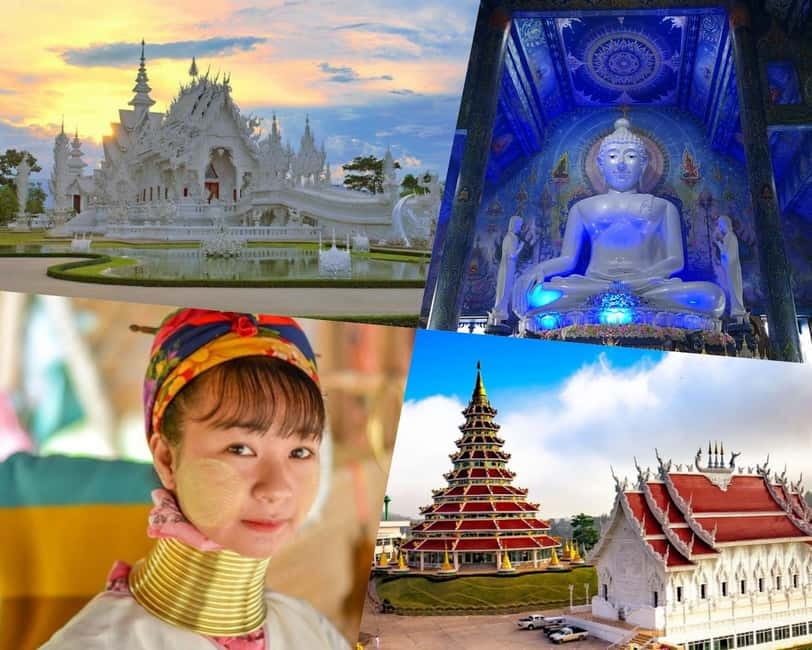
The trip’s most memorable stop is Wat Rong Khun, better known as the White Temple. It does not look like a traditional Thai temple in the usual sense. The entire exterior is white, with mirrored pieces that catch the sunlight and make the carvings sparkle.
The design blends Buddhist ideas with contemporary art. You’ll see figures and symbols tied to life, death, and rebirth, along with murals and sculptures that ask you to look beyond pretty architecture. This is not a place to walk in, snap one photograph, and leave. Give yourself time to notice the small details.
The bright surface can be hard on your eyes under strong sun, so bring a hat and sunscreen. Modest clothing is required at every sacred temple on the route. Cover your shoulders and knees, and wear shoes that can handle walking and stairs.
The White Temple is also a busy and highly photographed sight, but its unusual design gives it more substance than a standard photo stop. I find the mix of traditional Buddhist symbolism and modern imagery particularly useful for understanding how Thai religious art can keep changing rather than staying locked in the past.
More hill tribe village visits from Chiang Mai:
- Chiang Mai: Chiang Rai Temples, Karen Tribe and Hot Springs
★ 4.7 · 5,401 reviews - Thai and Akha Cooking Class in Chiang Mai
★ 5.0 · 4,358 reviews - Chiang Mai: Elephant Sanctuary, Long Neck & Sticky Waterfall
★ 4.9 · 2,262 reviews
Mae Kachan Hot Springs: useful break, modest setting
Mae Kachan Hot Springs comes early in the day and gives you a chance to stretch after the drive. You can put your feet in warm mineral water, which is believed to have soothing properties, or try the local custom of boiling eggs in the bubbling pools.
The egg boiling is a small but amusing touch. It turns a basic roadside pause into something you can participate in, even if you only watch. Bring water and take care around hot water, especially near bubbling areas.
Keep your expectations in check. This is not a quiet forest bath surrounded by untouched nature. The stop is close to a parking area, and the setting feels more like a public rest point than a secluded spring. I would treat it as a break with a local custom, not as one of the day’s major attractions.
That distinction matters because the tour covers a large area. You need this kind of pause, even if the setting is not perfect. It breaks up the drive and gives you a quick change of pace before the temples.
The Blue Temple brings color and calm
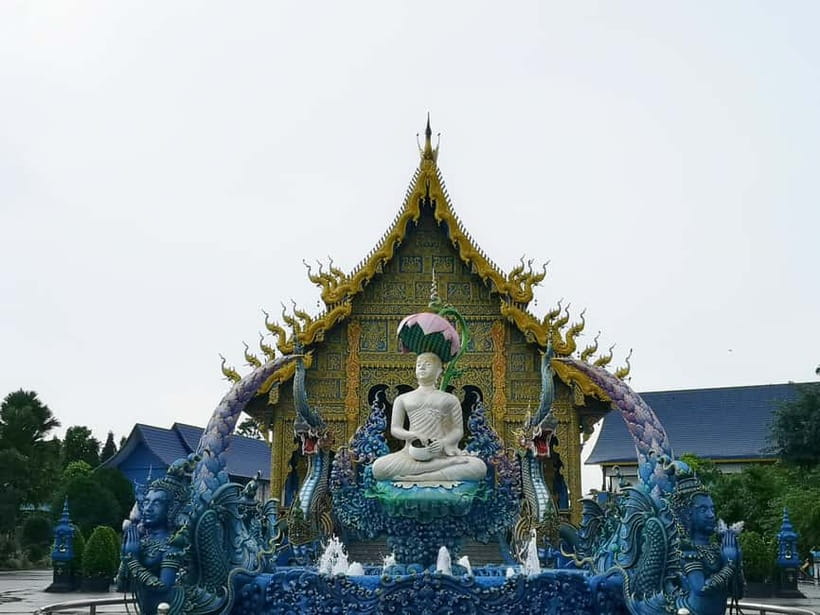
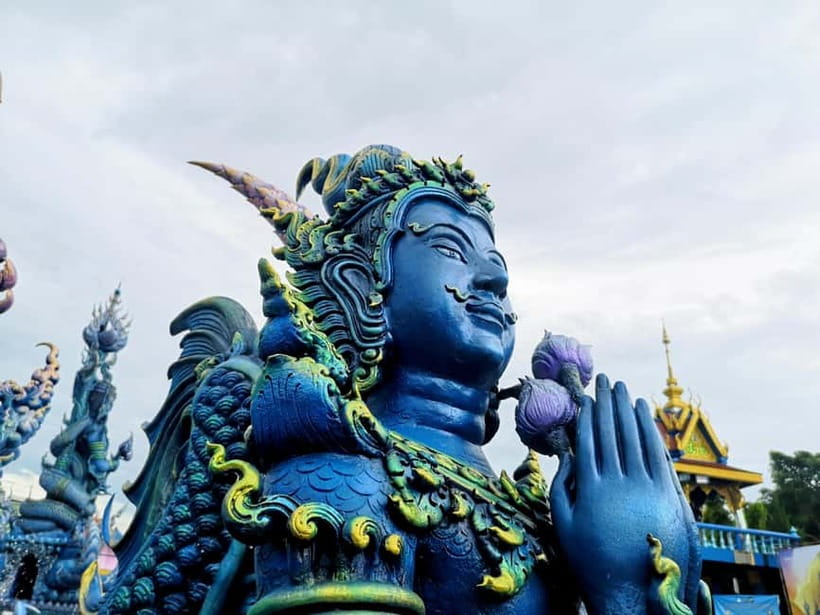
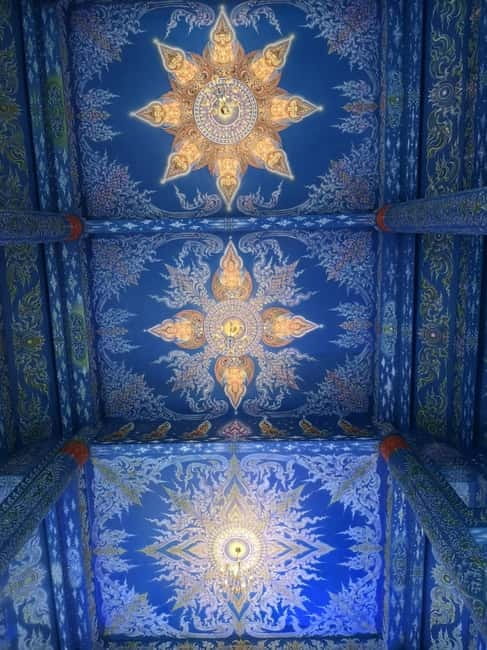
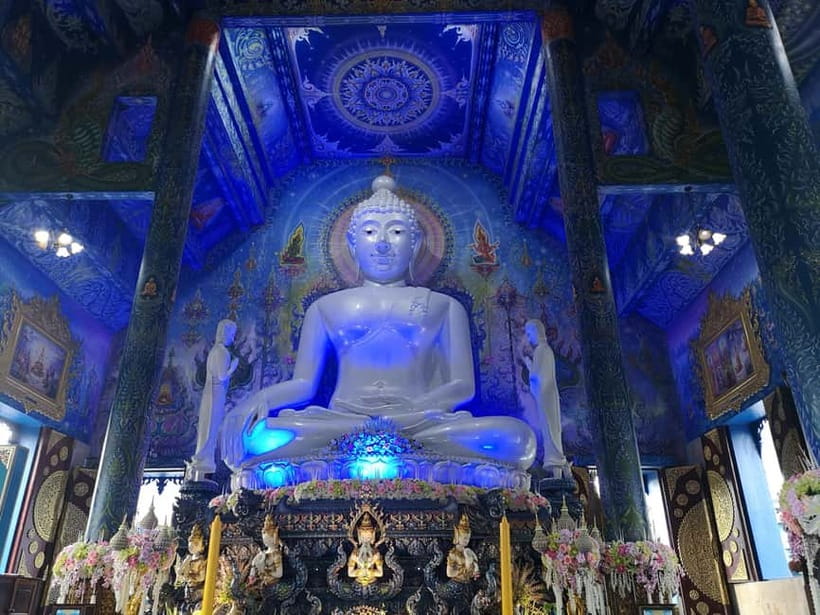
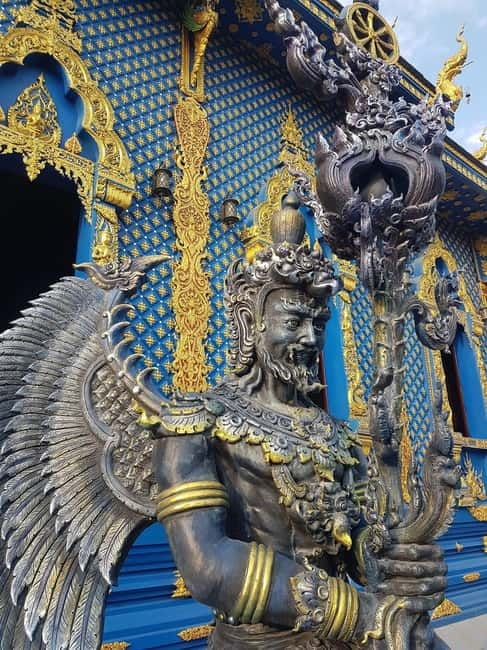
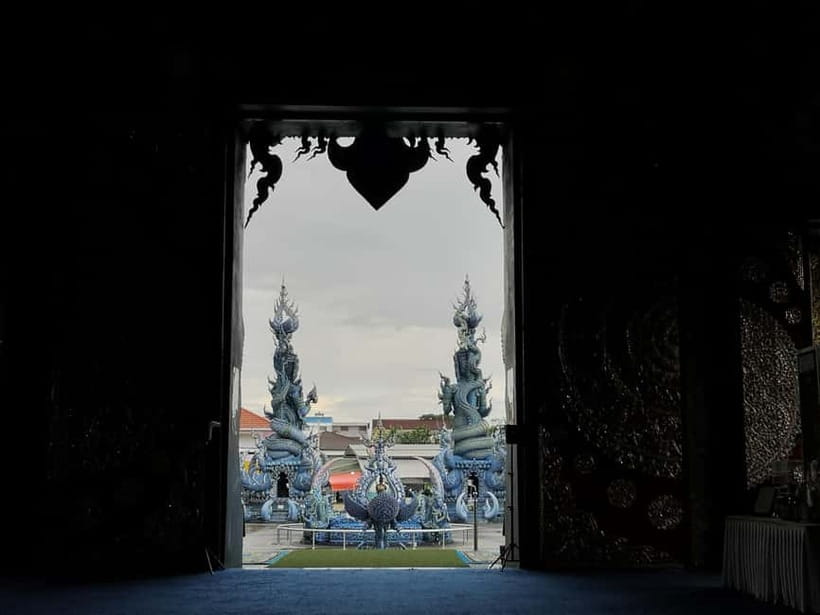
Wat Rong Suea Ten, usually called the Blue Temple, is a fine follow-up to the White Temple because the two places feel so different. Instead of white walls and reflective surfaces, you get strong blue tones, gold trim, and a more enclosed, atmospheric interior.
The temple’s Buddha image is a major focus. Spend a few minutes inside rather than treating the building as a backdrop for photographs. The blue walls and gold details create a more restful mood, and the design is easy to appreciate even if you are not deeply familiar with Thai religious art.
This is one of the tour’s most photograph-friendly stops. The color scheme gives your pictures a clear sense of place, while the White Temple depends more on sunlight and fine detail. If you enjoy architecture, the pair works well together because you can compare two very different approaches within the same province.
As with the other temples, dress modestly and follow the guide’s instructions. Comfortable shoes help because the day includes walking and climbing stairs. The itinerary can shift slightly because of traffic, weather, or the needs of the small group, so you may not receive identical time at every site.
Wat Huay Pla Kang and the giant Guan Yin
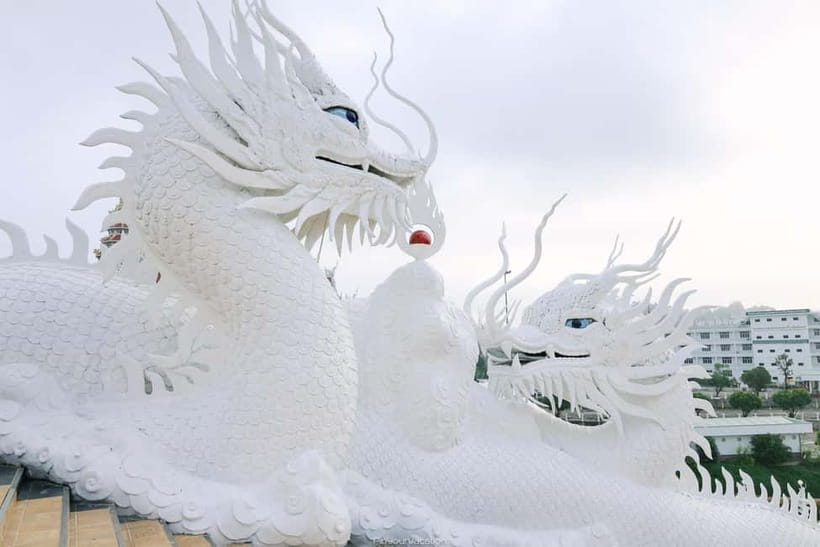
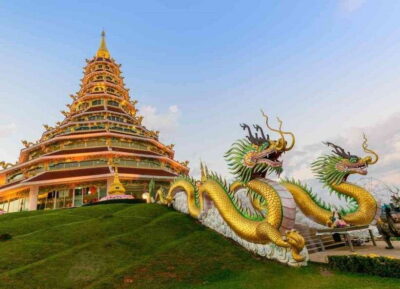
Wat Huay Pla Kang adds height and open views to a day otherwise focused on temple buildings. The main sight is a colossal Guan Yin statue, described as about 25 stories tall. An elevator takes you toward the top, where you can look across Chiang Rai’s countryside.
The view is the reason to make the ascent. From up high, the area opens out beyond the temple grounds, giving you a wider sense of the province than you get from the courtyards of the White and Blue Temples.
The complex also includes an elegant nine-tiered pagoda and quiet gardens. This is a good place to slow down for a few minutes, especially after the visual intensity of the White Temple and the bold colors of the Blue Temple.
Expect some stairs and walking around the complex, even with the elevator available for the statue. Anyone with back problems, limited mobility, or difficulty climbing should think carefully before booking. The tour is not suitable for wheelchair users, pregnant women, or people over 220 pounds, according to the stated restrictions.
More Chiang Rai and White Temple day trips:
- Chiang Rai White Temple and Blue Temple Day Tour
★ 4.6 · 3,366 reviews - Chiang Rai Temples: Private Tour from Chiang Mai
★ 5.0 · 1,267 reviews - From Chiang Mai: Chiang Rai’s Temples Exploration Day Trip
★ 4.5 · 871 reviews - Chiangmai to Chiangrai: 3 Temples, Hot Springs& Lalitta Cafe
★ 4.5 · 659 reviews
The Long-Neck Karen village needs a respectful approach
The final major stop is a Long-Neck Karen village. Members of the Karen community are known for brass neck rings, and the visit gives you a chance to learn about traditions, daily life, and local craftsmanship.
This stop can be meaningful, but it depends heavily on your attitude and on the quality of the guide’s explanation. Do not treat people as part of a display. Ask permission before taking photographs, avoid intrusive pictures, and pay attention to how the community presents its own traditions.
You can buy handmade souvenirs, which gives the visit a practical way to support local income. Some versions of the stop may also include a look at local production such as coffee making, but the level of explanation can vary. One account of the day found the village the most enjoyable part, while still wishing for more background about the Karen people.
That is useful advice. Go ready to listen, not just shop. If you want a long, detailed cultural program, this visit may feel brief. If you see it as an introduction and a chance to support craftspeople, it can fit well into the day.
What the small-group van means for your day
The group is limited to 12 people, and transport is provided in an air-conditioned van. That is a better arrangement than a large coach for a route with several stops. A smaller group usually makes it easier to hear the English-speaking guide and move through temple grounds without constantly waiting for a crowd.
The vehicle is described as comfortable and luxurious, but comfort is still relative on a long Chiang Mai to Chiang Rai route. You will spend a substantial part of the day seated, and the return journey can feel tiring. The route also passes through areas where traffic may slow the schedule.
Group behavior matters. Delays from people returning late can frustrate the guide and reduce time at later stops. One account described a group that did not feel very united, with limited conversation and some tension over lateness. You can help by keeping an eye on meeting times and returning to the van promptly.
Guide quality may also vary. Several accounts describe a friendly, funny guide with good explanations, while another found the guide’s English difficult to follow and the historical information too limited. The tour is conducted in English, but you should not assume a museum-level lecture at every stop.
Lunch and what the $61 price covers
Lunch is included at a local restaurant, along with transportation, admission fees, bottled water, an English-speaking guide, and insurance. That makes the $61 cost reasonable for a full-day trip covering several major sights outside Chiang Mai.
The value is strongest if you want convenience. Organizing Chiang Mai to Chiang Rai transport alone can take effort, and separate entrance charges and meals would add to the cost. You also avoid having to navigate the route yourself.
Lunch is a practical part of the package, not a reason to book the trip. Food quality can be uneven. One account described the meal as being served in an average dining room and found it disappointing. Personal expenses are not covered, so bring money for souvenirs, snacks, or anything else you choose to buy.
I would compare this tour with the cost of hiring private transport. A private option gives you more control over timing and may allow longer stops, but it will usually cost more than $61 per person. For a solo visitor or couple who wants the main sights without planning every detail, the small-group price is sensible.
Clothing, shoes, and the physical effort
Pack for heat, walking, and strong sun. Comfortable shoes, a hat, sunscreen, a camera, and water are specifically recommended. Bottled water is included, but carrying a small personal bottle is still useful during temple walks.
Your clothing must cover shoulders and knees. This is not just a packing suggestion. You are visiting sacred sites, and proper dress helps you enter with the right level of respect. A light shirt with sleeves and loose trousers or a long skirt are practical choices.
The day includes walking, stairs, temple courtyards, and the visit to the giant Guan Yin statue. The elevator reduces the climb to the upper part of the statue, but it does not remove all physical demands from the tour.
Pets and smoking are not allowed. Personal expenses are extra. The tour is not suitable for pregnant women, people with back problems, wheelchair users, or anyone over 220 pounds, so check those restrictions before paying.
Who will get the most from this Chiang Rai day trip
I would recommend this outing to you if you want to see Chiang Rai’s best-known temples in one organized day and do not want to arrange long-distance transport yourself. It is particularly good for first-time visitors who want a broad introduction rather than several hours at one temple.
You will get the most from it if you enjoy photography, unusual architecture, and a packed schedule. The White Temple and Blue Temple offer very different visual styles, while Wat Huay Pla Kang provides a change of scale and wide countryside views.
It is less suitable if you want a slow, deeply researched cultural tour. The route covers many stops, and one account found the guide’s historical explanations too thin. It is also a poor match if you dislike long van rides, fixed meeting times, or group pacing.
The Karen village deserves special consideration. If you are uncomfortable with staged cultural visits, ask yourself what you want from the stop. A respectful attitude, careful photography, and support through fair souvenir purchases can make the encounter more thoughtful.
Should you book it?
Book this tour if you want a convenient, affordable sweep of Chiang Rai’s major sights and are willing to accept a long day with some time in the van. The White Temple, Blue Temple, and giant Guan Yin statue give the outing real visual variety, while included transport, lunch, tickets, water, and a small group improve the value.
Skip it if you need a slow pace, detailed historical commentary, or a truly natural hot spring setting. Also think twice if physical restrictions make stairs and long transport difficult. For most fit visitors with limited time in northern Thailand, this is a practical way to see a lot in one day, as long as you arrive prepared for a busy schedule and keep your expectations realistic about the hot springs and Karen village.
FAQ
How much does the tour cost?
The tour costs $61 per person.
How long does the activity last?
It is a one-day tour. Starting times depend on availability.
What is included in the price?
The price includes air-conditioned van transport, an English-speaking guide, admission fees to all attractions, lunch, bottled water, and insurance.
How many people are in the group?
The tour is a small-group experience limited to 12 participants.
Which temples does the tour visit?
The route includes Wat Rong Khun, also called the White Temple, Wat Rong Suea Ten, also called the Blue Temple, and Wat Huay Pla Kang.
Is lunch included?
Yes. Lunch at a local restaurant is included.
What should I wear?
Wear clothing that covers your shoulders and knees because the tour visits sacred temples. Comfortable shoes are recommended for walking and stairs.
Can I cancel the booking?
You can cancel up to 24 hours in advance for a full refund. You can also reserve now and pay later.
Just added around Chiang Mai
- Chiang Rai Wonders: White, Blue & Red Temples and Hot Spring★ 5.0 · 3 reviews
- Chiang Rai White Temple Blue Temple and Hill Tribe Village Tour★ 3.5 · 3 reviews
- Private Chiang Mai City Tour including Wat Doi Suthep, Wat Suan Dok (SHA Plus)★ 5.0 · 3 reviews
- Workshop Making Herbal ball & herbal inhaler★ 4.3 · 3 reviews
- Chiang Mai Mae Ping River Cruise and Thai Farmer House Visit★ 4.0 · 3 reviews
- Phoenix Zipline Adventure Park – Chiang Mai Thrills★ 4.0 · 3 reviews
- Monk trails hike, Wat Phalat, Monk chanting, Wat Doi Suthep.★ 5.0 · 3 reviews
- Tok Sen Massage at Fah Lanna Spa in Chiang Mai★ 4.5 · 3 reviews
Chiang Rai & White Temple Day Trips, compared.
Chiang Rai Temples, Karen Tribe and Hot Springs
Read our review →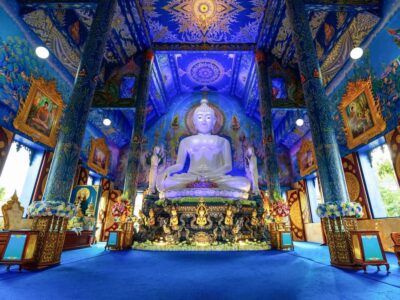
Chiang Rai White Temple and Blue Temple Day Tour
Read our review →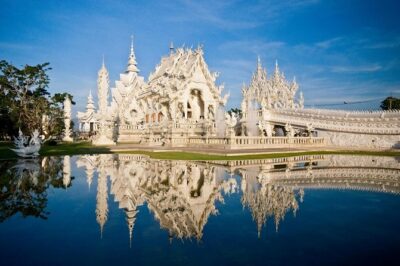
Chiang Rai Temples: Private Tour from Chiang Mai
Read our review →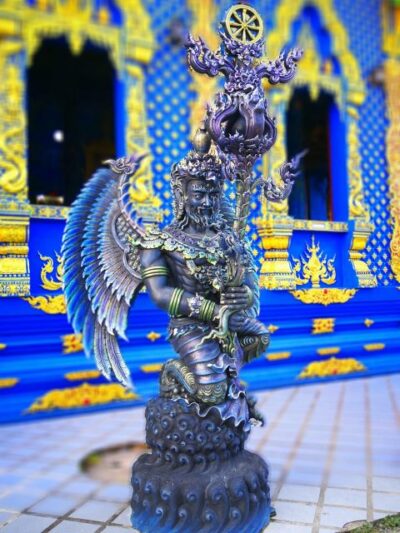
Chiangmai to Chiangrai: 3 Temples, Hot Springs& Lalitta Cafe
Read our review →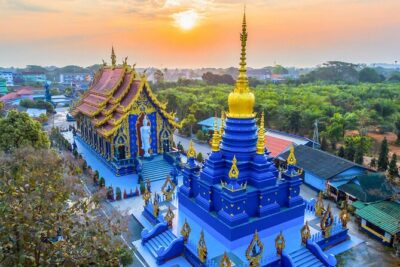
Chiang Rai White Temple, Blue Temple and more from Chiang Mai
Read our review →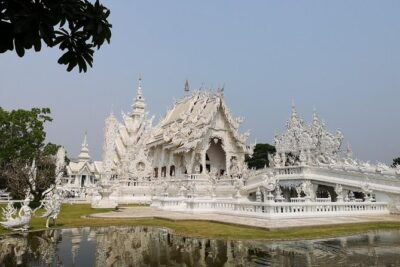
Chiang Rai Day Trip from Chiang Mai City with Golden Triangle
Read our review →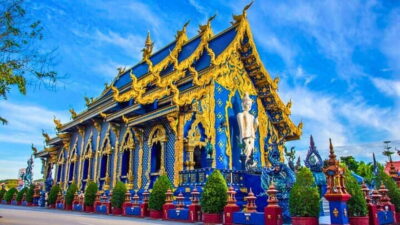
Chiang Rai Temples, Golden Triangle & Boat Tour
Read our review →Browse the lists this tour appears in